
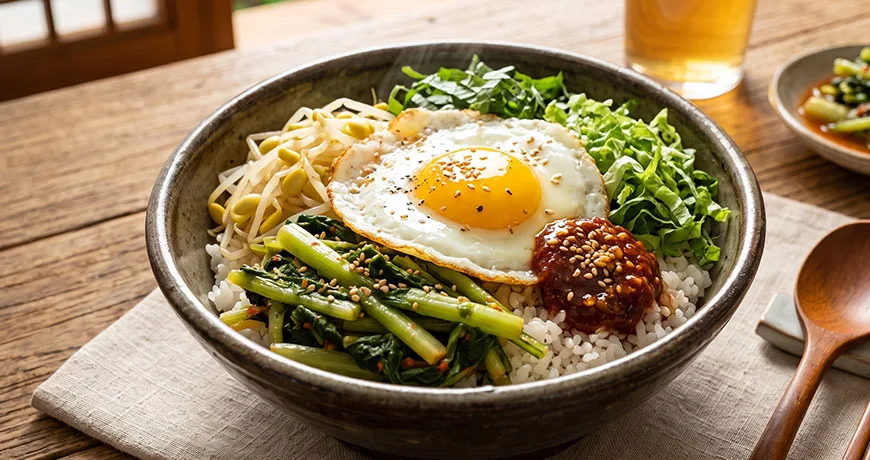
A refreshing, vibrant Korean rice bowl featuring crisp young summer radish kimchi (yeolmu-kimchi), a runny fried egg, and a tangy-spicy gochujang sauce. Perfect for restoring lost appetite on hot days with its satisfying crunch and zesty flavor.
⏱️ Prep: 15 mins | Cook: 10 mins | 🍳 Easy | 🌶️ Spicy | 🥗 Vegetarian Option
Ingredients (2-3 servings)
- Main Ingredients: 2 bowls warm cooked white rice, 1.5–2 cups young summer radish kimchi (yeolmu-kimchi), 2 eggs, 100g soybean sprouts (or spicy radish salad / mu-saengchae), 4–5 lettuce leaves (or perilla leaves)
- Bibim Sauce: 2 tbsp gochujang (chili paste), 1 tbsp plum extract (maesil-cheong), 1.5 tbsp sesame oil, 1/2 tsp minced garlic, 1 tbsp toasted sesame seeds
- Optional Additions: 2–3 tbsp yeolmu-kimchi juice, a scoop of concentrated soybean paste stew (gang-doenjang)
Allergy Information
- Contains: Eggs, Soy (Gochujang), Wheat (Gochujang), Sesame
Equipment
- Frying Pan, Mixing Bowl, Pot (for blanching sprouts), Knife, Cutting Board
Cooking Instructions
- Ingredient Prep: Lightly squeeze excess liquid from the yeolmu-kimchi and cut into 3–4 cm pieces. Thinly shred the lettuce and perilla leaves. Blanch the soybean sprouts in boiling water, drain, and toss lightly with a pinch of salt and sesame oil.
- Making Bibim Sauce: In a bowl, combine 2 tbsp gochujang, 1 tbsp plum extract, 1/2 tsp minced garlic, 1 tbsp sesame oil, and 1 tbsp toasted sesame seeds. (Optional: Whisk in 1–2 tbsp of yeolmu-kimchi juice to make the sauce smoother and tangy).
- Frying Eggs: Heat oil in a pan over medium heat and fry the eggs sunny-side up (or over-easy), leaving the yolks runny.
- Assembling the Bowl: Place warm cooked rice into wide serving bowls. Neatly arrange the chopped yeolmu-kimchi, seasoned soybean sprouts, and shredded lettuce around the rice, then place a fried egg in the center.
- Drizzling & Mixing: Serve with the bibim sauce and an extra drizzle of sesame oil. Break the egg yolk and mix thoroughly before enjoying.
💡 Cooking & Pairing Tips
- Incorporate Kimchi Juice: Whisking 1 to 2 tablespoons of tangy yeolmu-kimchi brine into the gochujang sauce thins out its density and infuses the entire bowl with a refreshing, moist umami.
- Gang-Doenjang Variation: Swapping the sweet-and-spicy gochujang sauce for a dollop of thick, savory soybean paste stew (gang-doenjang) offers a rustic, deeply comforting alternative.
- Perfect Food & Beverage Pairing: Pairs delightfully with a cool bowl of cold soybean soup (Kongguksu broth) or a simple icy cold cucumber soup (Oinaengguk). Enjoy with a glass of iced corn silk tea or a crisp lager beer.
Storage Instructions
- Bibimbap is best enjoyed fresh upon assembly. Store leftover prepared vegetables, yeolmu-kimchi, and bibim sauce in separate airtight containers in the refrigerator for up to 2–3 days. Fry fresh eggs and assemble with warm rice right before eating.
Nutrition Facts (Estimated)
- Total Content : Approx. 650g (2-3 servings total)
- Calories : 720 kcal total (approx. 110 kcal per 100g / 240 kcal per 1 serving)
– Sodium : 1,050mg (53%)
– Total Carbohydrate : 115g (35%)
– Sugar : 18g (18%)
– Total Fat : 18g (33%)
– Trans Fat : 0g
– Saturated Fat : 3g (15%)
– Cholesterol : 185mg (62%)
– Protein : 22g (40%)
– Calcium : 120mg (12%)
– Calcium : 180mg (18%)
Editor’s Review
1. A Sensual Summer Explosion of Crisp Freshness and Creamy Yolk
The moment the crisp, cool stems of yeolmu-kimchi yield beneath your teeth, their distinct sharp moisture and fermented acidity instantly awaken a dormant palate. As sweet-and-spicy gochujang sauce and fragrant sesame oil softly coat every grain of warm rice, the golden burst of a soft-boiled egg yolk gently envelops any sharp spice with velvety richness. Interwoven with the nutty pops of toasted sesame seeds and fresh lettuce, it completes a lively and sensual festival of flavor that effortlessly revives lost summer appetites.
2. Textural Mastery Forged by Kimchi Brine Emulsification and Moisture Control
Yeolmubibimbap represents the height of intuitive Korean seasonal dining, bridging the crisp spirit of fermented greens with the comforting depth of a mixed rice bowl. Blending fermented yeolmu kimchi brine directly into the gochujang paste to eliminate stiffness and infuse vibrant acidity is a brilliant technique ensuring the sauce seamlessly permeates the rice. The natural fat from the runny yolk softly emulsifies the spicy sauce, smoothing out harsh edges to achieve a flawlessly balanced, silky texture across the bowl.
3. A Cool Emerald Sanctuary Reviving the Weary Summer Soul
Amidst the sweltering heat of midsummer when even the appetite slumbers, a bowl overflowing with emerald radish greens and crimson sauce serves as a refreshing oasis for an exhausted spirit. Lifting a hearty spoonful tossed with care acts as a cooling ritual that instantly washes away seasonal fatigue with the crisp vitality of fermented kimchi. Harmonizing the vibrant energy of the earth with the comforting warmth of sesame oil, this humble bowl grants the most authentic and steadfast solace to sustain us through hot summer days.