
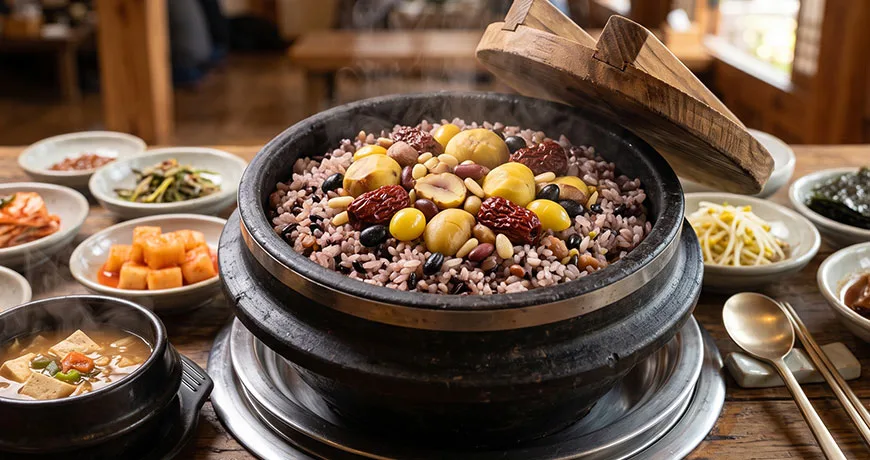
Yeongyangdolsotbap is an exercise in thermodynamic engineering that leverages the immense specific heat and thermal mass of a traditional stone pot (Dolsot) to create a micro-pressurized environment, perfectly gelatinizing the tough polysaccharide matrices of various grains and nuts. As the heavy lid traps the 100°C+ steam convection, the water-soluble sugars and amino acids from the chestnuts, ginkgo nuts, and jujubes are forcefully infused into the core of the rice grains. Once the rice is scooped out, the residual starches clinging to the 200°C+ bottom of the pot undergo aggressive Maillard browning to form a deeply caramelized crust (Nurungji). Pouring hot water over this superheated crust initiates the rapid heat of vaporization, extracting aromatic compounds and water-soluble dextrin into a colloidal suspension. This creates Sungnyung (scorched rice tea), the ultimate biochemical digestif.
⏱️ Total: 50 mins (excluding hydration time) | Prep: 15 mins | Cook: 35 mins | 🍳 Difficulty: High (Requires mastery of thermal mass and moisture evaporation) | 🌶️ Profile: Earthy, Nutty, and Subtly Sweet | 🍚 Focus: Thermal Mass, High-pressure Gelatinization, & Dextrin Extraction
Ingredients (2 servings)
- Starch Matrix: 1 cup short-grain white rice, 0.5 cup glutinous rice (sweet rice) (Both thoroughly hydrated/soaked for at least 30 mins)
- Resistant Starch & Fiber Matrix: 3 peeled chestnuts, 2 jujubes (pitted and julienned), 5 ginkgo nuts, 1 tsp pine nuts, 1 tbsp black beans (pre-soaked)
- Solvent: 1.5 cups water or light kelp broth
- Extraction Solvent (For Sungnyung): 1.5 cups hot water (to be poured into the pot after eating)
Allergy Information Contains: Soy (Black beans), Tree Nuts (Pine nuts, Ginkgo nuts, Chestnuts)
Equipment Dolsot (Korean Hot Stone Pot) or Heavy Cast-Iron Dutch Oven, Heavy Lid, Mixing Bowls
Cooking Instructions
- Hydration & Swelling: Pre-soak the rice, glutinous rice, and black beans thoroughly. Water must penetrate deep into the starch matrix before cooking to ensure the grains gelatinize completely to the core without leaving a chalky, undercooked center.
- Assembly & Sealing: Lay the hydrated rice and beans evenly at the bottom of the Dolsot. Arrange the ingredients of varying densities (chestnuts, jujubes, ginkgo nuts, pine nuts) evenly on top, and pour in the water. Cover tightly with a heavy lid to control internal pressure and prevent vapor escape.
- Boiling & Primary Gelatinization: Heat over medium flame until the water boils. The vigorous convection of 100°C steam physically breaks down the pectin and starch structures of the grains and nuts, softening them evenly.
- Evaporation & Maillard Crust: When the boiling water subsides and you hear a sharp, crackling sizzle (indicating evaporation), reduce the heat to the lowest setting for 15 minutes. As the excess kinetic moisture evaporates, the sugars in the rice fused to the bottom of the pot caramelize rapidly at 150°C, forging a thick, golden-brown Maillard crust (Nurungji).
- Thermodynamic Resting & Dextrin Extraction: Turn off the heat entirely and let the pot rest with the lid on for 5–10 minutes. The immense radiant heat retained by the stone redistributes the internal moisture perfectly. Scoop all the soft rice into serving bowls. Immediately pour hot water into the blazing hot Dolsot (over the crust) and cover. By the end of your meal, the water-soluble dextrin will have fully dissolved into a nutty, comforting broth known as Sungnyung.
💡 Professional Culinary Tips
- Thermal Mass & Micro-Pressure: While standard pots lose heat rapidly when the flame is lowered, a stone pot acts as a thermal battery, releasing absorbed radiant heat to keep the interior near 100°C even during the 10-15 minute resting phase. The heavy lid traps expanding steam, creating a micro-pressure cooker effect that fully gelatinizes the tough resistant starches found in multi-grains.
- Hydration Kinetics of Multi-grains: White rice, black beans, and pine nuts absorb water at drastically different molecular rates. Beans, protected by a thick pectin layer, must be soaked separately for at least 2 hours to ensure their thermal swelling matches the tension of the rice grains. Ignoring this hydration timing results in a disjointed texture of mushy rice alongside rock-hard beans.
- The Biochemistry of Sungnyung: The dextrin formed during the Maillard browning of the scorched rice (Nurungji) is not just a burnt byproduct. Dextrin acts as a potent biochemical agent that coats the stomach lining, neutralizes gastric acids, and stimulates digestive enzymes, making it the ultimate chemical palate cleanser and natural digestif after a meal.
Nutrition Facts (Estimated)
Total Content : Approx. 350g (1 serving, including Sungnyung)
Calories : 410 kcal
– Sodium : 15mg
– Total Carbohydrate : 82.0g
– Sugar : 5.0g
– Total Fat : 3.5g
– Saturated Fat : 0.5g
– Cholesterol : 0.0mg
– Protein : 9.0g
– Dietary Fiber : 7.0g
*Daily Values are based on a 2,000 calorie diet and standard Korean nutritional reference values.
**Nutritional values are calculated based on original ingredients; substitutions may alter specific macronutrients.
Origins and Food Culture of Nutritious Hot Stone Pot Rice (Yeongyangdolsotbap)
1. Heritage Lineage: The Philosophy of “Food as Medicine” and Classic Pot Rice
- Rooted in Korea’s ancestral culinary belief of Sikchi (healing through food) and the royal traditions of medicinal rice (yakbap) and seasonal multi-grain pot rice dating back to the Joseon Dynasty.
- With the refinement of stonecraft quarrying in regions like Jangsu during the late 20th century, individual single-serving stone pots modernized the tradition, establishing Yeongyangdolsotbap as a hallmark of premium Korean dining.
2. The Culinary Science of Far-Infrared Heat and Precision Steaming
- The hallmark of authentic preparation lies in the natural stone vessel’s dense thermal mass, which emits powerful far-infrared radiant heat that penetrates straight to the core of each rice grain, maximizing natural starch gelatinization and natural sweetness.
- Meticulously layering grains with nuts and root botanicals of varying moisture levels allows the ingredients to gently steam under a tight wooden lid, infusing the rich herbal essences into every grain without breaking the delicate textures.
3. The Feast of Seasonal Banchan and the Soothing Sungnyung Finale
- Diners scoop the steaming rice into a separate bowl to toss with fragrant scallion soy sauce or a pat of fresh butter, savoring it alongside bubbling soybean paste stew (doenjang-jjigae), grilled fish, and an array of seasonal wild namul.
- Pouring hot roasted barley or Solomon’s seal tea into the sizzling stone pot to brew sungnyung dissolves the nutty toasted rice crust into an enzymatic, stomach-soothing digestive broth that gracefully completes an iconic Korean feast.
The Radiant Thermal Harmony of Heavy Stone and the Earthy Bounty of Harvested Grains: A Refined Portrait of Yeongyang Dolsotbap
Yeongyang Dolsotbap (Nutritious Hot Stone Pot Rice) stands as the wholesome, deeply restorative crown jewel of Korean single-serve hot-stone gastronomy. Plump short-grain white rice, sweet glutinous rice, and an earthy blend of mixed grains (such as black rice and sorghum) are layered directly inside an individually heated natural agalmatolite stone pot (dolsot), crowned with autumnal treasures including sweet chestnuts, ruby jujubes, jade ginkgo nuts, hearty black soybeans, and fragrant pine nuts, then cooked to order under radiant heat. Eschewing batch-cooked rice warmers, this dish honors the patient discipline of cooking each individual serving from scratch, locking the natural humidity, vitamins, and minerals of grains and forest harvests directly within the stone vessel.
Unveiling the heavy wooden lid releases a dramatic billow of fragrant steam, filling the air with the honeyed warmth of steamed jujubes, the earthy sweetness of whole grains, and the resinous perfume of toasted pine nuts. Gently folding the glistening grains and tender nuts together before scooping a hearty mouthful reveals an astonishing textural cadence: the swollen rice grains coat the palate with a rich, glossy elasticity, requiring no animal broths to achieve profound savoriness. Sinking your teeth into the bite yields the powdery, melting sweetness of steamed chestnuts, contrasted with the chewy suppleness of ginkgo nuts and the nutty bite of slow-cooked beans. Drizzling a spoonful of seasoned scallion-soy dressing bridges the natural sugars into a savory culinary harmony, while pouring hot roasted grain tea over the golden scorched rice crust (nurungji) clinging to the vessel creates a soothing, nutty soup (sungnyung) that gently calms the digestive tract.
The enduring majesty of Yeongyang Dolsotbap lies in its living embodiment of Yaksik-dongwon (藥食同源)—the ancient Korean philosophy that food and medicine share the same noble root. Conceived to restore depleted energy and circulate vital warmth throughout the body using unadorned agricultural harvests, this steaming stone pot remains an enduring emblem of personalized hospitality, balanced wellness, and heartwarming culinary craftsmanship.
Editor’s Review
1. A Balanced Triad of Resilient Multi-Grain Elasticity, Buttery Chestnut Softness, and Nutty Scorched Sungnyung Solace
The sensory progression within the heated stone vessel delivers an exceptional interplay of textures. The glossy, springy chew of glutinous grains provides a rich foundation, punctuated by the yielding, velvety softness of steamed chestnuts and the dense, jelly-like resilience of ginkgo nuts. As the meal concludes, the crisp, crackling crunch of the bottom scorched rice softens under hot grain tea into a deeply comforting, roasted broth that finishes the palate with warmth and zero palate fatigue.
2. Agalmatolite Far-Infrared Radiation, Complete Core Gelatinization, and Pyrolytic Starch Dextrinization Kinetics
Yeongyang Dolsotbap represents an exacting study in mineral thermodynamics and carbohydrate macromolecular chemistry. The heavy agalmatolite stone pot exhibits high thermal mass and far-infrared emittance, distributing uniform heat and pressurized steam to drive complete intra-granular starch gelatinization (alpha-conversion) straight to the core of dense mixed grains. Simultaneously, contact conduction at the vessel base induces controlled pyrolytic dextrinization and Maillard browning, yielding aromatic pyrazines in the nurungji crust, while solubilized simple sugars from steamed jujubes form a protective glossy barrier that preserves moisture across the grain surface.
3. The Royal Restorative Heritage of Medicinal Rice and the Timeless Solace of Custom Tabletop Feasting
Rooted in the courtly tradition of infusing functional botanicals and seasonal nuts into daily grains to sustain physical vigor, and refined into a centerpiece of modern Han-jeongsik banquet dining, Yeongyang Dolsotbap serves as an enduring cultural touchstone. Taking the time to savor a custom-steamed pot of nourishing grains honors a generational Korean tradition of uncompromised care, seasonal reverence, and restorative gastronomic warmth.