
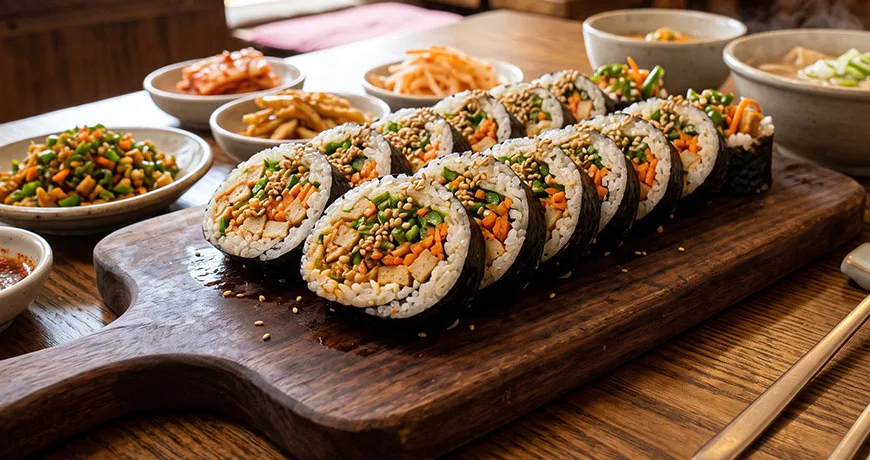
Maeungochugimbap is a pain-sensation-driven molecular gastronomy roll that operates by violently extracting fat-soluble capsaicin alkaloids into high-temperature cooking oil, which is then absorbed by a myofibrillar surimi gel matrix (fish cake). By mechanically cleaving (finely mincing) the Cheongyang green chilies and carrots, the cellular walls are obliterated, maximizing the surface area for rapid lipid extraction. This fiery chili oil emulsion is soaked up like a sponge by the porous minced fish cake. Combined with the Maillard browning of soy sauce and caramelized oligosaccharides, the filling becomes a hyper-concentrated, highly viscous umami bomb. Encased within lipid-coated, temperature-controlled rice and a hydroscopic seaweed membrane, this densely compressed macro-cylinder delivers an aggressive strike to the oral TRPV1 pain receptors with every single bite, triggering a powerful, addictive biochemical response.
⏱️ Total: 25 mins | Prep: 15 mins | Cook: 10 mins | 🍳 Difficulty: Low (Requires lipid extraction and radial compression) | 🌶️ Profile: Explosively Spicy, Savory, and Addictive | 🍚 Focus: Fat-Soluble Capsaicin Extraction, Surimi Sponge Effect, & TRPV1 Receptor Stimulation
Ingredients (2–3 servings / 3–4 rolls)
- Hydroscopic Algae Matrix: 3–4 sheets of roasted seaweed for Gimbap (Gim)
- Lipid-Coated Starch Matrix: 2.5 bowls of cooked white rice, 1.5 tbsp toasted sesame oil, 0.5 tsp fine salt, 1 tbsp toasted sesame seeds
- TRPV1 Stimulant & Turgor Matrix: 6–8 Cheongyang Green Chilies (seeds knocked out, minced extremely fine), 1/4 carrot (minced identically to the chilies)
- Myofibrillar Gel Matrix: 2 sheets of flat Fish Cake (Eomuk – blanched briefly in hot water to remove oxidized surface oils, then minced extremely fine)
- Hypertonic Umami Binder (Sauce): 2 tbsp cooking oil, 2 tbsp soy sauce, 1.5 tbsp oligosaccharide or corn syrup, 0.5 tsp minced garlic, 1 tsp toasted sesame oil
Allergy Information Contains: Fish (Fish cake), Soy, Wheat (from soy sauce and fish cake)
Equipment Bamboo Rolling Mat (Gimbal), Frying Pan, Cutting Board, Knife, Mixing Bowls
Cooking Instructions
- Starch Thermodynamics (Cooling & Coating): Spread the warm rice in a bowl, adding salt, sesame oil, and sesame seeds. Gently slice through the rice with a spatula, coating every grain with the hydrophobic sesame lipids. Cool the rice precisely to body temperature (37°C/98°F) to prevent escaping steam from compromising the structural integrity of the hydroscopic seaweed.
- Mechanical Cleavage: Finely mince the green chilies, carrots, and fish cake into uniform 0.3cm pieces. This mechanical processing maximizes the exposed surface area, which is critical for rapid fat-soluble extraction and creating a cohesive, easily rollable filling.
- Capsaicin Lipid Extraction: Heat the cooking oil in a pan over medium-high heat. Add the minced chilies, garlic, and carrots. The thermodynamic friction breaks down the cell walls, causing the non-polar capsaicin molecules to vigorously leach out into the oil, forming a potent, spicy lipid base.
- Surimi Integration & Maillard Browning: Add the minced fish cake to the fiery oil. The porous protein structure acts as a biochemical sponge, soaking up every drop of the capsaicin-infused lipids. Add the soy sauce and oligosaccharide, allowing them to boil and caramelize momentarily on the pan before stirring into the filling. Fry until all kinetic moisture evaporates and the mixture is sticky.
- Radial Compression Assembly: Place a seaweed sheet rough-side up. Spread the cooled rice thinly. Pile the concentrated spicy fish cake filling generously in the center. Use the bamboo mat to apply intense radial stress, compressing the roll tightly to fuse the matrices. Slice and serve.
💡 Professional Culinary Tips
- The Kinetics of Fat-Soluble Capsaicin: Capsaicin, the alkaloid responsible for the “heat” in chilies, is highly hydrophobic (water-repellent) but highly soluble in lipids. Sautéing the minced chilies in oil extracts the capsaicin exponentially better than boiling. This spicy oil heavily coats the oral mucosa, prolonging the physical burning sensation and maximizing the flavor impact.
- The Sponge Mechanics of Surimi (Fish Cake): Korean fish cake is a deep-fried myofibrillar protein gel. When minced and heated, its internal structure expands. This allows it to act as a highly efficient sponge, fully absorbing the spicy oil and the salty soy sauce. This prevents the filling from leaking moisture and ruining the seaweed, while turning the fish cake into concentrated flavor bombs.
- TRPV1 Receptors and the Endorphin Loop: The TRPV1 receptors in the mouth do not detect “taste”—they detect physical pain and scalding heat. When stimulated by capsaicin, the brain interprets this as a burn injury and rapidly floods the central nervous system with endorphins (natural painkillers). This immediate biochemical reward loop is the scientific reason why this extremely spicy Gimbap is famously described as “addictive.”
Nutrition Facts (Estimated)
Total Content : Approx. 450g (1 serving, approx. 1.5 rolls)
Calories : 530 kcal
– Sodium : 980mg
– Total Carbohydrate : 80.0g
– Sugar : 8.0g
– Total Fat : 16.0g
– Saturated Fat : 3.0g
– Cholesterol : 15.0mg
– Protein : 14.0g
– Dietary Fiber : 5.0g
*Daily Values are based on a 2,000 calorie diet and standard Korean nutritional reference values.
**Nutritional values are calculated based on original ingredients; substitutions may alter specific macronutrients.
Origins and Food Culture of Spicy Green Chili Pepper Gimbap (Maeungochugimbap)
1. Regional Heritage: From Jinju’s Iconic “Ttaengcho Gimbap” to a Nationwide Phenomenon
- Tracing its roots to the historic culinary hub of Jinju in Gyeongsangnam-do, where local snack eateries pioneered “Ttaengcho Gimbap” by mixing rice with minced spicy peppers, braised fish cakes, and seasoned soy sauce.
- Celebrating ttaengcho (the southeastern dialect for razor-sharp Cheongyang chilies), the dish’s reputation for fiery, tear-inducing deliciousness rapidly spread across Korea, evolving into a beloved comfort staple for urbanites seeking natural catharsis from daily stress.
2. The Culinary Science of Fine Mincing and Oil-Sautéed Flavor Emulsification
- The hallmark of authentic preparation lies in finely mincing the green chili peppers rather than leaving them in large strips, allowing their fiery essence to distribute evenly through every bite alongside carrots and fish cakes.
- Stir-frying the peppers in oil softens their raw, sharp astringency into a deeply rounded, fragrant chili oil flavor, while natural sugars from carrots and umami from fish cakes create an addictive sweet-savory glaze that cuts through the heat.
3. “Fight Fire with Fire” (Iyeol-chiyeol) Catharsis and the Mayonnaise Dipping Ritual
- Embodying Korea’s traditional Iyeol-chiyeol (“fighting heat with heat”) philosophy, diners willingly sweat through the fiery roll to clear internal congestion and revitalize bodily energy.
- To temper the fiery profile, a popular modern custom involves dipping slices into cool, creamy mayonnaise or pairing the dish with comforting rolled omelets (gyeran-mari), sweet dairy drinks, or soothing broths, establishing a playful and enduring subculture within Korean street gastronomy.
The Incandescent Fire of Sautéed Cheongyang Chilies and the Savory Embrace of Caramelized Fish Cake: A Refined Portrait of Maeungochugimbap
Maeungochugimbap (Spicy Green Chili Pepper Seaweed Rice Roll) stands as the fierce, palate-igniting, and irresistibly addictive zenith of contemporary Korean street-food (bunsik) gastronomy. Native Cheongyang green chilies—celebrated for their pristine, crisp bite and explosive capsaicin intensity—are finely minced with their seeds intact, then tossed into a sizzling skillet with ribbons of savory fish cake (eomuk), julienned carrots, naturally brewed soy sauce, minced garlic, and a hint of sweetness. This intensely concentrated spicy filling is layered across a foundation of fluffy short-grain white rice—gently seasoned with fine sea salt and cold-pressed toasted sesame oil—and encased in a tight cylinder of crisp roasted sea laver (gim). Decisively shattering the placid, multi-ingredient tranquility of traditional picnic rolls, this creation harnesses the searing heat of flash-sautéed chilies, balancing botanical fire and rich soy-glazed umami in every concentric bite.
Placing a sesame-speckled slice onto the tongue awakens the palate with an immediate, intoxicating aroma: the toasted oceanic essence of roasted seaweed and nutty sesame oil is sharply pierced by the raw, herbal pungency of sizzling green peppers. Sinking your teeth into the slice triggers an audible, clean snap as the brittle seaweed casing gives way, yielding smoothly to the pillowy, chewy elasticity of the warm rice. As your teeth compress the core, an exhilarating sensory crescendo unfolds: the minced chilies and carrots burst with a crisp, fine-grained micro-crunch (sak-sak), unleashing a wave of pure capsaicin heat that races across oral receptors. Instantly, the tender, toothsome chew of savory fish cake floods the palate with rich marine protein and caramelized soy sweetness, beautifully rounding out the sharp edges of the spice. The sweet starch of the rice grains absorbs the fiery chili oils, orchestrating an impeccably balanced, endlessly addictive rhythm that draws you toward the next piece.
The enduring majesty of Maeungochugimbap lies in its functional catharsis—marrying the ancient therapeutic tradition of harnessing capsaicin-driven endorphin rushes for emotional rejuvenation with the fast, democratic convenience of the rolled gimbap format. Originating from regional icons such as Jinju’s legendary Ddaengcho Gimbap and celebrated in cozy neighborhood snack bars across the country, a cylinder of spicy chili gimbap remains a timeless monument of culinary daring, domestic ingenuity, and electrifying gastronomic comfort.
Editor’s Review
1. A Dynamic Harmony of Brittle Laver Tensile Snap, Granular Chili Crunch, Toothsome Fish Cake Elasticity, and Starch Cushioning
The textural landscape inside the sliced roll achieves an extraordinary equilibrium of contrasting physical elements. The delicate, papery fracture of roasted laver gives way to the supple, cohesive chew of sesame-seasoned rice, which serves as a vital cushioning foundation. At the center, the finely minced Cheongyang chilies and carrots deliver a lively, granular crunch that crackles audibly with each chew. The springy, tender elasticity of the stir-fried fish cake bridges these disparate textures, preventing oral fatigue and ensuring a remarkably clean, non-greasy mouthfeel from the first slice to the last.
2. Lipophilic Capsaicin Thermal Extraction, TRPV1 Vanilloid Kinetics, Fish Cake Maillard Profiling, and Starch Matrix Buffering
Maeungochugimbap represents an exacting study in plant alkaloid thermodynamics, sensory neurobiology, and carbohydrate physics. Capsaicin and dihydrocapsaicin within the Cheongyang chili peppers are strictly hydrophobic; flash-sautéing them in cooking oil extracts and solubilizes these bioactive molecules into the lipid phase, coating the minced fish cake and carrots in a uniform, capsaicinoid-rich glaze. Upon mastication, capsaicin binds to the oral mucosal TRPV1 receptors, triggering heat and pain pathways that release systemic endorphins. Concurrently, the porous amylose-amylopectin matrix of the cooked short-grain rice and the unsaturated fatty acids of toasted sesame oil physically bind and trap excess capsaicin, attenuating receptor over-saturation and converting harsh burning into an agreeable warmth. Furthermore, high-heat pan stir-frying drives Maillard browning between fish cake myosin proteins and reducing sugars, generating savory pyrazines that unite with fish cake inosinates (IMP) and soy glutamates for an exponential umami synergy.
3. The Cathartic Heritage of Korean Spice Therapy and the Evolution of Modern Bunsik Gastronomy
Rooted in the long-standing cultural ethos of consuming fiery dishes to expel physical fatigue, promote circulation, and relieve accumulated emotional stress, Maeungochugimbap elevates humble snack-bar dining into a profound sensory ritual. By condensing the intense vibrancy of raw agricultural chili harvests into an accessible, perfectly proportioned roll, this unassuming culinary gem stands as an enduring sanctuary of shared laughter, revitalizing energy, and brilliant street-level craftsmanship.