
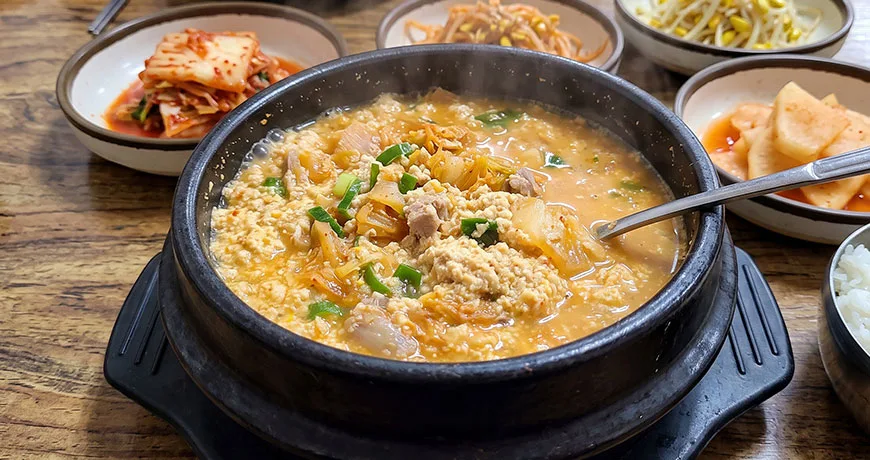
Kongbijitang is a high-density, fluid-dynamic soup that boils a thick protein-lipid suspension and raw cellulose derived from mechanically puréed, hydrated soybeans. When the rendered animal lipids from pork and the lactic acid from fermented Kimchi collide within the boiling solvent, the plant-based soybean proteins undergo rapid acid coagulation. Hitting their isoelectric point, the proteins curdle into a soft, porous, ricotta-like gel matrix. Because the extreme viscosity of this purée completely halts thermal convection, the artisan must continuously agitate the bottom of the pot to prevent the trapped steam from exploding and the starches from scorching. Emulsifying the nutty richness of pork fat with the sharp bite of lactic acid within a creamy, yet robustly fibrous texture, this dish is the ultimate biochemical delivery system for consuming proteins and dietary fiber in their most primal forms.
⏱️ Total: 40 mins (excluding soybean hydration) | Prep: 15 mins | Cook: 25 mins | 🍳 Difficulty: Moderate (Requires acid coagulation and high-viscosity convection control) | 🌶️ Profile: Deeply Nutty, Earthy, and Tart | 🍚 Focus: Acid Coagulation, Viscosity Control, & Protease Digestion | 🍶 Pairing: Chilled, dry traditional Barley Soju
Ingredients (2–3 servings)
- Protein & Cellulose Matrix: 400g Fresh Kongbiji (mechanically puréed soaked soybeans, or store-bought soybean pulp)
- Lactic Acid & Osmotic Binder: 150g Well-fermented Sour Kimchi (finely chopped)
- Animal Lipid & Umami Matrix: 150g Pork (shoulder or neck, with fat, finely chopped)
- Aqueous Umami Solvent: 400ml Anchovy-Kelp Broth or Rice Water
- Aromatic & Chemical Catalyst: 1/2 stalk Green Onion (chopped), 1 tbsp minced garlic, 1 tbsp Soup Soy Sauce, 1 tbsp Saeujeot (Korean salted fermented shrimp – natural protease), 1 tbsp Toasted Sesame Oil
Allergy Information Contains: Soy, Wheat (from soy sauce), Pork, Crustacean Shellfish (Saeujeot)
Equipment High Thermal Mass Earthenware Pot (Ttukbaegi) or heavy-bottomed pot, Spatula, Cutting Board, Knife
Cooking Instructions
- Lipid Extraction: Heat the sesame oil in the Ttukbaegi over medium heat and sauté the chopped pork. This initiates the Maillard reaction, rendering and extracting concentrated animal lipids into the pot.
- Lactic Matrix Integration: Once the pork is cooked, add the finely chopped sour Kimchi. Sautéing evaporates the excess moisture, condensing the lactic acid and emulsifying it smoothly with the rendered pork fat.
- Solvent Addition: Pour in the broth and heat over high heat until it reaches a rolling boil, leaching the hypertonic umami from the pork and Kimchi into the aqueous solvent.
- Suspension & Acid Coagulation: Once boiling, immediately reduce the heat to medium-low and fold in the massive volume of Kongbiji (soybean purée). The collision of the boiling kinetic heat and the Kimchi’s lactic acid chemically triggers the glycinin proteins in the soybeans to coagulate (curdle), forming microscopic, fluffy, porous gel curds.
- Rheological Agitation & Enzymatic Finish: Do not boil aggressively once the purée is added. Simmer gently for 10 minutes while continuously scraping the bottom with a spatula (agitation) to prevent scorching. Two minutes before finishing, fold in the green onions, garlic, and Saeujeot, utilizing its protease enzymes to finalize the dish.
💡 Professional Culinary Tips
- Physics of Acid Coagulation in Soy Proteins: The reason the smooth soybean purée curdles into a fluffy, ricotta-like texture in the soup is entirely due to the lactic acid excreted by the fermented Kimchi. When the soy proteins hit a specific acidity (an isoelectric point of roughly pH 4.5) alongside intense heat, they instantaneously coagulate. Sautéing the Kimchi first to establish this acidic baseline before introducing the purée is the fundamental biochemical key to weaving this soft gel structure.
- Thermodynamics of High-Viscosity Fluids: The moment the soybean purée enters the broth, the viscosity skyrockets, completely blocking natural thermal convection. Steam generated at the bottom becomes trapped, turning into massive bubbles that erupt like volcanic mud, while the uncirculated starches at the bottom scorch pitch-black. Dropping the heat and applying analog physical agitation—constantly scraping the boundary layer with a spatula—is the only way to avert this fluid-dynamic disaster.
- Biochemical Digestion via Saeujeot Protease: The rough cellulose of the beans and the dense lipids of the pork impose a heavy burden on the digestive system. Introducing Saeujeot (fermented shrimp) at the very end is not merely for seasoning; it deploys a high concentration of natural protease and lipase enzymes. This ancestral biochemical engineering acts as a potent biological catalyst, maximizing the bioavailability and digestion of the heavy fats and proteins inside the human body.
🍶 Gastronomic Pairing
- Biochemical Palate Cleansing: When the heavy, fibrous soybean curds and thick pork lipids coat your oral mucosa with a dense, powdery film, pair this dish with a chilled, dry traditional Barley Soju. Free from sweetness and acidity, the highly refined ethanol molecules of the spirit slice cleanly through the stubborn lipid barrier, physically scrubbing your palate. Meanwhile, the subtle, roasted aromatics of the barley create an exponential, synergistic resonance with the nutty earthiness of the soybeans.
Nutrition Facts (Estimated)
Total Content : Approx. 450g (1 serving)
Calories : 310 kcal
– Sodium : 850mg (Variable depending on Kimchi and Saeujeot)
– Total Carbohydrate : 15.0g (Complex plant carbohydrates)
– Sugar : 3.0g
– Total Fat : 16.0g (Animal lipids and unsaturated soy fats)
– Saturated Fat : 5.0g
– Cholesterol : 45.0mg (From pork)
– Protein : 24.0g (High-density coagulated plant and animal protein matrix)
– Dietary Fiber : 12.0g (Ultra-high density cellulose)
*Daily Values are based on a 2,000 calorie diet and standard Korean nutritional reference values.
**Nutritional values are calculated based on original ingredients; substitutions may alter specific macronutrients.
Origins and Food Culture of Pureed Soybean Soup (Kongbijitang)
1. Agricultural Frugality: Tofu Byproduct Resourcefulness and Northern “Doebiji” Heritage
- Rooted in the frugal wisdom of traditional Korean agrarian households, where the fiber-rich pulp (biji / okara) remaining after straining soymilk during the labor-intensive tofu-making process was carefully preserved rather than discarded, serving as an indispensable famine-relief resource (guhwang).
- Concurrently, in the northern provinces of Hwanghae-do and Pyeongan-do, cooks developed the historic Doebiji tradition—grinding whole soaked soybeans into an unseparated, velvety paste without pressing out the soymilk—creating an ultra-rich, protein-dense stew that spread across the peninsula following the Korean War.
2. The Culinary Science of Colloidal Suspensions and Gentle Low-Heat Simmering
- Because pureed soybean particles are dense with delicate proteins and starches that easily scorch at the bottom of the pot, authentic preparation demands meticulous heat control: pork and kimchi are first lightly sautéed in sesame oil to release aromatic bases, after which kelp broth and the soy purée are introduced over a low, steady simmer.
- Gently steaming and resting (tteum) the soup allows the soy proteins to gently curdle into a stable colloidal suspension without breaking or separating from the broth, achieving the signature pillowy, melting mouthfeel that defines elite home-style preparation.
3. The Tradition of “Free Biji” Neighborhood Sharing and Maternal Comfort
- Deeply tied to the heartwarming social custom of neighborhood tofu shops and village mills, where giant wooden tubs of fresh okara were placed outside for any passerby or neighbor to scoop into bags free of charge, symbolizing communal generosity and care.
- Transforming a handful of aged winter kimchi, humble scraps of pork, and shared soy pulp into a feast capable of satisfying a large family during lean winters, Kongbijitang remains an enduring cultural emblem of motherly comfort, childhood nostalgia, and the wholesome slow-food spirit of Korean home cooking.
The Silken Porosity of Stone-Milled Soybeans and the Savory Depths of Braised Pork and Aged Kimchi: A Refined Portrait of Kongbijitang
Kongbijitang (Pureed Soybean Stew with Pork and Aged Kimchi) stands as the deeply comforting, velvety, and nutritionally opulent summit of Korea’s winter legume (tangban) gastronomy. Plump dried soybeans, thoroughly soaked in cold spring water, are ground whole on a traditional stone mill into a fresh, unextracted puree (saengbiji or doebiji)—or, in its classic thrift-driven lineage, harvested as the delicate, fiber-rich soy pulp (kongbiji) remaining after tofu coagulation. In a heavy earthenware pot (ttukbaegi), tender morsels of pork shoulder or ribs are sizzlingly rendered in toasted sesame or perilla oil alongside translucent, finely chopped aged kimchi (mukeunji). Drenched with a modest measure of kelp-anchovy stock or rich bone broth, the pureed soybeans are gently folded into the bubbling vessel and simmered over a low, watchful flame. Subverting the clear fluidity of everyday soups and the assertive fire of gochujang stews, this dish champions the dense, creamy colloidal slurry of legume proteins and dietary fiber, wrapping the palate in an unbroken embrace of rustic warmth.
Confronting the boiling earthenware pot as viscous volcanic bubbles erupt across its creamy, snow-flecked surface releases an immediate, deeply grounding olfactory charge: the toasted nuttiness of cold-pressed oil mingles with the sweet, cereal fragrance of freshly milled raw soybeans, the sharp lactic breath of fermented cabbage, and the deep, roasted savor of braised pork. Dipping a spoon deep into the thick porridge-like broth reveals a luxurious texture: the microscopic soy granules coat oral tissues in a velvety suspension that glides effortlessly down the esophagus, delivering restorative warmth to a frozen body. The pork, shielded by the protective soy emulsion, collapses with succulent tenderness along its grain, while the braised kimchi fractures with a crisp, refreshing snap, releasing tart juices that slice cleanly through the legume paste’s natural density. Seasoned at the table with a spoonful of scallion-infused soy sauce or salted shrimp, each mouthful harmonizes the pure, agrarian sweetness of the earth with the deep savor of mammal protein, culminating in an unforgettable, restorative ritual of domestic solace.
The enduring brilliance of Kongbijitang lies in its historical lineage—rooted in the sustainable thrift of domestic hearths that transformed humble tofu byproducts and whole-ground field beans into a high-protein feast during the freezing winters of the northern and central provinces (historically celebrated across Hwanghae and Gyeonggi). Preserving the warmth of rural kitchens where families gathered around grinding stones to warm chilled hands, a bubbling pot of pureed soybean soup remains an irreplaceable monument of agrarian resourcefulness, maternal tenderness, and the timeless genius of Korean comfort gastronomy.
Editor’s Review
1. A Dynamic Harmony of Creamy Grain Porosity, Succulent Pork Tenderness, and Crisp Fermented Kimchi Fracture
The textural landscape inside the vessel delivers an extraordinary interplay between a high-viscosity colloidal suspension, tender animal protein, and crisp vegetable cell walls. The stone-ground soybean particles provide a pillowy, cloud-like oral cushion that glides smoothly across the palate without dry graininess. The pork, insulated by the surrounding bean puree against rapid moisture loss, retains an exceptionally juicy, fall-apart chew. This softness is dynamically counterbalanced by the brisk, auditory crunch of slowly braised aged kimchi, which prevents the dense starches and fibers from cloying and ensures an impeccably balanced, non-fatiguing mouthfeel from the first steaming spoonful to the last.
2. Soy Glycinin Hydrocolloid Suspension Mechanics, Phosphatidylcholine O/W Emulsification, and Lactic Acid Isoelectric Flocculation (pI ~4.5)
Kongbijitang represents an exacting study in legume protein physical chemistry, polysaccharide hydration rheology, and organic acid-induced colloidal transitions. When whole soaked soybeans are pulverized, structural 11S glycinin and 7S beta-conglycinin globulins disperse alongside insoluble hemicelluloses and pectins, forming a dense, three-dimensional colloidal suspension. This high-viscosity hydrogel severely restricts convective heat transfer, acting as a thermal insulator that sustains a steady internal temperature above 95°C and drives deep, uniform braising. Saturated and unsaturated lipids released from the searing pork are rapidly captured by endogenous soy lecithin (phosphatidylcholine), an amphiphilic phospholipid that encapsulates fat droplets into a stable, microscopic oil-in-water (O/W) emulsion, eliminating surface oil slicking and endowing the stew with its rich, unified mouthfeel. Furthermore, the natural lactic and acetic acids concentrated within the aged kimchi lower the broth’s pH toward the isoelectric point (pI 4.2–4.6) of soy storage globulins; this neutralizes net surface charges, inducing controlled micro-flocculation that creates the soup’s characteristically tender, curd-like texture. Inosine monophosphate (IMP) from the pork muscle interfaces synergistically with free glutamates from the fermented kimchi and legumes, triggering an exponential umami response across oral T1R1/T1R3 receptors.
3. Northern Hearthside Thrift, Zero-Waste Legume Stewardship, and the Living Summit of Korean Winter Gastronomy
Whether utilizing the delicate fiber remnants of artisanal tofu production or embracing whole millstone-ground soybeans to retain 100% of dietary fiber, minerals, and isoflavones, Kongbijitang exemplifies the ingenious resourcefulness of Korean food culture. Transforming frugal pantry staples into an elite winter restorative through precise heat modulation and organic acid balance, this humble classic stands as an enduring sanctuary of environmental respect, domestic comfort, and brilliant culinary craftsmanship.