
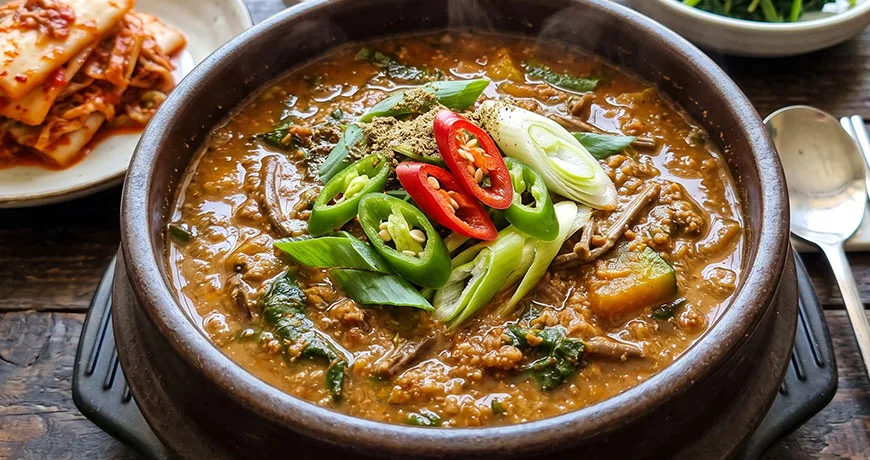
A deeply nourishing traditional Korean stamina dish made by simmering finely strained mud loaches in a rich, savory broth seasoned with soybean paste (doenjang), gochujang, tender pumpkin leaves, sweet pumpkin, and fernbrake (gosari).
⏱️ Prep: 30 mins | Cook: 60 mins | 🍳 Advanced | 🌶️ Mild-Spicy | 🐟 High Protein
Ingredients (4 servings)
- Main Ingredients: 600g fresh mud loaches (chueo), 300g pumpkin leaves, 2 sweet pumpkins (ahobak or aged pumpkin, spoon-scooped into bite-sized pieces), 1,000g (1kg) fernbrake (gosari), 2 Cheongyang chili peppers, 1 red chili pepper, 2 stalks green onion
- Aromatics: 1 thumb-sized ginger, 1 head garlic
- Broth & Seasoning: 3 tbsp soybean paste (doenjang), 2 tbsp gochujang (chili paste), 5 tbsp red pepper flakes (gochugaru), 2 tbsp soy sauce, a dash of sancho powder (Szechuan pepper powder), a pinch of black pepper, coarse salt (for purging/cleaning)
Allergy Information
- Contains: Fish (Mud loaches), Soy (Soybean paste, Gochujang, Soy sauce)
Equipment
- Deep Covered Container (for purging), Large Pot, Fine Mesh Strainer (Sieve), Spatula, Knife, Cutting Board
Cooking Instructions
- Purging & Boiling Loaches: Place live mud loaches in a deep container with a tight lid, sprinkle with coarse salt, and immediately cover tightly to let them purge slime and sand. Once quiet, scrub thoroughly with coarse salt and rinse multiple times in water. Boil the cleaned loaches in water until tender, then pass them through a fine sieve using a spatula while pouring warm broth over them to separate meat and juice from fine bones.
- Preparing Vegetables: Remove tough outer skins from pumpkin leaf stems and tear leaves into bite-sized pieces. Scoop sweet pumpkin into bite-sized chunks with a spoon. Trim tough ends off fernbrake and cut into convenient lengths.
- Prepping Aromatics: Diagonally slice green onions and chili peppers, shaking out seeds. Finely mince the garlic and ginger.
- Seasoning Broth & Simmering Veggies: In a pot, combine the loach broth and strained loach meat. Whisk in 3 tbsp soybean paste and 2 tbsp gochujang until smooth. Bring to a boil over medium-high heat, then add the prepared pumpkin leaves, pumpkin, and fernbrake, simmering gently until tender.
- Final Seasoning & Finishing: Add 5 tbsp red pepper flakes, 2 tbsp soy sauce, minced garlic, minced ginger, green onions, chili peppers, sancho powder, and black pepper. Bring to a vigorous final boil to let the flavors meld before serving warm in bowls.
💡 Cooking & Pairing Tips
- Safe & Thorough Slime Purging: Mud loaches thrash vigorously when salted, so keep the container firmly covered. Scrubbing thoroughly with coarse salt after 5–10 minutes removes the slippery surface mucin, which is essential to eliminate earthy or fishy odors.
- Technique for Straining Loaches: Pressing the boiled loaches through a mesh sieve with a spatula while continuously drizzling hot loach broth leaves fine bones behind while effortlessly extracting all the rich, savory loach meat and flavor into the broth.
- Perfect Food & Beverage Pairing: Serves as an ultimate revitalizing meal when paired with warm white rice, fresh kimchi (geotjeori), and pickled radish. To drink, enjoy with traditional Korean rice wine (makgeolli) or clear rice wine (cheongju).
Storage Instructions
- Store leftover soup in an airtight container in the refrigerator for up to 2–3 days, or freeze for longer storage. Reheat thoroughly over medium heat until bubbling hot, adding a touch of fresh sancho powder right before serving.
Nutrition Facts (Estimated)
- Total Content : Approx. 1,600g (4 servings total)
- Calories : 1,120 kcal total (approx. 70 kcal per 100g / 280 kcal per 1 serving)
– Sodium : 1,180mg (59%)
– Total Carbohydrate : 65g (20%)
– Sugar : 12g (12%)
– Total Fat : 28g (43%)
– Trans Fat : 0g
– Saturated Fat : 5g (25%)
– Cholesterol : 220mg (73%)
– Protein : 140g (255%)
– Calcium : 680mg (68%)
Editor’s Review
1. Rich Savory Depth and Sensual Vitality Sparked by Sancho
The rich, savory loach meat, boiled soft and strained through a fine sieve, meets a heavy base of fermented soybean and chili pastes, softly and viscously enveloping the tip of the tongue. Deep flavors seeped between tender pumpkin leaves and fiddlehead ferns spread an intense, wild vitality throughout the mouth. The sharp, dazzling spice of sancho pepper grazing the palate instantly awakens dormant senses, while the thick warmth sliding down the throat delivers a sensual synergy of revitalizing power.
2. Aesthetics of Density Born from Precise Purifying and Straining
Chueotang is the epitome of traditional Korean restorative dining, transforming a rugged ingredient into a gentle sanctuary. The meticulous purifying process of scrubbing away slippery slime and earthy odor with coarse salt is an essential technique securing culinary purity. The patience required to press the boiled loach through a sieve while pouring broth is a triumph of precise density control—filtering out the harsh texture of tiny bones while releasing only the pure, savory essence into the soup.
3. Warm Restoration and Solace Dedicated by the Earth
The loach, once wriggling in the mud, endures the long flames of time to finally be reborn into a bowl of deep sanctuary. For those exhausted by chilly seasons or life’s heavy weariness, this hot bowl of loach soup is not a superficial gesture, but the earth’s most genuine touch infusing energy from deep within. The moment you face the thick steam rising from the earthenware bowl, you are gifted a moment of purification—cleansing all toxicity from body and mind, refilling yourself with pure vitality.