
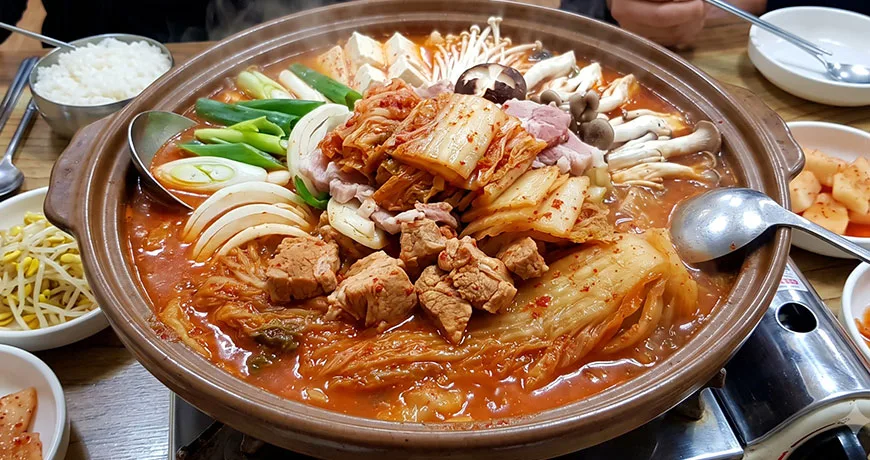
Kimchijeongol is the absolute alchemy of the dining table, where ‘fermentation’—the beating heart of Korean culinary culture—collides with the heavy, savory lipids of high-quality pork. The sharp, vibrant lactic acid of aged Mugeunji (Kimchi aged over a year in cool earthenware) yields its sharp edges when sautéed in rich, unsaturated pork fat, transforming into an elegantly round, profound umami. While a simple Kimchi stew offers everyday comfort, this meticulously layered and architecturally assembled hot pot elevates the rustic ingredients into high-end dining. From the initial Maillard reaction of searing pork in perilla oil to the final moments when the tofu and scallions expand with the savory broth, this Jeongol captivates the palate with a perfectly engineered balance of acidity and fat.
- ⏱️ Total Time: 1.5 Hours | Prep: 30 Mins (Trimming the aged Kimchi and vegetables) | Cook: 1 Hour (Perilla roasting and two-stage thermal control)
- 🍳 Difficulty: Medium (Requires chemical balancing of acidity and fat, and precise caramelization of Kimchi)
- 🌶️ Profile: A breathtaking, heavy, and spicy umami where the bright, vibrant acidity of well-aged Kimchi is gently swathed in the luxurious fats of premium pork
- 🍚 Core Process: Acidity Control, Perilla Roasting, Lipid Emulsion, Two-Stage Simmering
- 🍶 Pairing: Steaming rice from a cast-iron cauldron (Gamasot), thoroughly chilled raw rice fermented Makgeolli, charcoal-grilled short rib patties (Tteokgalbi)
Physicochemical & Sensory Matrix
- Baseline Salinity: 1.5% ~ 1.8% (A profound base built from the fermented saltiness of the Kimchi and concentrated pork umami)
- Thermal Dynamics: A fierce initial 100°C boil designed to violently emulsify the pork fat into the broth, followed by a gentle 80°C simmer to coax out the delicate sweetness of the vegetables
- Textural Crunch Index: [■■■□□] (A highly satisfying tri-fold contrast: melt-in-your-mouth aged Kimchi, chewy premium pork, and silken, broth-soaked tofu)
- Umami Density: 9.6 / 10 (An infinite umami spectrum forged from the lactic acid of the Kimchi, the inosinate of the pork, and the glutamate of the bone broth)
- Aroma Profile: Pungent Fermented Lactic Notes | Roasted Perilla & Pork Esters | Sharp Allium from Scallions & Garlic
Ingredients (Yields 1 Large Hot Pot, Serves 3-4)
- Fermentation Matrix: 500g Mugeunji (Kimchi aged for over 1 year) or well-fermented sour Kimchi
- Protein Matrix: 400g Premium Kurobuta (Black Pork) Belly or Shoulder, cut into thick, hearty chunks, 1 Block Firm Artisan Tofu
- Broth & Vegetable Matrix: 5 Cups Milky Beef Bone Broth (or intense Anchovy-Kelp stock), 2 Scallions, 1 Onion, 2 Shiitake Mushrooms, 1 Bunch Enoki Mushrooms, 2 Cheongyang Green Chilies
- Aromatic Catalyst: 2 tbsp Fine Red Chili Flakes (Gochugaru), 1 tbsp Soup Soy Sauce, 2 tbsp Minced Garlic, 2 tbsp Cheongju (Clear Rice Wine), 2 tbsp Freshly Pressed Perilla Oil (Deulgireum)
Allergy Information
- Contains: Pork, Soy, Wheat (inherent in tofu and soy sauce), Shrimp/Anchovy (inherent in the fermented Kimchi paste)
Cooking Instructions
- Preparing the Fermentation Matrix: Lightly shake off the excess seasoning paste from the aged Kimchi to prevent the final broth from becoming muddy, and chop it into large, substantial pieces. Reserve half a cup of the pure Kimchi brine. Slice the tofu into thick, robust blocks and cut the pork generously to preserve its satisfying chew.
- Perilla Roasting & Deglazing: Coat the bottom of a wide hot pot with perilla oil and sear the pork over medium heat. Once the surface achieves a deep brown Maillard crust and releases its savory rendered fat, add the Kimchi and sauté them together. As the pork fat coats the Kimchi fibers, taming its sharp acidity, pour in the Cheongju to deglaze the pan, scraping up all the caramelized umami stuck to the bottom.
- Architectural Assembly: Flatten the sautéed meat and Kimchi to form an even, solid base layer across the bottom of the pot. Radially and elegantly arrange the thick blocks of tofu, scallions, onion, shiitake, and enoki mushrooms on top. Crown the center with the minced garlic and Gochugaru.
- Boiling & Emulsion: Pour in the beef bone broth and the reserved, strained Kimchi brine. Turn the heat to high. Allow it to boil fiercely for 15 minutes, forcing the organic acids of the Kimchi and the unsaturated fats of the pork to rapidly emulsify into a rich, homogeneous broth.
- Two-Stage Simmering: Once the broth transforms into a thick, opaque, vibrant orange elixir, reduce the heat to a gentle simmer (around 80°C) for another 10 minutes. This critical second stage rounds off any sharp, acidic corners and coaxes out the clean sweetness of the vegetables. Top with sliced Cheongyang chilies and serve.
💡 Professional Culinary Tips
- 1. Chemical Neutralization of Lipid and Acid: Dropping sour Kimchi directly into a watery broth allows the sharp acidity to dominate the palate, resulting in a flat, one-dimensional flavor. Sautéing the Kimchi first is a vital buffering technique; it uses the heavy, savory pork fat to coat the lactic acid, structurally rounding out the sharpness before the broth is even introduced.
- 2. Smoke Point Control of Perilla Oil: Perilla oil has a low smoke point. If the pan is overheated, the oil oxidizes rapidly, imparting a bitter, burnt taste. By slowly searing the meat and Kimchi over a controlled medium heat, you secure the Maillard reaction while protecting the oil’s profoundly elegant, nutty aroma.
- 3. Acidity Fine-tuning via Kimchi Brine: Kimchi brine is a spectacular flavor enhancer, but using too much makes the broth overly salty and muddy. Straining exactly half a cup of the pure, vibrant liquid and adding it alongside the bone broth is a chef’s precision technique that separates a rustic home stew from a perfectly balanced, high-end Jeongol.
🍶 Gastronomic Pairing
- A Creamy Marriage to Neutralize the Heat: A fiery, profoundly heavy Kimchi hot pot demands a beverage with a delicate, fermented texture to balance the palate. Serve this dish alongside a thoroughly chilled, raw rice fermented Makgeolli (unpasteurized Korean rice wine) crafted without artificial carbonation. The creamy viscosity and gentle, natural sweetness of the rice brilliantly coat the spicy, acidic notes of the hot pot, washing the palate with pure elegance. Scooping the broth-soaked Kimchi and pork over a steaming bowl of cauldron-cooked rice offers the most visceral, awe-inspiring gastronomic experience in Korean dining.
Nutrition Facts (Estimated)
Total Content : Approx. 400g (1 Serving, including meat, tofu, Kimchi, and broth)
Calories : 480 kcal (High-density energy from premium pork and healthy plant protein from tofu)
– Sodium : 920mg (Aged salinity from the fermented Kimchi and broth, balanced perfectly when consumed with rice)
– Total Carbohydrate : 16.0g
– Sugar : 4.5g
– Total Fat : 32.0g (High-quality complex fats derived from the pork belly/shoulder and perilla oil)
– Saturated Fat : 11.0g
– Cholesterol : 75mg (Derived from the pork)
– Protein : 34.0g (An explosive delivery of premium protein from both the pork and the artisan tofu)
– Dietary Fiber : 6.5g (Abundant fiber from the aged Kimchi, enoki, and shiitake mushrooms)
*Daily Values are based on a 2,000 calorie diet and standard Korean nutritional reference values.
**Nutritional values are calculated based on original ingredients; substitutions may alter specific macronutrients.
Origins and Food Culture of Kimchi Hot Pot (Kimchijeongol)
1. Historical Lineage: “Chimchae-jeongol” in the Siuijeonso and Aristocratic Tabletop Cookery
- Preserving vegetables through salting, brining, and fermentation (chimchae 沈菜) has deep roots on the Korean peninsula, flourishing into modern red-pepper baechu kimchi by the late Joseon Dynasty. Serving kimchi as a refined hot pot emerged in late 19th-century culinary manuscripts, notably the foundational compendium Siuijeonso and Bang Sin-yeong’s landmark 1921 work Joseon Yori Jebeop.
- The Siuijeonso documented arranging thinly sliced meats, seasoned wild greens, and cured vegetables around a specialized cast-iron brazier pan (beon-geojit-gol) over live charcoal, pouring over seasoned clear broth to cook tableside. Elevating humble fermented kimchi from a side dish into the central star of a celebratory hot pot reflected the refined culinary hospitality of Joseon noble estates.
2. The Science of Matured “Mukeunji” and the Bifurcation of Stews (Jjigae) vs. Hot Pots (Jeongol)
- Kimchijeongol was historically designed to showcase Mukeunji—cabbage kimchi that has undergone slow, deep fermentation over winter to achieve optimal biochemical maturity (pH 4.0~4.2 and an acidity around 0.6~0.8%). As spring and summer approached and the kimchi developed an assertive tang, Korean kitchens divided its culinary applications into two distinct categories.
- Sautéing the chopped kimchi in sesame or lard to braise it down in a small stone bowl created Kimchi-jjigae, an everyday, robust home-cooked comfort food. In contrast, Kimchijeongol was reserved for banquets, family gatherings, and honored guests. Whole leaves of aged kimchi were arranged radially alongside leftover feast delicacies—such as stuffed dumplings (mandu), meatballs, sliced boiled meats (pyeonyuk), and fresh tofu—and simmered in clear broth without frying, creating an elegant dish where rich meat sweetness softened the intense fermented acidity.
3. Evolution into a Communal Tabletop Experience: Dumplings, Noodles, and Fried Rice
- During the rapid urbanization of the 1970s and 1980s, Kimchijeongol flourished across Korean city restaurants, frequently evolving into specialized regional iterations such as Pyongyang-style Kimchi-mandu-jeongol (combining massive northern meat dumplings with aged kimchi broth).
- The modern dish codified an interactive three-stage dining ritual: diners first enjoy the stewed dumplings, tender pork, and kimchi; halfway through, fresh wheat noodles (kalguksu), ramen, or glass noodles are added to absorb the savory reduction; finally, steamed rice is stir-fried with perilla oil, chopped greens, and roasted seaweed in the remaining glaze. Cross-pollinating with post-war stews like Budaejjigae while retaining its distinct heritage, Kimchijeongol stands as an enduring emblem of Korean communal hospitality, uniting family and friends around the living warmth of a simmering pot.
The Chilled, Lactic Depths of Subterranean Mukeunji Fermenting Through Biting Winters, Layering Crimson Cabbage Leaves over Marbled Pork, Bean Curd, and Forest Fungi to Spark a Convective Blaze: A Refined Portrait of Traditional Kimchijeongol
Kimchijeongol (Aged Kimchi and Assorted Delicacies Hot Pot) stands as an intimate, intellectually sophisticated summit within Korea’s communal hot pot gastronomy. Centered on well-aged kimchi (mukeunji)—slow-fermented in sub-zero earthenware jars for up to a year until its tissues soften into a translucent, lactic-sour treasure—this banquet dish arranges the rinsed, sliced cabbage leaves into a vibrant geometric mosaic. Ringed by marbled pork belly, creamy squares of firm soybean curd (dubu), fresh shiitake, enoki clusters, scallions, sweet onions, and crown daisy, the assembly is bathed tableside in a light anchovy-kelp or clarified bone bouillon. Unlike the everyday rusticity of Kimchijjigae, which relies on intense boiling in a rugged earthen pot to deliver immediate comfort, Kimchijeongol demands structural discipline, gentle thermal regulation, and a multi-layered harmony of ingredients. The long-aged kimchi functions as an active culinary catalyst: as convective heat circulates through the shallow brass pan, the vegetable surrenders crisp lactic and succinic acids to the broth. These acids soften rich pork lipids, while the porous lattices of tofu and mushrooms drink in the crimson bouillon, uniting disparate food groups under the noble banner of aged fermentation.
Lifting the lid from the simmering vessel tableside releases a billowing column of fragrant steam that envelops the room in mouth-watering warmth. The sharp, appetizing tang of aged lactic acid is underpinned by the sweet, malty fat profile of simmering pork, the pungent warmth of softened alliums, and the earthy perfume of forest mushrooms. Layering a translucent ribbon of stewed kimchi over a slice of pork and warm tofu, then lifting the morsel with chopsticks, reveals an exquisite textural balance: the cabbage yields with a tender, supple chew rather than turning to mush, discharging savory, sour brine across the palate. The velvety richness of the pork and the custardy softness of the tofu immediately cushion the acidic edge of the kimchi, creating a harmonious emulsion of fat and acid. Taking a deep spoonful of the bubbling crimson broth delivers a profound sensation of clarifying refreshment (siwonhan-mat): the brisk prick of fermented organic acids melds seamlessly with marine kelp umami and pork peptides, clearing the senses and leaving an enduring wave of warmth through the body.
The cultural identity of Kimchijeongol lies in the communal ingenuity that elevated Korea’s quintessential winter survival preserve into a celebratory, tableside centerpiece. By tempering rich animal fats with the bracing clarity of aged lacto-fermentation, this communal pot remains an unblemished monument to cellular preservation, organic acid buffering, and the generous hospitality of the Korean hearth.
Editor’s Review
1. Hemicellulose Degradation, Acid-Catalyzed Pectin Softening, and Cellular Tensile Rheology
The distinct, yielding bite of kimchi in Kimchijeongol is governed by microbial enzyme action paired with thermal acid hydrolysis:
- Controlled Middle-Lamella Softening: During prolonged cellar aging, endogenous microbial polygalacturonases and low environmental pH (3.8–4.2) gently solubilize structural pectins within the middle lamella. While the initial crisp turgor of raw brassica tissue is lost, the insoluble cellulose microfibrils and hemicellulose network remain largely intact. Consequently, the leaves avoid collapsing into a disorganized puree during simmering, retaining a tender, elastic tensile resistance that yields cleanly under dental shear.
- Osmotic Sponging and Hydraulic Release: Dehydrated parenchymal cells rehydrate within the boiling broth, drawing in meat extracts and surface lipids. Chewing compresses these micro-cavities, triggering a sudden, succulent fluid burst (hydraulic release) that floods the lingual papillae with concentrated seasoning.
2. Acid-Mediated Porcine Lipid Emulsification and Multi-Modal Umami Potentiation (IMP-Glutamate-Succinate)
The velvety body and non-greasy clarity of the broth stem from surface-tension reduction and multi-ligand taste receptor activation:
- Organic Acid Emulsification of Saturated Fats: Rendered pork lard (rich in palmitic, stearic, and oleic acids) typically coalesces into an unctuous, hydrophobic oil slick. High concentrations of free lactic and acetic acids leached from the aged kimchi lower the interfacial surface tension of the aqueous phase. This breaks molten fats into stable micro-droplets dispersed evenly throughout the broth, imparting a rich, cream-like mouthfeel without cloying greasy residues.
- Tri-Partite Umami Network: Free 5′-inosine monophosphate (5′-IMP) extracted from pork muscle combines with free L-glutamate from slow-fermented cabbage and dried kelp, reinforced by succinic acid from marine seasonings. This tri-partite synergy induces allosteric conformational shifts in lingual T1R1/T1R3 umami receptors, magnifying perceived savor far beyond solitary seasoning additions.
3. Open-Vessel Azeotropic Deodorization and Trigeminal Salivary Mechanics
The pristine aromatic clarity and digestive comfort of Kimchijeongol are driven by thermodynamic mass transfer and neuro-sensory stimulation:
- Convective Volatilization of Off-Odors: Prolonged kimchi aging accumulates volatile sulfur compounds (such as dimethyl sulfide and methyl mercaptan) alongside stale carbonyls. Boiling in an open, shallow vessel maximizes the surface-to-volume ratio, facilitating the azeotropic co-evaporation of these sharp off-odors with escaping water vapor, leaving only clean, appetizing aromatics behind.
- Dual Trigeminal-OTOP1 Activation: Capsaicin from sun-dried red chili peppers stimulates TRPV1 heat receptors, while lactic acid activates OTOP1 proton channels. This synergistic nerve stimulation induces copious salivary and gastric juice flow, buffering tongue sensitivity against heavy lipids while accelerating postprandial gastrointestinal transit.