
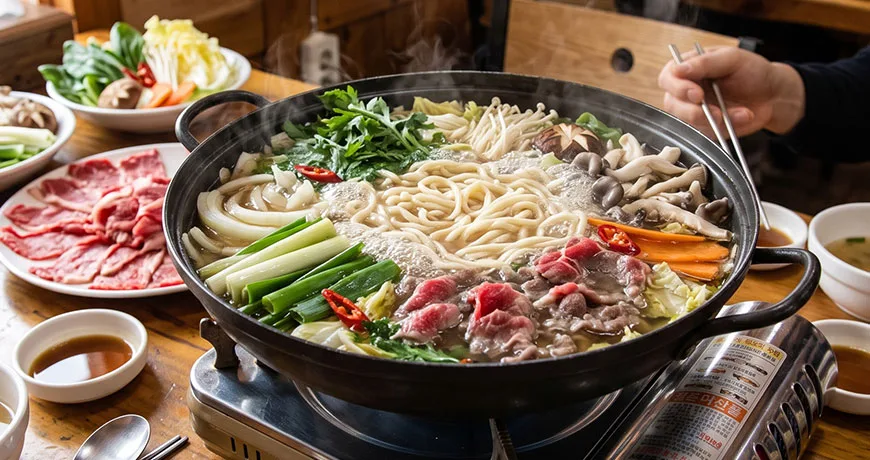
Guksujeongol is a mesmerizing culinary theater that demonstrates how a pristine, clear broth transforms into a heavy, seductive, and velvety elixir through the interplay of ingredients and time. While premium beef and vibrant vegetables build the initial framework of savory umami, the dish enters an entirely new dimension the moment fresh noodles are dropped into the pot. The starch released from the noodles meets the rolling boil, triggering a beautiful gelatinization process that coats the clear broth in a rich, viscous, velvet-like layer. Marrying the robust aroma of beef, the sweetness of vegetables, and the dense, comforting texture of complex carbohydrates, this hot pot finishes with a legendary finale: a creamy, savory porridge simmered right in the remaining starchy broth.
- ⏱️ Total Time: 40 Mins | Prep: 20 Mins (Trimming vegetables and preparing the broth) | Cook: 20 Mins (Table-side boiling and starch gelatinization)
- 🍳 Difficulty: Medium (Requires precise control over the noodle starch and boiling temperatures)
- 🌶️ Profile: A captivating gradient of umami that begins as a clean beef consommé and ends as a rich, creamy, and starchy powerhouse
- 🍚 Core Process: Broth Foundation, Vegetable & Meat Extraction, Starch Gelatinization, Egg Emulsion
- 🍶 Pairing: Crisp, unspicy white kimchi (Baek-kimchi), chilled traditional Cheongju (rice wine), thinly sliced raw beef tartare (Yukhoe)
Physicochemical & Sensory Matrix
- Baseline Salinity: 1.2% ~ 1.4% (A restrained initial salinity, strategically calculated to balance as the noodles absorb the broth and the liquid reduces)
- Thermal Dynamics: A fierce, roaring 100°C boil is maintained when introducing noodles to ensure the starch disperses elegantly without clumping
- Textural Crunch Index: [■■□□□] (A luxurious, slurping smoothness from the noodles paired with the cotton-candy tenderness of thinly sliced beef)
- Umami Density: 9.2 / 10 (The ultimate equilibrium where beef inosinate and mushroom guanylate fuse with the inherent sweetness of carbohydrates)
- Aroma Profile: Clear Beef Consommé | Herbaceous Crown Daisy | Toasted Sesame Esters from the final porridge
Ingredients (Yields 1 Large Hot Pot, Serves 3-4)
- Foundation Broth Matrix: 6 Cups Clear Beef Brisket Broth (or a Kelp-Bonito hybrid broth), 2 tbsp Soup Soy Sauce, 1 tbsp Tsuyu, 1 tbsp Minced Garlic
- Meat & Veggie Matrix: 300g Thinly Sliced Beef (Ribeye or Brisket), 4 Napa Cabbage Leaves, 1 Scallion, 2 Shiitake Mushrooms, 1 Bunch Enoki Mushrooms, Handful of Crown Daisy (Ssukgat)
- Carbohydrate Matrix: 400g Fresh Kalguksu Noodles (Knife-cut wheat noodles)
- Finale Catalyst (Porridge Ingredients): 1 Bowl Cooked Rice, 1 Egg, 1 tbsp Toasted Sesame Oil, Crushed Seaweed, Finely Minced Carrot and Scallion
Allergy Information
- Contains: Beef, Soy, Wheat, Egg (inherent in noodles, soy sauce, and Tsuyu)
Cooking Instructions
- Broth Foundation: Pour the clear beef broth into the hot pot and establish the base seasoning with soup soy sauce, Tsuyu, and minced garlic. The broth will reduce and be absorbed by the noodles, so it must start off slightly under-seasoned.
- Extraction: Artfully arrange the cabbage, scallions, and mushrooms in the pot and turn on the heat. As the sweet, clear flavors of the vegetables infuse the liquid, add the thinly sliced beef. The fats and proteins render into the broth, constructing the primary scaffolding of umami.
- Noodle Preparation & Drop: Gently dust off the excess surface flour from the fresh noodles, or rinse them fleetingly under lukewarm water. Only when the broth is at a violent, rolling boil, drop the noodles in. Use chopsticks to gently separate them, preventing any clumping.
- Starch Gelatinization: As the noodles cook, their core starch leaches into the boiling liquid. Watch the magic unfold as the watery broth slowly transforms into a thick, glossy, and velvety soup. Once the noodles turn translucent and bouncy, reduce the heat and serve immediately with the meat and vegetables.
- The Porridge Finale: Once the noodles are finished, add the cooked rice and minced vegetables to the remaining thick, starchy broth. Simmer until the liquid reduces. Crack the egg into the pot and stir rapidly to emulsify the egg into the liquid. Finish with a drizzle of sesame oil and crushed seaweed, completing the meal with the softest, most comforting savory porridge.
💡 Professional Culinary Tips
- 1. Controlling Broth Viscosity: Tossing fresh noodles directly into the pot without removing the excess dusting flour is a rookie mistake; the surface flour will instantaneously turn the broth into a cloudy, gluey paste. By dusting them off or rinsing them rapidly before the drop, you ensure that only the structural starch from the inside of the noodle thickens the soup, resulting in an elegantly glossy and velvety mouthfeel.
- 2. Thermal Dynamics of Starch: The broth must be at a roaring 100°C when the noodles are introduced. If dropped into simmering or lukewarm broth, the surface starches fail to gelatinize instantly, causing the noodles to bloat, become mushy, and ruin the textural integrity of the dish.
- 3. Egg Emulsion for the Finale: When adding the egg to the final porridge, you must lower the heat. If the broth is boiling too aggressively, the egg will scramble and separate into hard curds. Rapidly stirring the egg into a gentle simmer allows the lecithin in the yolk to perfectly emulsify with the residual starches, creating an impossibly creamy texture akin to a high-end risotto.
🍶 Gastronomic Pairing
- A Clear Acidity to Support the Richness: The broth of Guksujeongol, dense with rendered beef fat and suspended starches, can feel quite heavy on the palate. A chilled glass of traditional Cheongju (rice wine) is the perfect counterpoint; its subtle rice sweetness and impeccably clean finish reset the palate without disrupting the deep umami of the hot pot. For a side dish, skip the heavily spiced red kimchi and opt for crisp, refreshing Baek-kimchi (white kimchi). Its bright, clear acidity slices through the richness, creating a flawless culinary marriage.
Nutrition Facts (Estimated)
Total Content : Approx. 400g (1 Serving, including beef, vegetables, noodles, and finale porridge)
Calories : 580 kcal (High protein from beef and complex carbohydrates from noodles and rice)
– Sodium : 850mg (Cumulative salinity assumed when consuming the final reduced porridge)
– Total Carbohydrate : 78.0g (Primary energy source derived from the fresh noodles and rice)
– Sugar : 4.0g
– Total Fat : 14.0g (Unsaturated and saturated fats from the beef and sesame oil)
– Saturated Fat : 5.0g
– Cholesterol : 110mg (Derived from the beef and the egg in the finale)
– Protein : 32.0g (High-quality proteins delivered via beef and egg)
– Dietary Fiber : 5.5g (Abundant fiber from cabbage, mushrooms, and crown daisy)
*Daily Values are based on a 2,000 calorie diet and standard Korean nutritional reference values.
**Nutritional values are calculated based on original ingredients; substitutions may alter specific macronutrients.
Origins and Food Culture of Noodle Hot Pot (Guksujeongol)
1. Historical Lineage: “Jemul-guksu” in Classical Joseon Compendiums
- Historically on the Korean peninsula, wheat flour (jinmal 眞末) was difficult to harvest in large quantities compared to rice or barley, rendering it a luxury ingredient reserved strictly for royal banquets and aristocratic lineage ancestral rites.
- Lady Jang’s c. 1670 aristocratic cookbook Eumsik Dimibang and Yu Jung-im’s 18th-century Jeungbo Sallim Gyeongje (1766) documented not only rinsed cold noodles (geonjin-guksu) but also Jemul-guksu—simmering raw, hand-cut noodles directly inside rich pheasants, chicken, or beef broths. This method, where noodle starches naturally thicken the soup, served as the culinary forerunner of modern Guksujeongol.
2. The Jeongol (전골) Tradition and Interactive Tabletop Cookery
- Lady Yi’s Gyuhap Chongseo (1809) and the late 19th-century Siuijeonso documented Jeongol as an interactive communal dining format in which seasoned meat slices and wild vegetables were arranged in a wide cast-iron brazier pan (beon-geojit-gol) and cooked tableside over live charcoal.
- Merging the tableside intimacy of classical Jeongol with the comforting technique of Jemul-guksu gave rise to an interactive shared meal where broth, vegetables, meats, and noodles harmonize into an evolving, concentrated reduction, embodying the warmth of traditional communal dining (dureban).
3. The 1980s–1990s Upscale Restaurant Evolution and Tableside Service
- Guksujeongol attained its status as an iconic modern Korean specialty through the rapid expansion of upscale Seoul restaurants (notably Han-il-kwan, Hanwoori, and other prominent establishments across Gangnam and downtown) during the late 1980s and 1990s. As dining out modernized, restaurants differentiated premium beef noodle hot pots from everyday market-stall kalguksu.
- Dedicated servers managed the brass or stainless steel pots tableside—monitoring the heat, boiling the fresh noodles and prime Hanwoo beef, adjusting garlic, pepper, and chili levels to individual preference, and portioning the hot soup into individual porcelain bowls.
- The established dining progression—finishing the rich remaining broth with a savory porridge (juk) enriched with beaten eggs and sesame oil—elevated Guksujeongol into an essential format for business entertaining, family celebrations, and elegant hospitality. Moving from noble banqueting roots into an icon of urban dining refinement, Noodle Hot Pot remains an enduring celebration of Korean slow-food warmth and hospitality.
Thin Ribbons of Marbled Hanwoo Beef and Dewy Garden Greens Swirling in Golden Consommé, Showered with Fresh Raw Wheat Noodles to Transform the Broth into a Silken, Starch-Enriched Gravy: A Refined Portrait of Traditional Guksujeongol
Guksujeongol (Beef and Fresh Noodle Hot Pot) stands as an intimate, intellectually sophisticated summit within Korea’s communal hot pot gastronomy. Centered on a clarified, golden stock slow-simmered from beef brisket, marrow bones, radishes, and dried kelp, this banquet dish begins by poaching gossamer ribbons of beef sirloin alongside Napa cabbage, scallions, oyster mushrooms, and sweet zucchini in a wide, shallow vessel directly tableside. Unlike ordinary noodle soups where wheat ribbons are boiled separately and rinsed in cold water to strip away excess surface flour, Guksujeongol orchestrates a dramatic tableside transformation: raw, unboiled knife-cut wheat noodles (saeng-myeon) are plunged directly into the boiling beef liquor along with freshly pounded garlic, crushed red pepper flakes, and cracked black pepper. As the raw starch particles on the noodle skins absorb the boiling broth, they rupture and disperse, turning the once-clear consommé into a velvety, glossy, hydrocolloid sauce. The tender proteins of the beef, the natural sugars of the collapsed greens, and the starch-thickened gravy unite under vigorous convective heat, coating every strand in deep savory richness.
Lifting the burnished lid from the simmering vessel tableside unleashes a billowing cloud of fragrant steam that envelops the room in immediate comfort. The sweet, roasted depth of simmered bovine fats is pierced by the pungent, eye-opening warmth of crushed garlic and the smoky lift of sun-dried red chilies, underpinned by the earthy perfume of forest mushrooms and dewy cabbage. Ladling a generous nest of noodles, beef, and wilted vegetables into a porcelain bowl and lifting the strands with chopsticks reveals their remarkable transformation: cloaked in a clinging, amber gravy, the thick wheat ribbons rise with weighty elasticity. Drawing the noodles into the mouth delivers an exhilarating contrast: the outer surface glides across the lips like melted silk, while the inner core pushes back against the teeth with the authoritative, springy resistance of a well-developed gluten network. Taking a deep spoonful of the thickened broth coats the lingual mucosa in a comforting, velvety blanket, where the savory depth of beef peptides melds seamlessly with the mellowed heat of garlic. Finishing with a comforting porridge (juk) prepared by folding steamed rice, beaten eggs, chopped dropwort, and toasted seaweed into the remaining reduction brings the meal to an utterly satisfying close.
The cultural identity of Guksujeongol lies in the culinary intelligence that bridged communal hot pot dining and noodle craft through deliberate starch physics. By guiding the meal from a crystal-clear broth to an unctuous, satin-smooth emulsion, this communal pot remains an enduring emblem of urban Korean comfort, warming the spirit and drawing people together around a shared center of warmth.
Editor’s Review
1. In-Situ Starch Gelatinization, Amylose Leaching, and Sol-Gel Rheological Transition
Guksujeongol achieves its characteristic velvety body and tender noodle bite through dynamic phase transitions during open simmering:
- Amylose Exudation and Viscous Dissolution: When raw, flour-dusted wheat noodles are submerged directly into boiling broth (above 65–75°C), the starch granules within the exterior layers absorb water and swell irreversibly. The mechanical shear of boiling causes the granules to fragment, liberating linear amylose polymers into the aqueous medium. This leached polysaccharide network transforms the thin beef broth from a free-flowing sol into a high-viscosity hydrocolloid suspension.
- Thermal Cross-Linking of the Gluten Scaffold: Concurrently, the wheat proteins gliadin and glutenin undergo thermal denaturation, reinforcing their three-dimensional disulfide bond (-S-S-) lattice. This structural network traps the expanding interior starch granules, preventing the noodle core from disintegrating into mush and securing an elastic, chewy bite (jjolgit-jjolgit) against dental shear.
2. Rapid Myofibrillar Coagulation and Tri-Partite Umami Hyper-Synergy
The profound savor of Guksujeongol stems from minimal thermal denaturation of bovine muscle paired with multi-ligand receptor activation:
- Controlled Actomyosin Heat Exposure: Thinly shaved beef slices reach internal thermal equilibrium (65–70°C) within seconds. Searing the meat just past the threshold of myosin denaturation retains intracellular juices within the muscle fibers before actin shrinks severely, avoiding tough dryness and ensuring a tender, melt-away chew.
- Three-Way Receptor Potentiation (IMP-Glutamate-GMP): Free 5′-inosine monophosphate (5′-IMP) extracted from the beef muscle pairs with free L-glutamate from Napa cabbage, scallions, and kelp, alongside 5′-guanosine monophosphate (5′-GMP) released from shiitake and oyster mushrooms. This three-way molecular synergy alters the conformational state of oral T1R1/T1R3 umami receptors, multiplying perceived savor far beyond the mathematical sum of individual flavor compounds.
3. Hydrocolloid Thermal Inertia and Starch-Lipid Emulsion Stabilization
The dish maintains high thermal retention and a rounded finish due to the physical chemistry of its gelatinized broth:
- Suppression of Convective Cooling: The viscous matrix of dissolved amylose and amylopectin restricts internal fluid convection and slows thermal conduction. This high thermal inertia prevents the broth from cooling rapidly once the heat source is lowered, ensuring that the stew remains hot throughout dining.
- Micellar Entrapment and Trigeminal Buffering: Rendered bovine fats are physically emulsified by the sheared starch polymers, preventing the formation of an unctuous, floating oil slick. Concurrently, pungent allium volatiles (diallyl disulfides) from crushed garlic and capsaicin from red pepper flakes are partially trapped within the hydrophobic helical cavities of amylose chains, rounding off sharp sensory burns into a mellow, savory warmth.