
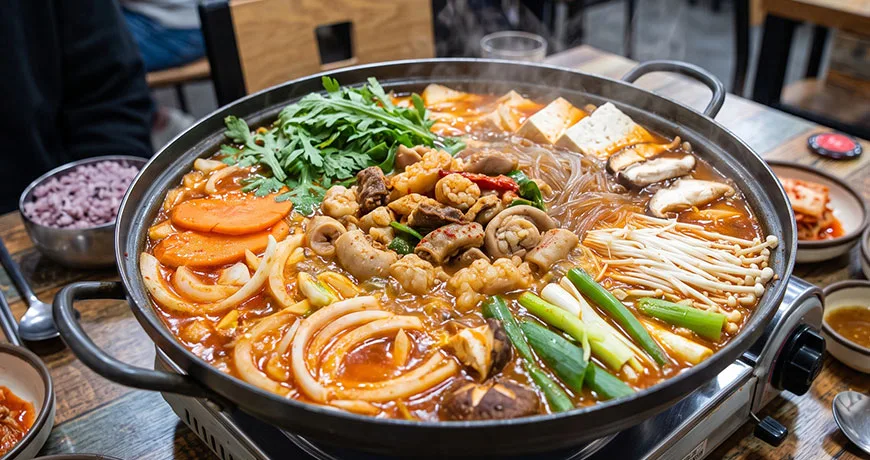
Gopchangjeongol is the most visceral, seductive masterpiece of Korean dining—a roaring, fiery hot pot where the deep, heavy energy of beef intestines collides with a spicy, volcanic broth. The tripe (Gopchang), meticulously scrubbed with flour and salt, safeguards the highly prized ‘gop’ (a rich, savory fat and digestive matrix) hidden within its smooth casing. As the hot pot reaches a vigorous boil, this lush fat slowly renders into the broth, transforming it from a clear soup into a magnificent, creamy, and profoundly heavy elixir. Enveloped by the nutty aroma of perilla seed powder and the intense herbal notes of perilla leaves, the untamed, earthy flavors of the offal are elegantly tamed, resulting in a mind-blowing explosion of umami.
- ⏱️ Total Time: 2.5 Hours | Prep: 1 Hour (Rigorous cleansing and parboiling offal) | Cook: 40 Mins (Architectural assembly and broth emulsion)
- 🍳 Difficulty: Extreme (Demands flawless odor neutralization and precise techniques to prevent the ‘gop’ from escaping)
- 🌶️ Profile: A breathtakingly rich, spicy, and creamy umami driven by melting beef fat within a fiery broth
- 🍚 Core Process: Rigorous Cleansing, Aromatic Parboiling, Spicy Matrix Assembly, Fat Emulsion via Boiling
- 🍶 Pairing: An ice-cold ‘Somaek’ (a crisp blend of Soju and Terra beer), chewy Udon noodles, crispy fried rice finished with sesame oil
Physicochemical & Sensory Matrix
- Baseline Salinity: 1.6% ~ 1.8% (A robust salinity engineered to cut through the heavy lipids and balance the vegetables’ moisture)
- Thermal Dynamics: A continuous, roaring 100°C boil necessary to seamlessly emulsify the rich intestinal fats directly into the broth
- Textural Crunch Index: [■■■■□] (A highly rhythmic contrast between the chewy, resilient tripe and the silky, yielding vegetables)
- Umami Density: 9.9 / 10 (An overwhelming, heavy umami born from concentrated beef fatty acids, bone broth, and fermented soybean paste)
- Aroma Profile: Deep Roasted Beef Fat | Earthy Perilla Seeds & Herbs | Savory Fermented Doenjang
Ingredients (Yields 1 Large Hot Pot, Serves 3-4)
- Heavy Earth Matrix: 400g Fresh Beef Small Intestines (Gopchang), 200g Beef Tripe / Rumen (Yang)
- Broth & Vegetable Matrix: 4 Cups Milky Beef Bone Broth (Sagol-yuksu), 1/2 Onion, 2 Scallions, 3 Napa Cabbage Leaves, 10 Perilla Leaves (Kkaennip), 1 Bunch Enoki Mushrooms, 2 Shiitake Mushrooms
- Spicy Yangnyeom Catalyst: 4 tbsp Fine Red Chili Flakes (Gochugaru), 1 tbsp Gochujang (Red Chili Paste), 1 tbsp Traditional Doenjang (Soybean Paste), 2 tbsp Soup Soy Sauce, 3 tbsp Minced Garlic, 1 tsp Ginger Juice, 0.5 tsp Black Pepper
- Aromatic Garnish: 3 tbsp Hulled Perilla Seed Powder (Deulkkae-garu), 2 Cheongyang Green Chilies, Handful of Water Dropwort (Minari), 1 Portion Frozen Udon Noodles
Allergy Information
- Contains: Beef (Offal), Soy, Wheat (inherent in Doenjang, Gochujang, Soy Sauce, and Udon noodles)
Equipment Heavy Cast Iron Hot Pot (or wide Jeongol-nabe), Large Mixing Bowl, Kitchen Shears, Cutting Board, Portable Tabletop Stove
Cooking Instructions
- Rigorous Cleansing: Place the intestines and tripe into a large bowl. Generously pour in all-purpose flour and coarse sea salt. Vigorously massage and scrub the offal with your hands; the flour binds to the slimy impurities and neutralizes foul odors. Rinse thoroughly under cold running water. (Keep the intestines whole and tie the ends with a string if possible to prevent the precious ‘gop’ from washing away).
- Aromatic Parboiling: In a large pot of boiling water, add a spoonful of Doenjang, scallion roots, whole garlic cloves, and a splash of Soju. Submerge the cleansed offal and boil rapidly for 40 minutes. This essential parboil tenderizes the resilient muscles and drives off any remaining gaminess. Remove, let cool slightly, and—only once the inner fat has coagulated—carefully snip the intestines into bite-sized pieces with shears.
- Maturing the Spice Matrix: Whisk together the Gochugaru, Gochujang, Doenjang, soup soy sauce, minced garlic, ginger juice, and black pepper. The ginger and fermented Doenjang serve as a chef’s ultimate shield, gracefully masking any residual offal odors.
- Architectural Assembly: Layer the bottom of the heavy cast-iron hot pot with an abundance of cabbage, onions, and mushrooms. Pile the parboiled Gopchang and tripe magnificently in the center. Top the meat with the matured spicy paste and gently pour in the milky beef bone broth until just submerged.
- Boiling & Emulsion: Ignite the stove and bring the hot pot to a vigorous, rolling boil. As the broth roars, the luscious, rich ‘gop’ (fat) hidden inside the intestines melts seamlessly into the liquid, transforming it into a thick, creamy elixir. Finish by scattering the perilla leaves, minari, green chilies, and a generous mound of perilla seed powder. Plunge the chewy Udon noodles into the boiling broth to absorb the decadent flavors.
💡 Professional Culinary Tips
- 1. Securing the ‘Gop’: The absolute soul of this dish lies in the ‘gop’—the savory, fatty digestive matrix packed inside the small intestines. Slicing raw intestines before cleaning or boiling guarantees the loss of this precious fat. You must clean and boil them entirely whole. Only after 40 minutes of boiling, when the fat has firmly coagulated, should you snip them with scissors. This ensures every drop of richness is preserved for the broth.
- 2. The Doenjang & Perilla Shield: Even the freshest offal carries a distinct, untamed gaminess. Integrating Doenjang into both the parboiling water and the spicy paste utilizes fermented amino acids to neutralize odors on a molecular level. Furthermore, finishing the dish with earthy perilla seed powder entirely overwrites any remaining off-notes, replacing them with an intoxicating, nutty aroma.
- 3. The Aesthetics of Udon: As the hot pot reduces, the extracted beef fat thickens the broth into a glorious glaze. Rather than thin glass noodles, introduce thick, chewy Udon noodles. Their expansive surface area acts like a sponge, aggressively soaking up the fiery, lipid-rich umami and elevating a simple carbohydrate into a luxurious centerpiece.
🍶 Gastronomic Pairing
- A Crisp Strike to Quench the Richness: Before this deeply rich and spicy hot pot, a meticulously chilled ‘Somaek’—a golden-ratio blend of Soju and the crisp, effervescent bite of Terra beer—serves as the ultimate culinary savior. When the heavy, creamy beef fat thickly coats your tongue, the thrilling carbonation and sharp alcoholic strike of the Somaek instantly wash the palate clean, refreshing your senses for a flawless continuation of the feast. Conclude the meal by adding a drizzle of sesame oil and crushed seaweed to the remaining thickened broth, frying it directly in the pot until the rice forms a glorious, crispy crust (Bokkeumbap).
Nutrition Facts (Estimated)
Total Content : Approx. 350g (1 Serving, including offal, broth, and noodles)
Calories : 650 kcal (High-energy lipids from the offal and bone broth)
– Sodium : 980mg (A robust salinity required for the heavy, spicy matrix)
– Total Carbohydrate : 28.0g (Includes the carbohydrate load from the Udon noodles)
– Sugar : 4.5g
– Total Fat : 45.0g (Rich, luxurious saturated fats derived from the ‘gop’ and beef tripe)
– Saturated Fat : 18.0g
– Cholesterol : 280mg (High cholesterol inherent in bovine organ meats)
– Protein : 32.0g (Dense proteins from the tripe and beef bone broth)
– Dietary Fiber : 6.0g (Abundant fiber from perilla leaves, minari, and mushrooms)
*Daily Values are based on a 2,000 calorie diet and standard Korean nutritional reference values.
**Nutritional values are calculated based on original ingredients; substitutions may alter specific macronutrients.
Origins and Food Culture of Beef Tripe Hot Pot (Gopchangjeongol)
1. Historical Lineage: Bovine Offal Cookery in Classical Joseon Treatises
- Consuming beef viscera has ancient roots on the Korean peninsula, representing an agrarian ethos of utilizing every edible portion of cattle (il-woo-do-ji / consuming the whole beast).
- The 18th-century agrarian manual Jeungbo Sallim Gyeongje (1766) and the late 19th-century culinary compendium Siuijeonso documented sophisticated recipes for bovine intestines and stomach, including Yang-bokkeum (braised tripe), Soegol-tang (marrow-and-brain soup), and Ujang-tang (beef intestine stew). Cleaning the viscera thoroughly and simmering it with radishes, scallions, and fermented pastes transformed humble offal into restorative fare, historically valued for nourishing the blood and fortifying convalescents.
2. Slaughterhouse Environs, “Gopchang Alleys,” and Working-Class Sustenance
- Gopchangjeongol assumed its modern identity alongside the rapid urbanization of the mid-20th century, closely tied to commercial slaughterhouses and central cattle markets. Neighborhoods like Majang-dong and Wangsimni in Seoul, as well as the Anjirang district in Daegu, developed bustling “Gopchang Alleys” that received fresh, inspected offal daily.
- While grilled intestines (gopchang-gui) were popular, simmering the cuts with broth and seasonal vegetables in wide pans allowed larger groups of urban laborers to share a hearty meal at an affordable price. The slow-simmering hot pot kept food warm over long evenings, making it an enduring social centerpiece for working-class gatherings accompanied by chilled soju.
3. The Communal “Hot Pot to Fried Rice” Dining Course and Modernization
- Gopchangjeongol exemplifies the communal, multi-stage structure of modern Korean dining. The ritual begins by enjoying the tender tripe and greens as an accompaniment to drinks; as the broth reduces and concentrates, thick noodles (udon, ramen, or glass noodles) are introduced to absorb the savory sauce. Finally, the remaining rich broth is stir-fried with steamed rice, minced kimchi, water parsley, and roasted seaweed flakes, completing a seamless three-stage culinary progression.
- Evolving from rustic tavern origins, modern Gopchangjeongol has modernized through refined cleaning methods, pristine bone-stock bases, and specialized dining franchises, standing today as a beloved staple of Korean culinary culture.
The Supple Muscular Ring of Bovine Small Intestines Guarding a Hidden Treasure of Creamy, Molten ‘Gop’, Bursting into a Fiery Cauldron of Boiling Chili Broth Thickened with Roasted Perilla Seeds: A Refined Portrait of Traditional Gopchangjeongol
Gopchangjeongol (Spicy Beef Small Intestine Hot Pot) stands as an unctuous, passionately comforting summit within Korea’s heritage of offal gastronomy. Centered on fresh beef small intestines (gopchang) meticulously massaged with coarse salt and flour to cleanse the mucosal lining, parboiled with fermented soybean paste, fresh ginger, and rice wine to soften the muscular matrix, and cut into bite-sized rings, this dish is simmered tableside in a wide vessel with Napa cabbage, radish, mushrooms, scallions, crown daisy, and wild perilla leaves in a rich beef brisket broth seasoned with red chili powder, gochujang, garlic, and freshly ground perilla seeds. Unlike structural muscle cuts framed by rigid fibers, beef intestines are built from a supple tubular tunic of smooth muscle enclosing a prized interior filling known as gop—a naturally occurring, nutrient-dense emulsion of digestive fluids, epithelial cells, and peptide-rich lipids. If mishandled or over-scrubbed, this delicate filling washes away; if under-cleaned, stubborn barnyard musk ruins the dish. Ancestral culinary wisdom solved this dilemma through an exacting two-stage protocol: trimming external tallow while preserving the interior paste, followed by an aromatic parboil to relax collagenous bonds. Plunged into a bubbling crimson broth, the simmering heat slowly coaxes molten lipids from within the casings into the soup, creating a rich, velvety stew that commands total devotion at the table.
Lifting the lid from the boiling pot tableside releases an intoxicating cloud of aromatic steam that blankets the room. The sweet, roasted aroma of rendered bovine tallow is pierced by the sharp, herbal brightness of perilla leaves and the earthy, toasted nuttiness of crushed perilla seeds, intertwined with the fiery punch of simmered garlic and dried chili. Guiding a plump, broth-drenched ring of intestine to the mouth with chopsticks provides an immediate textural reward: the circular smooth muscle delivers an engaging, springy resistance that pushes back gently against the teeth before yielding. Biting down firmly breaches the casing, releasing an eruption of scalding, custard-like gop across the tongue. The rich, butter-like savor of the interior dissolves into the mouth, instantly followed by a deep spoonful of crimson broth that balances the unctuous fat with the sharp kick of capsaicin and the nutty body of perilla. Plucking chewy strands of thick udon noodles steeped in the savory gravy, followed by crusty spoonfuls of rice fried directly on the scorched pan with wild dropwort and toasted seaweed, brings a profound physical warmth that dissolves the fatigue of daily labor in an exhilarating wave of comfort.
The cultural identity of Gopchangjeongol lies in the resilience of Korea’s working-class foodways, which transformed vulnerable, perishable offal into a banquet centerpiece through botanical buffering and emulsion physics. By balancing decadent animal fats with fiery fermentation and herbal aromatics, this communal bubbling cauldron remains an unblemished monument to domestic resourcefulness, cellular preservation, and the soulful warmth of the Korean hearth.
Editor’s Review
1. Smooth Muscle Connective Tissue Kinetics, Collagen Gelatinization, and Annular Shear Resilience
Gopchangjeongol showcases a specialized masticatory profile governed by the thermal phase transitions of visceral connective tissues:
- Thermal Hydrolysis of Visceral Collagen: The bovine intestinal wall is built from smooth muscle layers (inner circular and outer longitudinal) bound by a dense submucosal lattice rich in Type-I and Type-III collagen. An initial pre-simmering phase maintained at 85–90°C destabilizes inter-chain hydrogen bonds, converting tough, insoluble collagen into water-soluble gelatin. This neutralizes rubbery toughness into a pliable, tender chew while retaining structural coherence.
- Elastin Core Elasticity and Acoustic Snap: The elastic fiber network within the vascular and serosal layers remains largely unaffected by cooking temperatures. This preserves the tubular geometry of the intestine during simmering, ensuring that the rings push back with a springy, elastic bite rather than collapsing into mush.
2. Rheology of the Endogenous ‘Gop’ Matrix and Perilla Hydrocolloid Lipid Emulsification
The rich body of the broth is engineered through the thermal gelation of luminal contents and plant-derived colloidal stabilization:
- Thermal Coagulation of the Luminal Matrix (Gop): The creamy substance filling the lumen is a natural complex of pancreatic enzymes, bile salts, sloughed mucosal cells, and dietary lipids. Upon heating past 70°C, the endogenous soluble proteins coagulate into a soft, cohesive gel reminiscent of warm ricotta. As the intestines simmer, portions of this paste diffuse into the broth, enriching the medium with savory peptides and free amino acids.
- Amphiphilic Stabilization via Ground Perilla Seeds: High-melting-point bovine tallow (40–45°C) naturally separates into a thick, greasy surface layer that coats the mouth unpleasantly. Finely ground roasted perilla seeds (deulkkaegaru) contain concentrated plant phospholipids (lecithin) alongside insoluble dietary microfibers. These natural surfactants lower interfacial surface tension, shearing rendered tallow into micro-micelles suspended evenly throughout the aqueous broth. This transforms free-floating grease into a velvety, full-bodied emulsion.
3. Volatile Fatty Acid (VFA) Off-Odor Masking and Capsaicin Sensory Mechanics
The clean, appetizing aroma of Gopchangjeongol relies on multi-modal chemical capture and trigeminal stimulation:
- Botanical Odor Masking: Raw intestinal tissues harbor trace volatiles including hexanal, volatile short-chain fatty acids (VFAs like butyric and isovaleric acids), and alkylamines. Preliminary boiling with fermented soybean paste (doenjang) extracts and binds these molecules to soy melanoidin lattices. In the hot pot, perillaldehyde from wild perilla leaves, alpha-pinene from crown daisy, and allyl disulfides from crushed alliums competitively bind to olfactory receptors, completely masking off-notes with refreshing, resinous top notes.
- Capsaicin-Mediated Trigeminal Balancing: Capsaicin from sun-dried red chili stimulates oral TRPV1 heat receptors, triggering localized vasodilation and copious salivation. This increased salivary flow prevents palate desensitization from dense animal fats, accelerating gastric secretion to facilitate the digestion of rich visceral proteins.