
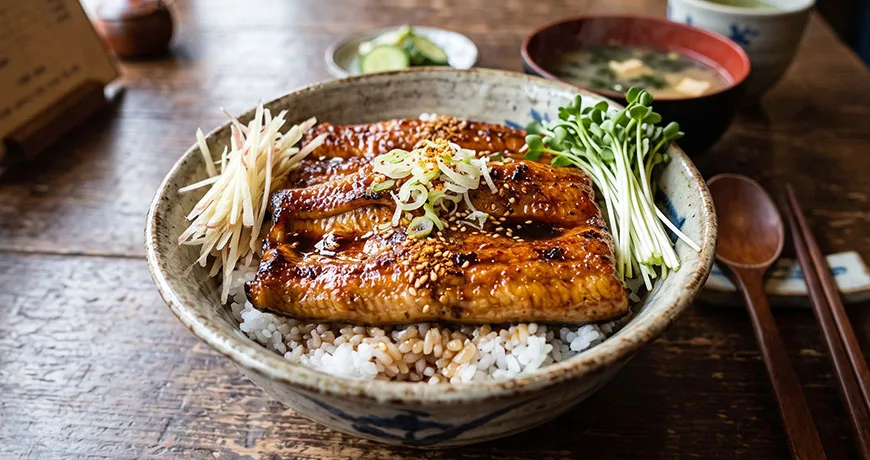
Jangeodeopbap is a highly technical dish requiring precise thermodynamic control over the eel’s dense collagen matrix and strict physicochemical removal of its mucin layer. Due to the intense muscular activity of eels, their tissues are bound by tough cross-linked collagen. Pre-steaming or flash-grilling hydrolyzes this collagen into soft, melt-in-your-mouth gelatin without causing violent thermal contraction. A highly reduced, hypertonic soy and sugar glaze is then applied in multiple layers over radiant heat. As the rendered omega-3 rich lipids of the eel interact with the reducing sugars of the glaze, they trigger an aggressive Maillard reaction, forming a thick, lacquered crust. Served over warm rice, the heavy, unctuous animal fats are biochemically balanced by the gingerol in julienned ginger and the isothiocyanates in radish sprouts, which physically and chemically cleanse the palate with every bite.
⏱️ Total: 40 mins | Prep: 20 mins | Cook: 20 mins | 🍳 Difficulty: High (Requires mucin extraction and multiple caramelization layering) | 🌶️ Profile: Deeply Savory, Sweet, Rich, and Zesty | 🍚 Focus: Collagen Gelatinization, Maillard Layering, & Biochemical Palate Cleansing
Ingredients (2 servings)
- High-Lipid Protein Matrix: 2 filleted Eels (Freshwater or saltwater eel, butterflied)
- Hypertonic Reduction Glaze (Tare): 4 tbsp soy sauce, 3 tbsp Mirin (sweet rice wine), 2 tbsp Cheongju (rice wine), 2 tbsp corn syrup, 1 tbsp sugar, 1 tsp ginger juice, 1/2 stalk green onion, 3 cloves whole garlic
- Chemical Cleanser & Aromatics: 1 knob fresh ginger (julienned extremely fine and soaked in cold water to remove excess starch/harshness), 1 handful radish sprouts
- Starch Matrix: 2 bowls of warm, cooked white rice
- Solvents: Boiling water (for mucin removal), a little cooking oil
Allergy Information Contains: Fish (Eel), Soy, Wheat (from soy sauce)
Equipment Cutting Board, Knife, Grill or Non-stick Pan, Silicone Basting Brush, Saucepan
Cooking Instructions
- Physicochemical Prep (Mucin Removal): Lay the eel fillets skin-side up and briefly pour boiling water (80°C+) over the skin. The clear slime (mucin) will instantly thermo-coagulate and turn white. Use the back of a knife to scrape this entirely off. Failing to remove the mucin will block the glaze from adhering and leave a muddy, rancid flavor (geosmin/heptanal).
- Thermal Hydrolysis (Pre-cooking): Steam the fillets for 5–7 minutes, or lightly flash-grill them without any sauce. This kinetic heat treatment prevents the protein fibers from violently shrinking and curling, while gently hydrolyzing the tough collagen into tender gelatin.
- Glaze Reduction: In a saucepan, combine the soy sauce, Mirin, Cheongju, corn syrup, sugar, green onion, and garlic. Simmer over medium-low heat until the volume is reduced by half. The high-molecular-weight sugars will concentrate, creating a highly viscous, sticky emulsion (Tare).
- Multiple Layering & Searing: Brush the reduced glaze generously onto the pre-cooked eel. Grill over medium-low heat. As the glaze caramelizes and becomes sticky, flip the eel, brush again, and repeat this process 3–4 times. The rendering eel fat will fry the sugars, creating a brilliant, lacquered Maillard crust.
- Assembly & Palate Cleansing: Slice the glazed eel and arrange it meticulously over the warm rice. Top immediately with the soaked ginger julienne and radish sprouts. The diner must consume these aromatics together with the eel to biochemically cut through the heavy lipids and reset their taste receptors.
💡 Professional Culinary Tips
- The Rheological Obstacle of Mucin: The slippery mucin on the eel’s skin is a highly hydrophilic biological defense mechanism. It will actively repel oil-based glazes and trap off-flavors. Thermo-coagulating this layer with hot water and mechanically scraping it off is a non-negotiable step for achieving a restaurant-quality texture and flavor profile.
- Thermodynamics of Layering: Why baste multiple times instead of just marinating the eel? Applying the glaze in layers controls the surface thermodynamics. As the moisture evaporates from the first layer, the sugars harden. Applying a fresh wet layer on top cools the surface slightly, preventing the first layer from burning to ash while building a physical, millimeter-thick stratum of caramelized flavor.
- Biochemical Palate Reset via Gingerol: Eel is exceptionally rich in lipids (nearly 20% fat by weight). This heavy fat quickly coats the oral mucosa, causing taste fatigue. Gingerol, the active compound in ginger, acts as a chemical astringent. It slices through this lipid film and powerfully stimulates the TRPA1 receptors on the tongue, instantly cleansing the palate so the last bite is as impactful as the first.
Nutrition Facts (Estimated)
Total Content : Approx. 400g (1 serving, including rice)
Calories : 650 kcal
– Sodium : 820mg
– Total Carbohydrate : 78.0g
– Sugar : 12.0g
– Total Fat : 24.0g (Highly concentrated in EPA/DHA Omega-3s)
– Saturated Fat : 5.0g
– Cholesterol : 120.0mg
– Protein : 32.0g
– Dietary Fiber : 3.0g
*Daily Values are based on a 2,000 calorie diet and standard Korean nutritional reference values.
**Nutritional values are calculated based on original ingredients; substitutions may alter specific macronutrients.
Origins and Food Culture of Stir-fried Eel with Rice (Jangeodeopbap)
1. Historical Heritage: From the Jasaneobo Chronicle to Modern Stamina Dining
- Tracing its roots back to historic texts such as Jeong Yak-jeon’s Joseon Dynasty marine encyclopedia Jasaneobo (1814), where eel (manryeo) was praised for its rich, sweet flavor and profound restorative properties for human vitality.
- Historically consumed during the dog days of summer (Sambok) to overcome extreme heat exhaustion, the traditional whole-grilled eel feast modernized into a refined, luxurious one-bowl dining format.
2. The Culinary Science of Par-Cooking and Layered Glaze Broiling
- The hallmark of authentic preparation lies in par-grilling or gently steaming the eel first to render excess lipids and tenderize the muscle fibers before repeatedly basting it with an aged soy reduction over gentle heat.
- This multi-stage glazing triggers precise Maillard browning and sugar caramelization, achieving a glistening golden-brown sheen that locks in succulent moisture while producing a delightfully crisp exterior and a tender, melt-in-the-mouth interior.
3. The Yin-Yang Balance of Fresh Ginger and Refined Banchan Presentation
- Grounded in traditional Korean food philosophy, warm, pungent julienned ginger is an essential companion to balance the cool, rich energetic nature of eel while cleansing the palate between bites.
- Served alongside a delicate bowl of clear broth (such as enoki mushroom soup or light miso), pickled radish, and crisp white kimchi, it offers an elegant, revitalizing dining experience that remains the gold standard of high-energy comfort cuisine.
The Mahogany Radiance of Glazed Embers and the Melt-in-the-Mouth Velvet of Freshwater Delicacy: A Refined Portrait of Jangeodeopbap
Jangeodeopbap (Glazed Grilled Eel over Steamed Rice) stands as the opulent, stamina-restoring crown jewel of modern Korean single-bowl (deopbap) gastronomy. Plump, carefully filleted eel is either lightly pre-broiled to render excess lipids or gently par-steamed to relax its dense muscular texture, then meticulously brushed with multiple layers of a deeply reduced, glossy soy glaze (tare)—simmered with roasted eel bones, brewed soy sauce, scallions, garlic, ginger, and rice wine—while being turned slowly over incandescent hardwood charcoal. Generously draped over a steaming bed of fluffy white rice and crowned with delicate needles of fresh young ginger and peppery radish sprouts, this dish elevates the restorative power of fresh seafood into an exquisite, unified culinary masterwork.
Lifting a generous spoonful brimming with sauce-kissed rice and a thick cut of glistening, mahogany-hued eel topped with a pinch of ginger delivers an immediate sensory reverence. The intoxicating aroma of sweet hardwood woodsmoke, toasted sesame, and caramelized soy rises instantly to open the palate. The first bite reveals a delicate, crackling lacquer along the crisped skin, followed immediately by the tender, butter-soft interior that dissolves across the tongue with zero resistance. Concentrated amino acids and rich, unctuous omega-3 fatty acids burst through the velvety flesh, harmonizing effortlessly with the sweet warmth of the rice grains. The sharp, refreshing sting of raw ginger needles and the crisp, pleasant bitterness of radish sprouts swiftly slice through the rich lipids, leaving the palate revitalized, cleansed, and endlessly receptive to the next mouthful.
The enduring brilliance of Jangeodeopbap lies in its functional equilibrium—harnessing the nutrient-dense vitality of lipid-rich eel and balancing it through fire-caramelization and the digestive clarity of pungent root botanicals. Long revered in Korean culinary tradition as an essential Boyang-sik (restorative stamina nourishment) to combat seasonal exhaustion and sustain physical vigor, a luxurious bowl of glazed grilled eel over rice remains a timeless monument of attentive craftsmanship, generous hospitality, and deeply grounding culinary comfort.
Editor’s Review
1. A Dynamic Harmony of Caramelized Glaze Crispness, Silken-Melt Eel Tenderness, and Sharp Ginger Needles
The textural landscape inside the bowl achieves an extraordinary balance between deep richness and vibrant clarity. Multiple passes over glowing embers yield a micro-thin, savory-sweet caramel crust on the surface while trapping delicate moisture within the flaky, velvety fish flesh. The springy tenderness of the eel melts against the soft, broth-seasoned rice, while the crisp, snapping chew of raw ginger julienne provides an essential tactile counterpoint that prevents palate fatigue from start to finish.
2. Subcutaneous Collagen-to-Gelatin Thermal Conversion, Rapid Tare Maillard Kinetics, and Gingerol Digestive Dynamics
Jangeodeopbap represents an exacting study in connective-tissue biophysics, high-heat surface browning, and botanical lipid mitigation. Dense Type-I collagen fibers nestled within the eel’s skin and myosepta undergo controlled denaturation into water-soluble gelatin through pre-steaming and radiant roasting, creating a signature melt-in-the-mouth unctuousness. Over direct heat, reducing sugars in the glaze rapidly cross-link with free amino acids on the fish surface above 150°C, forming savory pyrazines and furans that seal in natural juices. Concurrently, active gingerols and shogaols from the fresh ginger garnish mask volatile fish amines and stimulate biliary secretions, accelerating the assimilation of dense polyunsaturated fatty acids.
3. The Storied Heritage of Seasonal Stamina Tonics (Boyang-sik) and the Timeless Solace of Tabletop Gastronomy
Rooted in centuries-old Korean dietary traditions that prized eel as an unrivaled source of revitalizing energy during the grueling heat of summer, Jangeodeopbap elegantly translates ancestral wellness wisdom into a contemporary gourmet format. Serving an entire masterfully glazed fillet over a steaming bowl of rice honors an authentic heritage of generous care, seasonal respect, and uplifting culinary excellence.