
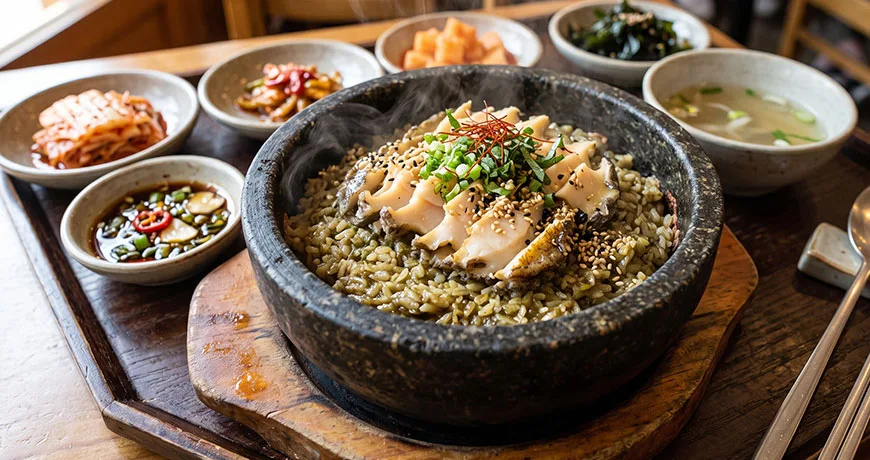
Jeonbokdolsotbap is a pinnacle of culinary engineering that harnesses the intense umami payload of abalone viscera (Gevu) and the massive thermal mass of a traditional stone pot (Dolsot). The viscera, heavily concentrated with glutamate and digested kelp chlorophyll, is blended and emulsified with sesame oil. When sautéed with soaked rice, this viscous paste coats the amylopectin matrix of the grains, physically locking in a deep, oceanic flavor profile. The heavy lid of the stone pot induces a micro-pressurized boiling environment, driving the umami deep into the starch while flash-evaporating the bottom moisture to form a Maillard crust (Nurungji). Crucially, the dense collagen of the sliced abalone meat is not boiled; it is introduced only during the resting phase, allowing the residual radiant heat of the stone pot to gently thermo-coagulate the proteins into a perfectly tender, viscoelastic bite.
⏱️ Total: 45 mins (excluding rice soaking) | Prep: 20 mins | Cook: 25 mins | 🍳 Difficulty: High (Requires viscera emulsification and precise thermal protein coagulation) | 🌶️ Profile: Profoundly Savory, Earthy, and Buttery | 🍚 Focus: Viscera Emulsification, Thermal Mass, & Residual Heat Coagulation
Ingredients (2 servings)
- Starch Matrix: 2 bowls worth of short-grain white rice (thoroughly hydrated/soaked for at least 30 mins)
- Protein & Umami Matrix: 4 live Abalones (Jeonbok – scrubbed, meat separated from shells, viscera reserved, teeth removed)
- Lipid & Flavor Catalysts: 2 tbsp toasted sesame oil, 1 tbsp rice wine (Cheongju)
- Solvent: 1.5 cups Kelp Broth (Dashima broth, adjust based on rice moisture)
- Osmotic Binder (Sauce): 3 tbsp soy sauce, 2 tbsp minced chives, 1 tbsp sesame oil, 1 tbsp crushed sesame seeds, a pinch of minced red chili
Allergy Information Contains: Shellfish (Abalone), Soy, Wheat (from soy sauce)
Equipment Dolsot (Korean Hot Stone Pot) or Cast-Iron Dutch Oven, Kitchen Brush, Spoon, Knife, Cutting Board, Blender (or Mortar)
Cooking Instructions
- Mechanical Separation: Vigorously scrub the black bio-film off the abalone’s foot and sides using a stiff brush. Slide a spoon under the meat to detach it from the shell. Carefully cut away the viscera (the dark green/yellow sac) without puncturing it, and physically excise the hard mouth/teeth at the tip of the meat.
- Collagen Scoring: Score the surface of the abalone meat in a tight, crosshatch pattern. This mechanical cleavage cuts through the dense collagen fibers, increasing thermal conductivity and ensuring the meat yields softly upon chewing.
- Viscera Emulsification: Place the reserved viscera and rice wine into a blender and puree until smooth. The alcohol in the rice wine acts as a biochemical catalyst, binding with the volatile trimethylamine (TMA) molecules responsible for fishy odors and aiding in their evaporation during cooking.
- Lipid Coating & Searing: Generously coat the heated stone pot with sesame oil. Add the soaked rice and the viscera puree. Sauté over medium-low heat. The unsaturated fatty acids and the viscous puree will coat the exterior of the rice grains, creating an emulsion barrier that prevents over-gelatinization.
- Boiling & Gelatinization: Once the rice grains turn slightly translucent, pour in the kelp broth. Cover tightly with the heavy lid and boil over high heat. When the bubbling subsides into a crackling sizzle, reduce the heat to the absolute minimum and cook for 10–15 minutes to form the caramelized crust.
- Residual Heat Coagulation: Just before turning off the heat completely, quickly lay the scored abalone slices over the rice and replace the lid. Turn off the heat and let the pot rest for 10 minutes. The immense radiant heat trapped inside the Dolsot will gently steam and thermo-coagulate the abalone, bypassing the violent contraction that boiling causes. Serve with the soy sauce binder.
💡 Professional Culinary Tips
- Biochemical Value of the Viscera: The dark green or yellowish hue of abalone viscera is the concentrated chlorophyll from its diet of kelp and seaweed. This organ is a biological storehouse of glutamic acid and arginine, possessing exponentially more umami than the muscle tissue itself. Discarding the viscera means throwing away 80% of the abalone’s flavor potential.
- Thermodynamics of Abalone Collagen: Abalone muscle is extremely dense. If you boil it aggressively at 100°C alongside the rice from the beginning, the collagen network will violently seize, turning the premium seafood into an unchewable tire. By utilizing the 80–90°C residual steam trapped inside the heavy stone pot during the resting phase, you denature the proteins softly, resulting in a luxurious, buttery texture.
- Rheology of the Viscera Emulsion: Simply mixing raw viscera into water creates a muddy, unpleasant broth. However, vigorously sautéing the pureed viscera in sesame oil under direct heat causes the fat-soluble aromatic compounds to bloom. This physical friction completely eradicates the raw oceanic smell, transforming the viscera into a rich, creamy lacquer that permanently binds to the rice starches.
Nutrition Facts (Estimated)
Total Content : Approx. 450g (1 serving)
Calories : 480 kcal
– Sodium : 720mg
– Total Carbohydrate : 75.0g
– Sugar : 1.5g
– Total Fat : 12.0g
– Saturated Fat : 1.5g
– Cholesterol : 110.0mg
– Protein : 18.0g
– Dietary Fiber : 3.0g
*Daily Values are based on a 2,000 calorie diet and standard Korean nutritional reference values.
**Nutritional values are calculated based on original ingredients; substitutions may alter specific macronutrients.
Origins and Food Culture of Abalone Hot Stone Pot Rice (Jeonbokdolsotbap)
1. Royal Tribute Heritage: From “Emperor of Shellfish” to Modern Gastronomic Luxury
- Tracing its roots back to the Joseon Dynasty royal court banquets, where abalone (bok-eo) was revered as the ultimate marine delicacy and an indispensable medicinal tribute (jinsang-pum).
- Harvested by traditional female divers (Haenyeo) along the pristine rocky reefs of Wando and Jeju Island, it evolved from a cherished regional stamina pot rice into one of Korea’s most celebrated modern culinary luxuries.
2. The Culinary Science of Ge-u (Viscera) Infusion and Radiant Stone Steaming
- The hallmark of authentic preparation lies in finely grinding the nutrient-dense abalone viscera (ge-u) and incorporating it directly into the cooking broth, imparting a distinctive jade-green hue and deep oceanic umami into every grain of rice.
- Cooking inside a natural stone pot utilizes steady far-infrared radiant heat to gently steam the shellfish without toughening its delicate muscle fibers, preserving a supple, melt-in-the-mouth tenderness.
3. Tabletop Butter-Soy Emulsion, Seaweed Soups, and the Soothing Sungnyung Finale
- Diners traditionally scoop the hot seasoned rice into a separate bowl to toss with fragrant wild chive soy sauce and a pat of rich butter, enjoying it alongside a warm bowl of traditional abalone seaweed soup (jeonbok-miyeok-guk) or rustic soybean paste stew.
- Pouring warm roasted barley or Solomon’s seal tea into the sizzling stone pot dissolves the nutty toasted rice crust into an enzymatic, stomach-soothing digestive broth (sungnyung) that gracefully concludes an iconic Korean feast.
The Emerald Resonance of Ocean Ge-u and the Sizzling Warmth of Radiant Stone: A Refined Portrait of Jeonbok Dolsotbap
Jeonbok Dolsotbap (Abalone Hot Stone Pot Rice) stands as the opulent, nutrient-dense summit of Korea’s premier coastal hot-stone gastronomy. Fresh, tender abalone—prized for grazing on pure marine kelp and sea mustard—is delicately sliced into supple ribbons, while its nutrient-rich green hepatopancreas (ge-u) is finely pulverized into a savory broth and steeped with short-grain white rice inside a heavy agalmatolite stone pot (dolsot). Completely transcending standard seafood toppings over plain starch, this dish introduces the concentrated, jade-colored essence of the sea directly into the rice grain’s cellular matrix during the earliest stages of thermal gelatinization, resulting in an aristocratic and deeply restorative one-pot masterpiece.
Lifting the heavy wooden lid unleashes a dramatic billow of fragrant steam, carrying the rich, nutty warmth of toasted sesame oil, sweet cooked starch, and the clean mineral breeze of the open sea. Folding the green-tinted rice and translucent abalone slices together with a pat of fresh butter or a spoonful of seasoned scallion-soy dressing delivers an immediate textural revelation. The rice grains, plump and glistening from the emulsified abalone lipids, glide across the tongue in a velvety, deeply savory embrace. Sinking your teeth into the tender abalone ribbons yields a snappy yet remarkably supple resistance, releasing a cascade of pure, sweet marine juices that harmonize with the earthy, umami-rich depth of the ge-u broth. Finishing the meal by pouring warm grain tea over the golden scorched rice crust (nurungji) creates a soothing, savory broth (sungnyung) that gently warms the body and leaves the palate completely refreshed.
The enduring majesty of Jeonbok Dolsotbap lies in its whole-ingredient philosophy—revering the abalone as the “Ginseng of the Ocean” and utilizing both pristine muscle and nutrient-packed viscera without waste to maximize vitality and restorative stamina. Rooted in the heroic free-diving traditions of coastal haenyeo and the refined heritage of royal court banquets, a steaming stone pot of fresh abalone rice remains a timeless monument of attentive culinary craftsmanship, seasonal reverence, and deeply comforting hospitality.
Editor’s Review
1. A Dynamic Interplay of Supple Abalone Ribbons, Creamy Ge-u-Coated Grains, and Golden Scorched Rice Crispness
The sensory progression within the heated stone vessel achieves an exceptional equilibrium of textures. The tender, springy bite of par-steamed abalone contrasts gracefully with the luscious, broth-swollen rice grains beneath. Melting butter and savory soy sauce form a glossy emulsion that accentuates the unctuous marine lipids, while the crackling, nutty crunch of the bottom nurungji and warm sungnyung finishes the meal with profound warmth and zero palate fatigue.
2. Hepatopancreatic Amino Acid Starch Entrapment, Paramyosin Heat Mechanics, and Far-Infrared Stone Gelatinization
Jeonbok Dolsotbap represents an exacting study in marine biochemistry and mineral thermodynamic engineering. The abalone hepatopancreas contains high concentrations of free glutamic acid, glycine, taurine, and polyunsaturated fatty acids derived from its macroalgal diet. Cooking the rice in this liquefied emulsion promotes amylose-lipid inclusion complexation during starch swelling, locking natural marine umami into the crystalline starch matrix. Simultaneously, the steady, uniform far-infrared radiation emitted by the thick agalmatolite pot drives complete intra-granular gelatinization while preventing excessive contraction of paramyosin structural proteins in the abalone flesh, ensuring optimal tenderness.
3. The Royal Court Tribute Heritage and the Grounding Sanctuary of Tabletop Coastal Gastronomy
Historically celebrated as the most prized tribute presented to Joseon Dynasty royalty and preserved through the resilient seafaring culture of Korea’s southern shores, abalone hot stone pot rice bridges ancestral wellness with modern culinary sophistication. Serving a custom-steamed pot of ocean-infused grains to honor a guest captures an enduring Korean tradition of generous care, dietary harmony, and heartfelt gastronomic excellence.