
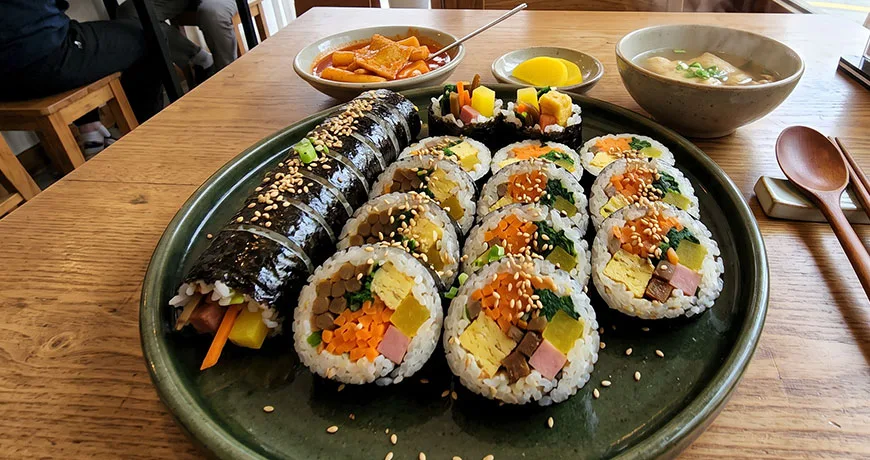
Gimbap is a macro-cylindrical molecular gastronomy structure where diverse physicochemical fillings are encapsulated within a carbohydrate matrix and tightly compressed by a hydroscopic algae membrane (roasted seaweed). Preventing moisture migration is the cornerstone of this dish. The rice must be cooled to expel kinetic steam, and its amylopectin starches are thoroughly coated with unsaturated sesame lipids to form an impenetrable hydrophobic barrier. Internally, the roll contains thermo-coagulated protein gels (thick egg crepe), Maillard-browned meats, and structurally contrasting turgid vegetables like pickled radish and carrots. When radial compression is applied using a bamboo mat (Gimbal), these independent matrices fuse into a seamless, high-density cylinder that offers an extraordinarily complex chewing experience and vibrant flavor contrast upon mastication.
⏱️ Total: 45 mins | Prep: 30 mins | Cook: 15 mins | 🍳 Difficulty: Moderate (Requires rigorous moisture control and uniform radial compression) | 🌶️ Profile: Nutty, Savory, Crunchy, and Harmonious | 🍚 Focus: Moisture Migration, Radial Compression, & Lipid Coating
Ingredients (2–3 servings / 4 rolls)
- Hydroscopic Algae Matrix: 4 sheets of roasted seaweed for Gimbap (Gim)
- Lipid-Coated Starch Matrix: 3 bowls of cooked short-grain white rice, 2 tbsp toasted sesame oil, 0.5 tsp fine salt, 1 tbsp toasted sesame seeds
- Turgor & Color Matrix: 4 strips of pickled radish (Danmuji – moisture violently squeezed out), 1 carrot (julienned and sautéed in oil), 150g spinach (flash-blanched, aggressively squeezed dry, and tossed with salt and sesame oil)
- Protein Matrix: 3 fresh eggs (beaten, seasoned, and fried into a thick crepe/omelet), 4 strips of Gimbap ham (or 100g of dry-sautéed Bulgogi beef)
Allergy Information Contains: Egg, Soy, Wheat (from soy sauce/ham), Pork (Ham)
Equipment Bamboo Rolling Mat (Gimbal), Frying Pan, Cutting Board, Exceptionally Sharp Knife, Mixing Bowls
Cooking Instructions
- Starch Thermodynamics (Cooling & Coating): Spread the warm rice evenly in a wide mixing bowl. Add salt, sesame oil, and sesame seeds. Use a spatula to slice through the rice (mechanical cleavage) to coat the grains with the lipids without mashing them. Allow the rice to cool to body temperature (37°C/98°F). If rolled hot, the escaping steam will instantly destroy the crisp cellular structure of the seaweed.
- Protein Coagulation & Rendering: Pour the beaten eggs into a lightly oiled pan over low heat. Allow the proteins to slowly thermo-coagulate into a thick, porous gel network (crepe). Slice into long strips. Lightly sauté the ham to induce surface Maillard browning and render its fats.
- Cellular Breakdown & Lipid Extraction: Sauté the julienned carrots in cooking oil. The kinetic heat breaks down the tough plant cellulose, softening the bite, while perfectly extracting the fat-soluble beta-carotene into the oil for maximum bioavailability.
- Radial Compression Assembly: Place a sheet of seaweed rough-side up on the bamboo mat. Take a baseball-sized portion of the cooled rice and spread it exceptionally thinly across 3/4 of the seaweed. Stack the radish, carrot, egg, ham, and spinach tightly in the lower center. Lift the bamboo mat and roll it over the fillings, tucking the edge under. Apply firm, even radial stress (squeezing) to compress out any air pockets, forming a tight, dense cylinder.
- Mechanical Slicing & Rheological Finish: Brush the exterior of the rolls lightly with sesame oil to prevent oxidation and add an aromatic sheen. Wipe an extremely sharp knife with a damp, oiled cloth. Using a swift, confident sawing motion, slice the rolls into 1.5cm thick pieces. The oiled blade prevents the sticky amylopectin from tearing the delicate algae wrapper.
💡 Professional Culinary Tips
- The Physics of Moisture Migration: The varying moisture levels of the internal ingredients are the biggest threat to structural integrity. If you do not squeeze the spinach and pickled radish bone-dry, osmotic pressure will force their internal liquids outward through the rice and into the hydroscopic seaweed. This renders the algae rubbery and causes the entire cylinder to violently unravel when sliced.
- The Mechanical Stress of the Gimbal: Rolling by hand applies uneven pressure, pushing ingredients out the sides. The bamboo mat (Gimbal) is a brilliant engineering tool that applies uniform radial compression around the entire circumference. This forces the lipid-coated rice grains to interlock, creating a near-vacuum seal that holds the contrasting textures firmly together.
- The Porous Sponge Effect of the Egg: The thick egg crepe acts as more than just a protein source; it functions as an internal moisture buffer. As the egg thermo-coagulates, it traps microscopic air bubbles, forming a porous structure. If any residual moisture escapes from the vegetables during compression, the egg acts like a biochemical sponge, absorbing the stray water and preventing the rice from becoming soggy.
Nutrition Facts (Estimated)
Total Content : Approx. 500g (1 serving, 2 rolls)
Calories : 560 kcal
– Sodium : 890mg
– Total Carbohydrate : 82.0g
– Sugar : 5.0g
– Total Fat : 16.0g
– Saturated Fat : 3.5g
– Cholesterol : 185.0mg
– Protein : 18.0g
– Dietary Fiber : 6.0g
*Daily Values are based on a 2,000 calorie diet and standard Korean nutritional reference values.
**Nutritional values are calculated based on original ingredients; substitutions may alter specific macronutrients.
Origins and Food Culture of Gimbap (Gimbap)
1. Historical Lineage: From Joseon “Bokssam” to Modern Korean Gimbap
- Tracing its cultural roots back to the Joseon Dynasty custom of Bokssam (wrapping rice in dried seaweed or wild greens during the First Full Moon of the Lunar New Year to wrap and invite good fortune), recorded in historical treatises such as the Dongguksesigi (1849).
- Following the pioneering commercialization of seaweed aquaculture by Gim Yeo-ik in Gwangyang during the 17th century, the dish modernized throughout the mid-to-late 20th century, evolving into an indigenous Korean rolled rice delicacy seasoned with sesame oil and stuffed with traditional banchan.
2. The Culinary Science of Bamboo Mat Rolling and Five-Color (Obangsaek) Geometry
- The hallmark of authentic preparation lies in using a fine bamboo mat (gimbap-bal) to distribute even, firm pressure along the cylinder, creating an airtight roll that prevents internal fillings from shifting.
- Showcasing the traditional Korean five cosmic colors (obangsaek)—black (seaweed), yellow (egg, pickled radish), green (spinach, cucumber), orange (carrots), and pink (ham)—each cross-section represents visual harmony and dietary balance, cut with a sesame-oil-slicked knife to keep each slice immaculate.
3. Nostalgic Picnic Traditions and the Global K-Food Sensation
- Revered across generations as the quintessential picnic food (sopung dosirak), evoking warm childhood memories of mothers waking at dawn to roll fresh gimbap wrapped in aluminum foil for school sports days and family excursions.
- From its beloved role in everyday street food (bunsik) diners alongside steaming bowls of ramyeon to its contemporary international acclaim—including the viral worldwide boom of frozen gimbap—it stands as an enduring global ambassador of healthy, balanced, and creative Korean food culture.
The Concentric Harmony of Toasted Sea Laver, Sesame-Glazed Rice Grains, and the Radiant Bloom of Five-Color Fillings: A Refined Portrait of Gimbap
Gimbap (Korean Seaweed Rice Rolls) stands as the approachable, universally cherished, and ergonomically peerless summit of Korea’s portable (doshirak) gastronomy. Tender sheets of dried sea laver (gim—Porphyra) are gently toasted to awaken their crisp oceanic fragrance, then spread with a delicate, even layer of warm short-grain white rice lightly seasoned with fine sea salt and cold-pressed toasted sesame oil. Arranged in disciplined geometric bands across this foundation is a brilliant mosaic of fillings: sunny strips of pickled daikon radish (danmuji), vibrant sautéed carrots, parboiled spinach or fresh cucumbers, pillowy ribbons of egg omelet (jidan), savory soy-braised burdock root (ueong), and lightly seared ham or beef. Tightly rolled using a traditional bamboo mat (gimbal), brushed with an aromatic sheen of toasted sesame oil, and sliced into bite-sized jewel-like rounds, this dish collapses the traditional divide between rice and side dishes, concentrating a complete nutritional universe into an elegant, hand-held parcel.
Placing a sesame-speckled slice onto the tongue awakens the palate with an immediate, intoxicating aroma of toasted sea laver intertwined with the nutty warmth of cold-pressed sesame oil. The initial bite yields a clean, delicate fracture as the brittle seaweed casing gives way, instantly releasing the comforting, bouncy chew of seasoned rice grains. As your teeth meet the core, an exhilarating symphony of textures unfolds in rapid succession: the crisp, auditory snap of sweet-tangy pickled radish and savory burdock bursts with refreshing cellular juices, seamlessly balanced by the melting softness of egg ribbons and the rich, umami-dense chew of seared ham. The gentle caramelization of stir-fried carrots ties the flavors together, while the cohesive starch of the rice binds every element into an impeccably balanced, endlessly satisfying gastronomic harmony.
The enduring brilliance of Gimbap lies in its functional harmony—encapsulating carbohydrates, complete proteins, dietary fibers, and essential vitamins within an unpretentious, transportable format designed to sustain life on the move. Rooted in the tender domestic memories of early-morning school excursions—where the rhythmic chopping of mother’s knife and the warm scent of sesame oil signaled days of celebration—and elevated today into an internationally celebrated culinary ambassador, a rolled cylinder of seasoned rice and fillings remains a timeless cultural monument of maternal warmth, communal affection, and comforting everyday nourishment.
Editor’s Review
1. A Dynamic Harmony of Laver Tensile Fracture, Resilient Rice Starch Chew, Crisp Root Turgor, and Pillowy Egg Cushioning
The radial architecture of the sliced roll delivers an extraordinary equilibrium of contrasting physical textures. The brittle, paper-thin exterior of roasted laver offers a clean initial snap before dissolving smoothly against oral moisture, giving way to the tender, distinct chew of sesame-seasoned rice. At the core, the firm cellular turgor of pickled daikon and braised burdock provides a lively, auditory crunch that contrasts delightfully with the yielding, silken softness of layered egg omelet and ham, ensuring a dynamic, non-fatiguing mouthfeel from the first round to the last.
2. Porphyran-Cellulose Structural Mechanics, Lipid-Mediated Retrogradation Inhibition, and Multi-Compound Umami Synergism
Gimbap represents an exacting study in marine polysaccharide biophysics, starch colloid chemistry, and nucleotide-amino acid synergy. Sheets of dried laver derive high tensile strength from a dense meshwork of porphyran and insoluble cellulose, allowing the wrapper to withstand high shear forces during rolling while forming a semi-permeable moisture barrier. Seasoning the warm rice with toasted sesame oil coats each swollen starch grain in a hydrophobic lipid barrier; this slows ambient moisture evaporation and significantly impedes the crystallization of amylose chains, physically preventing starch retrogradation (staling) as the rolls cool. Concurrently, natural free glutamic acid concentrated within the toasted laver synergizes exponentially with nucleotide inosinate (IMP) from the cured meat and egg, while the organic succinic and lactic acids from the pickled daikon stimulate salivation and clean lipid clearance across taste receptors.
3. The Folk Heritage of Bokssam and the Democratic Triumph of Modern Korean Portable Gastronomy
Tracing its cultural lineage to the ancient agrarian tradition of Bokssam—wrapping rice in leafy greens or seaweed during Lunar New Year celebrations to symbolize gathering good fortune—and modernized through the rise of 20th-century urban snack culture (bunsik), Gimbap captures the adaptable soul of Korean dining. Transforming an assortment of humble seasonal ingredients into an artful, egalitarian centerpiece suitable for schoolyards, mountaintops, and street corners alike, this timeless classic serves as an enduring sanctuary of generous hospitality, nostalgic comfort, and brilliant culinary craftsmanship.
서호김밥
#생방송오늘저녁 #수요미식회
조선김밥
#맛있는녀석들 #생방송투데이 #생생정보통 #생활의달인 #수요미식회 #2014테이스티로드