
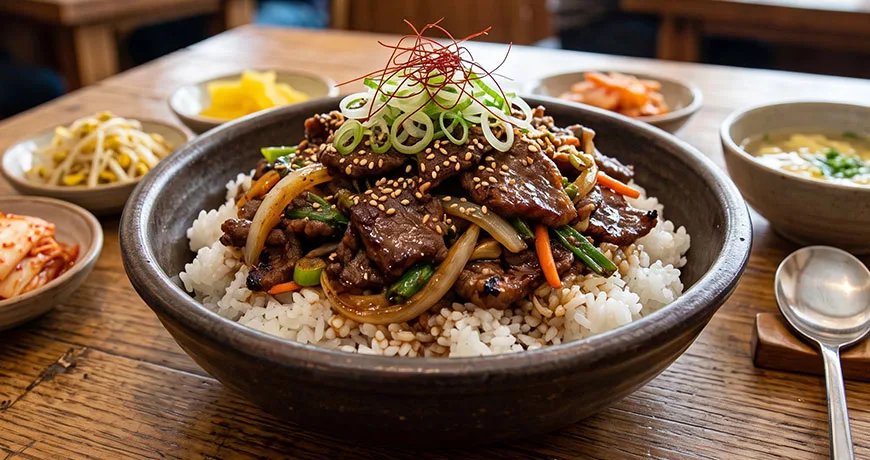
Bulgogideopbap is a molecular gastronomy bowl dish that employs proteolytic enzymes (from Asian pear) to chemically tenderize thinly sliced beef, binding it with a hypertonic soy sauce emulsion to maximize umami. Unlike dry-fried Bulgogi (Bassak-bulgogi), the “deopbap” (rice bowl) variation demands precise thermodynamic moisture control to generate a high-viscosity sauce. As the high heat collapses the cellular walls of the onions and mushrooms, their extracted sweet sap fuses with the beef’s rendered lipids and the added broth. This thermodynamically engineered, sweet and savory lipid emulsion seamlessly coats the amylopectin matrix of the rice grains, providing an unctuous, rheologically unified mouthfeel during mastication.
⏱️ Total: 35 mins (includes marination) | Prep: 25 mins | Cook: 10 mins | 🍳 Difficulty: Moderate (Requires enzymatic tenderization and emulsion viscosity control) | 🌶️ Profile: Sweet, Savory, Rich, and Comforting | 🍚 Focus: Enzymatic Tenderization, Osmotic Infusion, & Emulsion Viscosity
Ingredients (2 servings)
- Protein & Lipid Matrix: 300g thinly sliced Beef for Bulgogi (chuck or ribeye, 1.5–2mm thick)
- Enzyme & Hypertonic Marinade: 3.5 tbsp soy sauce, 2 tbsp grated Asian pear juice (protease source), 1.5 tbsp sugar, 1 tbsp minced garlic, 1 tbsp sesame oil, a pinch of black pepper
- Moisture & Fiber Source: 1/2 onion, 2 shiitake mushrooms, 1 stalk green onion, 1/5 carrot (all julienned)
- Starch Matrix: 2 bowls of warm, cooked white rice, (Optional) a small handful of pre-soaked sweet potato glass noodles (Dangmyeon)
- Solvent: 1/2 cup Kelp broth or water (for emulsion density control)
Allergy Information Contains: Beef, Soy, Wheat (from soy sauce)
Equipment High Thermal Mass Wok or Skillet, Mixing Bowl, Knife, Cutting Board, Wide Deep Bowls (for plating)
Cooking Instructions
- Enzymatic Tenderization & Osmosis: In a mixing bowl, toss the thinly sliced beef with the hypertonic marinade. The enzymes from the pear juice gently cleave the protein peptide bonds, while the high salinity and sugar content generate osmotic pressure, forcing aromatic molecules deep into the muscle fibers. Rest for exactly 20 minutes.
- Mechanical Cleavage: Julienne the onion, mushrooms, carrot, and green onion into uniform strips. This maximizes the surface area, ensuring the intracellular moisture leaches out rapidly during cooking.
- Rendering & Initial Searing: Heat a wok over high heat, add a touch of oil, and toss in the marinated beef. Flash-evaporate the surface moisture and allow the rendering subcutaneous beef fat to fry the sugars, triggering the initial Maillard browning.
- Sap Extraction & Viscosity Control: When the beef is 60% cooked, add the julienned vegetables, the 1/2 cup of broth (or water), and the soaked glass noodles. As the plant cell walls collapse, their natural juices combine with the rendered animal fat and broth, boiling together to form a thick, glossy, high-viscosity emulsion sauce.
- Rheological Integration: Place the warm rice in a wide bowl. Generously ladle the hot Bulgogi directly over the top, ensuring plenty of the thick gravy is transferred. The sticky emulsion perfectly coats the rice grains for a seamless, luxurious bite.
💡 Professional Culinary Tips
- Protease Tenderization Kinetics: Similar to how the osmotic salting timeline is strictly controlled minute-by-minute in high-end yakitori preparation to lock in kinetic moisture and maximize texture, the enzymatic tenderization of Bulgogi must be tightly restricted. Marinating the beef for over an hour will cause the protease to completely liquefy the muscle fibers (over-tenderization), resulting in an unpleasant, muddy mush. 20 to 30 minutes is the thermodynamic sweet spot.
- The Rheology of Deopbap Sauce: If you flash-evaporate all the moisture and fry the beef bone-dry, mixing it with rice will result in a choking, disjointed texture. For a rice bowl (Deopbap), you must intentionally extract the sweet vegetable juices and add a splash of broth to construct a thick, sticky gravy. This gravy acts as the mechanical binder uniting the meat and the starch.
- Gelation of Glass Noodles: If adding sweet potato glass noodles, be aware that they will aggressively absorb the excess moisture to fuel their own starch gelatinization. You must add an extra 2–3 tablespoons of broth to prevent the sauce from drying out completely and to maintain optimal fluid viscosity.
Nutrition Facts (Estimated)
Total Content : Approx. 500g (1 serving, including rice)
Calories : 560 kcal
– Sodium : 880mg
– Total Carbohydrate : 82.0g
– Sugar : 12.0g
– Total Fat : 14.0g
– Saturated Fat : 4.5g
– Cholesterol : 65.0mg
– Protein : 32.0g
– Dietary Fiber : 4.0g
*Daily Values are based on a 2,000 calorie diet and standard Korean nutritional reference values.
**Nutritional values are calculated based on original ingredients; substitutions may alter specific macronutrients.
Origins and Food Culture of Bulgogi with Rice (Bulgogideopbap)
1. Historical Lineage: From Goguryeo Maekjeok and Royal Neobiani to Modern Deopbap
- Tracing its roots back over two millennia to Maekjeok (seasoned, skewered grilled meat from the ancient Goguryeo Kingdom), Seolhameyeok of the Goryeo Dynasty, and Neobiani (delicately marinated, broad beef slices served in the royal court and noble banquets of the Joseon Dynasty).
- Following the mid-20th-century popularity of broth-rich Seoul-style bulgogi, rapid modern urbanization in the 1970s and 1980s inspired the adaptation of this classic celebratory meat dish into a swift, satisfying, and nutritionally comprehensive one-bowl rice meal (deopbap).
2. The Culinary Science of Fruit-Assisted Tenderization and Saucy Broth Reduction
- The hallmark of authentic preparation lies in utilizing pureed Asian pears and onions within the soy marinade to naturally break down collagen and muscle fibers without chemical tenderizers.
- Sautéing the marinated beef quickly with mushrooms and vegetables over high heat releases savory meat juices and sweet vegetable essence into a luscious, glossy broth (jajak-han gukmul) that coats the rice grains without leaving them soggy.
3. A Universally Beloved Comfort Icon and Global Culinary Ambassador
- Celebrated worldwide for its gentle, non-spicy profile and comforting sweet-savory balance, making it an accessible gateway to Korean cuisine for diners of all generations and international backgrounds.
- An enduring lunchtime staple for busy professionals and a beloved family comfort food, it is traditionally enjoyed with a bowl of warm broth and crisp kimchi, representing the heartwarming, generous hospitality of everyday Korean dining.
The Silken Grace of Fruit-Tenderized Marinated Beef and the Velvet Flow of Sweet-Savory Jus: A Refined Portrait of Bulgogideopbap
Bulgogideopbap (Marinated Thin-Sliced Beef over Steamed Rice) stands as the approachable, aristocratic, and universally beloved pinnacle of Korea’s classic one-bowl (deopbap) gastronomy. Tissue-thin ribbons of marbled native beef—sourced from tender cuts like chuck roll or top round—are steeped in an artisanal marinade of fresh Korean pear puree, sweet onion, naturally brewed soy sauce, minced garlic, raw honey, and cold-pressed toasted sesame oil to break down cellular fibers. Flash-sautéed in a hot pan alongside sweet sliced onions, tender scallions, carrots, and earthy shiitake mushrooms until a glossy, aromatic meat gravy (jus) naturally collects in the pan, the glistening beef and its flavorful juices are generously draped over a steaming mound of pristine white rice. Diverging from dry charcoal table grills, this dish champions the comforting magic of a rich, sweet-savory broth that penetrates deep into each grain of starch, creating an effortlessly cohesive and luxurious dining experience.
Lifting a generous spoonful brimming with sauce-soaked rice, tender beef ribbons, and glossy mushrooms awakens the senses with an immediate, intoxicating aroma of toasted sesame oil, caramelized soy, and sautéed alliums. The initial contact reveals a remarkably tender mouthfeel: the thin beef slices, softened by natural fruit enzymes, yield with silken tenderness across the tongue to release an immediate flood of clean, savory beef essence and sweet nectar. Swollen with the rich jus, the rice grains remain supple and distinct, providing a comforting, chewy starch foundation. The tender crunch of caramelized onions and the earthy bounce of mushrooms offer an engaging textural rhythm, while the balanced salinity of aged soy sauce harmonizes with the subtle fruit sugars, leaving the entire palate completely enveloped in an enduring, heartwarming culinary comfort.
The enduring brilliance of Bulgogideopbap lies in its historical adaptability—translating the ancient, celebratory heritage of royal marinated meats into an accessible, nutrient-dense format tailored for modern living. Tracing its lineage back to ancestral skewered meats and courtly banquets, this comforting bowl transforms Korea’s most iconic meat preparation into an everyday sanctuary of complete nourishment, generous hospitality, and heartwarming gastronomic warmth.
Editor’s Review
1. A Dynamic Harmony of Silken Beef Tenderness, Earthy Mushroom Resilience, and Jus-Infused Starch Equilibrium
The textural landscape inside the bowl delivers immediate comfort and sophisticated balance. Enzymatically tenderized beef yields effortlessly upon mastication, flaking softly against the palate without stringiness. Sliced sweet onions and springy shiitake mushrooms introduce a delicate, juicy resistance that complements the tender meat. The savory-sweet jus naturally coats each individual rice grain, ensuring a velvety, fluid mouthfeel that remains remarkably light and endlessly appetizing from the first bite to the last.
2. Fruit Protease Myofibrillar Hydrolysis, Maillard-Caramelization Flavor Synergy, and Inosinate-Glutamate Capillary Adsorption
Bulgogideopbap represents an exacting study in protein biochemistry, carbohydrate thermodynamics, and nucleotide-amino acid synergy. Natural cysteine proteases present in fresh Korean pear puree selectively cleave structural myofibrillar proteins and connective tissue collagen prior to cooking, ensuring exceptional tenderness and preventing thermal meat contraction. During high-heat sautéing, reducing sugars (fructose and glucose) from the pear and alliums react with beef amino acids and soy peptides between 140–160°C, driving rapid Maillard browning and caramelization that yield rich pyrazine and furan aromatics. Concurrently, nucleotide inosinates (IMP) from the beef muscle bond with free glutamates in the brewed soy sauce and guanylates in shiitake mushrooms to trigger an exponential umami synergy, while the viscous broth is drawn into the inter-granular spaces of the rice starch via capillary action, locking in moisture and preventing staling.
3. The Ancient Lineage of Maekjeok and Royal Neobiani: The Modern Evolution of Korean Beef Gastronomy
Originating from the ancient Goguryeo Dynasty’s seasoned skewered Maekjeok, refined through the Joseon royal court’s tender Neobiani, and popularized as mid-century broth-rich Seoul-style Bulgogi, this iconic meat dish represents the crowning evolution of Korean culinary hospitality. Condensing this banquet centerpiece into a fast, balanced single-bowl meal honors a timeless cultural tradition of generosity, culinary ingenuity, and restorative everyday comfort.