
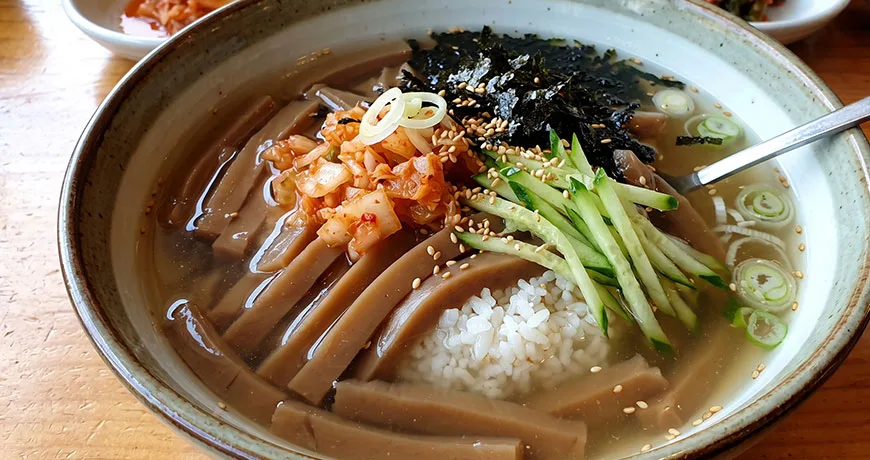
Mukbap is a low-calorie, rheological dish that thoroughly exploits the hydrocolloid matrix of acorn starch. Acorn jelly (Dotori-muk) is formed by heating acorn starch and cooling it into a highly hydrated, 3D gel network. By serving this jelly submerged in a thermodynamically chilled solvent (cold broth), the gel’s internal structure is preserved, maintaining its firm viscoelasticity. Fermented Kimchi introduces a concentrated dose of lactic acid, while fresh cucumbers provide a sharp turgor pressure (crunch) to physically contrast the smooth, yielding texture of the jelly. When a small amount of warm rice is immersed in this ice-cold broth, the surface amylopectin undergoes “flash retrogradation.” This instant thermal shock prevents the rice from dissolving into a mushy paste, yielding instead a remarkably chewy grain structure that interacts perfectly with the bouncy acorn gel.
⏱️ Total: 15 mins | Prep: 15 mins | Cook: 0 mins (assuming pre-chilled broth) | 🍳 Difficulty: Low (Requires thermodynamic control of the hydrocolloid and acidic balancing) | 🌶️ Profile: Refreshing, Tangy, and Savory | 🍚 Focus: Hydrocolloid Matrix, Lactic Acid, & Flash Retrogradation
Ingredients (2 servings)
- Hydrocolloid Gel Matrix: 300g Acorn Jelly (Dotori-muk) (julienned into 5cm long, 1cm thick strips)
- Solvent & Temperature Control: 3 cups commercially prepared cold Naengmyeon broth or chilled kelp/anchovy broth (partially frozen into slush is ideal)
- Acidity & Turgor Modifiers: 100g well-fermented Kimchi (finely chopped and coated with 1 tsp sesame oil and 0.5 tsp sugar), 1/2 Cucumber (julienned)
- Aromatics & Umami: 1 sheet roasted seaweed (crushed), 1 tbsp crushed toasted sesame seeds
- Starch Matrix: 1 bowl of warm, cooked white rice (divided into two portions for a low-calorie diet)
Allergy Information Contains: Soy, Wheat (from Kimchi seasoning and broth base)
Equipment Cutting Board, Knife, Mixing Bowls, Wide serving bowls (pre-chilled in the freezer)
Cooking Instructions
- Gel Matrix Restoration: If the acorn jelly was stored in the refrigerator, its starches will have retrograded, making it hard and crumbly. Briefly blanch the jelly block in boiling water for 1–2 minutes to re-gelatinize the internal starches, then shock it in cold water. This thermodynamic reset restores its bouncy, viscoelastic properties before slicing.
- Lactic Acid & Lipid Coating: Finely chop the fermented Kimchi. The addition of a tiny amount of sugar neutralizes the extreme lactic acid, while tossing it in sesame oil creates a lipid barrier. This biochemical step prevents the Kimchi’s acidity from overwhelmingly dominating the subtle broth.
- Turgor Maximization: Julienne the cucumber. The water-filled vacuoles in the cucumber cells provide maximum turgor pressure, guaranteeing a loud, mechanical crunch that contrasts beautifully with the soft jelly.
- Thermodynamic Assembly: Place a small mound of warm rice at the bottom of the chilled serving bowls. Arrange a generous pile of the julienned acorn jelly over the rice. Top meticulously with the seasoned Kimchi, cucumber, crushed seaweed, and sesame seeds.
- Solvent Injection: Just before serving, pour the ice-cold broth over the ingredients. The sudden drop in temperature shocks the warm rice grains, triggering surface retrogradation, locking in a chewy texture, and completing this perfect physicochemical bowl.
💡 Professional Culinary Tips
- Gelation Kinetics of Acorn Starch: Acorn jelly is a classic hydrocolloid. It is created by swelling acorn starch in water under heat and allowing it to set. The resulting gel is 80–90% trapped water by weight. This makes it a structurally imposing yet extremely low-calorie matrix, perfect for diets. Using an ice-cold broth prevents the kinetic heat from melting this delicate network, ensuring every bite is firm and bouncy.
- Tannins and Digestibility: Acorns naturally contain tannins—polyphenolic compounds responsible for astringency. While the leaching process removes most tannins during starch production, the residual trace amounts impart a distinctive, subtle bitterness. These remaining tannins act biochemically to protect the gastric mucosa and stimulate digestion, making Mukbap exceptionally easy on the stomach.
- Flash Retrogradation of Rice: Dropping warm, gelatinized rice into a 0°C (32°F) liquid instantly forces the starch chains on the surface of the rice to contract and re-crystallize (retrograde). Unlike a hot soup that turns rice into porridge, this cold-shock method creates a physically hardened exterior on the grain, yielding a highly desirable, chewy al dente texture that elevates the mechanical mastication experience.
Nutrition Facts (Estimated)
Total Content : Approx. 450g (1 serving, including half a bowl of rice)
Calories : 240 kcal
– Sodium : 850mg (Variable based on broth and Kimchi)
– Total Carbohydrate : 45.0g
– Sugar : 5.0g
– Total Fat : 3.5g (Sesame oil lipids)
– Saturated Fat : 0.5g
– Cholesterol : 0.0mg
– Protein : 5.0g
– Dietary Fiber : 4.0g
*Daily Values are based on a 2,000 calorie diet and standard Korean nutritional reference values.
**Nutritional values are calculated based on original ingredients; substitutions may alter specific macronutrients.
Origins and Food Culture of Chilled Acorn Jelly and Rice Soup (Mukbap)
1. Historical Heritage: From Mountain Famine-Relief Foraging to Cherished Comfort Food
- Tracing its roots back to Korea’s traditional guhwang (famine relief) food culture, where wild acorns gathered from deep mountain slopes served as a vital survival food during lean spring seasons (boritgogae).
- In the mountainous, hilly terrains of Gangwon-do, Chungcheong-do (Chungju, Jecheon, Danyang), and northern Gyeongbuk, frugal rural households historically combined generous mounds of sliced acorn jelly with small amounts of precious rice in savory broths to create a nourishing, plentiful family meal.
2. The Culinary Science of Tannin Leaching and Seasonal Broth Dualities
- The hallmark of authentic preparation lies in repeatedly rinsing and filtering ground acorn starch to leach excess astringent tannins before boiling it down into a smooth, elastic jelly (dotorimuk) that holds its shape when thinly sliced.
- Showcasing Korea’s adaptive seasonal dining philosophy, the dish is served ice-cold with tangy radish water kimchi broth (dongchimi) in sweltering summer months (naeng-mukbap), or ladled with steaming, fragrant anchovy broth (on-mukbap) during chilly winter days.
3. Crisp Tangy Garnishes and Modern Low-Calorie Detox Dining
- Served simply with chopped aged baechu kimchi, crisp cucumber, toasted nori, and roasted sesame seeds, it invites diners to mix the slippery jelly with rice, enjoying an effortless balance of textures without needing heavy side dishes.
- Celebrated today as an iconic slow-food delicacy that lowers carbohydrate burdens while delivering natural detoxification and hydration, Mukbap remains a beloved national wellness dish that connects diners to the wholesome vitality of Korean nature.
The Silken Elasticity of Woodland Acorn Hydrogel and the Frosty Clarity of Savory Broth: A Refined Portrait of Mukbap
Mukbap (Chilled Acorn Jelly and Rice Soup) stands as a pristine, deeply soothing, and exquisitely light-footed masterpiece of Korean plant-based, cold-broth gastronomy. Finely sliced ribbons of supple acorn starch jelly (dotori-muk)—crafted by patiently leaching wild autumnal acorns in mountain water to remove bitter tannins and simmering the pure starch into a glossy, bouncy jelly—are arranged inside a chilled ceramic bowl with a modest portion of fluffy white rice. Garnished with finely shredded aged Kimchi, crisp julienned cucumbers, roasted seaweed shreds (gim), and toasted crushed sesame seeds, the dish is finished with a generous ladle of ice-slushed, clear broth brewed from simmered beef or dried anchovy and kelp. Bypassing heavy animal fats and aggressive heat, this bowl celebrates the unadorned structural hydration, forest mineral purity, and crisp fermentation of Korean pastoral cuisine within an effortlessly refreshing one-bowl format.
Gently loosening the acorn jelly strands, crunchy toppings, and tender rice grains into the frosty broth with a spoon releases an invigorating perfume of cold-pressed sesame oil, toasted ocean laver, and the brisk, lactic tang of ripe Kimchi. Sinking your teeth into the first generous mouthful delivers an exhilarating textural cadence: the slippery, gelatinous acorn ribbons glide across the tongue, yielding with a delicate, springy resistance that releases a gentle, earthy nuttiness. The auditory crunch of cold cucumbers and tangy aged Kimchi bursts with refreshing cellular juices, perfectly countered by the comforting, chewy grains of cold-steeped rice. The icy, umami-rich broth balances the bright acidity of the fermented vegetables, enveloping the entire palate in an impeccably clean, invigorating, and deeply restorative finish.
The enduring majesty of Mukbap lies in its sustainable transformation—elevating historical woodland famine-relief sustenance into a modern pinnacle of digestive wellness and restorative detox dining. Revered across Korea as the quintessential summer cooling elixir and a gentle sanctuary for overworked digestive systems, a frosty bowl of acorn jelly and rice soup remains an enduring monument of maternal resourcefulness, ecological balance, and heartwarming culinary comfort.
Editor’s Review
1. A Dynamic Cadence of Slippery Acorn Hydrogel Elasticity, Auditory Kimchi Snap, and Broth-Swollen Rice Grains
The textural landscape inside the chilled bowl delivers immediate sensory revitalization. The toothsome, jelly-like bounce of the acorn jelly provides a delightfully slippery glide that contrasts gracefully against the crisp, loud crunch of julienned cucumbers and well-fermented Kimchi. The tender rice grains maintain their distinct structural chew in the cold broth, absorbing the savory stock to add substance, while the roasted seaweed and sesame oil form a velvety emulsion that prevents palate fatigue from the first spoonful to the last.
2. Acorn Amylose 3D Hydrogel Rheology, Polyphenol Detoxification Mechanics, and Lactic Acid-Inosinate Flavor Kinetics
Mukbap represents an exacting study in macromolecular carbohydrate chemistry and cold-acid umami thermodynamics. Acorn starch possesses a high amylose-to-amylopectin ratio, creating a resilient, hydrogen-bonded three-dimensional hydrogel matrix during cooling that retains high water-holding capacity and elastic recovery. Micro-residual acoric acids and polyphenols within the acorn jelly support gastrointestinal motility and natural cellular cleansing. Furthermore, natural lactic and acetic acids from the fermented Kimchi interact with nucleotide inosinates (IMP) from the anchovy/beef stock and glutamates from kelp, stimulating salivary secretion and generating a sharp, clean umami baseline that remains crisp at cold temperatures (0–4°C) without masking the delicate earthy aroma of the forest starch.
3. The Woodland Foraging Heritage of Chungcheong and Gangwon and the Timeless Solace of Korean Restorative Gastronomy
Originating as an indispensable mountain famine food where foraged acorns were ground and leached to feed whole villages during harsh years, and later refined into celebrated regional icons like the Gujeuk Muk Village of Daejeon, Mukbap captures the humble, generous soul of Korean country dining. Serving a bowl of forest jelly and cooling broth honors an authentic heritage of ecological gratitude, mindful nourishment, and restorative culinary craftsmanship.