
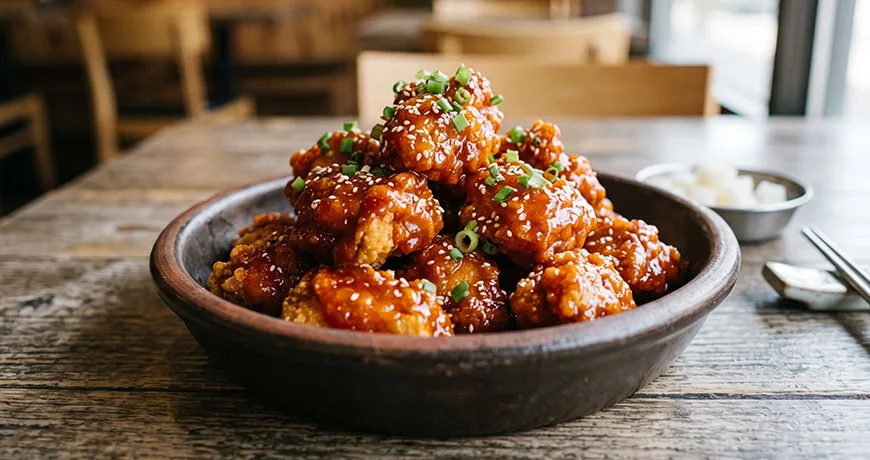
A masterpiece of textural engineering and complex flavor layering. This iconic Korean dish involves subjecting chicken to a precise double-frying technique, resulting in a shatteringly crisp crust that encases impeccably juicy meat. The hot, fried pieces are then rapidly tossed in a highly viscous, caramelized glaze made from Gochujang, garlic, soy sauce, and sweet syrup. The rich concentration of high-quality proteins and Vitamin B rapidly replenishes metabolic energy, while the bold, spicy kick of capsaicin and allicin triggers a rush of endorphins. It is an exhilarating gastronomic experience designed to obliterate daily fatigue and elevate the spirit.
⏱️ Total: 45 mins | Prep: 15 mins | Cook: 30 mins | 🍳 Hard (Deep-frying mechanics) | 🌶️ Sweet, Spicy & Shatteringly Crisp | 🍗 Endorphin-Boosting Gastronomy
Ingredients (2-3 servings)
- Main Ingredients: 1 whole chicken, cut into pieces (approx. 800g – 1kg), or bone-in wings/drumsticks
- Pre-processing & Batter: 1 cup milk (for tenderizing and odor removal), salt and black pepper to taste, 1.5 cups Korean frying mix, 1 cup ice-cold water, ample high-smoke-point oil for deep-frying
- Yangnyeom Glaze: 2 tbsp Gochujang (Korean red chili paste), 3 tbsp tomato ketchup, 1 tbsp soy sauce, 2 tbsp minced garlic, 4 tbsp corn syrup (Mulyeot), 1 tbsp sugar, 2 tbsp water
- Garnish: Crushed roasted peanuts or toasted sesame seeds
💡 Gastronomic Substitutes & Notes
- Korean Frying Mix ➔ 50/50 blend of cornstarch and all-purpose flour, plus a pinch of baking powder, garlic powder, and onion powder. (This faithfully replicates the rigid, ultra-crispy crust required to withstand the wet glaze).
- Corn Syrup ➔ Rice syrup (Ssal-yeot) or agave nectar. (Essential for creating the thick, highly viscous barrier that adheres tightly to the chicken without making the crust soggy).
Allergy Information
- Contains: Poultry, Wheat, Soy, Peanuts (if garnished) (Omit peanuts and use sesame seeds if dealing with nut allergies)
Equipment
- Large Mixing Bowls, Deep Pot or Dutch Oven for frying, Deep-fry Thermometer (recommended), Wire Rack, Large Wide Pan (for tossing)
Cooking Instructions
- Brining & Tenderizing: Soak the rinsed chicken pieces in milk for 30 minutes to neutralize any gaminess and gently tenderize the meat. Rinse thoroughly under cold water, pat completely dry with paper towels, and season evenly with salt and black pepper.
- Battering Architecture: Dust the chicken with 0.5 cups of the dry frying mix to create a binding layer. Whisk the remaining 1 cup of frying mix with 1 cup of ice-cold water to create a thin wet batter. Submerge the dusted chicken pieces into the wet batter until evenly coated.
- The Double-Fry Protocol: Heat the frying oil in a deep pot to 160°C (320°F). Fry the chicken in batches for 7-8 minutes to fully cook the meat, then transfer to a wire rack. To lock in the crunch, increase the oil temperature to 180°C (350°F) and fry the chicken a second time for 2-3 minutes until deep golden and blistered.
- Glaze Reduction: In a wide, shallow pan, combine the Gochujang, ketchup, soy sauce, minced garlic, corn syrup, sugar, and water. Simmer gently over medium-low heat until the sauce thickens and transforms into a glossy, viscous syrup. Turn off the heat.
- Rapid Coating: Immediately transfer the hot, double-fried chicken into the warm glaze. Using a spatula, toss the pieces rapidly until every crevice is coated. Plate immediately and garnish with crushed peanuts.
💡 Gastronomic & Engineering Insights
- Thermodynamics of Double-Frying: During the initial fry, internal moisture from the chicken turns into steam and migrates to the crust, rendering it slightly soft. Resting the chicken and plunging it into a hotter second fry rapidly evaporates this residual moisture and permanently sets the starch matrix. This engineered rigidity is the only way the crust can survive being smothered in a wet sauce while remaining audibly crunchy.
- Viscosity Control (Corn Syrup & Ketchup): The Yangnyeom glaze is not a thin sauce, but a calculated syrup. Corn syrup provides a high-viscosity barrier that clings instantly to the crust rather than soaking through it, maintaining the crunch. Concurrently, the acidity of the tomato ketchup cuts through the heavy, earthy density of the Gochujang, achieving perfect flavor equilibrium.
- Biochemical Endorphin Release: The readily digestible proteins and essential amino acids in poultry provide immediate muscular fuel. When paired with the vasodilating properties of allicin (garlic) and capsaicin (chili paste), this dish dramatically increases blood circulation and prompts the brain to release endorphins. It is an intensely comforting physiological response that actively relieves mental stress and physical fatigue.
Nutrition Facts (Estimated)
Total Content : Approx. 350g (1 serving)
Calories : 850 kcal
– Sodium : 980mg
– Total Carbohydrate : 65.0g
– Sugar : 25.0g
– Total Fat : 45.0g
– Saturated Fat : 8.0g
– Cholesterol : 110.0mg
– Protein : 40.0g
– Calcium : 30.0mg
*Daily Values are based on a 2,000 calorie diet and standard Korean nutritional reference values
**Nutritional values are calculated based on the original ingredients, not substitutes
The Origins and Culture of Yangnyeom Chicken (Seasoned Fried Chicken)
1. Born in Daegu in the 1980s as a Solution for Cold Chicken
- Yangnyeom-chicken traces its origins to the early 1980s in Daegu, when a vendor sought a solution to a common culinary dilemma: traditional fried chicken became tough, dry, and unappealing once it cooled down.
2. The Magic of Gochujang, Garlic, and Malt Syrup (Plus Pickled Radish)
- By blending fiery gochujang, pungent garlic, and a crucial touch of malt syrup (suggested by a local neighbor), he created a glossy, sweet-and-spicy glaze that coated the crunchy crust. This era also birthed chikin-mu (crisp pickled radish cubes), establishing an inseparable culinary pairing.
3. A Global K-Food Icon Conquering the World
- Though initially met with slight hesitation regarding sticky fingers, it rapidly ignited a nationwide sensation through word-of-mouth and pioneering television advertisements. Today, it stands proudly at the forefront of the global “K-chicken” phenomenon, beloved by food enthusiasts worldwide.
The Golden Crucible of Acoustic Crunch and Crimson Glaze: The Resplendent Feast of Modern Korean Soul Food
Yangnyeom Chicken (Korean Seasoned Fried Chicken) stands as the dynamic and breathtaking masterpiece of modern Korean gastronomy, where golden, shatteringly crisp fried poultry meets a dense, glistening crimson glaze crafted from gochujang, soy sauce, crushed garlic, and sweet syrups. Transcending the dry crust of traditional Western fried chicken, the culinary wizardry of coating piping-hot chicken in a sticky, sweet-and-spicy lacquer while miraculously preserving its acoustic crispness represents the pinnacle of contemporary K-comfort food.
The moment the foil-lined box is opened, the billowing perfume of caramelized garlic, savory soy, and piquant red pepper commands the room, instantly arresting the senses. The first bite delivers a resounding crunch that yields immediately to steaming, succulent meat juices, where high-biological-value poultry protein harmonizes effortlessly with the bold, addictive depth of the glaze to unleash a multi-layered explosion of culinary pleasure.
True gastronomy does not dwell exclusively in quiet formality; it flourishes when an exuberant harmony of bold textures and flavors banishes daily exhaustion, triggering an invigorating wave of endorphins and dopamine. Savoring a piece of crispy, glossy seasoned chicken at the end of a grueling day is an empowering and celebratory ritual—washing away modern stress and replenishing the spirit with unyielding vitality and heartwarming joy.
Editor’s Review
1. An Electrifying Cadence of Acoustic Crackle, Succulent Meat Juices, and Sticky Sweet-and-Spicy Glaze
The moment the crimson-glazed chicken touches the lips, an assertive acoustic crackle shatters between the teeth despite the rich coating of sauce. This crisp exterior gives way to a flood of steaming, tender meat juices that blend seamlessly with the sweet heat of gochujang, the savory depth of aged soy, and the sharp punch of fresh garlic—orchestrating an intensely addictive, multi-dimensional sensory thrill that captivates from the first bite to the last.
2. Starch Glass-Transition Porosity, High-Viscosity Moisture-Barrier Thermodynamics, and Capsaicin Neurochemistry
Yangnyeom Chicken represents an exacting study in food rheology and moisture-barrier physics. High-temperature deep frying rapidly vaporizes water from the starch-flour matrix, creating a highly porous, glassy cellular crust that delivers signature acoustic crispness. The coating sauce, formulated with high-viscosity oligosaccharides, establishes a protective hydrophilic-lipophilic interface across the rendered fat layer, dramatically delaying moisture migration into the crust and securing the coveted structural dichotomy of “crispy outside, juicy inside.” Concurrently, volatile pyrazines from Maillard browning, allicin from garlic, and red pepper capsaicin stimulate peripheral circulation and trigger endogenous opioid (endorphin) release, establishing a biologically optimized matrix of sensory satisfaction.
3. The Warmth of the Foil-Lined Box and the Grounding Sanctuary of Modern Evening Conviviality
From the nostalgic memory of a parent carrying home a foil-wrapped box on payday to contemporary late-night gatherings shared over cold drinks, seasoned fried chicken is an enduring emotional haven in Korean cultural life. Partaking in this honest, flavor-packed culinary delight washes away the fatigue of grueling routines, granting a timeless sanctuary of collective warmth, revitalizing joy, and grounded conviviality.