
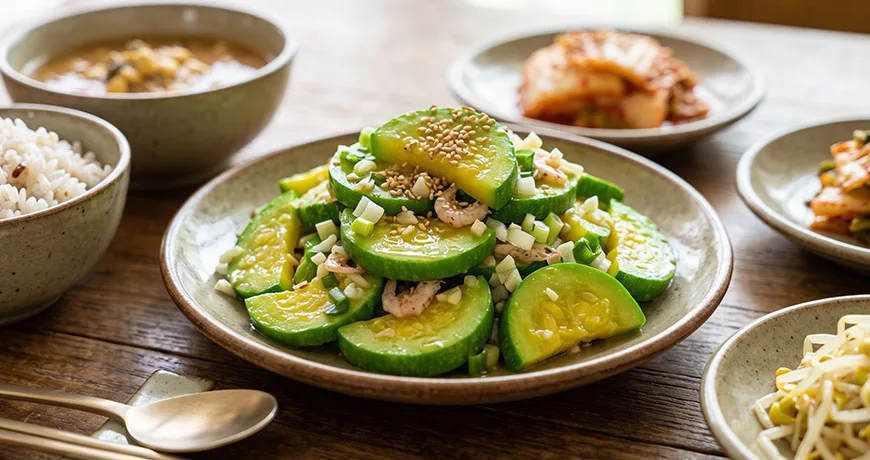
A classic and highly nutritious Korean vegetable side dish (banchan) featuring tender Korean zucchini stir-fried with minced garlic, scallions, and salted fermented shrimp (Saeujeot). Cooking the zucchini in oil is a deliberate technique to maximize the body’s absorption of its fat-soluble beta-carotene. Furthermore, pairing it with salted shrimp is a nutritional masterstroke—the natural protease and lipase enzymes in the fermented shrimp significantly aid digestion while enveloping the subtle sweetness of the vegetable in a profound, savory umami. It is a brilliant example of achieving maximum flavor and health benefits through minimal culinary intervention.
⏱️ Total: 15 mins | Prep: 10 mins | Cook: 5 mins | 🍳 Easy | 🥒 Sweet & Savory Umami | 🌿 Digestive-Friendly Side
Ingredients (2 servings)
- Main Ingredients: 1 Korean Zucchini (Aehobak), 1/4 onion, 1 scallion, 1/2 red chili (optional)
- Seasoning & Cooking: 1 tbsp cooking oil, 1 tbsp perilla oil (or sesame oil), 1 tbsp salted fermented shrimp (Saeujeot), 1/2 tbsp minced garlic, toasted sesame seeds, 2-3 tbsp water (for moisture control)
💡 Gastronomic Substitutes & Notes
- Korean Zucchini ➔ Standard green zucchini or yellow squash. (Western varieties tend to release more water and have a slightly less dense flesh, but the cooking application remains identical).
- Salted Fermented Shrimp ➔ 1 tbsp fish sauce or light soy sauce. (While these alternatives substitute the saltiness and umami, note that they lack the active digestive enzymes unique to Saeujeot).
Allergy Information
- Contains: Crustacean (Salted shrimp) (Vegan/Vegetarian-friendly if substituting salted shrimp with soy sauce)
Equipment
- Knife, Cutting Board, Heavy-bottomed Skillet, Spatula
Cooking Instructions
- Prepping Ingredients: Halve the zucchini lengthwise and slice it into 0.5cm-thick half-moons. Slice the onion evenly, and finely chop the scallion and red chili.
- Aromatic Infusion: Heat a skillet over medium heat and add 1 tbsp of cooking oil. Toss in the minced garlic and chopped scallions, stirring briefly to infuse the oil with their volatile aromatics.
- Stir-frying: Once fragrant, add the zucchini and onion. Stir-fry for 1-2 minutes until the zucchini edges become slightly translucent and evenly coated with the aromatic oil.
- Seasoning & Thermal Steaming: When the zucchini is halfway cooked, add the salted fermented shrimp and mix well. To ensure the zucchini becomes perfectly tender without burning or becoming mushy, pour 2-3 tablespoons of water around the edges of the pan. Cover with a lid and let it gently steam over low heat for exactly 1 minute.
- Finishing Touches: Turn off the heat once the zucchini reaches a tender-crisp texture. Fold in the red chili, perilla oil (or sesame oil), and toasted sesame seeds, utilizing the residual heat to bind the flavors. Serve warm or at room temperature.
💡 Professional Culinary Insights
- The Nutritional Synergy of Saeujeot: Salted fermented shrimp is far more than a simple sodium substitute. Through the fermentation process, it develops an abundance of natural protease and lipase enzymes. These actively assist the stomach in breaking down proteins and fats, making this vegetable dish exceptionally easy to digest and comforting for the gut.
- Maximizing Beta-Carotene Bioavailability: Korean zucchini is densely packed with beta-carotene, a fat-soluble precursor to Vitamin A. Deliberately stir-frying it in oil rather than blanching it in water exponentially increases the bioavailability and absorption rate of this vital nutrient, promoting cellular health and boosting immunity.
- Moisture Control Technique: Adding a splash of water and briefly covering the pan introduces controlled steam into the cooking environment. This hybrid stir-fry/steam method cooks the zucchini evenly to the core without requiring excessive oil or risking a charred, bitter exterior.
Nutrition Facts (Estimated)
Total Content : Approx. 150g (1 serving)
Calories : 75 kcal
– Sodium : 420mg
– Total Carbohydrate : 8.0g
– Sugar : 4.0g
– Total Fat : 4.5g
– Saturated Fat : 0.5g
– Cholesterol : 5.0mg
– Protein : 2.5g
– Calcium : 25.0mg
*Daily Values are based on a 2,000 calorie diet and standard Korean nutritional reference values
** Nutritional values are calculated based on the original ingredients, not substitutes
The Emerald Tenderness of the Garden: A Lyricism of Sweet Summer Squash and Fermented Umami
Aehobak Bokkeum (Stir-fried Korean Zucchini with Salted Shrimp) stands as the most comforting and gentle zenith of traditional Korean home-cooking gastronomy (Banchan), where tender, sun-drenched summer squash meets the savory depth of fermented salted shrimp (Saeujeot) over a gently oiled skillet. Eschewing heavy, aggressive spices, the ancestral wisdom of slicing the delicate squash into translucent rounds allows its pure, hydrating juices and subtle natural sugars to awaken upon contact with gentle heat, transforming into a meltingly tender and succulent culinary delight.
As minced garlic and scallions sizzle in the pan to release their piquant aromatic base, the addition of salted shrimp acts as an exquisite culinary bridge, dramatically amplifying the squash’s delicate sweetness. The soft, pillow-like flesh of the squash yields effortlessly beneath the tooth, releasing an abundance of sweet moisture that melds seamlessly with the deep, briny umami of the cured shrimp—crafting the most tranquil and soul-soothing harmony on the everyday Korean dining table.
True gastronomy does not rely on ostentatious luxury or heavy artificial seasonings; it flourishes in the holistic philosophy of pairing pristine seasonal vegetables with time-honored fermentation to comfort the digestive system and restore internal peace. Savoring a glossy, tender spoonful of stir-fried zucchini over warm white rice today is an honest and gentle ritual—clearing away bodily heaviness and replenishing the spirit with unadulterated vitality, lightness, and maternal warmth.
Editor’s Review
1. A Delicate Cadence of Melting Squash Succulence, Gentle Vegetal Sweetness, and Deep Fermented Shrimp Umami
The moment a warm, sauce-glistening slice of zucchini touches the palate, an immediate wave of natural sweetness and pure vegetal freshness spreads across the tongue without a trace of heaviness. As the velvety, tender flesh yields effortlessly to the bite, it releases a flood of hydrating vegetable juices married with the rich, savory depth of fermented shrimp and garlic-infused oil, orchestrating an endlessly comforting, multi-layered rhythm of subtle gastronomic pleasure.
2. Lipid-Mediated Beta-Carotene Solubilization and Fermented Enzyme (Protease–Lipase) Digestive Kinetics
Aehobak Bokkeum represents an exacting study in nutrient bioavailability and digestive biochemistry. Sautéing in a small amount of cooking oil systematically dissolves the fat-soluble beta-carotene and vitamin A locked within the plant cell walls into lipid micelles, dramatically increasing their absorption rate within the human intestinal tract. Concurrently, the naturally occurring digestive enzymes in the fermented shrimp—chiefly proteases and lipases—accelerate gastrointestinal breakdown, while the squash’s high potassium reserves promote cellular sodium excretion, establishing an optimal biochemical equilibrium that soothes the stomach and relieves water retention.
3. The Nostalgic Solace of Everyday Home Cooking and the Grounding Sanctuary of Gentle Digestion
Encountering a freshly cooked plate of stir-fried zucchini alongside a steaming bowl of rice serves as an intimate sanctuary of solace whenever one feels fatigued or overstimulated by rich foods. Revered for generations as an essential staple to ease digestion, nourish vital energy, and restore balance, enjoying this honest, unpretentious green dish washes away modern stress, granting a timeless sanctuary of stillness, maternal tenderness, and grounded restorative wellness.