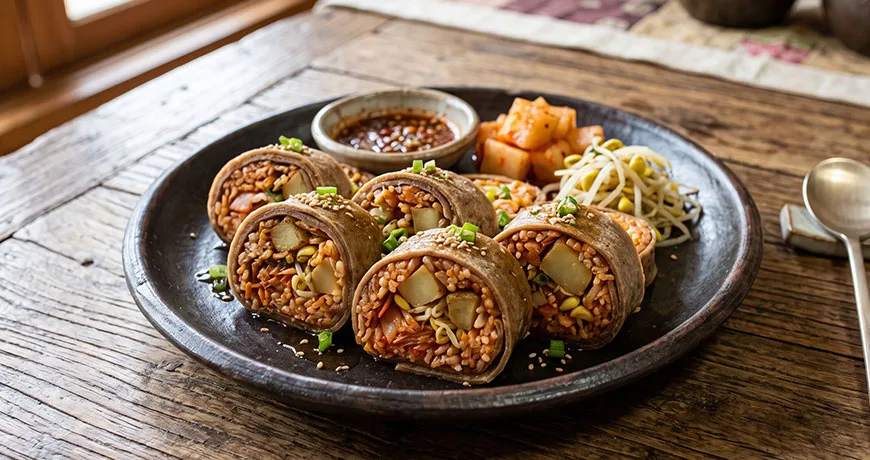
Memilgamjabibimbap is a highly advanced structural gastronomy dish where a dense, multi-textured matrix of ingredients is mechanically compressed inside a thin, flexible hydrocolloid gel envelope (crepe) formed by the thermal coagulation of gluten-free buckwheat. The warm, amylopectin-rich rice, thermally hydrolyzed soft potatoes, and the surviving cellular turgor pressure of soybean sprouts and lactic acid-fermented kimchi are first emulsified with the unsaturated lipids of toasted sesame oil. When this multi-phase matrix is tightly rolled inside the elastic buckwheat crepe under mechanical pressure, all internal air pockets are eliminated, establishing a high-density cylindrical roll structure. Upon mastication, the soft outer buckwheat gel shears first, instantly followed by an explosive textural contrast as the crisp cellulose and sticky starches inside grind together like gears, delivering a calculated burst of flavor and texture directly to the brain.
⏱️ Total: 35 mins | Prep: 20 mins | Cook: 15 mins | 🍳 Difficulty: Moderate (Requires gluten-free gel thermal coagulation and structural compression control) | 🌶️ Profile: Nutty, Earthy, Savory, and Refreshingly Tart | 🍚 Focus: Hydrocolloid Gelation, Mechanical Compression, & Textural Engineering | 🍶 Pairing: Chilled, naturally carbonated Buckwheat Dongdongju or clear Yakju
Ingredients (2 servings)
- Structural Envelope Matrix: 1 cup Buckwheat Flour, 1.5 cups Water, 2 pinches Salt, Cooking Oil (for frying)
- Amylopectin & Starch Matrix: 2 bowls warm cooked White Rice, 1 Potato (julienned and sautéed with oil and salt)
- Cellulose & Lactic Matrix: 100g Sour Kimchi (liquid forcefully squeezed out, then finely chopped), 100g blanched Soybean Sprouts (lightly salted)
- Lipid & Umami Emulsifier (Sauce): 1.5 tbsp Brewed Soy Sauce, 0.5 tbsp Gochujang (Korean chili paste), 1.5 tbsp Toasted Sesame Oil, 1 tbsp Toasted Sesame Seeds
Allergy Information Contains: Buckwheat, Soy, Wheat (from soy sauce and Gochujang), Sesame
Equipment Well-coated wide Frying Pan, Mixing Bowls, Cutting Board, Very Sharp Knife
Cooking Instructions
- Hydrocolloid Gel Formation: In a mixing bowl, whisk the buckwheat flour, water, and salt into a thin aqueous suspension. Let it rest for 10 minutes to allow the buckwheat starches to fully hydrate. Lightly oil a frying pan and spread a thin layer of the batter. Cook slowly over low heat to thermally coagulate the proteins, forming a tear-resistant, flexible crepe.
- Multi-phase Matrix Assembly: In a large bowl, combine the rice, sautéed julienned potatoes, tightly squeezed chopped kimchi, and blanched soybean sprouts. Pour in the seasoning sauce. Mix thoroughly so the sesame lipids smoothly emulsify the amylopectin and vegetables together.
- Mechanical Compression & Rolling: Lay the cooled buckwheat crepe flat on a cutting board. Spread the mixed bibimbap matrix evenly over about 2/3 of the crepe’s surface. Applying firm mechanical pressure with your fingertips, roll it tightly into a dense cylinder, much like making sushi or gimbap.
- Shear Force Control: Using a razor-sharp knife, apply a clean shear force to slice the roll into bite-sized pieces. A dull blade will tear the outer gel and release the internal compression, so a swift, clean cut is mandatory.
- Structural Finish: Plate the slices neatly to visually expose the beautiful, multi-colored cross-sectional architecture of the compressed ingredients.
💡 Professional Culinary Tips
- Thermodynamics of Gluten-Free Batter: Buckwheat lacks the gluten proteins that form a stretchy web in wheat flour. If you fry it aggressively over high heat, the surface water evaporates instantly, resulting in a brittle, crumbling mess. It is imperative to apply gentle, low heat to slowly gelatinize the starches completely. This thermodynamic control transforms the batter into a tough, flexible envelope capable of withstanding mechanical compression without tearing.
- Physics of Water Activity Control: If you do not physically squeeze out every drop of excess lactic brine from the chopped kimchi, catastrophic osmotic pressure will force that moisture out into the buckwheat crepe. This will cause the gel structure to disintegrate and turn soggy. Strict manual compression to control the excess water activity of the internal matrix is the key to maintaining the roll’s structural integrity.
- Gastronomic Value of Mechanical Compression: Eating scattered rice and vegetables from a bowl provides a slow, sequential breakdown in the mouth. Compressing them at high density inside a crepe envelope is calculated textural engineering. The moment your teeth penetrate the roll, the sheer density forces a simultaneous explosion of contrasting textures—the crunch of the sprouts, the stickiness of the rice, and the soft yield of the potato—resulting in a profoundly different and elevated sensory experience.
🍶 Gastronomic Pairing
- Biochemical Palate Cleansing: When the heavily compressed carbohydrates and sesame lipids fill the oral cavity, pair this dish with a chilled, naturally carbonated Buckwheat Dongdongju or traditional clear Yakju. The highly refined alcohol molecules and natural organic acids resonate with the earthy rutin compounds of the buckwheat, sharply slicing through the lipid coating to reset your taste receptors for the perfect next bite.
Nutrition Facts (Estimated)
Total Content : Approx. 400g (1 serving)
Calories : 420 kcal
– Sodium : 890mg (Variable depending on soy sauce, kimchi, and Gochujang)
– Total Carbohydrate : 76.0g (Complex carbs from buckwheat, potato, and rice)
– Sugar : 3.0g
– Total Fat : 8.5g (Primarily unsaturated lipids from sesame oil)
– Saturated Fat : 1.5g
– Cholesterol : 0.0mg
– Protein : 11.0g (Plant-based proteins)
– Dietary Fiber : 7.0g
*Daily Values are based on a 2,000 calorie diet and standard Korean nutritional reference values.
**Nutritional values are calculated based on original ingredients; substitutions may alter specific macronutrients.
Origins and Food Culture of Buckwheat and Potato Bibimbap (Memilgamjabibimbap)
1. Highland Famine Relief: Slash-and-Burn Agriculture and the Destiny of Two Crops
- Rooted in the historic slash-and-burn farming (hwajeon) communities scattered across the rugged Taebaek Mountain highlands of Gangwon-do (Pyeongchang, Jeongseon, Yeongwol, and Bongpyeong), where steep, rocky terrains and severe frost prevented traditional wet-rice paddy farming.
- Fast-growing buckwheat—capable of thriving in acidic, rocky soils within two to three months—and cold-tolerant potatoes served as indispensable life-saving famine staples (guhwang singnyo). Combining both crops into a single dish allowed peasant households to stretch scarce rice rations while securing dense, sustained nutritional sustenance during long winter months.
2. The Culinary Science of Buckwheat Chongtteok and the Bibimbap Roll Matrix
- Ingeniously merging the structural form of Gangwon-do’s signature Memil Chongtteok (or Memil Jeonbyeong—savory buckwheat crepes stuffed with spicy radish and kimchi) with the communal harmony of traditional Korean Bibimbap.
- Because pure buckwheat flour is devoid of gluten, making it brittle and prone to tearing, cooks developed a delicate pan-frying technique: blending finely ground buckwheat with cool water into a loose batter and spreading it paper-thin across hot iron lids to achieve rapid starch gelatinization. Rolling the seasoned rice and potato filling securely inside this elastic crepe creates a durable, moisture-balanced cylindrical matrix that can be sliced without falling apart.
3. The Culture of the Field Snack (Saecham) and Modern Eco-Friendly Wellness
- Deeply connected to the traditional agrarian saecham culture—the midday field snacks carried out to farmers working on precipitous hillsides. Packaged easily in wild leaves, hemp cloths, or straw baskets, these sliced rolls eliminated the need for heavy ceramic bowls or broth, functioning as an ancestral high-energy portable meal.
- Today, Memilgamjabibimbap is widely celebrated as an authentic Korean plant-based, gluten-friendly superfood and elegant finger food, embodying the warm nostalgia of rural five-day markets (oil-jang) while presenting a sustainable, eco-conscious culinary model of Gangwon slow food to the modern world.
The Rustic Elasticity of Griddled Buckwheat Crepes and the Earthy Comfort of Steamed Potato-Kimchi Rice: A Refined Portrait of Memilgamjabibimbap
Memilgamjabibimbap (Buckwheat Crepe-Rolled Potato and Kimchi Bibimbap) stands as the ingenious, deeply grounded, and comforting summit of Korea’s regional fusion (bibimbap) gastronomy. Flour milled from hardy mountain buckwheat (memil)—which thrives in the thin soils and chilly winds of Gangwon Province’s high plateaus—is whisked with water into a gossamer batter and pan-seared into thin, circular, parchment-like crepes (memiljeonbyeong). Fluffy steamed potatoes, prized for their powdery sweetness, are gently mashed and combined with warm white rice, finely diced aged kimchi, crisp soybean sprouts, toasted sesame oil, and artisanal chili seasoning paste. Spread generously across the griddled buckwheat canvas, the seasoned rice is rolled tightly into a compact, savory cylinder and sliced into delicate, bite-sized cross-sections. Breaking free from the traditional paradigm of deep earthenware bowls and metal spoons, this dish merges the rustic wrap architecture of Gangwon’s iconic chongtteok with the dynamic amino acid synergy of bibimbap, presenting an effortlessly portable, multi-dimensional masterwork of botanical comfort.
Arranged on a white ceramic plate to reveal their vibrant, mosaic-like cross-sections, lifting a single slice with chopsticks delivers an immediate, heartwarming sensory charge. The roasted, rustic aroma of pan-seared buckwheat flour mingles seamlessly with the nutty perfume of cold-pressed sesame oil and the piquant, lactic breath of aged kimchi. Sinking your teeth into the piece reveals an exhilarating sequence of textures: the tender, silky resistance of the thin buckwheat skin yields gently, allowing the warm, starch-rich bibimbap filling to flood the palate. The fluffy, powdery potato starch acts as a soothing velvet cushion that softens the fiery edges of the red chili seasonings, while the auditory crunch of fermented kimchi and the crisp juiciness of tender bean sprouts awaken the salivary glands with bright lactic acidity. The nutty, mineral earthiness of the buckwheat wrapper harmonizes with the sweet grain notes of rice and potato, leaving an invigorating, remarkably clean finish that captures the brisk, refreshing spirit of alpine mountain meadows.
The enduring brilliance of Memilgamjabibimbap lies in its historical lineage—rooted in the survival foodways of Gangwon’s slash-and-burn mountain farmers (hwajeonmin) who relied on cold-hardy buckwheat and drought-tolerant potatoes as life-saving staples across harsh winters. By uniting the griddled crepe tradition of rural market festivals with the vibrant nutritional harmony of fermented vegetables and rice, a platter of buckwheat and potato rolled bibimbap remains an irreplaceable monument of agrarian resourcefulness, culinary elegance, and the timeless ingenuity of Korean comfort food.
Editor’s Review
1. A Dynamic Harmony of Supple Crepe Elasticity, Powdery Potato Starch Softness, and Crisp Kimchi-Sprout Snap
The structural architecture inside each rolled slice delivers an engaging play between delicate external tension and vibrant internal friction. The griddled buckwheat wrap, cooked without gluten yet stabilized through starch gelatinization, offers a tender, tear-resistant bite that holds the cylinder firmly together. Once pierced, the filling collapses luxuriously: the powdery, mashed potato integrates between the rice grains to create a creamy, cohesive matrix. This softness is punctuated by the brisk, auditory crunch of diced kimchi and water-dense bean sprouts, preventing the dense carbohydrates from cloying and ensuring an impeccably balanced mouthfeel from the first bite to the last.
2. Buckwheat Rutin and Globulin Film Mechanics, Potato Amylopectin Thermal Binding, and Lactic Acid Capsaicin Buffering
Memilgamjabibimbap represents an exacting study in non-gluten grain rheology, starch hydrocolloid dynamics, and sensory acid-lipid buffering. While buckwheat lacks glutenin and gliadin, its globulin storage proteins and starch granules swell and cross-link upon skillet contact, creating a flexible, heat-set edible film that serves as a protective moisture barrier for the filling. The gelatinized amylopectin within the mashed potatoes forms a high-viscosity hydrogel that binds the loose rice grains, ensuring the roll slices cleanly without structural crumbling. Furthermore, the concentrated lactic and acetic acids in the aged kimchi enhance salivary flow and elevate the natural sweetness of the potato starch. The lipophilic capsaicinoids from the chili seasoning paste are dispersed across the potato starch matrix and encapsulated by the unsaturated triglycerides of toasted sesame oil, preventing mucosal harshness while prolonging savory satisfaction.
3. Gangwon Mountain Foraging Heritage and the Modern Evolution of Rolled Finger-Food Gastronomy
By translating the traditional communal bowl of bibimbap into an elegant, self-contained rolled format inspired by Gangwon’s regional buckwheat wraps, Memilgamjabibimbap represents a landmark evolution in Korean casual dining. Preserving the rustic soul of ancient famine-relief staples while enhancing accessibility, texture, and visual presentation, this dish stands as an enduring sanctuary of domestic comfort, ecological resourcefulness, and brilliant Korean culinary craftsmanship.