
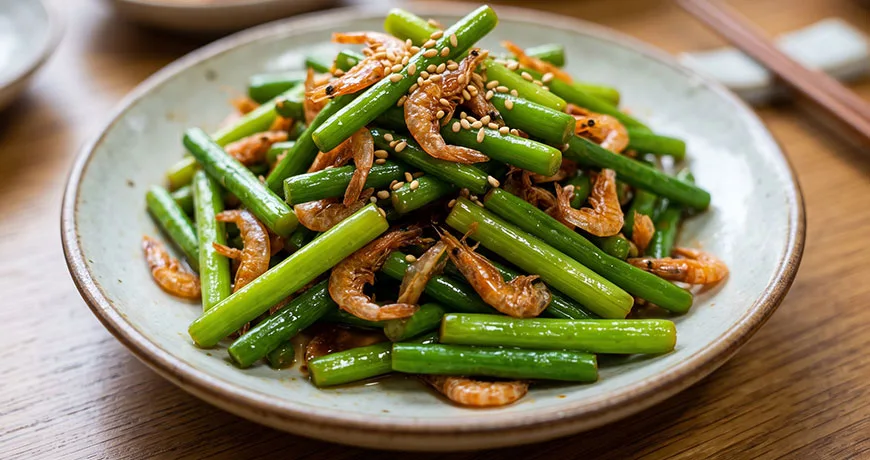
A savory, vibrant, and mildly sweet traditional Korean side dish (banchan) made with garlic scapes (maneuljong). Garlic scapes are the long, slender, edible flower stalks of the garlic plant, prized for their crisp texture and mellow, sweet garlic flavor that is much less pungent than the cloves. The scapes are cut into bite-sized lengths, briefly blanched in boiling water to retain their vibrant green color and crispness, and then stir-fried with soy sauce or salt. Adding dried shrimp (bori-saeu) to the stir-fry is a popular variation that beautifully enhances the dish with a crunchy texture, deep marine umami, and an appetizing contrasting color.
⏱️ Total: 15 mins | Prep: 5 mins | Cook: 10 mins | 🍳 Easy | 🦐 Savory & Crunchy | 🌿 Sweet Garlic Flavor
Ingredients (2-3 servings)
- Main Ingredients: 250g fresh garlic scapes (maneuljong), 1/2 cup small dried shrimp (bori-saeu or geon-saeu, optional but highly recommended), 1/2 tsp coarse sea salt (for blanching)
- Seasoning & Glaze: 1.5 tbsp soy sauce, 1 tbsp rice syrup (mulyeot) or oligosaccharide (for sweetness and shine), 1/2 tbsp cooking wine (cheongju / mirin), 1.5 tbsp cooking oil
- Finishing Touches: 1 tbsp toasted sesame oil, 1 tsp toasted sesame seeds
Allergy Information
- Contains: Crustacean Shellfish (Dried Shrimp), Soy (Soy sauce), Wheat (Soy sauce), Sesame (Vegan-friendly if the dried shrimp is omitted and a pinch of salt is used instead of fish sauce)
Equipment
- Medium Pot (for blanching), Colander, Frying Pan or Wok, Kitchen Tongs, Spatula, Cutting Board, Knife
Cooking Instructions
- Prepping the Scapes: Wash the garlic scapes thoroughly under cold water. Snip off the tough, woody bottom ends and the bulging flower bud at the top. Cut the remaining bright green stalks into 4–5 cm lengths.
- Flash Blanching: Bring a pot of water to a rolling boil and add 1/2 tsp of coarse salt. Drop the cut garlic scapes into the water and blanch them for just 30–45 seconds. Drain immediately and rinse under cold water to stop the cooking and lock in their vivid green color and crisp snap.
- Toasting the Shrimp: Heat a dry frying pan over medium heat. Add the dried shrimp and toss for 1 minute until they turn fragrant and extra crispy. Remove them from the pan and set aside.
- Stir-Frying: Wipe the pan clean, add 1.5 tbsp of cooking oil, and place it over medium heat. Add the blanched garlic scapes and stir-fry for 2 minutes until they start to glisten and soften slightly.
- Glazing: Lower the heat to medium-low. Add the soy sauce, cooking wine, and rice syrup. Toss the scapes continuously so the savory, sweet glaze coats every piece evenly.
- Combining & Finishing: Add the toasted dried shrimp back into the pan. Stir-fry everything together for another 1 minute until the sauce reduces and clings tightly to the ingredients. Turn off the heat, drizzle with toasted sesame oil, and sprinkle with sesame seeds. Serve warm or at room temperature.
💡 Cooking & Pairing Tips / Health Benefits
- Garlic & Shrimp Synergy (Food Pairing): Combining garlic scapes with dried shrimp is nutritionally excellent. While garlic scapes provide abundant Vitamin C and dietary fiber, the dried shrimp supplies high-quality protein and highly bioavailable calcium (as you consume the shells). The savory crunch of the shrimp perfectly contrasts the tender, snappy bite of the scapes.
- Why Blanching is Essential: Skipping the blanching step can result in tough, overly pungent scapes that take too long to cook in the pan. A quick hot water bath ensures a uniformly tender-crisp texture while softening the sharp raw garlic bite.
- The Dry-Toast Technique: Toasting the dried shrimp in a dry pan beforehand removes any lingering fishy odors and restores their delightful, airy crunch.
- Perfect Food & Beverage Pairing: A classic, everyday staple in Korean home-cooking. It pairs perfectly with warm white rice, soft rolled omelets (Gyeran-mari), and mild stews. Also acts as an excellent side to cut through the richness of grilled meats.
Nutrition Facts (Estimated)
- Total Content : Approx. 100g (1 serving)
- Calories : 125 kcal
– Sodium : 450mg
– Total Carbohydrate : 12.5g
– Sugar : 4.5g
– Total Fat : 6.5g
– Saturated Fat : 1.0g
– Cholesterol : 25.0mg
– Protein : 6.0g
– Calcium : 120.0mg
– Dietary Fiber : 2.5g
(Daily Values are based on a 2,000 calorie diet and standard Korean nutritional reference values)
A Vibrant Color Theory of Early Summer: The Symphony of Earth’s Vitality and Oceanic Umami
Maneuljong-bokkeum (Stir-fried Garlic Scapes) is an ode to early summer gastronomy, bringing the spicy, unyielding vitality of garlic flower stalks straight to the dining table. While these firm, emerald-green stems inherently carry the concentrated, pungent energy of the earth, the moment they pass through boiling water and hit a shimmering, oiled pan, their sharp bite gracefully mellows into a deep, elegant sweetness. When paired with dried sakura shrimp—tiny, crimson vessels of concentrated oceanic energy—this humble side dish achieves an absolute gastronomic structure where the earth and the sea intersect.
Sizzling in the pan, the deep, caramelized aroma of soy sauce intertwining with the toasted, savory scent of the shrimp creates an olfactory temptation as striking as their visual contrast. The harmony of vibrant green stalks speckled with blushing red shrimp transcends mere taste, offering a wondrous experience that allows diners to physically savor the changing of the seasons.
True gastronomy is not confined to lavish main courses; it thrives in the culinary wisdom of crossing distinct natural colors and textures to enrich the everyday table. Clearing away this crisp, delightful plate today is a restorative, grounding ritual—awakening a sluggish appetite amidst the changing seasons and replenishing the body with the earth’s fresh, revitalizing energy.
Editor’s Review
1. A Multi-Layered Sensory Cadence of Snapping Green Stalks and Crispy Oceanic Bites
The moment the gently soy-glazed garlic scapes are chewed, a delightfully crisp, snapping rupture releases a burst of sweet, verdant juices that instantly awaken the palate. Closely followed by the crispy, slightly prickly texture of the toasted dried shrimp, an explosive wave of concentrated seafood umami washes over the tongue. This brilliant contrast between the refreshing crunch and the intensely savory, sweet-and-salty finish delivers a dynamic, endlessly engaging sensory pleasure.
2. Cellulose-Softening Blanching Dynamics and Lipid-Soluble Astaxanthin Extraction
Maneuljong-bokkeum represents an exacting application of preparatory food science, utilizing a brief blanching stage to break down rigid plant cellulose for a tender chew while stabilizing the vibrant green chlorophyll. During the subsequent high-heat sauté, the high-density proteins, glutamic acids, and crimson astaxanthin pigments concentrated within the dried shrimp explosively leach into the cooking oil. This resulting umami-infused lipid seamlessly glazes the surface of the scapes, neutralizing volatile allicin into a mellow sweetness and demonstrating absolute chemical cohesion in vegetable sautéing.
3. The Restorative Solace and Nostalgic Warmth of Early Summer Home Dining
Placing a generous, colorful chopstick-full of stir-fried garlic scapes and shrimp over a bowl of freshly steamed white rice transports the diner back to the comforting warmth and maternal care of a traditional home-cooked meal. Though unpretentious, this deeply nostalgic banchan solidly anchors the table, washing away the monotony of daily life and granting an authentic sanctuary of peace, emotional recovery, and seasonal vitality.