
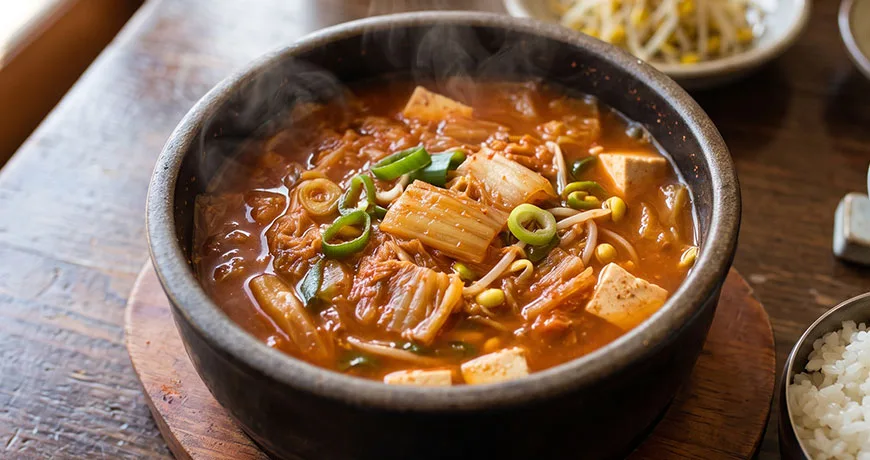
Kimchi-guk is a quintessential Korean winter daily soup that demonstrates brilliant biochemical synergy. It pairs the potent lactic acid and glutamates of well-fermented, aged kimchi with the rich inosinate found in anchovy broth. The organic acids generated during the kimchi’s fermentation naturally mask any residual fishiness from the broth, resulting in a bright, clean, and fiercely savory liquid. Fortified with asparagine-rich bean sprouts to aid in liver detoxification and porous tofu that acts as a sponge for the tangy broth, this soup is a masterclass in maximizing flavor and nutrition through traditional fermentation and thermodynamics.
⏱️ Total: 25 mins | Prep: 10 mins | Cook: 15 mins | 🍳 Difficulty: Easy (Requires temperature control to prevent sprout enzymes) | 🌶️ Profile: Tangy, Spicy, Refreshing, and Deeply Savory | 🍚 Focus: Lactic Acid, Umami Synergy, & Asparagine
Ingredients (3–4 servings)
- Acidic & Umami Base: 200g aged, sour kimchi (mugeunji, lightly shaken of excess filling and chopped), 1/2 cup kimchi brine (juice from the kimchi container)
- Umami Broth Medium: 6–7 cups water, 10–12 dried soup anchovies (gutted), 1 piece dried kelp (dashima, 5x5cm)
- Proteins & Detoxifiers: 150g soybean sprouts (kongnamul), 1/2 block firm tofu (cubed), 1/2 scallion
- Seasoning: 0.5 tbsp minced garlic, 1 tbsp soup soy sauce (guk-ganjang) or salted shrimp (saeujeot), 1 tbsp gochugaru (chili flakes, optional for extra heat)
Allergy Information Contains: Soy, Wheat (from soy sauce), Seafood (Anchovy, and often shrimp/fish sauce in kimchi)
Equipment Medium Pot, Cutting Board, Knife, Fine Mesh Strainer, Ladle
Cooking Instructions
- Inosinate Extraction (Broth): In a pot, combine the water, gutted anchovies, and kelp. Bring to a rolling boil over high heat. Remove the kelp after 5 minutes to prevent alginic acid from making the broth slimy. Boil for another 10 minutes, then remove and discard the anchovies to yield a clear, savory stock.
- Lactic Acid Release & Cellulose Softening: Add the chopped sour kimchi and the filtered kimchi brine to the clear boiling broth. Boil vigorously for about 10 minutes. This thermodynamic process softens the tough cellulose of the cabbage and fully disperses the lactic acid and fermented amino acids into the liquid.
- Lipoxygenase Control (Sprout Addition): Once the broth is deeply infused, add the washed soybean sprouts. To prevent the activation of lipoxygenase (an enzyme that causes a raw, fishy smell in legumes), leave the pot completely uncovered. Boiling it uncovered allows any volatile off-odors to evaporate instantly while maintaining a rolling boil.
- Protein Hydration: As the sprouts begin to soften (about 3–4 minutes), gently stir in the cubed tofu, minced garlic, and gochugaru. The porous matrix of the tofu will immediately act like a sponge, drawing in the hot, tangy, and savory broth.
- Aromatic Finish: Add the diagonally sliced scallion and boil for 1 final minute to release its sharp, sweet sulfur compounds. Taste the soup and adjust the final salinity with soup soy sauce or salt. Turn off the heat and serve.
💡 Professional Culinary Tips
- Biochemical Value of Kimchi Brine: The liquid left in your kimchi container is not waste; it is a highly concentrated elixir of lactic acid, succinic acid, and glutamate produced by lactic acid bacteria. Adding it to the anchovy broth provides a powerful chemical masking effect, completely neutralizing any fishy notes while exponentially increasing the body and tanginess of the soup.
- The Umami Synergy Equation: The ‘glutamate’ from the fermented kimchi and the ‘inosinate’ from the dried anchovies create a biochemical reaction on the palate. When mixed in a roughly 1:1 ratio, the perceived intensity of the savory flavor is multiplied up to 7 or 8 times compared to either ingredient alone. This is the scientific reason this meatless soup tastes so profoundly satisfying.
- Thermodynamics of Soybean Sprouts: Fluctuating temperatures during boiling activate lipoxygenase in soybean sprouts, resulting in an unpleasant, grassy/fishy odor. Because the kimchi broth is already boiling violently when the sprouts are added, the safest method is the “Open System” approach: keeping the lid off entirely so the enzymes are quickly denatured by the high heat and any volatile odors immediately escape into the air.
Nutrition Facts (Estimated)
Total Content : Approx. 400g (1 serving, including broth)
Calories : 95 kcal
– Sodium : 850mg (Varies highly based on kimchi salinity)
– Total Carbohydrate : 9.0g
– Sugar : 2.0g
– Total Fat : 3.0g
– Saturated Fat : 0.5g
– Cholesterol : 5.0mg (from anchovy broth)
– Protein : 8.0g
– Dietary Fiber : 3.5g
*Daily Values are based on a 2,000 calorie diet and standard Korean nutritional reference values
**Nutritional values are calculated based on original ingredients; substitutions may alter specific macronutrients.
The Piquant Symphony of Winter-Fermented Aged Kimchi and Anchovy Umami: A Lyrical Masterpiece of Gimchiguk and Hearthside Winter Solace
Gimchiguk (Clear Spicy Kimchi Soup with Tofu and Bean Sprouts) stands as the pure, heartwarming, and deeply nostalgic pinnacle of Korean everyday home gastronomy, where well-fermented, sour aged kimchi (shin-kimchi)—harvested from winter earthenware jars (jangdokdae)—is finely chopped and simmered alongside crisp soybean sprouts and silken tofu in a pristine dried anchovy and kelp broth. Flourishing during the cold winter months when fresh gimjang kimchi reaches its peak fermented brilliance, this unassuming soup relies not on heavy meats or extravagant embellishments, but on the delicate interplay between brisk marine broth and the fizzy, lactic acidity of cultured cabbage, filling the dining space with comforting steam from the very first bubble.
The moment a piping-hot spoonful of the vibrant, crimson-tinted broth touches the palate, an exhilarating wave of zesty, lactic acidity and warming chili heat cascades across the taste buds, anchored by the clean, savory depth of the anchovy base. The tender, cloud-soft cubes of tofu dissolve effortlessly across the tongue while releasing mild soy sweetness, complemented by the watery, refreshing snap of bean sprouts. Mixing a bowl of warm, freshly steamed white rice into the steaming broth delivers a gentle, unpretentious solace that dispels winter chills and brings immediate gastrointestinal comfort.
True gastronomy does not rely on heavy, ostentatious luxuries; it flourishes in the ancestral wisdom of elevating humble, probiotic-rich staples through gentle heat to restore internal equilibrium and revive tired spirits. Savoring an aromatic, steaming bowl of clear kimchi soup today is an elegant and sacred ritual—clearing away everyday exhaustion through a wave of clean, tangy warmth and filling the spirit with unpretentious comfort, maternal nostalgia, and timeless solace.
Editor’s Review
1. An Exhilarating Cadence of Refreshing Lactic Acidity, Anchovy Umami Clarity, and Crunchy Sprout-Silken Tofu Harmony
The moment a piping-hot spoonful of Gimchiguk coats the palate, an immediate burst of invigorating lactic acidity from the sour kimchi and the clean kick of red pepper awakens the senses with sparkling clarity. This vibrant profile is supported by the savory foundation of clear dried anchovy broth, the refreshing, watery crunch of soybean sprouts, and the pillowy, custard-like surrender of silken tofu, orchestrating an endlessly refreshing, multi-layered sensory thrill that makes it the ultimate accompaniment to warm rice.
2. Inosinate-Glutamate Umami Multiplication Kinetics, Lactic Acid Digestion Stimulation, and Asparagine Mechanics
Gimchiguk represents an exacting study in fermentation biochemistry and aqueous flavor extraction. The inosine monophosphate (IMP) naturally extracted from dried anchovies interacts synergistically with the free glutamates released from aged kimchi and soybean sprouts, multiplying perceived umami intensity without requiring artificial flavorings. Concurrently, the bioavailable lactic and acetic acids in the fermented kimchi stimulate gastric secretions to promote digestion, while bean sprout asparagine, vitamin C, and highly digestible soy proteins establish an optimal biochemical matrix for cellular recovery and gentle hangover alleviation.
3. The Winter Gimjang Jar Heritage and the Grounding Sanctuary of Unpretentious Hearthside Comfort
Found gracing family breakfast tables on freezing winter mornings as an indispensable symbol of home-cooked maternal love, a modest bowl of spicy clear kimchi soup serves as an enduring emotional haven against daily weariness. Revered for generations as an essential comfort staple that thaws frozen mornings and revives the soul through pure, honest nourishment, enjoying this authentic delicacy washes away modern stress, granting a timeless sanctuary of stillness, culinary heritage, and grounded happiness.