
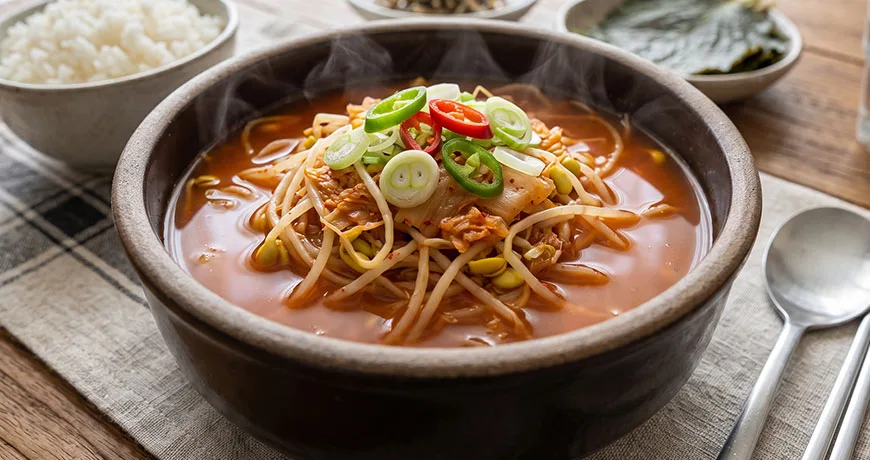
Kimchikongnamulguk is the ultimate hangover-curing consommé, merging the sharp, lactic acid fermentation matrix of aged Kimchi with the high-concentration aspartic acid found in soybean sprouts. As the inosinate (IMP) from the anchovy broth fuses with the organic acids leached from the kimchi, the broth’s pH drops, constructing an impeccably balanced, acidic umami base. The biochemical engineering of this dish hinges on two critical controls: managing the lipoxygenase enzyme (which causes the infamous “beany” smell in sprouts) through specific lid mechanics, and executing staggered thermal extraction to preserve the crunchy cellulose of the sprouts. By subjecting the kimchi to prolonged thermal hydrolysis first, the pectin walls soften, dissolving the rich lactic acid into the solvent. The sprouts are flash-boiled only at the very end. Seasoned with the profound fermented peptides of salted shrimp (Saeujeot), this is a high-end execution of a Korean household classic.
- ⏱️ Total: 30 mins | Prep: 10 mins (Kimchi marinade purging & sprout physical sorting) | Cook: 20 mins
- 🍳 Difficulty: Medium (Requires strict fluid dynamic lid control to vent lipoxygenase enzymes)
- 🌶️ Profile: Sharply Refreshing, Acidic Umami with a Crisp Capsaicin Finish
- 🍚 Focus: Organic Acid Diffusion, Lipoxygenase Venting, & Cellulose Preservation
Ingredients (3–4 servings)
- Lactic & Organic Acid Matrix: 200g Aged Kimchi (Mugeunji – fermented for 1+ years. MUST lightly shake off excess chili flakes and garlic stuffing to preserve broth clarity), 3 tbsp Aged Kimchi Brine
- Aspartic Acid & Cellulose Matrix: 200g Fresh Soybean Sprouts (Kongnamul – The thin roots contain the highest density of aspartic acid; do absolutely NOT snap them off. Rinse gently)
- Aqueous Umami Solvent: 1.2L Anchovy-Kelp Broth
- Amino Acid & Textural Matrix: 1/2 block Firm Tofu (sliced into rectangles)
- Ionized Sodium & Peptide Binder: 1 tbsp Salted Shrimp (Saeujeot – crucial for amino acid synergy), 1 tsp Soup Soy Sauce, Coarse Sea Salt to taste
- Aromatic Catalyst: 1 stalk Green Onion (diagonally sliced), 1 Cheongyang green chili, 1 tsp minced garlic
Allergy Information Contains: Soy (Sprouts, Tofu, Soy Sauce), Fish/Crustacean (Anchovy Broth, Salted Shrimp)
Cooking Instructions
- Solvent & Lactic Diffusion: In a pot, combine the anchovy broth, prepped aged kimchi, and 3 tbsp of kimchi brine. Bring to a rapid boil. Reduce to medium heat and perform proactive thermal hydrolysis for 10 minutes. This collapses the cabbage’s pectin cell walls and ensures the trapped lactic acids and fermented amino acids completely dissolve into the clear broth.
- Aspartic Extraction & Enzyme Control: Once the translucent red lactic matrix is established, return the heat to high. Drop in the soybean sprouts. From this moment on, keep the lid completely off. This hydrodynamic control ensures that the volatile, foul-smelling molecules produced by the lipoxygenase enzyme in the sprouts vaporize and escape with the steam, rather than condensing and falling back into the soup.
- Peptide Fusion: 2 minutes after adding the sprouts, gently slide in the sliced tofu, minced garlic, and 1 tbsp of salted shrimp. The protease enzymes and peptides from the fermented shrimp will violently collide with the lactic acid of the kimchi, exponentially elevating the body and umami of the solvent.
- Cellulose Preservation: Do not allow the sprouts to boil for more than 4 minutes total. Prolonged kinetic heat will destroy their cellulose structure, resulting in a mushy, stringy mess (syneresis). 1 minute before turning off the heat, scatter the scallions and chilies to activate their allyl compounds. Serve immediately.
💡 Professional Culinary Tips
- Thermodynamics of Lipoxygenase Control: The enzyme responsible for the raw, “beany” smell of soybean sprouts releases volatile aromatics when heated. If you open and close the pot lid during the boiling phase, these volatile molecules will hit the cold lid, condense, and drip right back into the broth, irreparably ruining the flavor. Leaving the lid entirely off from the start is the most molecularly sound method for venting this odor.
- Biochemical Value of Salted Shrimp (Saeujeot): Seasoning a kimchi soup exclusively with salt or soy sauce leaves the flavor profile hollow, with the sourness aggressively overpowering the palate. Introducing salted shrimp injects a massive payload of free amino acids (glutamate) broken down by the shrimp’s internal proteases. This chemically neutralizes the harsh edge of the lactic acid, transforming the sourness into a deeply rounded, elegant umami.
- Optical Necessity of Purging Kimchi: Boiling heavily coated kimchi directly in the solvent creates a murky, gritty broth filled with raw starch and oxidized garlic paste. To achieve the crystalline, refreshing consommé (Chintan) style essential for a premium hangover soup, you must physically shake off the heavy marinade from the kimchi leaves, utilizing only the fibrous cabbage and the clear, filtered kimchi brine as your extraction medium.
🍶 Gastronomic Pairing
- Biochemical Palate Cleansing: When the sharp lactic acid of the kimchi, the crisp cellulose of the sprouts, and the fiery capsaicin saturate your palate, pair this matrix with a highly refined, ice-cold Traditional Cheongju (Clear Rice Wine). The subtle, inherent lactic fermentation notes of the Cheongju will molecularly resonate with the kimchi broth, while the polished ethanol elegantly washes away the spicy heat, flawlessly resetting your taste receptors for the next spoonful.
Nutrition Facts (Estimated)
Total Content : Approx. 450g (1 serving)
Calories : 95 kcal (Excluding rice, ultra-low calorie restorative matrix)
– Sodium : 1,250mg (Attributed to Salted Shrimp, Kimchi, and Soy Sauce)
– Total Carbohydrate : 12.0g (Dietary fiber from sprouts and kimchi polysaccharides)
– Sugar : 2.5g
– Total Fat : 2.0g (Plant-based lipids from tofu)
– Saturated Fat : 0.3g
– Cholesterol : 10.0mg (Trace amounts from anchovy broth and shrimp)
– Protein : 9.0g (Plant-based peptide complex from tofu and sprouts)
– Dietary Fiber : 6.0g
*Daily Values are based on a 2,000 calorie diet and standard Korean nutritional reference values.
**Nutritional values are calculated based on original ingredients; substitutions may alter specific macronutrients.
Origins and Food Culture of Kimchi and Bean Sprout Soup (Kimchikongnamulguk)
1. Historical Lineage: Goryeo Hyangyak Gugeupbang, Joseon Dongui Bogam, and Kimchi Tradition
- Cultivating soybean sprouts is a uniquely Korean agricultural tradition, first documented in the 13th-century Goryeo medical text Hyangyak Gugeupbang under the name Daeduhwang (大豆黃), serving as an indispensable wintertime source of fresh vegetable vitamins when fresh greens were unavailable.
- In Heo Jun’s 1613 Joseon medical compendium Dongui Bogam, dried medicinal soybean sprouts were documented as Daeduhwangwon (大豆黃卷), praised because “its nature is balanced, its flavor sweet, and it is non-toxic; it cures muscular cramps, dissolves stagnation in the five visceral organs, clears heat from the stomach, and resolves water swelling.” Following the widespread adoption of red chili peppers and kimchi fermentation (chimchae) during the late Joseon era, combining well-fermented kimchi with fresh soybean sprouts into a unified, boiling broth gave birth to one of Korea’s most iconic everyday soups.
2. The Culinary Science of Lipoxygenase Inhibition and Whole-Root Decoction
- The fundamental food science of cooking soybean sprouts relies on controlling lipoxygenase—an endogenous enzyme that oxidizes polyunsaturated fatty acids to produce unpleasant grassy bean odors when exposed to moderate heat. Master cooks strictly adhere to a thermodynamic protocol: boiling the pot either with the lid tightly closed throughout or leaving it completely uncovered over high heat to allow volatile aldehydes to escape freely.
- Crucially, because hepatoprotective aspartic acid (asparagine) is concentrated within the fine taproots rather than the yellow cotyledons, authentic Korean culinary practice insists on leaving the sprout tails intact. Furthermore, the natural organic acids in aged kimchi interact with the sprout cell walls, preventing pectins from dissolving and ensuring the sprouts retain their signature crisp, juicy crunch even when boiled.
3. The Maternal Morning Hearth and the Soul of Working-Class Hangover Solace
- Kimchikongnamulguk represents the timeless maternal spirit of the Korean home: an ingenious culinary staple requiring no expensive cuts of meat, relying instead on a handful of home-grown soybean sprouts, a wedge of ripened winter kimchi from the earthenware onggi jar, and a few dried anchovies to nourish and warm an entire family at dawn.
- Evolving from a breakfast soup that soothed a working father’s morning hangover and energized children for school, it transitioned into an indispensable nationwide staple across 24-hour diners, school cafeterias, and military mess halls. Revered as the ultimate working-class solace and the undisputed champion of everyday hangover relief, it stands as an immortal monument to Korean home dining, microbiological fermentation, and comforting culinary warmth.
The Piercing Lactic Acidity of Well-Aged Kimchi, the Resilient Crunch of Seedling Hypocotyls, and the Oceanic Solace of Dried Anchovy Broth: A Refined Portrait of Kimchikongnamulguk
Kimchikongnamulguk (Kimchi and Bean Sprout Soup) stands as the dynamic, profoundly comforting, and biologically restorative summit of Korea’s everyday domestic (tangban) gastronomy. Centered upon mature, deeply fermented Napa cabbage kimchi (mukeunji or sin-kimchi)—whose long winter dormancy inside breathable earthenware onggi has enriched it with sparkling organic acids and microbial amino acids—and crisp soybean sprouts (kongnamul), cultivated in the dark to transform dense legume proteins into bioavailable asparagine and ascorbic acid, the preparation begins with disciplined stock extraction. Large, silver dried anchovies (dae-myeolchi), eviscerated to prevent bitterness, are simmered alongside thick sheets of dried kelp (dasima) in fresh spring water to construct an immaculate, low-viscosity oceanic foundation. Finely sliced aged kimchi and its fermented brine are introduced into the bubbling anchovy stock over high convective heat, gently breaking down the fibrous cellulose of the cabbage until the broth turns a translucent, shimmering ruby. As the natural sugars and fermentation acids suffuse the broth, generous handfuls of cleaned soybean sprouts are plunged into the cauldron, brought to a rapid rolling boil with the lid kept off to prevent the emergence of volatile beany off-notes. Crowned at the final moment with crushed garlic, scallions, sharp Cheongyang green chilies, and a crystalline spoonful of fermented salted shrimp (saeujeot) or artisanal soup soy sauce, this dish represents a masterclass in domestic minimalism. Completely eschewing heavy animal tallows or cloying pastes, Kimchikongnamulguk extracts the pure lactic vigor of fermented vegetables and the crisp mineral hydration of sprouted legumes, delivering an austere, soul-cleansing broth that banishes metabolic fatigue with radiant clarity.
Confronting the steaming earthenware pot as terracotta-colored bubbles froth vigorously between vivid yellow bean sprout heads and translucent crimson cabbage ribbons, lifting a deep spoonful of the broth releases an immediate, deeply electrifying olfactory charge: the sharp, mouth-watering perfume of fermented lactic and acetic acids mingles seamlessly with the deep, roasted sea savor of dried anchovy broth, the sweet sulfurous warmth of scallions, and the brisk pungency of crushed garlic. Taking the first sip delivers an unadorned revelation across the oral mucosa: devoid of any greasy surface tension, the clarified, low-viscosity acidic broth floods the tongue with silk-like softness, gliding effortlessly down the esophagus to soothe alcohol-inflamed gastric linings and dispel mental lethargy in an exhilarating wave of what Korean gastronomy reveres as siwon-kalkal-han mat—the sensation of profound, soul-cleansing lightness anchored by a sharp, invigorating kick. Sinking your teeth into the tangled mound of bean sprouts reveals an extraordinary structural joy: having preserved their cellular turgor under swift boiling, the slender white hypocotyl stalks fracture with an energetic, audible snap (ajak), discharging cool, sweet vegetal water. In delightful contrast, the golden cotyledon heads yield with a nutty, toothsome chew, while the braised kimchi leaves melt across the palate like warm silk, releasing concentrated streams of tangy, savory brine. Steeping a bowl of warm white rice into the bubbling crimson broth and taking each steaming spoonful with a crisp bite of aged kimchi completes an unforgettable ritual of physical rejuvenation, domestic solace, and profound gastronomic catharsis.
The enduring majesty of Kimchikongnamulguk lies in its working-class domestic heritage—born in the humble home kitchens of the Korean peninsula during freezing winters and sparse early springs, where mothers turned to the two most ubiquitous and affordable pantry staples: the family’s winter kimchi crock and the indoor sprouting crock (kongnamul siru). Without access to expensive butchery cuts, they utilized the transformative power of fermentation and germination to nourish growing children and revive exhausted husbands after long nights of toil and drink. Uniting vegetal fermentation acids with the hepatic restorative power of germinated legumes, a steaming bowl of kimchi and bean sprout soup remains an irreplaceable monument of maternal resourcefulness, democratic sustenance, and brilliant Korean culinary craftsmanship.
Editor’s Review
1. A Dynamic Harmony of Hypocotyl Cell Wall Fracture, Nutty Cotyledon Chew, Silken Kimchi Flaccidity, and Frictionless Broth Fluidity
The structural architecture inside the vessel delivers an extraordinary, four-tiered choreography between hydrated dicotyledonous seedling tissues, microbially softened vegetable matrices, and an ultra-low-viscosity aqueous matrix. Subjected to rapid convective boiling, the elongated white hypocotyls of the soybean sprouts preserve their internal cellular turgor and cellulose-pectin scaffolds, fracturing under tooth pressure with a clean, energetic crunch (ajak-sakak) that supplies essential masticatory friction. Counterbalancing this, the dense cotyledon heads—reinforced with heat-coagulated legume globulins—resist tooth pressure with a nutty, toothsome chew. Slices of long-aged kimchi exhibit a dual texture: the thin leafy blades soften into a delicate, velvet-like silkiness that dissolves effortlessly across the tongue, while the thick leaf ribs retain a tender, juicy give. Finally, the completely defatted, clear broth forms a frictionless lubricating fluid layer across oral membranes, ensuring an impeccably balanced, non-fatiguing mouthfeel from the first steaming sip to the last.
2. Kimchi Organic Acid Neuro-Sensory Stimulation, Hypocotyl Free Asparagine Hepatic ADH/ALDH Kinetics, IMP-Glutamate Nucleotide Synergy, and Lipoxygenase Thermal Inactivation
Kimchikongnamulguk represents an exacting study in vegetable fermentation biochemistry, seed germination physiology, and flavor volatile mitigation. Long-aged kimchi provides high concentrations of microbially generated lactic acid, acetic acid, and succinic acid; upon oral contact, these organic acids trigger immediate salivary secretion from the sublingual and submandibular glands, while stimulating the vagus nerve to promote gastric acid secretion and gastrointestinal motility. Concurrently, dense reserves of free L-asparagine concentrated within the soybean sprout hypocotyls activate the malate-aspartate shuttle and hepatic urea cycle, synthesizing essential cofactors that accelerate alcohol dehydrogenase (ADH) and acetaldehyde dehydrogenase (ALDH) kinetics to rapidly oxidize toxic acetaldehyde into acetate. Broth savor is governed by a profound three-way biochemical synergy: muscle-derived inosine monophosphate (5′-IMP) from the dried anchovies converges with natural free glutamates from the dried kelp, alongside free amino acids generated during cabbage fermentation and soybean germination, triggering an exponential activation across human oral T1R1/T1R3 umami heterodimers. In the odor-control phase, lipoxygenase enzymes responsible for generating beany off-volatiles (such as hexanal) undergo irreversible thermal denaturation above 85°C; boiling with the cauldron uncovered allows volatile aldehydes to escape freely into the atmosphere. Furthermore, active allyl sulfides from garlic and scallions chemically bind and mask trace fishy trimethylamine (TMA) and residual cabbage sulfur volatiles (methanethiol), securing an immaculate, pure, and invigorating aromatic profile.
3. The Pan-Korean Winter Kimjang Heritage, Domestic Germination Lore, and the Sovereign Apex of Democratic Restorative Gastronomy
Marrying the crowning achievement of winter lactic preservation with the indoor vitality of sprouted legume seeds, Kimchikongnamulguk stands as the ultimate archetype of frugal, nutritionally complete comfort food in Korean history. Proving that profound gastronomic catharsis and biological rejuvenation require neither elite cuts nor extravagant ingredients, this vibrant, ruby-tinted classic captures the loving resilience of the Korean domestic hearth, standing as an enduring sanctuary of environmental authenticity, maternal solace, and brilliant culinary artistry.