
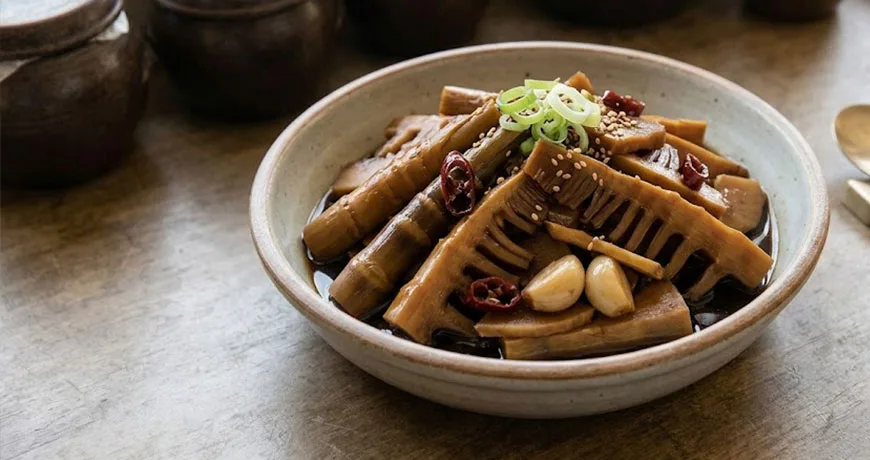
Juksunjangajji is a premium Korean fermented preserve that captures the robust cellulosic texture of young spring bamboo shoots within a highly calibrated osmotic brine of soy sauce and organic acids. Because raw bamboo shoots contain cyanogenic glycosides and homogentisic acid (which causes a harsh, astringent bite), they must undergo a rigorous thermal detoxification process using starch-rich rice water. Once purified, a boiling sweet-and-sour soy brine is poured directly over the shoots, instantly locking in their unparalleled crunch through thermal shock. The bamboo’s natural free amino acids (like tyrosine) bind with the soy peptides, creating an elegant balance between earthy, woody notes and deep umami.
- ⏱️ Total: 3–5 Days | Prep: 1 Day (Bamboo shoot peeling and rice water thermal detoxification) | Cook & Ferment: 3–5 Days (Hot osmotic blanching and cold aging)
- 🍳 Difficulty: Medium-High (Requires proper thermal extraction of toxins and precise boiling/cooling cycles for the brine)
- 🌶️ Profile: A highly refreshing, earthy bamboo aroma cut by a bright, sweet-and-sour soy umami with an exceptional crunch
- 🍚 Focus: Thermal Detoxification, Hot Osmotic Blanching, Acid-Base Buffer Aging
- 🍶 Pairing: K-BBQ (Fatty grilled beef or pork belly), Green tea rice bowls with dried fish
Physicochemical & Sensory Matrix
- Baseline Salinity: 6.0% ~ 8.0% (Calculated to penetrate the dense, high-moisture matrix of bamboo shoots)
- pH Equilibrium: 3.8 ~ 4.2 (Anti-spoilage acidic buffer matrix formed by vinegar and plum extract)
- Textural Crunch Index: [■■■■□] (Pectin structures shrunk and permanently locked via hot brine blanching)
- Umami Density (T1R1/T1R3 Synergy): 8.4 / 10 (Synergy between the bamboo’s natural amino acids and fermented soy peptides)
- Shelf Stability: Peaks at 3–5 days; can be refrigerated for 3+ months with secondary boiling
- Aroma Profile: Earthy Bamboo (Woody) | Fermented Soy Melanoidins | Refreshing Acetic Acidity
Ingredients (Yields 1 Medium Airtight Glass Container)
- Primary Plant Matrix: 500g Fresh Bamboo Shoots (or pre-boiled and detoxified shoots)
- Detoxification Matrix: 2L Thick Rice Water (The milky water collected from washing raw white rice)
- Osmotic Pickling Brine: 1 Cup Naturally Brewed Soy Sauce, 1 Cup Purified Water, 0.8 Cup Naturally Fermented Vinegar (Apple/Brown Rice), 0.5 Cup Unrefined Sugar, 0.5 Cup Plum Extract (Maesil-cheong)
- Aromatic Catalyst: 5 Cloves Garlic, 2 Dried Red Chilies, 0.5 tsp Whole Black Peppercorns
Allergy Information
- Contains: Soy, Wheat (inherent in brewed soy sauce)
Equipment Large Boiling Pot, Heat-resistant Glass Airtight Container, Heavy Pressing Stone (or heavy ceramic plate), Paper Towels
Cooking Instructions
- Thermal Detoxification: Trim the tough base of the raw bamboo shoots and make a deep lengthwise slit to peel away all the outer sheaths. Submerge the whole shoots in a large pot filled with the thick rice water. Boil for over 1 hour, then turn off the heat and let the shoots cool completely inside the liquid. This draws out the astringent homogentisic acid.
- Trimming & Dehydration: Rinse the detoxified shoots in cold water. Slice them into bite-sized pieces, retaining the beautiful comb-like ridges. Meticulously pat the pieces completely dry with paper towels to prevent the brine from diluting.
- Brine Matrix Boiling: In a pot, combine the soy sauce, water, sugar, garlic, dried chilies, and peppercorns. Bring to a rolling boil over high heat. Once boiling, turn off the heat immediately and stir in the vinegar and plum extract to minimize the evaporation of volatile organic acids.
- Hot Osmotic Blanching: Pack the dried bamboo shoots into the heat-resistant glass container. Pour the boiling hot brine directly over them. Place a pressing stone or plate on top of the shoots to keep them fully submerged and block oxygen exposure.
- Aging & Secondary Boiling: Let the container sit at room temperature for 1 day, then transfer to the refrigerator. On day 3, drain only the liquid brine back into a pot and boil it a second time. This time, let the brine cool completely before pouring it back over the bamboo shoots. This secondary boil guarantees long-term shelf stability.
💡 Professional Culinary Tips
- Biochemistry of Rice Water: Boiling bamboo shoots in plain water fails to extract the harsh astringency effectively. The starch colloids suspended in rice water act as molecular sponges, powerfully adsorbing the bitter compounds and toxins while simultaneously inhibiting oxidative enzymes that cause the bamboo to brown.
- Texture Control via Hot Blanching: Pouring the soy brine while it is boiling hot induces thermal shock within the plant’s cellular walls. This sudden heat violently shrinks the pectin network, fundamentally altering the physical structure to lock in an intense crunch that remains crisp even after months of aging.
🍶 Gastronomic Pairing
- Textural Contrast with Fatty Proteins: Juksunjangajji is structurally designed to cut through animal fats. Serve it alongside deeply caramelized, fatty cuts of Korean BBQ like Hanwoo ribeye or pork belly. When the heavy, rich fat coats the palate, a single piece of this pickled bamboo delivers a burst of woody, acidic crunch, cleanly resetting the taste buds for the next bite.
Nutrition Facts (Estimated)
Total Content : Approx. 30g (3-4 pieces)
Calories : 15 kcal (Low-calorie, high-fiber plant matrix)
– Sodium : 380mg (Penetrative osmotic salinity from soy brine)
– Total Carbohydrate : 2.5g (Natural sugars and structural polysaccharides)
– Sugar : 1.5g (Plum extract and dissolved osmotic sugars)
– Total Fat : 0.1g
– Saturated Fat : 0.0g
– Cholesterol : 0.0mg (100% Vegan matrix)
– Protein : 0.8g (Contains dense free amino acids like Tyrosine)
– Dietary Fiber : 1.2g (Dense cellulose and hemicellulose network)
*Daily Values are based on a 2,000 calorie diet and standard Korean nutritional reference values.
**Nutritional values are calculated based on original ingredients; substitutions may alter specific macronutrients.
Origins and Food Culture of Pickled Bamboo Shoot (Juksunjangajji)
1. Classical Lineage: The Goryeo Hallim Byeolgok, Joseon Treatises, and “Juksun-chae” Heritage
- Native to the humid bamboo groves of the southern Korean peninsula since antiquity, bamboo shoots (juksun) have long been celebrated as an elite seasonal delicacy, immortalized as early as the 13th-century Goryeo poetic anthology Hallim Byeolgok as a refined gastronomic pleasure enjoyed by scholars and noble literati.
- Because tender shoots emerge during a narrow seasonal window in mid-spring and toughen rapidly within days, Joseon encyclopedists codified elaborate preservation methods. Treatises including Yu Jung-im’s Jeungbo Sallim Gyeongje (1766), Seo Yu-gu’s Imwon Gyeongjeji, and Lady Yi’s Gyuhap Chongseo (1809) documented recipes for curing parboiled bamboo shoots in soy sauce and fermented soybean paste to create Juksunjangajji (竹筍醬汁), transforming fleeting spring harvests into year-round household provisions.
2. The Culinary Science of Rice-Water Leaching and Thermal Shock Brine Thermodynamics
- The technical mastery of authentic Juksunjangajji relies upon eliminating harsh astringency and managing cell wall pectin thermodynamics.
- Freshly harvested bamboo shoots rapidly accumulate homogentisic acid and insoluble oxalates that produce an unpleasant stinging bitterness on the tongue. Ancestors neutralized this by boiling the shoots in cloudy rice-wash water (ssaltteumul), allowing starch polymers to chelate and extract the bitter molecules while rice minerals reinforced cellular structure. Furthermore, pouring the soy-vinegar brine boiling-hot over the shoots executed an immediate thermal shock, deactivating softening enzymes and setting the hemicellulose matrix to ensure the shoot retains its signature crisp, snappy bite throughout extended aging.
3. The Bamboo Grove Heritage of Damyang and the Aristocratic Symbol of Scholarly Purity
- The historical and cultural capital of Korean bamboo gastronomy is Damyang in Jeollanam-do, renowned nationwide for its lush bamboo forests spanning the foothills of Jirisan. In Damyang, the arrival of the spring shoot harvest around early May was traditionally celebrated with community gatherings where households harvested fresh shoots, cured vats of jangajji, and welcomed honored guests.
- Revered by Joseon scholars as an emblem of unyielding integrity, upright moral virtue, and aristocratic modesty, the bamboo shoot was treasured as a “pure food of the scholar” (seonbi-ui eumsik) and featured prominently in temple cuisine (sachal-eumsik) and noble lineage banquets. Today, recognized as a cherished regional slow-food treasure, Pickled Bamboo Shoot remains an immortal cultural monument to peninsular agrarian resourcefulness, seasonal wisdom, and pristine culinary heritage.
The Fleeting Vitality of Spring Shoots Piercing the Forest Soil, Taming Primal Astringency in Rice-Water Emulsions, and Locking Ephemeral Cellular Snap into an Amber Soy-Vinegar Crucible: A Refined Portrait of Traditional Juksunjangajji
Juksunjangajji (Pickled Bamboo Shoots in Seasoned Soy Sauce) represents an aristocratic, structurally breathtaking achievement in Korea’s forested foraging and preservation gastronomy. Harvested during a narrow window in late spring (April to May) across the bamboo groves of the southern provinces (Damyang and Geoje), this artisanal pickle captures the pale, subterranean shoots of bamboo (Phyllostachys edulis and reticulata) before the fierce imperative of lignification turns tender flesh into unyielding timber. The craft of this pickle begins with an unforgiving biological race: the moment a shoot breaches the humid forest floor and meets sunlight, rapid cell-wall thickening sets in. To arrest this woody hardening, freshly dug shoots are stripped of their fibrous sheaths and plunged immediately into a simmering cauldron of nutrient-rich rice-rinse water (ssaltteumul) or diluted rice bran. This parboiling bath hydrolyzes and strips away the toxic cyanogenic glycoside taxiphyllin and the fiercely acrid homogentisic acids that protect young shoots in the wild. Sliced horizontally to reveal their exquisite, comb-like nodal chambers, the cooled shoots are submerged in a chilled, boiled pickle brine of naturally brewed soy sauce, clear vinegar, grain syrup, and kelp stock. Slowly equilibrating under refrigeration, the pale fibers absorb the translucent amber marinade, transforming transient forest moisture into an eternal, crisp sensory treasure.
Lifting a sliced comb of Juksunjangajji from a celadon saucer reveals an immediate visual mastery: the delicate, laddered architectural chambers of the bamboo node hold beads of glossy amber pickling liquor through capillary action. Approaching the nose, the deep, malty peptide aroma of brewed soy sauce is instantly cut by the bright, volatile flight of acetic acid, wrapped in the cool, rain-washed scent of a bamboo grove. Taking a piece between the molars triggers an astonishing hydraulic event: an audible, sharp snap echoes through the jaw as the compressed chambers rupture, discharging trapped, icy brine across the palate. The resilient, springy resistance of the vascular bundles yields cleanly without woody stringiness, while the saline depths of soy and the sharp edge of fermented vinegar awaken the salivary glands. As the initial savory-sour wave crests, the natural, sweet vegetable milkiness of the bamboo shoot emerges on the finish, leaving the throat completely free of bitterness. Stationed beside sizzling pork belly, charcoal-grilled eel, or chilled poached chicken, Juksunjangajji slices through cloying animal grease with surgical precision, grounding the meal in profound forest clarity.
The historical identity of Juksunjangajji is rooted in the refined agrarian and scholarly traditions of the Joseon dynasty, celebrated in classics such as Yi Gyu-bo’s Dongguk Isanggukjip and the encyclopedic Sallim Gyeongje as an emblem of aristocratic temperance and forest elegance. By neutralizing wild plant toxins through starch-water boiling and deploying the physics of osmotic pickling, traditional cooks transformed a fleeting botanical sprint into an all-season culinary sentinel. A single saucer of pickled bamboo shoot remains an enduring monument to botanical intuition, cellular preservation, and the luminous craftsmanship of the Korean table.
Editor’s Review
1. Vascular Bundle Elastic Resilience, Nodal Comb Hydraulic Reservoirs, and High-Turgor Parenchyma Snapping
Juksunjangajji delivers an extraordinary, three-dimensional mouthfeel unmatched by common root pickles:
- The Hydraulic Chamber Burst: The horizontal nodal diaphragms of the shoot form open, laddered geometric pockets (the comb structure). These voids act as capillary reservoirs, holding low-viscosity soy-vinegar brine through liquid cohesion. Upon chewing, mechanical tooth pressure abruptly crushes these chambers, triggering an explosive micro-burst of cool, seasoned juice directly into the oral cavity.
- Vascular Bundle Elasticity: Dense, longitudinally aligned vascular bundles furnish springy, structural resistance. Instead of shredding into fibrous threads, proper harvesting and parboiling ensure that these bundles fracture cleanly under shear stress, delivering an audible, crisp snap.
- Cellular Turgor Cushioning: The surrounding parenchymal ground tissue retains internal cellular turgor through osmotic salt equilibrium, compressing like an elastic cushion that buffers intense surface salinity and provides a clean, continuous chew.
2. Rice-Wash Starch Complexation Debittering, Acidic Pectin Preservation (pH 3.8–4.4), and Osmotic Mass Equilibration
The textural longevity and immaculate flavor profile of Juksunjangajji are rooted in applied carbohydrate chemistry and preservation physics:
- Thermal Hydrolysis and Starch Entrapment: Raw shoots harbor trace cyanogenic glycosides (taxiphyllin) alongside harsh, astringent homogentisic and oxalic acid crystals. Boiling at 100°C hydrolyzes these heat-labile glycosides. Simultaneously, the suspended colloidal starch micelles in the rice-rinse water chelate and encapsulate free polyphenols and bitter crystals, preventing them from re-adsorbing into the porous shoot tissues during parboiling.
- Pectin Stabilization via Low pH: Under neutral or alkaline cooking conditions, plant cell walls suffer rapid beta-elimination of pectin methyl esters, turning crisp tissues into mush. The acidic environment established by the vinegar marinade (stabilized at pH 3.8 to 4.4) suppresses this depolymerization completely, maintaining structural calcium pectate cross-links across months of aging.
- Osmotic Mass Transfer: The hypertonic solute concentration of the soy-sugar-vinegar brine drives free intracellular moisture out of the shoot while drawing sodium, acetate, and free glutamates inward. This drops water activity (Aw) to approximately 0.85, arresting enzymatic decomposition and establishing absolute microbial safety.
3. The Forest Sentinel: Neutralizing Saturated Animal Fats
Juksunjangajji operates as a high-precision palate balancer designed to neutralize heavy lipid barriers. While rich roasted meats coat oral receptors in hydrophobic fats, the volatile acetic acid and organic solutes in the pickled bamboo shoot quickly disperse this lipid layer. Concurrently, the shoot’s mineral sweetness and umami-rich brine create a savory harmony with grilled animal proteins. Transforming a wild shoot’s vulnerable, ten-day harvest window into a durable culinary asset, Juksunjangajji remains one of the most refined, intellectually sophisticated pickles in the traditional Korean pantry.