
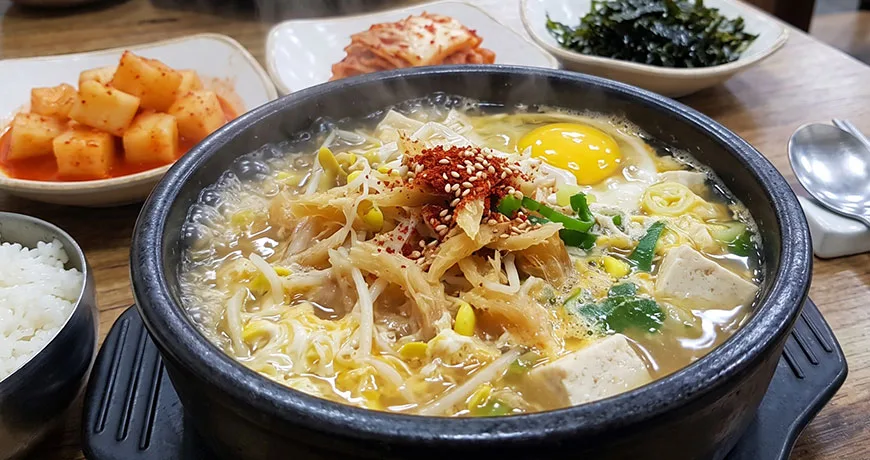
Hwangtae-haejang-guk is an advanced biochemical detox soup utilizing Hwangtae (freeze-dried pollock). Produced in freezing alpine regions where the fish undergoes months of freezing and thawing, the ice crystals turn directly into vapor (sublimation), leaving behind a porous, sponge-like cellular structure with highly concentrated amino acids. By heavily sautéing the rehydrated pollock in sesame oil, the lipids and proteins emulsify upon the addition of water, creating a milky, colloidal broth. Combined with asparagine-rich bean sprouts and taurine-rich clams, this soup acts as a potent biological catalyst, rapidly breaking down toxic acetaldehyde in the liver for ultimate hangover relief.
⏱️ Total: 35 mins | Prep: 15 mins | Cook: 20 mins | 🍳 Difficulty: Easy (Requires proper lipid emulsification) | 🌶️ Profile: Deeply Savory, Nutty, and Restorative | 🍚 Focus: Methionine, Asparagine, & Emulsification
Ingredients (3–4 servings)
- Main Ingredients: 100g shredded Hwangtae (freeze-dried pollock), 150g Korean radish (cut into small squares)
- Detox Additions: 150g soybean sprouts (kongnamul), 150g littleneck clams (optional, washed), 1/2 block tofu, 50g oyster or enoki mushrooms
- Emulsion Base: 2 tbsp sesame oil (or perilla oil), 6–7 cups mild kelp stock (or rice water)
- Aromatics & Seasoning: 1 scallion, 1 tbsp minced garlic, 2 tbsp soup soy sauce (guk-ganjang), 1 tbsp salted shrimp (saeujeot) or coarse salt, 1–2 eggs (optional)
Allergy Information Contains: Seafood (Pollock, Clams, Salted Shrimp), Soy, Wheat (from soy sauce, tofu)
Equipment Deep Pot or Traditional Earthenware Pot (Ttukbaegi), Cutting Board, Knife, Mixing Bowl
Cooking Instructions
- Porous Tissue Rehydration: Briefly rinse the dried shredded pollock in cold water for just 10 seconds, then immediately squeeze out all excess moisture. (Soaking it too long will leach out all the valuable, water-soluble amino acids.) Cut the softened fish into bite-sized lengths (4–5cm) and physically remove any stray pin bones.
- Protein Sauté & Lipid Emulsification: Heat a pot over medium-low heat. Add the sesame oil, the rehydrated pollock, and the radish. Sauté vigorously for 3–4 minutes. This thermodynamic friction between the fish proteins and the hot lipids is critical; it prepares the ingredients to emulsify, guaranteeing a milky-white broth later.
- Colloidal Broth Formation: Once the pollock shrinks slightly and emits a deeply nutty aroma, pour in the stock and turn the heat to high. As the water boils violently, the agitated oils and proteins will bind, turning the clear liquid into a rich, opaque, milky suspension.
- Biochemical Detox Integration: When the broth reaches a rolling boil, add the clams, soybean sprouts, mushrooms, minced garlic, and soup soy sauce. Cover with a tight lid and boil for 5–7 minutes until the sprouts are cooked. (Do not open the lid prematurely, or the sprouts will release a raw, fishy enzyme odor.)
- Final Protein Coating: Once the sprouts are tender, add the cubed tofu and sliced scallion. Season to taste with salted shrimp (which amplifies the umami) or sea salt. Finally, lightly beat the eggs and drizzle them over the boiling surface. Turn off the heat and let the eggs coagulate undisturbed for 1 minute before serving.
💡 Professional Culinary Tips
- Thermodynamics of Sublimation: The unique texture of Hwangtae is a product of natural freeze-drying in alpine winds. The constant cycle of freezing at night and thawing during the day allows ice crystals inside the fish to sublimate (turn directly from solid to gas). This carves out a micro-honeycomb structure in the flesh, allowing it to instantly absorb massive amounts of broth like a sponge.
- Physics of the Milky Broth: A proper Hwangtae soup is opaque and milky, not clear. This is achieved through physical emulsification. Sautéing the dry protein in oil before adding water ensures that when the turbulent boiling begins, the oil droplets are sheared into microscopic spheres and coated by the fish proteins, suspending them in the liquid as a rich colloid.
- Biochemistry of Hangover Relief: The headache and nausea of a hangover are caused by acetaldehyde, a toxic byproduct of alcohol. Hwangtae is densely concentrated with methionine, while soybean sprout roots are loaded with asparagine. Together, these specific amino acids act as direct biochemical catalysts, stimulating the liver to synthesize enzymes that rapidly neutralize and flush out the toxins.
Nutrition Facts (Estimated)
Total Content : Approx. 500g (1 serving, including broth)
Calories : 220 kcal
– Sodium : 1,150mg
– Total Carbohydrate : 12.0g
– Sugar : 3.0g
– Total Fat : 7.0g
– Saturated Fat : 1.2g
– Cholesterol : 60.0mg (from egg and clams)
– Protein : 28.0g
– Calcium : 80.0mg
*Daily Values are based on a 2,000 calorie diet and standard Korean nutritional reference values
**Nutritional values are calculated based on original ingredients; substitutions may alter specific macronutrients.
The Golden Alchemical Bounty of Alpine Snow and Winter Winds: A Lyrical Masterpiece of Hwangtae-haejangguk and Pure Restorative Solace
Hwangtae-haejangguk (Dried Pollack Hangover Soup) stands as the pure, immaculate, and deeply restorative pinnacle of Korean soup gastronomy, where pristine Alaska pollack—eviscerated, desalted, and hung across wooden drying racks (deokjang) in the freezing alpine heights of Daegwallyeong and Yongdae-ri for over three to four months—undergoes a miraculous cycle of freezing by night and thawing by day hundreds of times until transformed into golden, sponge-soft hwangtae. Delicately hand-shredded and simmered into an ivory-golden broth alongside sweet radish, crisp soybean sprouts, ocean-fresh clams, tender mushrooms, and silken tofu, this iconic hangover elixir fills the dining space with a clean, fragrant warmth that gently revitalizes every cell in the body from the very first spoonful.
The moment a steaming spoonful of the milky pollack broth touches the palate, an immediate wave of mellow, savory umami balanced by the crisp oceanic clarity of clams and the refreshing sweetness of radish cascades across the senses. The slow-simmered shredded pollack, which swells into pillowy, cloud-like tenderness within the soup, dissolves effortlessly across the tongue while releasing a subtle, nutty sweetness. Complemented by the soothing softness of tofu and the watery snap of soybean sprouts, this harmonious assembly envelops the weary stomach in a blanket of warm, restorative solace.
True gastronomy does not rely exclusively on heavy, assertive seasonings; it flourishes in the transformative wisdom of patient alpine weathering, capturing the pure essence of nature’s elements to restore internal equilibrium and revive depleted vitality. Savoring an aromatic bowl of steaming, milky dried pollack soup today is an elegant and sacred ritual—clearing away yesterday’s exhaustion through a wave of pristine winter warmth and filling the spirit with unpretentious nourishment, alpine heritage, and timeless solace.
Editor’s Review
1. An Exhilarating Cadence of Milky Golden Umami Depth, Pillowy Dried Pollack Tenderness, and Crisp Sprout Harmony
The moment a piping-hot spoonful of Hwangtae-haejangguk coats the palate, an immediate wave of rich, nutty savory depth derived from toasted dried pollack and perilla oil awakens the taste buds with gentle sophistication. This comforting baseline is swiftly elevated by the melt-in-the-mouth, pillowy texture of the rehydrated golden fish fibers, the refreshing snap of bean sprouts, and the silken slide of fresh tofu, orchestrating an endlessly soothing, multi-layered sensory thrill that reawakens the entire body.
2. Freeze-Thaw Porous Matrix Extraction Kinetics and Methionine-Asparagine Hepatic Clearance Mechanics
Hwangtae-haejangguk represents an exacting study in biomaterial physics and nutritional biochemistry. The natural repeated freeze-thaw cycles create a porous, sponge-like cellular matrix within the fish tissue, dramatically accelerating the rapid aqueous extraction of free savory amino acids (glutamic acid, glycine, alanine) into the boiling liquid. Concurrently, exceptionally high concentrations of sulfur-containing methionine and lysine naturally preserved within the dried fish stimulate hepatic glutathione synthesis and accelerate acetaldehyde decomposition, while bean sprout asparagine and clam taurine establish an optimal biochemical equilibrium for rapid hangover recovery.
3. The Daegwallyeong Alpine Deokjang Heritage and the Grounding Sanctuary of Pristine Morning Restoration
Found welcoming weary morning souls and celebrated nationwide as the undisputed noble remedy among restorative hangover soups, a modest bowl of milky dried pollack soup serves as an enduring emotional haven against daily weariness. Revered for generations as an essential comfort staple that thaws frozen mornings and revives the spirit through pure, easily digestible nourishment, enjoying this honest, nutrient-dense delicacy washes away modern stress, granting a timeless sanctuary of stillness, mountain heritage, and grounded culinary happiness.