
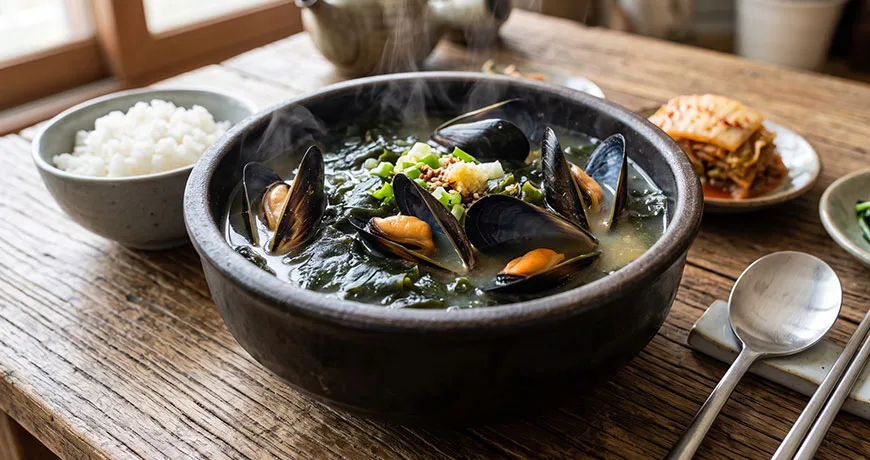
A regional specialty from Gyeongsang-do, this refreshing soup swaps the heavy, lipid-rich beef typically found in seaweed soup for fresh mussels. This thermodynamic shift relies on the rapid aqueous extraction of taurine and betaine from the bivalves, creating an incredibly clean, bright, and oceanic umami profile. Precise thermal control is essential to prevent the delicate mussel proteins from denaturing and turning rubbery.
⏱️ Total: 35 mins (incl. 20 mins soaking) | Prep: 25 mins | Cook: 10 mins | 🍳 Difficulty: Easy | 🌶️ Profile: Clean, Bracing, and Oceanic Umami | 🍚 Focus: Taurine Extraction & Low-Fat Protein
Ingredients (2 servings)
- Main Ingredients: 20g dried seaweed (miyeok), 150g shelled fresh mussels (honghap), 6–7 cups water
- Seasoning: 2 tbsp sesame oil, 2 tbsp soup soy sauce (or 1 tbsp tuna extract), 0.5 tbsp minced garlic, a pinch of salt (to taste)
Allergy Information Contains: Seafood (Mussels), Soy, Wheat (from soup soy sauce)
Equipment Large Mixing Bowl, Cutting Board, Knife, Deep Pot, Strainer, Ladle
Cooking Instructions
- Hydration & Alginate Control: Submerge the dried seaweed in cold water for 20 minutes. Once fully hydrated, vigorously knead and wash the seaweed to remove excess slippery alginate. Squeeze out the water and cut into bite-sized (5cm) lengths.
- Mussel Preparation: Gently wash the shelled mussels in lightly salted water to remove any grit or residual shell fragments. Drain thoroughly. (Snip off any remaining byssal threads/beards with scissors.)
- Lipid-Soluble Flavor Extraction: Heat the sesame oil in a deep pot over medium heat. Add the hydrated seaweed and 1 tbsp of soup soy sauce, sautéing until the seaweed turns bright green. Add the mussels and toss very briefly (under 1 minute) just to coat them in the lipid barrier without initiating violent protein contraction.
- Aqueous Extraction & Thermal Control: Pour in the 6–7 cups of water and bring to a rolling boil over high heat. Add the minced garlic. Reduce the heat to medium and boil for only 5–7 minutes. (Unlike beef seaweed soup, prolonged boiling will destroy the mussel’s texture.)
- Final Seasoning: Add the remaining soup soy sauce (or tuna extract). Adjust the final salinity with a pinch of salt to maintain a clean broth profile, then immediately remove from heat.
💡 Professional Culinary Tips
- Thermodynamic Limits of Bivalve Protein: While beef connective tissues require prolonged simmering to hydrolyze into gelatin, mussel myofibrils aggressively expel water and seize up when exposed to sustained high heat. Restricting the boiling time to under 10 minutes ensures the meat remains plump and tender.
- Aqueous Extraction of Taurine & Betaine: The primary umami drivers in mussels—taurine and betaine—are highly water-soluble and extract rapidly into the broth. This creates a deeply savory yet refreshing (“siwonhan”) body that lacks the heavy mouth-coating lipids of a beef-based soup.
- Limits of Sesame Oil Roasting: Sautéing mussels in hot sesame oil for too long will prematurely cook and toughen them. Sauté the seaweed fully first, introducing the mussels at the very end of the roasting phase purely for aromatic coating before the water halts the searing process.
Nutrition Facts (Estimated)
Total Content : Approx. 400g (1 serving)
Calories : 160 kcal
– Sodium : 820mg
– Total Carbohydrate : 9.0g
– Sugar : 1.0g
– Total Fat : 6.0g
– Saturated Fat : 1.0g
– Cholesterol : 40.0mg
– Protein : 14.0g
– Calcium : 160.0mg
*Daily Values are based on a 2,000 calorie diet and standard Korean nutritional reference values
**Nutritional values are calculated based on original ingredients; substitutions may alter specific macronutrients.
The Verdant Breath of the Sea and the Toasted Scent of Sesame: A Lyrical Milky Symphony of Gyeongsang Coastal Heritage
Honghab-miyeokguk (Mussel and Seaweed Soup) stands as the pristine and refreshing pinnacle of Gyeongsang regional coastal gastronomy, where briny mussels—having weathered the rough ocean tides—unite with tender sea mustard, gently sautéed in fragrant sesame oil within a heavy pot before simmering into a rich, milky, and deeply restorative broth. Diverging from용한 beef-based seaweed soup, the clean, refreshing umami characteristic of fresh mussels envelops the entire broth, offering an immediate wave of breezy liberation and clear comfort from the very first spoonful.
As the mussels and seaweed dance with warm sesame oil in the iron pot, the nutty aroma commands the surrounding air, calming the mind and awakening a pure appetite. The moment the milky, translucent broth touches the palate, natural succinic acid and taurine released from the mussels spark a profound wave of crisp refreshment, while the silky, tender bite of the simmered seaweed coats every grain of white rice in luscious moisture, achieving an exquisite culinary harmony.
True gastronomy does not reside exclusively in elite banquets; it flourishes inal wisdom of elevating modest coastal ingredients to refresh the body and restore inner peace. Savoring a steaming bowl of Gyeongsang-style mussel and seaweed soup today is an honest and comforting ritual—washing away the rush of modern life and filling the spirit with unpretentious vitality, oceanic clarity, and timeless solace.
Editor’s Review
1. A Velvety Cadence of Milky Mussel Umami, Toasted Sesame Aromatics, and Silky Seaweed Succulence
The moment a warm spoonful of the milky, savory broth touches the palate, an immediate wave of rich sesame fragrance and deep, emulsified mussel umami envelops the senses with invigorating clarity. This is swiftly followed by the tender, slippery bite of simmered seaweed and the springy chew of the mussel meat, orchestrating an endlessly soothing, multi-layered culinary experience that brings absolute peace to the senses.
2. Mussel Succinic Acid & Taurine Extraction Kinetics and Lipid-Mediated Maillard Pyrolysis
Honghab-miyeokguk represents an exacting study in regional culinary physics and biochemical synergy. The initial step of sautéing the mussels and seaweed in sesame oil initiates controlled Maillard browning between amino acids and reducing sugars, establishing a rich flavor foundation. Subsequent prolonged simmering drives the extraction of natural succinic acid, glutamate, and fatigue-banishing taurine fromal extract, creating a powerful umami synergy. Concurrently, water-soluble alginates from the seaweed optimize cellular hydration and systemic mineral balance.
3. The Coastal Heritage of Gyeongsang Fishermen and the Grounding Sanctuary of Refreshing Solace
Found gracing coastal dining tables across the Gyeongsang province as a cherished regional staple to refresh the palate and warm the core, a modest bowl of mussel and seaweed soup serves as an enduring emotional haven against daily weariness. Revered for generations as an essential restorative anchor offering a cleaner, crisper alternative to beef-based broths, enjoying this honest, reliable soup washes away modern stress, granting a timeless sanctuary of stillness, maternal care, and grounded culinary happiness.