
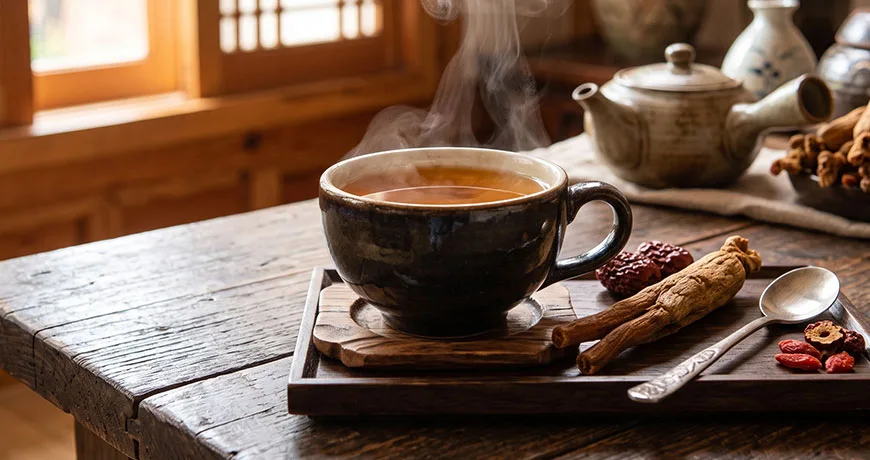
A deeply aromatic and powerful traditional Korean wellness tea made by gently simmering red ginseng. Red ginseng is created through a meticulous process of steaming and drying fresh ginseng, which concentrates its active compounds and mellows its natural heat. This robust, earthy, and bittersweet tea is celebrated for its exceptional ability to boost the immune system, improve blood circulation, and relieve chronic fatigue. Stirring in a spoonful of honey beautifully balances the bittersweet flavor, making it a soothing, warming tonic to revitalize the body and mind.
⏱️ Total: 2 hrs | Prep: 5 mins | Cook: 1 hr 55 mins | 🍳 Easy | ☕ Earthy & Bittersweet | 🌿 Immunity-Boosting Tonic
Ingredients (3-4 servings)
- Main Ingredients: 20g dried red ginseng root (Hongsam), 1.5 liters water
- Optional Garnish & Sweetener: Honey to taste, 1 tbsp pine nuts
💡 Substitutes & Notes
- Dried red ginseng root ➔ Red ginseng extract (liquid) or red ginseng tea bags (for a quick, instant alternative that skips the 2-hour boiling process).
- Honey ➔ Agave nectar, maple syrup, or regular sugar for a fully vegan option.
Allergy Information
- Contains: Pine nuts (if using as garnish)
- Warning: If using honey, do not serve to infants under 1 year old due to the risk of botulism. (Fully Vegan & Vegetarian-friendly if using sugar/syrup or no sweetener)
Equipment
- Glass, Ceramic, or Stainless Steel Pot (Strictly avoid cast iron or aluminum), Fine-mesh Strainer
Cooking Instructions
- Washing the Ginseng: If using dried whole red ginseng roots, rinse them quickly under cold running water to remove any surface dust.
- Boiling: In a glass or ceramic pot, combine the 1.5 liters of water and the rinsed red ginseng. Bring to a rolling boil over high heat.
- Simmering (Extracting): Once boiling, reduce the heat to low. Let it simmer gently for 1.5 to 2 hours. This long, slow extraction pulls out the deep color and powerful ginsenosides from the tough roots. (If using liquid extract or tea bags, simply mix with or steep in hot water).
- Finishing & Serving: Turn off the heat and remove the ginseng roots. Pour the dark, aromatic tea into warm mugs. Stir in honey to your liking to soften the natural earthy bitterness, and float a few pine nuts on top for a traditional touch.
💡 Cooking & Pairing Tips / Health Benefits
- The Rule of the Pot: When simmering ginseng or any traditional Eastern medicinal herbs, always use a glass or ceramic pot. Iron or aluminum pots can react chemically with the active compounds, potentially altering the taste and reducing the medicinal benefits.
- The Power of Red Ginseng: The unique steaming and drying process transforms regular ginseng into red ginseng (Hongsam), creating specific types of saponins (ginsenosides) that are incredibly effective at boosting immunity, promoting blood flow, and fighting oxidative stress.
- The Modern Shortcut: If simmering roots for two hours doesn’t fit your daily schedule, high-quality Korean red ginseng extract is widely available and extremely popular in Korea. Just dissolve a spoonful in hot water for an instant, highly potent cup of tea!
Nutrition Facts (Estimated)
Total Content : Approx. 250ml (1 serving, un-sweetened)
Calories : 10 kcal
– Sodium : 1mg
– Total Carbohydrate : 2.0g
– Sugar : 0.0g
– Total Fat : 0.0g
– Saturated Fat : 0.0g
– Cholesterol : 0.0mg
– Protein : 0.1g
– Calcium : 5.0mg
*Daily Values are based on a 2,000 calorie diet and standard Korean nutritional reference values
**Nutritional values are calculated based on the original ingredients, not substitutes
The Crimson Elixir of Fire and Time: A Majestic Symphony of Concentrated Vitality
Hongsamcha (Red Ginseng Tea) stands as the profound and majestic pinnacle of Korean restorative gastronomy (Eumcheongnyu / Bohyak), where pristine cultivated ginseng transforms into an unyielding, ruby-hued treasure through the rigorous ancestral cycle of steaming and drying (Jeungpo). The raw herbaceous edge and cold qualities of fresh ginseng are completely refined by the intense heat of steam and patient solar dehydration, systematically realigning its internal compounds into a denser, highly bioavailable spectrum of active adaptogenic molecules.
When boiling water gently awakens the dense cellular structure of red ginseng within the teapot, a deep mahogany infusion rises, commanding the room with a rich, smoked root essence and woodland aroma long before the first sip. The initial taste introduces a regal, grounded bitterness powered by active ginsenosides; yet, as it glides down the throat, the lingering warmth unfurls a subtle, caramelized sweetness that coats the palate like liquid silk, radiating a profound wave of internal vitality throughout the vascular system.
True gastronomy does not rely on fleeting artificial indulgence; it flourishes in the holistic wisdom of drawing forth nature’s most concentrated botanical medicines to fortify immunity and realign internal equilibrium. Cupping a steaming bowl of Hongsamcha with both hands today is an empowering healing ritual—melting away deep-seated chills and exhaustion while replenishing the spirit with unyielding vitality and enduring solace.
Editor’s Review
1. A Profound Sensory Cadence of Grounded Ginsenoside Bitterness, Smoked Wood Aromas, and Lingering Caramelized Sweetness
The moment the teacup nears the lips, a magnificent wave of deep forest root aromatics and delicate toasted notes surrounds the senses, gently diffusing tension. Taking a sip releases a commanding, medicinal bitterness and savory depth that firmly coats the tongue, swiftly rounded out by a subtle, naturally caramelized sweetness that blooms at the back of the palate. This interplay softens the sharp saponin edges into an endlessly comforting, multi-layered sensory experience.
2. Steaming-Induced Ginsenoside Structural Conversion (Rg3, Rh2) and Maillard Extraction Thermodynamics
Hongsamcha represents an exacting study in phytochemical transformation and thermal extraction kinetics. High-temperature steam processing systematically cleaves the sugar moieties of native protopanaxadiols and protopanaxatriols, converting them into low-molecular, highly bioavailable ginsenosides such as Rg2, Rg3, Rh1, and Rh2. Concurrently, non-enzymatic Maillard browning between free amino acids and reducing sugars generates roasted alkylpyrazines and arginyl-fructose complexes that naturally mask harsh astringency. When infused in hot water, dense acidic polysaccharides and polyphenols systematically dissolve to support peripheral blood circulation and optimize cellular antioxidant defense.
3. Ancestral Wisdom Against Seasonal Chills and the Restorative Sanctuary of Internal Warmth
Encountering a steaming cup of red ginseng tea when frosty winds blow or physical energy flags serves as an intimate sanctuary for systemic recovery. Revered for centuries as the quintessential restorative elixir to warm the core, relieve fatigue, and fortify natural resilience, savoring this deep mahogany brew washes away modern stress, granting a timeless refuge of stillness, physical rejuvenation, and lucid vitality.