
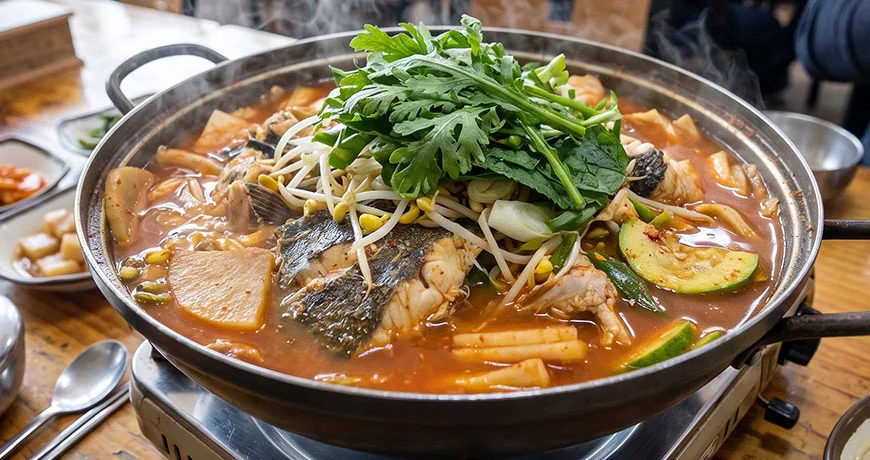
Gwang-eo-maeun-tang is a thermodynamic culinary staple typically served at the end of a Korean sashimi meal. It utilizes the “seodeol” (the head, spine, and remaining meat of the filleted flatfish) to extract a profoundly rich broth loaded with inosinate and collagen. The enzymatic sweetness of Korean radish combines with a fiery hypertonic seasoning paste. Crucially, small amounts of fermented soybean paste (doenjang) and alcohol chemically neutralize the fish’s trimethylamine (TMA) odors. Finished with volatile aromatics like crown daisy, this stew offers a perfectly balanced, heavy-bodied, and deeply spicy palate.
⏱️ Total: 35 mins | Prep: 15 mins | Cook: 20 mins | 🍳 Difficulty: Moderate (Requires rigorous mechanical cleaning of the fish) | 🌶️ Profile: Deeply Savory, Fiery, and Refreshing | 🍚 Focus: Collagen Extraction, TMA Masking, & Thermal Timing
Ingredients (3–4 servings)
- Umami & Collagen Base: 1 flatfish frame (head, bones, and scraps, approx. 500g)
- Enzymatic & Aromatic Veggies: 150g Korean radish (squared), 1/3 zucchini (sliced), 1/2 onion, 1 scallion, 2 Cheongyang chilies, 50g crown daisy (ssukgat), 1/2 pack enoki mushrooms
- Colloidal Broth Medium: 6–7 cups anchovy-kelp stock (or rice water)
- Hypertonic Seasoning Paste: 3 tbsp gochugaru (chili flakes), 0.5 tbsp gochujang (chili paste), 0.5 tbsp doenjang (soybean paste, for masking), 2 tbsp soup soy sauce (guk-ganjang), 1.5 tbsp minced garlic, 0.5 tsp minced ginger, 2 tbsp mirin or rice wine, a pinch of black pepper
Allergy Information Contains: Fish (Flatfish, Anchovy), Soy, Wheat (from soy sauce, doenjang, gochujang)
Equipment Wide Shallow Pot (Jeongol pan), Cutting Board, Knife, Mixing Bowl
Cooking Instructions
- Myoglobin Purging (Prep): Rigorously wash the flatfish frame under cold running water. It is absolutely critical to physically scrape out the dark red blood clots (kidney) wedged along the spine and remove any remaining gills. (If left intact, these blood proteins will oxidize during cooking, creating a foul, murky broth.)
- Enzymatic Extraction: In a wide pot, bring the anchovy stock and squared radish to a rolling boil. Boil over high heat for 10 minutes until the radish turns translucent, releasing its natural diastase enzymes and sweetness into the liquid.
- Seasoning & Emulsification: In a bowl, mix all the seasoning paste ingredients. Dissolve this hypertonic mixture into the boiling broth. The minor addition of doenjang is a biochemical trick; its proteins act as a sponge to absorb off-odors without turning the soup into a soybean stew.
- Protein Denaturation (Thermal Shock): Once the seasoned broth is boiling violently, drop in the cleaned flatfish bones. (Never add raw fish to cold water, as it will leach fishy compounds as it slowly warms.) The intense heat immediately coagulates the surface proteins, sealing in the delicate meat while extracting collagen from the bones. Skim off any foam and boil for 10 minutes.
- Aromatic Finish: Add the onion, zucchini, scallions, and chilies. Boil for another 5 minutes. Just before serving, turn off the heat and mound the crown daisy and enoki mushrooms on top. Let the residual heat gently wilt them, trapping their delicate, volatile terpenes in the bowl.
Nutrition Facts (Estimated)
Total Content : Approx. 500g (1 serving, excluding bone weight, including broth)
Calories : 210 kcal
– Sodium : 1,120mg
– Total Carbohydrate : 12.0g
– Sugar : 3.0g
– Total Fat : 4.5g
– Saturated Fat : 1.0g
– Cholesterol : 65.0mg
– Protein : 28.0g
– Dietary Fiber : 3.5g
*Daily Values are based on a 2,000 calorie diet and standard Korean nutritional reference values.
**Nutritional values are calculated based on original ingredients; substitutions may alter specific macronutrients.
The Origins and Culture of Gwangeomaeuntang (Spicy Flatfish Stew)
1. Born from Korea’s Favorite Flatfish Culture
- Flounder (gwang-eo) is South Korea’s most popular and widely consumed white-fish species, both farmed and wild. Gwang-eo-maeuntang originated from the clever culinary practice at fish markets and raw fish restaurants (hwtjip) of utilizing leftover bones and heads after filleting the fish for raw sashimi (hoe).
- It beautifully reflects the resourcefulness of Korean food culture in transforming humble kitchen scraps into a mouthwatering delicacy.
2. Clean, Refreshing Broth from Flounder Bones and Head
- Flounder meat is firm and relatively low in fat, resulting in a mild flavor. When simmered into a stew, rather than yielding an ultra-heavy, oily broth like rockfish, it produces a clean, crisp, and refreshing soup.
- Loaded with daikon radish, bean sprouts, and fragrant herbs like water dropwort (minari) and seasoned with chili paste, it delivers a deeply satisfying, non-greasy umami kick.
3. The Essential Grand Finale of a Sashimi Feast
- In Korean dining culture, enjoying a hot pot of spicy flounder stew with rice immediately after finishing a platter of raw fish is an anticipated, ritualistic finale.
- Because of its lighter, well-balanced profile, it serves as a comforting companion to a casual drink or a soothing hangover cure that won’t overwhelm the palate.
The Crimson Symphony of Pristine White Flounder Bone Broth and Verdant Ocean Botanicals: A Lyrical Masterpiece of Gwang-eo Maeuntang and Celebratory Tabletop Solace
Gwang-eo Maeuntang (Spicy Olive Flounder Stew) stands as the dynamic, fiery, and deeply comforting pinnacle of Korean coastal soup gastronomy, where tender cuts, rich head cartilage, and gelatin-dense bone frames (seodeori) of fresh olive flounder are simmered in a wide tabletop pot alongside sweet Korean radish, crisp water dropwort (minari), fragrant crown daisy (ssukgat), and scallions in a pungent red chili broth. Serving as the universally acclaimed, triumphant climax to a traditional Korean raw fish (hoe) feast, this iconic stew unites the clean, delicate umami of white-fleshed fish bones with the invigorating punch of red chili flakes and fermented paste, filling the dining room with an intoxicating aroma of maritime depth from the very first bubble.
The moment a steaming spoonful of the vibrant crimson broth touches the palate, an exhilarating wave of clean, warming chili heat and concentrated seafood umami cascades across the taste buds. Plucking the delicate, snow-white flakes of flounder meat from the bone reveals a meltingly tender sweetness, while the gelatinous skin and head connective tissues yield with a luscious, velvety chew. As the sweet, watery juices of slow-simmered radish and the crisp, herbal aroma of crown daisy penetrate the liquid, enjoying this bubbling broth alongside warm rice or chewy hand-torn dough flakes (sujebi) induces a gentle, restorative perspiration that banishes daily exhaustion.
True gastronomy does not rely exclusively on consuming prime cuts; it flourishes in the ancestral wisdom of total utilization (head-to-tail culinary ethics), transforming the skeletal bounty of the sea into an indispensable reservoir of physical restoration and communal joy through balanced heat and botanical aromatics. Savoring a bubbling pot of spicy flounder stew today is an elegant and sacred ritual—clearing away modern weariness through a wave of bracing warmth and filling the spirit with unpretentious nourishment, coastal heritage, and timeless solace.
Editor’s Review
1. An Exhilarating Cadence of Piquant Chili Broth Depth, Flaky Flounder Tenderness, and Verdant Dropwort Freshness
The moment a piping-hot spoonful of Gwang-eo Maeuntang coats the palate, an immediate burst of aromatic chili heat, sharp garlic, and rich, long-simmered fish bone broth awakens the senses with invigorating punch. This bold strike is swiftly balanced by the remarkably delicate, flaky texture of the tender white fish, the chewy slide of head cartilage, and the crisp, refreshing perfume of crown daisy and minari, orchestrating an endlessly satisfying, multi-layered sensory thrill that makes it the ultimate companion to warm rice.
2. Bone Marrow Inosinate (IMP) Extraction Kinetics, Collagen Gelatinization, and Volatile Terpene Amine Deodorization
Gwang-eo Maeuntang represents an exacting study in marine skeletal biochemistry and botanical flavor integration. Extended boiling of the flounder carcass hydrolyzes dense collagen fibers within the head and fin bases into bioavailable gelatin, providing a silky viscosity to the soup. Simultaneously, inosine monophosphate (IMP) leaches rapidly from the bone marrow, interacting synergistically with the glutamates of soy seasonings to multiply perceived umami intensity. Concurrently, volatile terpenes from water dropwort and crown daisy chemically bind and disperse fishy trimethylamine (TMA) vapors, while capsaicin and allicin stimulate gastrointestinal blood flow for optimized metabolic assimilation.
3. The Triumphant Portside Banquet Climax and the Grounding Sanctuary of Communal Sujebi Feasts
Found commanding center stage at seaside sashimi houses and bustling coastal markets nationwide as the undisputed finale of shared conviviality, a modest pot of spicy flounder stew serves as an enduring emotional haven against daily weariness. Revered for generations as an essential comfort feast that unites diners through the shared joy of simmering broth and tearing chewy sujebi dough into the pot, enjoying this honest, nutrient-dense delicacy washes away modern stress, granting a timeless sanctuary of stillness, maritime heritage, and grounded culinary happiness.