
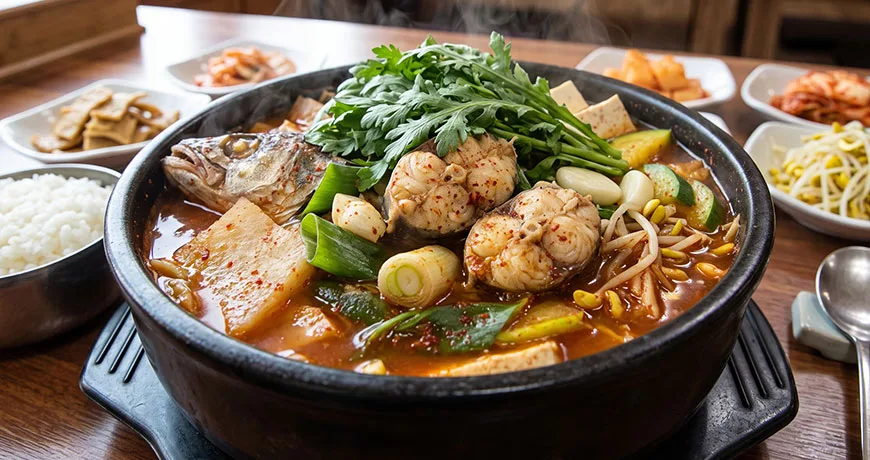
Dongtaetang is a rugged biochemical matrix that deals with a marine protein structure heavily altered by the extreme thermodynamic phase transitions of freezing and thawing. While fresh pollack (Saengtae) boasts delicate, perfectly hydrated myofibrils, frozen pollack (Dongtae) has undergone cellular rupture; expanding ice crystals puncture the muscle cell walls, leading to significant drip loss upon thawing. This alters the flesh into a firm, slightly dry, yet highly resilient structure that can withstand the violent kinetic friction of a 100°C rolling boil without disintegrating. To compensate for this porous, rigid texture, the engineering of Dongtaetang specifically demands a heavy, viscous capsaicin emulsion—constructed from glutinous rice starch in Gochujang and fermented peptides in Doenjang—rather than a clear consommé. This thick solvent physically permeates the dry muscle fibers, restoring the perception of moisture, while the Doenjang chemically neutralizes any oxidized lipid aromas associated with freezing. The result is a profoundly hearty, heavy-hitting restorative stew.
- ⏱️ Total: 55 mins | Prep: 20 mins (Slow thawing & membrane purging) | Cook: 35 mins
- 🍳 Difficulty: Medium (Requires management of cellular drip loss and establishment of a viscous starch emulsion)
- 🌶️ Profile: Deeply Savory, Thick Capsaicin Heat, and Earthy Marine Umami
- 🍚 Focus: Ice Crystal Cellular Rupture, Starch-Capsaicin Emulsification, & Drip Loss Management
- 🍶 Pairing: Ice-cold Somaek (Soju + Beer bomb) engineered with a highly carbonated light lager like Terra
Ingredients (3–4 servings)
- Ice-Ruptured Protein Matrix: 1 whole Frozen Pollack (Dongtae – approx. 700g. Thawed slowly in cold salted water to minimize drip loss. Black peritoneal membrane and spinal bloodlines strictly removed), 150g Frozen Pollack Milt & Roe
- Porous Gel & Pectin Matrix: 250g Daikon Radish (sliced thickly into squares), 1/2 block Tofu (cut into large pieces)
- Aqueous Umami Solvent: 1.3L Kelp-Anchovy Broth or Rice Water (for added starch stabilization)
- High-Viscosity Capsaicin Binder: 3 tbsp Gochugaru (Chili Flakes), 1.5 tbsp Gochujang (Chili Paste – crucial for viscosity), 1 tbsp Traditional Doenjang (Soybean Paste – for chemical masking of freezer burn aromas), 2 tbsp Soup Soy Sauce, 2 tbsp minced garlic, 1 tsp minced ginger
- Aromatic & Terpene Catalyst: 1 handful Crown Daisy (Ssukat), 1 stalk Green Onion (diagonally sliced), 2 Cheongyang green chilies
Allergy Information Contains: Fish (Pollack), Soy, Wheat (from Gochujang, Doenjang, Soy Sauce)
Equipment High Thermal Mass Cast Iron Pot or Earthenware, Fine Skimmer, Fish Scaler, Cutting Board, Knife
Cooking Instructions
- Osmotic Thawing & Purging: Submerge the frozen pollack in cold, lightly salted water. This osmotic balance controls the thaw rate and minimizes the leakage of internal cellular fluids (drip loss). Once thawed, rigorously use your fingertips to scrape away the bitter black membrane inside the cavity and the coagulated bloodline along the spine.
- Solvent & Pectin Hydrolysis: Place the broth (or rice water) and thick-cut radish into a heavy pot and bring to a rolling boil. Apply high kinetic energy until the rigid pectin walls of the radish collapse, releasing their reducing sugars.
- High-Viscosity Emulsion: Dissolve the Gochujang, Doenjang, Gochugaru, garlic, and ginger into the boiling solvent. Unlike the clear broth of fresh pollack soup, the starchy Gochujang and peptide-rich Doenjang forcefully emulsify with the water to create a heavy, murky, red baseline.
- High-Kinetic Convection & IMP Extraction: As the thick broth boils aggressively, drop in the prepared Dongtae and tofu. Leave the lid open to allow volatile oxidized off-odors to vaporize. Boil vigorously over medium-high heat for 15–20 minutes. The ruptured but rigid muscle fibers will withstand the physical friction, releasing deep bone inosinate (IMP) into the stew.
- Milt Gelation & Terpene Finish: 5 minutes before cutting the heat, introduce the thawed milt and roe to rapidly coagulate their exterior proteins. Just before serving, crown the matrix with green onions, chilies, and Ssukat. The volatile terpenes will slice through the heavy, starchy air as the stew is brought to the table.
💡 Professional Culinary Tips
- Ice Crystal Kinetics of Frozen Pollack: When a fish freezes, intracellular water molecules form jagged ice crystals that puncture the delicate myofibrillar walls. Upon thawing, the water leaks out (drip loss), leaving the protein fibers dry and tough. To rescue this texture, Dongtaetang deliberately utilizes the heavy starch of Gochujang to create a viscous broth that mechanically coats and infiltrates the dry meat, masking its textural flaws.
- Oxidized Lipid Control via Doenjang: Frozen seafood slowly oxidizes over time, developing a distinct “freezer burn” aroma. Chili heat alone cannot neutralize this. The fermented peptides in traditional Doenjang chemically bind to these oxidized lipid molecules, replacing the off-notes with a rich, earthy umami profile.
- Thawing Rate & Texture: Flash-thawing in a microwave or hot water radically accelerates protein denaturation and maximizes drip loss, turning the flesh into a dry sponge. Slow, cold-water thawing is the mandatory thermodynamic defense against total matrix collapse.
🍶 Gastronomic Pairing
- Biochemical Palate Cleansing: When the dense, rigid pollack protein and the heavy, starchy capsaicin emulsion thickly coat your oral mucosa, pair this intense dish with a perfectly proportioned, ice-cold Somaek (Soju and Beer bomb) engineered with a crisp, highly carbonated light lager like Terra. The aggressive effervescence and refined ethanol dynamically slice through the heavy capsaicin and starch barrier, acting as a surgical solvent that instantly resets your taste receptors for maximum impact on the next spoonful.
Nutrition Facts (Estimated)
Total Content : Approx. 700g (1 serving, excluding bone weight)
Calories : 310 kcal (Excluding rice)
– Sodium : 1,450mg (Elevated due to Doenjang and Gochujang usage)
– Total Carbohydrate : 16.0g (Starch from Gochujang and radish polysaccharides)
– Sugar : 4.5g
– Total Fat : 6.0g (Creamy lipids from milt and residual pollack fats)
– Saturated Fat : 1.2g
– Cholesterol : 110.0mg
– Protein : 38.0g (Dense, ice-ruptured myofibrillar protein)
– Dietary Fiber : 5.0g
*Daily Values are based on a 2,000 calorie diet and standard Korean nutritional reference values.
**Nutritional values are calculated based on original ingredients; substitutions may alter specific macronutrients.
Origins and Food Culture of Frozen Pollack Soup (Dongtaetang)
1. Historical Roots: Joseon “Myeongtae” Heritage and Northern Deep-Sea Fleets
- Rooted in the ancient fishing heritage of the East Sea documented in late Joseon compendiums such as Seo Yu-gu’s Nanho Eomok and Yi Gyu-gyeong’s Ojuyeonmunjang Jeonsango, inheriting centuries of wisdom surrounding the winter freezing and preservation of pollack.
- During the 1970s and 1980s, South Korean distant-water fishing fleets operating in the frigid waters of the North Pacific (the Sea of Okhotsk, the Bering Sea, and the Kamchatka Peninsula) began flash-freezing catches directly on factory vessels (sea-frozen); this secured an abundant, affordable year-round supply of high-grade marine protein that anchored everyday family tables across the nation.
2. The Culinary Science of Ice Crystal Condensation and Thermodynamic Simmering
- While fresh pollack is prized for its ethereal, delicate flakiness, the freezing process causes cellular moisture loss that tightens the myofibrillar protein matrix, endowing Dongtae with a remarkably resilient, springy, and chewy texture that holds up beautifully to vigorous boiling.
- Master kitchens prevent flavor loss by rinsing the fish quickly in cold water to preserve cellular integrity without extended thawing, simmering the Korean radish and bean sprouts first to extract a crisp botanical base before sliding the frozen steaks into boiling broth. The intense rolling heat instantly sears surface proteins, locking in natural inosinates and preventing the tender flesh from disintegrating into mush.
3. Working-Class Resilience and the Weathered Nickel-Silver Pot Soul Comfort
- During freezing winter months when sub-zero winds swept through urban alleyways, steaming pots of Dongtaetang bubbling inside weathered nickel-silver pots (yaneun naembi) or rustic earthenware crocks served as the ultimate sanctuary for weary laborers, drivers, and market vendors.
- Offering generous portions of bone-in steaks alongside nutrient-dense roe and milt at an accessible price, and concluding with chewy noodles or hand-torn dough flakes (sujebi) dropped into the rich broth, Dongtaetang remains an immortal cultural monument to Korean working-class warmth, economic ingenuity, and restorative communal dining.
The Dense Resilience of Flash-Frozen Pacific Pollack Flakes, the Savory Depth of Bone Marrow and Creamy Milt, and the Fiery Dynamic of Fermented Chili Broth: A Refined Portrait of Dongtaetang
Dongtaetang (Spicy Frozen Pollack Stew) stands as the dynamic, hearty, and deeply comforting summit of Korea’s everyday marine composite (tangban) gastronomy. Centered upon whole Alaska pollack (Gadus chalcogrammus) flash-frozen at sea immediately after harvest in the sub-polar expanses of the North Pacific, the icy carcass is chopped into cross-sectional steaks: thick bone-in fillets, mineral-dense heads, and tender white meat are layered generously alongside convoluted milt (iri) and plump roe sacks within a shallow casserole or heavy pot. Anchored upon an immaculate bed of thinly sliced winter radish and crisp soybean sprouts to establish a clean vegetable foundation, the stew is bathed in a foundational dried anchovy and kelp stock dissolved with an assertive seasoning paste of sun-dried red chili powder (gochugaru), a touch of red chili paste (gochujang), rustic soybean paste (doenjang), minced garlic, fresh ginger, and aged soup soy sauce. Brought to an aggressive, rolling tableside boil and crowned at the bubbling climax with cubes of firm tofu, wild water parsley (minari), aromatic crown daisy (ssukgat), scallions, and sliced Cheongyang chilies, this dish represents a robust departure from the fragile melt of fresh pollack (saengtae). By harnessing the controlled moisture loss and structural densification inherent to frozen marine muscle, it locks toothsome, muscular flakes into the fiery kinetics of boiling red chili, delivering an irrepressible wave of metabolic warmth and deep physical comfort.
Confronting the bubbling pot tableside as crimson chili froth erupts around dense, ivory segments of pollack releases an immediate, deeply comforting sensory charge: the spicy, roasted heat of chili and alliums mingles seamlessly with the deep, savory perfume of poaching fish bones and the brisk, pine-fresh aroma of wild crown daisy and water parsley. Lifting a deep metal spoon for the first sip delivers a revelation across the tongue: the rich broth, fortified with natural asparagine from the soybean sprouts, sweet succinic acids from the braised radish, and bone-leached amino acids, glides over the palate with zero greasy heaviness. It courses down the throat to unlock instant, soothing heat, triggering revitalizing perspiration that swiftly dispels bodily fatigue and lingering alcohol toxicity. Sinking your teeth into the poached pollack meat reveals a distinct structural delight: having undergone freeze-induced protein compaction, the flesh resists tooth pressure with a firm, buoyant chew (jjolgit) before parting along natural muscular sheets to discharge clean, concentrated marine sweetness. Concurrently, the simmered milt (iri) liquefies like warm cream across the oral mucosa, delivering rich lipid sweetness, while tender tofu provides a soft cushion. The brisk, auditory crunch of wild herbs cleanses lingering rich notes, transforming the simple act of steeping warm white rice into the crimson stock into an unforgettable ritual of physical rejuvenation, domestic solace, and profound gastronomic catharsis.
The enduring majesty of Dongtaetang lies in its historical transformation—born out of the rapid modernization of Korea’s distant-water fishing fleets, which ventured into the icy squalls of the Bering and Okhotsk Seas after warming territorial waters depleted indigenous East Sea pollack stocks. Transitioning from an emergency substitute into the undisputed champion of late-night tavern tents and neighborhood diner counters, this steaming cauldron sustained generations of weary industrial laborers through bitter winters for mere pocket change. Transforming deep-sea sustenance into a democratic symbol of collective resilience and culinary resourcefulness, Dongtaetang remains an irreplaceable monument of working-class survival, maternal warmth, and brilliant Korean culinary craftsmanship.
Editor’s Review
1. A Dynamic Harmony of Firm Freeze-Structured Pollack Flakes, Creamy Milt Viscoelasticity, Soft Tofu Cushion, and Crisp Vegetable Snap
The structural architecture inside the vessel delivers an extraordinary, tactile choreography between freeze-modified marine muscle fibers, lipid-dense reproductive organs, hydrated soy protein gels, and crisp vegetable cell walls. Having undergone low-temperature moisture reorganization, the pollack meat maintains muscular cohesion amid the boiling currents, separating into dense, toothsome flakes that resist mastication with a clean, springy bounce (taenggeul) rather than collapsing into soft mush. This firm chew is framed by the simmered milt (iri), which dissolves into a rich, creamy velvet at body temperature, while cubes of tender tofu offer soft textural respite. Meanwhile, briefly wilted soybean sprouts and water parsley supply a crisp, auditory snap that introduces structural friction, ensuring an impeccably balanced, non-fatiguing mouthfeel from the first steaming sip to the last.
2. Gadoid TMAO-to-DMA/Formaldehyde Degradation Mechanics, Myofibrillar Actomyosin Cross-Linking, IMP-Glutamate Nucleotide Synergy, and Capsaicin TRPV1 Thermoregulation
Dongtaetang represents an exacting study in low-temperature seafood biochemistry, protein structural thermodynamics, and sensory neurochemistry. Gadoid fish like Alaska pollack accumulate high physiological concentrations of trimethylamine oxide (TMAO) for osmotic equilibrium. During frozen storage, endogenous TMAOase enzymes slowly break down TMAO into dimethylamine (DMA) and formaldehyde. Trace amounts of liberated formaldehyde act as a natural cross-linking agent among myofibrillar myosin and actin filaments, causing the muscle proteins to undergo controlled cryo-denaturation and moisture expulsion, yielding its signature firm, toothsome texture (toughness) upon hydrothermal cooking. When simmered between 85°C and 90°C over a protective bed of radish and sprouts, these compacted protein sheets retain trapped internal juices without disintegrating. Broth savor is driven by a powerful biochemical synergy: muscle-derived inosine monophosphate (IMP) converges with natural succinic acid from the braised radish and free glutamic acid (Glutamate) leached from fermented doenjang and soy sauce, triggering an exponential activation across human oral T1R1/T1R3 umami heterodimers. Furthermore, volatile basic amines—principally trimethylamine (TMA)—are physically adsorbed by the colloidal soybean proteins of doenjang and rapidly vaporized along with cooking alcohol vapors. Active gingerols from ginger, allicin from garlic, and volatile monoterpenes (limonene, terpinolene) from water parsley chemically sequester trace off-notes. Lipophilic capsaicin from red pepper excites oral TRPV1 receptors, promoting peripheral vasodilation, gentle sweating, and gastrointestinal circulation to complete a restorative, hangover-dispelling metabolic mechanism.
3. Distant-Water Oceanic Fisheries Heritage and the Sovereign Anchor of Working-Class Korean Tangban
Overcoming the domestic depletion of fresh pollack through the heroic expansion of deep-sea trawler fleets into sub-polar oceans, Dongtaetang exemplifies the ultimate triumph of modern Korean food provisioning. Evolving from an industrial-era necessity into the beloved soul food of working-class neighborhoods and bustling winter taverns, this steaming crimson cauldron captures the enduring resilience of the Korean spirit, standing as an unshakeable sanctuary of domestic comfort, communal generosity, and brilliant culinary artistry.