
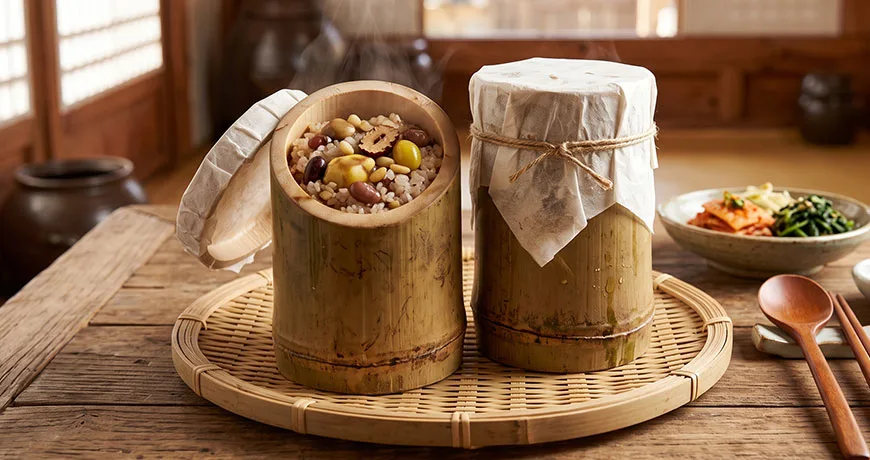
Daenamutongbap is a highly integrated culinary technique that repurposes freshly harvested raw bamboo from a mere vessel into an active “biological pressure vessel.” Inside the thick walls of 3-year-old Wangdae bamboo lie dense reserves of water-soluble amino acids and polyphenols. When the exterior is enveloped by 100°C steam in a cauldron, the thermodynamic expansion forces the bamboo’s internal moisture to aggressively permeate the amylopectin matrix of the rice via osmosis. As the starches entangle with the natural lipids and sugars from the chestnuts, jujubes, and pine nuts to form a sticky gel, the Hanji (traditional Korean paper) lid acts as a sophisticated semi-permeable membrane, meticulously venting extreme kinetic vapor pressure. The fresh bamboo sap and chlorophyll perfectly coat every grain of rice, transferring the unadulterated biochemical energy of the forest directly to the palate in this ultimate vegan recovery dish.
⏱️ Total: 1 hr 30 mins | Prep: 40 mins (inc. hydration) | Cook: 50 mins | 🍳 Difficulty: High (Requires biological pressure control and water activity balancing) | 🌶️ Profile: Earthy, Nutty, Mildly Sweet, and Deeply Aromatic | 🍚 Focus: Phytochemical Osmosis, Semi-permeable Membrane Physics, & Amylopectin Gelatinization | 🍶 Pairing: Chilled, pine/bamboo-infused traditional Daetongju (Bamboo wine)
Ingredients (2 servings)
- Biological Pressure Vessel: 2 fresh Raw Bamboo Tubes (approx. 15cm long, 8-10cm diameter, with the bottom node intact and closed)
- Amylopectin & Starch Matrix: 1 cup Glutinous Rice (Chapssal), 0.5 cup Non-glutinous White Rice (soaked in cold water for at least 1 hour to ensure full cellular hydration)
- Protein & Lipid Matrix: 2 tbsp Black Beans (soaked), 4 raw Chestnuts (halved), 4 Dried Jujubes (pitted and rolled), 1 tbsp Pine Nuts, 8 Ginkgo Nuts
- Aqueous Solvent: Clear Kelp Broth (Dashima) or mildly salted water (1 pinch salt per cup)
- Semi-permeable Sealant: 2 sheets of Hanji (Traditional Korean Mulberry Paper), silk thread or cooking twine
Allergy Information Contains: Tree Nuts (Pine nuts, Ginkgo nuts)
Equipment High Thermal Mass Steamer, Scissors
Cooking Instructions
- Starch Hydration: Ensure the rice and black beans are thoroughly soaked. Starches lacking proper cellular hydration will undergo incomplete gelatinization inside the pressurized bamboo, leaving an unpalatable, hard core in the grains.
- Structural Assembly: Clean the bamboo tubes. Fill the cavity only up to 70% with the hydrated rice and beans to account for thermodynamic expansion during steaming. Neatly arrange the chestnuts, jujubes, ginkgo, and pine nuts on top to establish a diverse turgor and lipid layer.
- Solvent Injection: Pour the kelp broth into the bamboo tube until the liquid barely kisses the top layer of the rice (about 0.5cm above the grains). Because raw bamboo releases its own significant aqueous sap under heat, you must intentionally restrict the added solvent by 15–20% compared to normal rice cooking to achieve perfect viscoelasticity.
- Semi-permeable Membrane Sealing: Cover the mouth of each bamboo tube with Hanji and tie it tightly with the silk thread.
- Thermodynamic Steaming: Place the bamboo tubes upright in a pre-heated steamer. Cover and steam over high heat for 40 minutes, then reduce to low for 10 minutes. Turn off the heat and allow a 5-minute radiant heat resting phase (steeping) to safely lower the internal pressure.
💡 Professional Culinary Tips
- Phytochemical Osmosis of Raw Bamboo: Reusing dried bamboo tubes offers zero gastronomic value. Only freshly cut bamboo with over 30% moisture content reacts to 100°C steam by opening its cellular walls and weeping xylose and polyphenols. This biochemical sap seeps into the microscopic fissures of the rice grains, imparting a faint green hue and a profound, sweet forest aroma.
- Physics of the Hanji Semi-permeable Membrane: Sealing the bamboo with aluminum foil creates a hermetic environment; the intense thermodynamic pressure would violently split the bamboo wood vertically. The artisan’s analogue touch of meticulously stretching and tying natural Hanji over the opening creates a flawless physical pressure valve. It traps the 100°C steam required for starch gelatinization while allowing excess kinetic kinetic energy to safely vent through the microscopic fibers.
- Gelatinization Ratio of Starches: Using 100% regular rice (high amylose) under this intense pressure causes the grains to crumble, while 100% glutinous rice (pure amylopectin) melts into an indistinguishable paste. Cross-blending them at a 2:1 ratio is precise textural engineering, balancing the sticky, bouncy viscoelasticity against the structural integrity of the individual grains.
🍶 Gastronomic Pairing
- Biochemical Palate Cleansing: When the heavy, sticky amylopectin and the dense lipids from the pine nuts and chestnuts coat your mouth, pair this dish with a chilled Daetongju (Rice wine aged inside a living bamboo stalk). The sharp ethanol and organic acids of the wine slice through the starchy residue like a scalpel, while the shared phytoncide aromatics between the food and the beverage create an absolute, seamless olfactory synchronization in your nasal cavity.
Nutrition Facts (Estimated)
Total Content : Approx. 350g (1 serving)
Calories : 410 kcal
– Sodium : 150mg
– Total Carbohydrate : 78.0g (Complex starches from glutinous rice and chestnuts)
– Sugar : 4.5g (Natural reducing sugars from jujubes and bamboo sap)
– Total Fat : 6.0g (Plant lipids from pine and ginkgo nuts)
– Saturated Fat : 0.5g
– Cholesterol : 0.0mg
– Protein : 9.0g
– Dietary Fiber : 5.0g
*Daily Values are based on a 2,000 calorie diet and standard Korean nutritional reference values.
**Nutritional values are calculated based on original ingredients; substitutions may alter specific macronutrients.
Origins and Food Culture of Steamed Rice in Bamboo Tube (Daenamutongbap)
1. Southern Terroir: Damyang’s Verdant Ecosystem and the Medical Lore of Dongui Bogam
- Deeply rooted in the ecological terroir of Damyang, Jeollanam-do—the historic capital of Korean bamboo forestry, endowed with temperate maritime breezes, ample rainfall, and mineral-dense red soils ideal for cultivating robust groves.
- Celebrated in Joseon Dynasty medical compendiums such as Heo Jun’s 1613 Dongui Bogam and Li Shizhen’s Bencao Gangmu, which document that bamboo oil (Jukryeok) possesses a cooling energetic essence that treats apoplexy (stroke recovery), clears cranial inflammation, and clarifies vision. Southern scholars (seonbi) and regional cooks ingeniously integrated this therapeutic tree resin into everyday dining by cooking staples directly inside fresh bamboo cylinders.
2. The Selection of 3-Year-Old King Bamboo and the “Single-Use” Thermodynamic Protocol
- Authentic preparation demands three-year-old King Bamboo (Wangdae): younger stalks are brittle and lack aromatic oils, while older canes become dry and desiccated.
- Because the living essence—its vital sap, phytoncides, and inner membrane nutrients (Juk-yeo)—fully migrates into the swelling rice grains during the first cook, authentic master kitchens observe a strict single-use principle, never reusing a bamboo tube for rice. Sealing the open cylinder with traditional mulberry paper (hanji) creates an unpressurized micro-steaming autoclave that permits steam respiration while preventing condensed water droplets from diluting the sap-infused rice.
3. The Unity of Vessel and Ingredient, and the Scholar’s Emblem of Unbending Integrity
- Serving simultaneously as cooking vessel, thermodynamic chamber, and elegant dining table service, Daenamutongbap represents the pinnacle of zero-waste eco-gastronomy. The bamboo tree—which remains perpetually green and upright throughout freezing winters—serves as an ancient Korean cultural metaphor for noble scholarly rectitude and unbending moral integrity (jijo-wa-jeolgae).
- Anchoring modern Damyang’s celebrated culinary district alongside grilled minced short-rib patties (tteokgalbi) and tender bamboo shoot salads, Daenamutongbap represents an internationally acclaimed monument of Korean eco-friendly slow food that harmonizes vessel, ingredient, and human wellness into a single poetic creation.
The Verdant Breath of Sylvan Phytoncides and the Crystalline Nectar of Bamboo Sap: A Refined Portrait of Daenamutongbap
Daenamutongbap (Steamed Multi-Grain Rice in Bamboo Tube) stands as the pristine, tranquil, and biologically harmonious summit of Korea’s vessel-integrated cereal (bap) gastronomy. Thick segments of native green bamboo (predominantly Wangdae or Maengjongjuk) harvested at three years of age from the misty groves of Damyang are severed at natural nodal partitions to form organic steaming canisters. Pre-soaked glutinous rice, short-grain white rice, and black sweet rice are blended with chestnuts, jujubes, gingko nuts, pine nuts, and black soybeans, packed neatly into the bamboo hollows, sealed tightly with traditional mulberry paper (hanji), and steamed inside giant cauldrons over steady, low-intensity heat. Deliberately transcending the aggressive thermal conductance of cast iron and glazed earthenware, this dish utilizes the living botanical culm as both a cooking vessel and a pressurized micro-chamber, infusing every single grain with the mineral sap (jukryeok) and volatile forest terpenes trapped within the bamboo’s fibrous vascular bundles.
Unveiling the steamed bamboo tube and lifting away the damp mulberry paper unleashes an immediate, deeply restorative olfactory sensation: the brisk, pine-like aroma of green bamboo wood and cooling phytoncides mingles seamlessly with the warm, honeyed fragrance of steaming glutinous starches, dried jujubes, and buttery chestnuts. Plunging a spoon into the cylinder reveals grains cloaked in a gossamer, jade-like luster—imparted by the delicate cellulose lining (jukmak) peeling cleanly from the bamboo interior. Sinking your teeth into the rice yields an extraordinary, springy elasticity (jjondeuk); each grain swells with sweet botanical turgor, resisting tooth pressure with an unctuous bounce before melting smoothly across the palate. The velvety mash of slow-cooked chestnuts and the bittersweet chew of gingko nuts interweave with the rich nutty oils of pine nuts, producing a serene, multi-tiered cereal tapestry. Free of heavy animal tallows or assertive condiments, the clean finish leaves a lingering, forest-kissed sweetness along the throat, delivering a sublime sensation of physical purity and spiritual renewal.
The enduring majesty of Daenamutongbap lies in its historical symbolism—reflecting the noble ethos of Damyang’s literati scholars who revered the unyielding, hollow stalks of the bamboo grove as emblems of integrity and mental clarity, paired with the rustic ingenuity of forest dwellers who cooked over open embers inside freshly cut timber. Transforming the natural architecture of the wild bamboo stalk into a sacred gastronomic vessel, a steaming tube of bamboo rice remains an irreplaceable monument of ecological minimalism, woodland terroir, and the timeless elegance of Korean grain gastronomy.
Editor’s Review
1. A Dynamic Harmony of Glutinous Amylopectin Elasticity, Powdery Nut Softness, and Bamboo-Film Fluidity
The textural landscape inside the cylinder delivers an extraordinary study in grain hydration and structural resilience. The glutinous rice, having expanded within the uniform radial vapor pressure of the closed bamboo culm, avoids structural mushiness, achieving an unctuous, springy elasticity that rebounds gently against the teeth. This chew is dynamically punctuated by the crumbly, velvet softness of braised chestnuts, the supple give of gingko nuts, and the delicate pop of toasted pine nuts. The paper-thin inner bamboo lining (jukmak) adheres to the grain cluster, providing a microscopic cellulose shield that prevents individual grains from turning into a soggy porridge and ensuring an impeccably balanced, non-fatiguing mouthfeel from the top layer to the bottom node.
2. Silica-Lignin Cell Wall Buffered Thermal Diffusion, Jukryeok (Bamboo Sap) Phenolic Extraction, and Amylose Retrogradation Suppression
Daenamutongbap represents an exacting study in plant histochemistry, non-linear thermal diffusion, and starch macromolecular kinetics. The dense culm wall of the bamboo is heavily fortified with lignin polymers and biogenic silica (SiO₂), endowing the cylinder with exceptionally low thermal conductivity. When placed in a 100°C steam cauldron, the vessel acts as an insulated thermal buffer, moderating rapid thermal shock and allowing steam to penetrate the grain bed via slow, buffered conductive transfer. This guarantees that starch granules hydrate and gelatinize completely to their cores without premature outer wall rupture. As the internal temperature climbs, the bamboo’s parenchymal cells release fresh sap (jukryeok) loaded with free amino acids, phenolic acids, and volatile monoterpenes. These organic compounds diffuse into the swollen starch matrix, intercalating between linear amylose chains. This steric hindrance prevents the rapid re-association of hydrogen bonds upon cooling, thereby significantly delaying starch retrogradation and preserving the rice’s supple texture long after cooking.
3. Damyang Bamboo Forest Terroir and the Living Summit of Organic-Vessel Culinary Craftsmanship
By integrating the cooking vessel directly into the thermodynamic and chemical transformation of the dish, Daenamutongbap captures the pinnacle of Korean vessel-food unity. Transforming the sustainable timber of the southern bamboo groves into an active, flavor-donating instrument through patient hydrothermal steaming, this unadorned classic stands as an enduring sanctuary of environmental harmony, physiological wellness, and brilliant culinary restraint.