
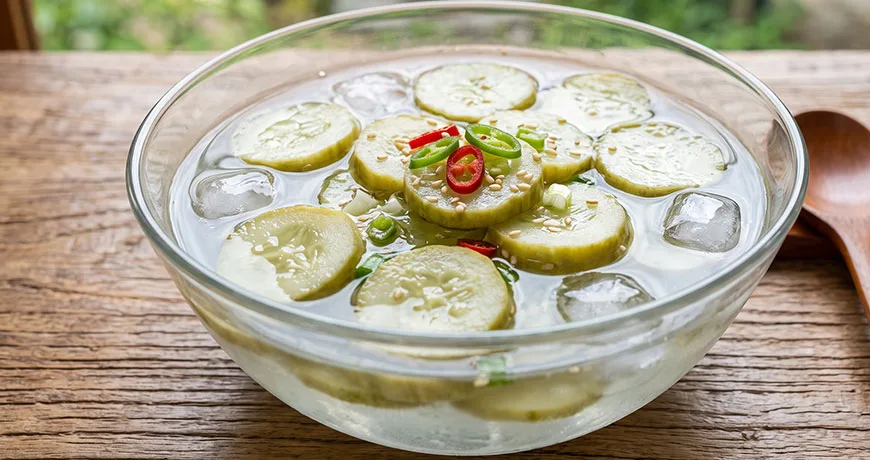
Oiji is a masterful expression of culinary patience, where firm, early-summer Korean cucumbers gracefully endure the intense heat of boiling brine and the heavy weight of a pressing stone. The instantaneous thermal shock from the boiling saltwater locks in the vibrant crunch of the cucumbers. As days pass, they slowly yield their clear juices, wrinkling into a beautiful golden hue. This process reveals the marvel of natural lactic acid fermentation. Crafted entirely without artificial vinegar or sugar, the pure, clean acidity born from time and high-quality sea salt instantly awakens a heat-weary palate. When enjoyed with cold water and rice, this humble yet profound preserve offers the ultimate seasonal comfort.
- ⏱️ Total Time: 7–10 Days | Prep: 20 Mins | Cook & Ferment: Initial hot brine infusion, followed by a secondary boil and 4–7 days of cold aging
- 🍳 Difficulty: Medium (Requires flawless washing, salinity maintenance, and microbial control)
- 🌶️ Profile: A resounding, musical crunch followed by a clean, oceanic saltiness and the elegant, bright acidity of natural fermentation
- 🍚 Core Process: Flawless Washing, Hot Brine Infusion, Weighted Pressing, Secondary Simmering
- 🍶 Pairing: Rice soaked in ice water, seasoned Oiji salad (with sesame oil and chili flakes), clear scorched rice soup (Nurungji)
Physicochemical & Sensory Matrix
- Baseline Salinity: 8.0% ~ 10.0% (A steadfast salinity engineered for profound osmotic dehydration and long-term preservation)
- pH Equilibrium: 3.8 ~ 4.2 (A refreshing acidic matrix forged purely through time-honored lactic acid fermentation)
- Textural Crunch Index: [■■■■■] (An overwhelming, percussive crunch achieved through extreme moisture extraction)
- Umami Density: 6.5 / 10 (A pure, unadulterated depth derived from the cucumber’s natural amino acids and fermentation)
- Shelf Stability: Peaks at 10 days; retains its peerless texture for 6+ months refrigerated
- Aroma Profile: Crisp Lactic Brightness | Refreshing Green Cucumber Notes | Clean Marine Minerals
Ingredients (Yields 1 Large Earthenware Crock or Glass Container)
- Primary Vegetable Matrix: 20 Firm, pristine Korean pickling cucumbers (Baekdadagi). Must be flawless without any skin damage.
- Brine & Defense Matrix: 3L Purified Water, 3 Cups Coarse Sea Salt (Yielding approx. 10% brine)
- Aromatic Catalyst: 3 Dried Red Chilies (For a subtle kick and antimicrobial support)
Allergy Information
- Contains: None (100% Plant and Mineral Matrix)
Equipment Traditional Earthenware Crock (Onggi) or Large Heat-resistant Glass Container, Heavy Pressing Stone, Large Stainless Steel Pot, Soft Sponge
Cooking Instructions
- Gentle Cleansing: Korean pickling cucumbers will easily turn mushy during fermentation if their skin is bruised. Avoid scrubbing with coarse salt; instead, wash them gently under running water using bare hands or a soft sponge. Lay them on a wire rack to dry completely.
- Simmering the Brine: In a large pot, combine the purified water and coarse sea salt at a 10:1 ratio. Boil over high heat until the salt is completely dissolved and the water reaches a rolling, vigorous boil.
- Hot Infusion: Neatly stack the dried cucumbers in the container, tucking the dried chilies between the layers. Without hesitation, pour the violently boiling saltwater directly over the cucumbers. This fleeting, intense heat sears the outer pectin layer, breathing an unyielding crispness into the vegetable.
- The Weight of Time: If the cucumbers float and touch the air, mold will inevitably form. Place a heavy pressing stone on top to keep them entirely submerged. Allow the container to rest peacefully in a cool, shaded area for 3 days.
- Secondary Simmering: After 3 days, the cucumbers will have wrinkled, releasing their natural juices and diluting the brine. Carefully drain only the liquid back into a pot and bring it to a rolling boil. Let this re-boiled brine cool completely to room temperature before pouring it back over the cucumbers. Move the container to the refrigerator for another 4 to 7 days to finalize the natural lactic acid fermentation.
💡 Professional Culinary Tips
- 1. Thermal Control for Pectin Coagulation: Pouring near-100°C boiling saltwater on the first day is a precise technique that instantaneously contracts the plant cell walls and deactivates autolytic enzymes. This delicate thermal shock coats the cucumber’s surface, permanently locking in the musical, percussive crunch.
- 2. The Aesthetics of Osmotic Dehydration: The synergistic force of a 10% high-salinity brine and a heavy pressing stone exerts immense osmotic and physical pressure, ruthlessly extracting internal moisture. The void left by the expelled water contracts into a dense, solid matrix, forming the ultimate defense mechanism for long-term preservation over the summer months.
- 3. Fermentation Sealing via Secondary Boil: Re-boiling the diluted brine on the third day is a vital ritual of purification. It restores the osmotic power of the brine while pasteurizing any rogue microbes. Returning this broth only after it is completely chilled establishes the perfect, stable ecosystem for lactic acid bacteria to weave their bright, elegant acidity.
🍶 Gastronomic Pairing
- The Perfect Contrast of Hydration and Salinity: On a sweltering summer day, prepare a bowl of freshly cooked rice submerged in ice-cold water. Take a piece of the golden, fermented Oiji, slice it thinly, and forcefully squeeze out the excess moisture with both hands. Toss it lightly with a drop of roasted sesame oil, a pinch of chili flakes, and minced scallions. The deeply savory, crunchy, and bright acidic bite of the cucumber against the cold, hydrated rice is a masterclass in reviving a heat-exhausted palate.
Nutrition Facts (Estimated)
Total Content : Approx. 30g (1/2 pickled cucumber)
Calories : 5 kcal (Insoluble dietary fiber and trace carbohydrates)
– Sodium : 480mg (Preservation-grade traditional salinity)
– Total Carbohydrate : 1.2g
– Sugar : 0.5g
– Total Fat : 0.0g
– Saturated Fat : 0.0g
– Cholesterol : 0.0mg
– Protein : 0.2g
– Dietary Fiber : 0.7g
*Daily Values are based on a 2,000 calorie diet and standard Korean nutritional reference values.
**Nutritional values are calculated based on original ingredients; substitutions may alter specific macronutrients.
Origins and Food Culture of Pickled Cucumber (Oiji)
1. Ancient Peninsular Cultivation and Joseon Documentation of “Chim-hwanggwa”
- Cultivated on the Korean peninsula since the Three Kingdoms era, cucumbers (hwanggwa 黃瓜) became a foundational summer garden crop. Classical agrarian manuals from the mid-to-late Joseon Dynasty—including Yu Jung-im’s Jeungbo Sallim Gyeongje (1766), Seo Yu-gu’s Imwon Gyeongjeji, and the late 19th-century manuscript Siuijeonso—documented recipes for curing cucumbers in brine under terms such as Chim-hwanggwa (沈黃瓜), Hwanggwaji (黃瓜漬), or Oeji.
- Historic records explicitly describe washing intact fresh cucumbers, air-drying their surfaces, pouring boiling-hot salt water over them, and securing them with heavy stones. This demonstrates that the sophisticated thermal-shock and osmotic preservation principles governing contemporary Oiji were already codified and practiced before the 18th century.
2. The Seasonality of Dano and the Anaerobic Science of the River Pressing Stone
- In traditional agrarian life, the premier window for preparing Oiji fell around the festival of Dano (the fifth day of the fifth lunar month). Before the onset of the summer monsoon (jangma), households procured bundles of 100 slender, white-skinned cucumbers (dadagi-oi), which were firm, juicy, and free of mature seeds, securing household provisions for the months ahead.
- The culinary success of Oiji depended strictly on the use of a sanitized heavy river rock (nureum-dol). If cucumbers floated to the surface and contacted ambient oxygen, aerobic wild yeasts would form an unsightly white pellicle (golmaji), causing the cucumbers to soften and rot. Forcing the cucumbers below the surface maintained strict anaerobic conditions, illustrating ancestral environmental microbiology using only stone and salt.
3. From Peasant Survival Food to Temple and Noble Aristocratic Tables
- In an era when cooking oils and animal proteins were scarce luxuries, Oiji was an indispensable lifeline for farming communities, replenishing sodium and moisture lost during demanding field labor.
- Buddhist monasteries treasured Oiji prepared purely with spring water and salt as a clean, meditative summer sustenance free of allium seasonings (osinche), while noble lineage estates (jongga) served it alongside cold summer noodle broths or nourishing ginseng chicken soups (samgyetang). Bridging seasonal frugality with refined simplicity, Traditional Pickled Cucumber stands as an immortal cultural monument to Korean slow-food ingenuity, seasonal harmony, and domestic preservation science.
Expelling the Fragile Fluid of Plentiful Summer Cucumbers with Boiling Brine and Heavy Granite, Channeling Lactic Acidity Within the Oxygen-Deprived Earthenware Darkness: A Refined Portrait of Traditional Oiji
Oiji (Traditional Korean Salt-Pickled Cucumbers) stands as an austere, primordial triumph in Korea’s heritage of saline vegetable preservation. Crafted at the onset of summer when crisp, slender white-skinned cucumbers (baek-dadagi-oi) flood farmsteads, this venerable pickle bypasses vinegar, garlic, or sweet syrups. Fresh whole cucumbers are packed into breathing earthenware jars (onggi), submerged under a roaring deluge of boiling salt water (typically an 8–10% salinity brine), and pinned beneath flat granite pressing stones (nureumdol). Composed of more than 95% water, fresh cucumbers naturally collapse into mushy rot within days. Ancestral preservation countered this biological fragility through an aggressive physical shock: the scalding brine immediately denatures native softening enzymes and sanitizes surface spoilage microbes, while the cooling hypertonic solution and compressive weight of the stone ruthlessly wring out free intracellular fluids. Over several weeks of subterranean fermentation, bright emerald chlorophyll gives way to a noble olive-amber translucence, converting tender vegetable flesh into an intensely compacted, resiliently springy treasure.
Reaching into the crock to pull out a golden, wrinkled cucumber reveals a taut, dehydrated cylinder weeping beads of clear brine. Sliced into thin discs and wrung inside a cheesecloth to expel every last trace of residual fluid, the cucumber delivers an astonishing textural bite. Crushed between the teeth, it releases an authoritative, high-density chew—an acoustic, rubbery snapping rhythm known in Korean gastronomy as kkodeul-kkodeul—completely unlike the brittle crunch of Western dill pickles or the aqueous yield of fresh slices. The bracing mineral salinity of coarse solar salt strikes first, anchored by the clean, mellow lactic tang generated during undisturbed anaerobic aging. Tossed with a thread of toasted sesame oil, minced garlic, and sun-dried chili flakes into oiji-muchim, it revives fatigued palates with rustic elegance. Dropped into a bowl of icy spring water with sliced chilies to create oiji-naengguk, a single chilled spoonful quenches sweltering midsummer heat, restoring clarity and vital equilibrium to the body.
The cultural identity of Oiji lies in the austere agrarian discipline that refused to let summer abundance go to waste, mastering vegetable turgor through the pure balance of salt, water, and mechanical pressure. Unadorned by dark soy sauces or overpowering spices, Oiji captures the resilient spirit of the traditional Korean hearth, turning fleeting seasonal moisture into an enduring, crisp monument of culinary preservation.
Editor’s Review
1. Osmotic Dehydration and Cell-Wall Densification: The Lamellar Chew
Oiji represents a study in the structural compaction of high-water plant tissues:
- Vacuolar Water Evacuation and Cellular Shrinkage: The hypertonic brine environment, reinforced by the steady load of the pressing stone, lowers internal turgor pressure and drives cytoplasmic water out of the parenchymal cells. The emptied cell walls flatten, folding into dense, multi-layered lamellar structures.
- The Mechanical Squeezing Factor: The traditional step of wringing sliced discs within a cloth further purges free and bound water, ensuring that mastication encounters pure, concentrated plant fibers that push back resiliently against dental shear rather than collapsing into watery pulp.
- Acoustic Snapping Feedback: By avoiding prolonged cooking and maintaining cell-wall cellulose integrity, the tightly compressed tissues snap under tooth pressure, producing a distinct, high-frequency masticatory rhythm (kkodeul).
2. Halophilic Lactic Fermentation, Pheophytin Browning Chemistry, and Calcium Pectate Stabilization
The stability, appearance, and firm texture of Oiji are governed by spontaneous anaerobic succession and inorganic chemistry:
- Selective Lactic Acid Bacteria Succession: At sustained salinity levels (8–10%) and strictly anaerobic conditions, halotolerant lactic acid bacteria—chiefly Leuconostoc mesenteroides followed by acid-tolerant Lactobacillus plantarum—dominate the brine. Metabolizing trace cucurbit sugars, they produce natural lactic acid, depressing the pH to a shelf-stable range of 3.8 to 4.2.
- Chlorophyll Degradation to Pheophytin: Under mounting lactic acidity, the magnesium ion (Mg2+) bound at the center of the porphyrin ring of chlorophyll a and b is displaced by two hydrogen ions (H+). This irreversible chemical reaction transforms vibrant green pigment into olive-drab pheophytin, imparting the classic amber translucence of well-aged Oiji.
- Inorganic Calcium Pectate Cross-Linking: Divalent cations (Ca2+, Mg2+) present in solar sea salt bind with free carboxyl groups on de-esterified pectin chains in the middle lamella. This forms an insoluble “egg-box” calcium pectate matrix that permanently shields the cell walls from pectolytic enzyme breakdown, preventing structural softening across months of room-temperature aging.
3. Pellicle Yeast Suppression and Physiological Electrolyte Restoration
Oiji functions as both an anaerobic engineering marvel and an indispensable biological reviver:
- Anaerobic Submersion via Granite Stones: The white surface film (golmaji) often found on poorly kept brines is caused by aerobic pellicle yeasts (Pichia, Debaryomyces). Complete immersion beneath the pressing stone denies these film-forming yeasts access to oxygen, preventing off-odors and tissue rotting.
- Summer Electrolyte Equilibrium: During periods of extreme heat and profuse perspiration, the sodium, potassium, and trace sea minerals concentrated in Oiji replenish depleted systemic electrolytes, while organic lactic acid aids in buffering fatigue-inducing metabolic byproducts.