
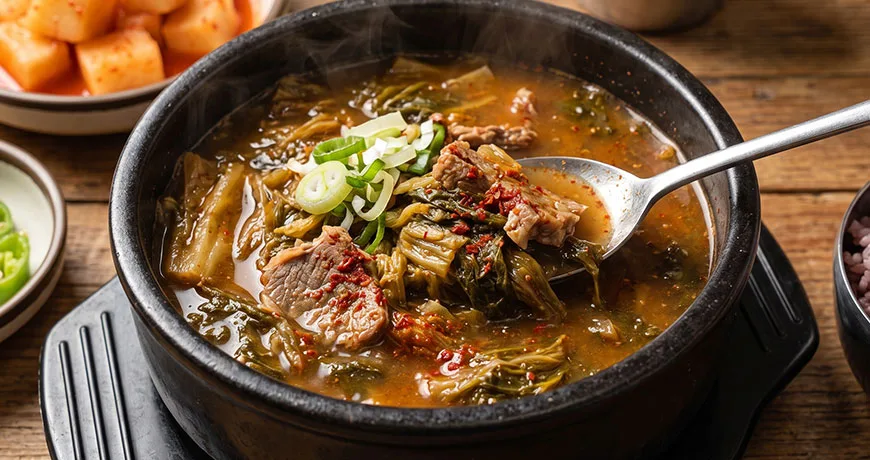
Ugeoji-haejang-guk is the quintessential Korean hangover remedy—a profoundly deep thermodynamic emulsion of beef bone broth combined with biochemically softened outer cabbage leaves (ugeoji). The soup relies on prolonged boiling to extract collagen, marrow, and minerals from beef bones, creating a milky, rich suspension. The tough, cellulose-heavy outer cabbage leaves are tenderized and aggressively marinated in fermented soybean paste (doenjang) and chili. This fibrous mass acts as a physiological sponge, binding to intestinal toxins, while the amino acids from the doenjang and optional bean sprouts directly stimulate the liver’s detoxification of acetaldehyde, curing the hangover from within.
⏱️ Total: 4+ hrs (includes broth extraction) | Prep: 30 mins | Cook: 3+ hrs | 🍳 Difficulty: Moderate (Requires patience for emulsification and fiber softening) | 🌶️ Profile: Deeply Earthy, Savory, and Spicy | 🍚 Focus: Emulsification, Dietary Fiber, & Biochemical Detoxification
Ingredients (4 servings)
- Bone Broth Emulsion Base: 1kg beef leg bones/mixed bones, 4–5L water (plus ample cold water for purging)
- Aromatics (Masking Agents): 2 scallion roots, 1/2 onion, 10 cloves garlic, 1 tsp whole black peppercorns
- Fibrous Vegetables: 500g boiled outer cabbage leaves (ugeoji), 2 scallions, 200g soybean sprouts (optional, for asparagine detoxification)
- Hypertonic Marinade: 4 tbsp doenjang (soybean paste), 2.5 tbsp gochugaru (chili flakes), 2 tbsp soup soy sauce (guk-ganjang), 2 tbsp minced garlic, coarse sea salt (to taste), a pinch of black pepper
Allergy Information Contains: Beef, Soy, Wheat (from doenjang, soy sauce)
Equipment Very Large Heavy-Bottomed Stockpot, Cutting Board, Knife, Mixing Bowl, Fine Mesh Skimmer
Cooking Instructions
- Myoglobin Purging: Submerge the beef bones in cold water for 3 to 4 hours to extract the water-soluble myoglobin (blood). Change the water 2–3 times. Failure to purge the blood will result in an oxidized, foul-smelling broth.
- Collagen Hydrolysis & Emulsification: Blanch the purged bones in boiling water for 10 minutes, then discard the water and wash the bones thoroughly. In a large stockpot, combine the clean bones, 4–5L of fresh water, and the aromatics. Bring to a boil, then reduce to a simmer and cook for at least 3 to 4 hours. (The turbulent heat breaks down the fat and collagen, emulsifying them into a milky, rich bone broth.)
- Physical Softening of Cellulose: If using raw outer cabbage leaves, boil them in lightly salted water until tender, then rinse in cold water and squeeze dry. Tear the boiled leaves lengthwise, then cut them into 4–5cm bite-sized lengths.
- Flavor Binding (Osmosis): In a mixing bowl, aggressively massage the cabbage leaves with the doenjang, gochugaru, soup soy sauce, and minced garlic. This physical manipulation forces the hypertonic seasoning into the dense, fibrous cellular structure of the cabbage.
- Thermodynamic Simmering: Strain about 2–2.5L of the rich, opaque bone broth into a clean pot. Add the seasoned cabbage mixture and bring to a vigorous boil.
- Detoxification Integration: Once boiling, add the soybean sprouts (if using) and diagonally sliced scallions. Reduce the heat and simmer for 20 minutes until the cabbage leaves melt in your mouth. Adjust the final seasoning with coarse sea salt and serve piping hot.
💡 Professional Culinary Tips
- Physics of the Emulsified Broth: Boiling bones for hours extracts minerals, marrow lipids, and collagen. Because oil and water repel each other, the violent convection of the boiling water is necessary to shear the fat into microscopic droplets. The dissolved collagen (gelatin) acts as an emulsifier, coating these droplets and suspending them in the water, resulting in the signature milky-white, full-bodied broth.
- Biochemical Value of Ugeoji (Outer Leaves): The chlorophyll-rich outer leaves of Napa cabbage are discarded in many cuisines because their cellulose structure is notoriously tough. However, prolonged boiling with fermented soybean paste breaks down the pectin holding the cell walls together. The resulting mass is extremely high in insoluble dietary fiber, which acts as a mechanical broom for the digestive tract, sweeping out toxins.
- Mechanisms of the “Haejang” (Hangover Cure): The intense physical discomfort of a hangover is caused by acetaldehyde, a toxic byproduct of alcohol metabolism, which irritates the stomach lining. The colloidal proteins in the doenjang and bone broth physically coat and soothe the stomach wall. Meanwhile, amino acids like methionine (from doenjang) and asparagine (from soybean sprouts) act as biochemical catalysts, accelerating the liver’s ability to break down and flush out the toxins.
Nutrition Facts (Estimated)
Total Content : Approx. 500g (1 serving, excluding bone weight, including broth)
Calories : 240 kcal
– Sodium : 1,280mg
– Total Carbohydrate : 16.0g
– Sugar : 5.0g
– Total Fat : 10.0g (Includes rendered lipids from bone broth)
– Saturated Fat : 3.5g
– Cholesterol : 20.0mg
– Protein : 18.0g
– Calcium : 220.0mg
– Dietary Fiber : 7.0g
*Daily Values are based on a 2,000 calorie diet and standard Korean nutritional reference values
**Nutritional values are calculated based on original ingredients; substitutions may alter specific macronutrients.
The Deep-Simmered Soul of Beef Bone Marrow Broth and the Earthy Comfort of Sun-Dried Cabbage: A Lyrical Masterpiece of Ugeoji Haejangguk and Morning Hangover Solace
Ugeoji Haejangguk (Spicy Beef Bone and Cabbage Hangover Soup) stands as the deeply comforting, hearty, and quintessential pinnacle of Korean soup gastronomy, where assorted beef bones are simmered patiently in bubbling cauldrons to extract their rich marrow and collagen, combined with tender, rehydrated outer cabbage leaves (ugeoji), rustic fermented soybean paste (doenjang), sharp chili pepper flakes, and crushed garlic into a robust, fiery broth. Renowned for generations as the ultimate morning antidote to soothe a weary stomach after evening revelries, this iconic soup fills the dining space with a deeply fragrant, savory steam that instantly revitalizes the body from the very first spoonful.
The moment a piping-hot spoonful of the spicy, bone-infused broth touches the palate, an immediate wave of deep marrow umami and earthy soybean paste depth cascades across the senses, followed by an invigorating kick of warming chili heat. The slow-simmered cabbage leaves, tender enough to dissolve effortlessly with a gentle chew, release soothing vegetable juices that mingle harmoniously with the rich soup. Blending a warm bowl of freshly steamed rice into the bubbling earthen pot induces a gentle, restorative perspiration that banishes physical fatigue and brings profound gastrointestinal relief.
True gastronomy does not rely exclusively on expensive luxury cuts; it flourishes in the transformative wisdom of simmering humble ingredients over patient flame to turn simple outer greens and bones into a reservoir of healing and nourishment. Savoring an aromatic, bubbling bowl of spicy beef bone and cabbage soup today is an elegant and sacred ritual—clearing away yesterday’s exhaustion through a wave of bracing warmth and filling the spirit with unpretentious nourishment, cultural heritage, and timeless solace.
Editor’s Review
1. An Exhilarating Cadence of Savory Beef Bone Depth, Meltingly Tender Cabbage Leaves, and Balanced Doenjang Spice
The moment a piping-hot spoonful of Ugeoji Haejangguk coats the palate, an immediate burst of rich bone marrow umami, savory fermented doenjang, and piquant red chili awakens the senses with invigorating punch. This robust foundation is swiftly balanced by the luscious, melting tenderness of the slow-cooked cabbage greens and the sharp, clean finish of garlic and scallions, orchestrating an endlessly satisfying, multi-layered sensory thrill that makes it the ultimate companion to warm rice.
2. Bone Marrow Gelatin Extraction Thermodynamics and Cabbage Fiber-Glucosinolate Detoxification Mechanics
Ugeoji Haejangguk represents an exacting study in meat structural biochemistry and botanical detoxification synergy. Extended gentle boiling of beef bones hydrolyzes dense connective tissue and marrow into bioavailable gelatin, creating a viscous liquid matrix that soothes and coats the gastric mucosal lining. Concurrently, the insoluble dietary fiber, chlorophyll, and sulfur-rich glucosinolates within the ugeoji actively bind to intestinal metabolic waste for rapid clearance, while abundant potassium and capsaicin replenish depleted electrolytes and stimulate peripheral circulation for rapid recovery.
3. The Dawn Haejangguk Counter Hearth and the Grounding Sanctuary of Morning Renewal
Found welcoming early-morning workers and weary night owls nationwide at steaming 24-hour soup counters as an indispensable symbol of restorative hospitality, a modest bowl of spicy beef bone and cabbage soup serves as an enduring emotional haven against daily exhaustion. Revered for generations as an essential comfort staple that restores vitality through shared, soul-warming spoonfuls, enjoying this honest, nutrient-dense delicacy washes away modern stress, granting a timeless sanctuary of stillness, culinary heritage, and grounded happiness.