
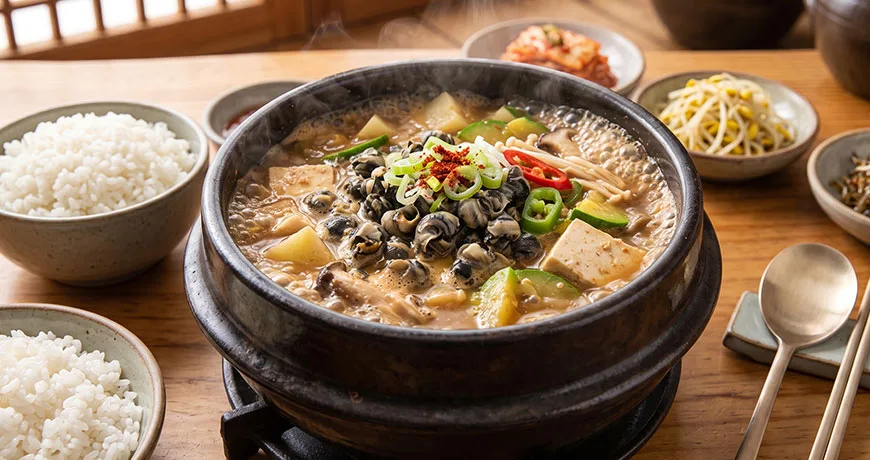
A masterclass in utilizing colloidal suspensions to mask earthy aromas while precisely controlling protein denaturation. The starchy rice water acts as a colloidal binder, harmonizing the fermented notes of doenjang and neutralizing the muddy scent inherent to freshwater snails (ureong). The snails are introduced at the very end of the cooking process to prevent their muscle fibers from tightening, ensuring a delightfully chewy yet tender texture, perfectly balanced by the soft, cooked greens.
⏱️ Total: 25 mins | Prep: 10 mins | Cook: 15 mins | 🍳 Difficulty: Moderate | 🌶️ Profile: Earthy, Savory, and Chewy | 🍚 Focus: Protein, Calcium, and Iron
Ingredients (2 servings)
- Main Ingredients: 150g boiled freshwater snail meat (ureong), 150g mallow leaves (auk) or spinach (sigeumchi), 1/2 scallion, 1 Cheongyang chili
- Broth & Seasoning: 4–5 cups rice water (or anchovy-kelp broth), 2.5 tbsp doenjang (Korean soybean paste), 1 tbsp minced garlic, 0.5 tbsp gochugaru (optional), a splash of soup soy sauce (or 0.5 tbsp tuna extract) for final seasoning
Allergy Information Contains: Mollusks (Freshwater Snail), Soy, Wheat (from doenjang, soup soy sauce)
Equipment Cutting Board, Knife, Mixing Bowl, Deep Pot, Fine Strainer, Ladle
Cooking Instructions
- Ingredient Preparation: If using mallow (auk), strip the tough outer fibers from the stems and vigorously massage the leaves with coarse salt to remove bitter green juices. (If using spinach, simply wash and halve.) Diagonally slice the scallion and chili.
- Mechanical Snail Washing: Vigorously toss the boiled snail meat with a spoonful of wheat flour or coarse salt, then rinse thoroughly under running water. This physical scrubbing absorbs and strips away surface impurities, mucilage, and residual muddy odors.
- Colloidal Broth Formulation: Bring the rice water to a rolling boil over high heat. Using a strainer, dissolve the doenjang smoothly into the boiling liquid and add the minced garlic.
- Vegetable Tenderization: Add the prepared mallow (or spinach). Boil mallow for 5–7 minutes to break down its tough cellulose. If using spinach, boil for only 2–3 minutes due to its fragile cellular structure.
- Snail Integration & Thermal Control: Once the greens are tender, introduce the cleaned snails. Boil for exactly 2–3 minutes. Prolonged thermal exposure will rapidly denature the snail proteins, causing them to expel moisture and turn rubbery.
- Residual Heat Finishing: Right before turning off the heat, add the scallion and chili to activate their volatile aromatics. Adjust the final salinity with soup soy sauce.
💡 Professional Culinary Tips
- Mechanical Absorption Washing: The fine particles of wheat flour act as an absorbent abrasive, effectively stripping the snails of their slimy coating and earthy off-flavors. Skipping this step risks a murky, muddy-tasting broth.
- Chemical Masking via Rice Water: The soluble starches in rice water form a colloidal suspension when heated. This matrix physically masks the muddy aroma of the snails while smoothing out the sharp salinity of the fermented soybean paste, adding a velvety viscosity to the broth.
- Controlling Protein Denaturation: Snail muscle fibers contract violently under sustained heat. Introducing them only after the vegetables are fully cooked minimizes their exposure to thermal energy, locking in their tender, snappy texture.
Nutrition Facts (Estimated)
Total Content : Approx. 300g (1 serving)
Calories : 130 kcal
– Sodium : 810mg
– Total Carbohydrate : 10.0g
– Sugar : 2.0g
– Total Fat : 2.5g
– Saturated Fat : 0.4g
– Cholesterol : 35.0mg
– Protein : 15.0g
– Calcium : 190.0mg
*Daily Values are based on a 2,000 calorie diet and standard Korean nutritional reference values
**Nutritional values are calculated based on original ingredients; substitutions may alter specific macronutrients.
The Resilient Vitality of Marsh Snails and Deep Doenjang: A Soul-Soothing Symphony of Earthy Warmth and Chewy Textures
Ureong Doenjang-guk (Marsh Snail Soybean Paste Soup) stands as the most robust, nourishing, and profoundly comforting pinnacle of traditional Korean rustic gastronomy, where tender, protein-rich marsh snails (ureong), harvested from clean paddies and ponds, simmer patiently alongside a rich broth infused with deep, aged doenjang (fermented soybean paste), tender spinach, or mallow leaves within an earthenware pot. Eschewing flashy artifice in favor of chewy textures and earth-grown bounty, this rustic soup transforms simple freshwater harvest into a deeply restorative elixir that warms the core from the first spoonful.
As the soup simmers gently, the nutty, robust aroma of aged soybeans and savory broth calms the mind and awakens a wholesome, unadulterated appetite. The resilient, springy chew of the snails blends seamlessly with the tender, velvety bite of the greens and the savory broth, coating every grain of white rice in rich moisture to achieve the ultimate pairing of rustic comfort and deep nutritional fulfillment.
True gastronomy does not rely on ostentatious luxuries; it flourishes in the ancestral wisdom of elevating humble, wholesome ingredients to nourish the body and restore inner peace. Savoring a steaming bowl of ureong soybean paste soup today is an honest and grounding ritual—clearing away the rush of modern life and filling the spirit with unpretentious warmth, protein-rich vitality, and timeless solace.
Editor’s Review
1. A Grounded Cadence of Chewy Snail Resilience, Deep Doenjang Umami, and Velvety Leaf Tenderness
The moment a warm spoonful of the savory soup touches the palate, an immediate wave of deep, aged doenjang umami and clean broth envelops the senses with comforting warmth. This is swiftly followed by the springy, satisfying chew of the simmered marsh snails and the soft, tender bite of the fresh greens, orchestrating an endlessly soothing, multi-layered culinary experience that brings absolute peace to the senses.
2. Snail Chondroitin-Protein Bioactivity and Purine-Glutamate Umami Synergy Mechanics
Ureong Doenjang-guk represents an exacting study in traditional culinary physics and nutritional biochemistry. High concentrations of bioavailable protein, calcium, and chondroitin sulfate naturally present in the marsh snails actively support joint health and systemic stamina. Concurrently, savory umami compounds merge with the naturally occurring glutamates of the fermented soybean paste, establishing a powerful purine-glutamate umami synergy while supplying abundant vitamins and dietary fiber from the greens for optimal digestive wellness.
3. The Rustic Bounty of Paddies and the Grounding Sanctuary of Countryside Comfort
Found gracing family dining tables across the nation as a cherished seasonal staple rooted in agricultural wisdom, a modest bowl of marsh snail soybean paste soup serves as an enduring emotional haven against daily weariness. Revered for generations as an essential nutritional anchor to restore stamina and warm the core, enjoying this honest, reliable soup washes away modern stress, granting a timeless sanctuary of stillness, maternal care, and grounded culinary happiness.