
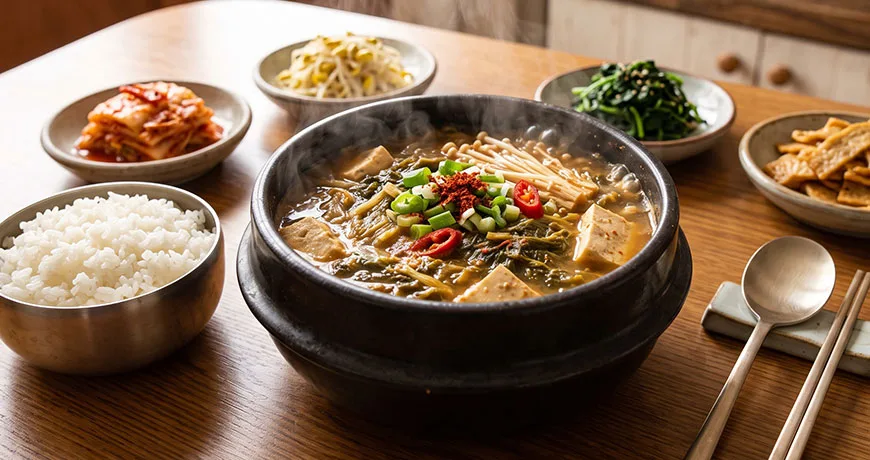
A traditional restorative soup that relies on prolonged thermal degradation of tough cabbage outer leaves (ugeoji) and osmotic infusion of fermented soybean paste (doenjang). Massaging the thick leaves with the savory paste prior to simmering ensures deep flavor penetration. Depending on the broth chosen—anchovy for clarity or beef bone for rich viscosity—this soup demonstrates a masterclass in transforming fibrous vegetables into a melt-in-the-mouth, deeply savory dish.
⏱️ Total: 40 mins | Prep: 10 mins | Cook: 30 mins | 🍳 Difficulty: Moderate | 🌶️ Profile: Deep, Savory, and Earthy | 🍚 Focus: Dietary Fiber Breakdown
Ingredients (2 servings)
- Main Ingredients: 200g boiled outer cabbage leaves (ugeoji), 100g beef for soup (optional, omit if using beef bone broth), 1/2 scallion, 1 Cheongyang chili
- Broth & Seasoning: 5–6 cups anchovy-kelp broth (or beef bone broth), 2.5 tbsp doenjang (Korean soybean paste), 1 tbsp minced garlic, 0.5 tbsp gochugaru (optional), a splash of soup soy sauce (or 0.5 tbsp tuna extract) for final seasoning
Allergy Information Contains: Soy, Wheat (from doenjang, soup soy sauce), Beef (if using beef broth or meat)
Equipment Cutting Board, Knife, Mixing Bowl, Deep Pot, Ladle
Cooking Instructions
- Ingredient Preparation: Rinse the boiled ugeoji thoroughly under running water and squeeze out the excess liquid. Cut the leaves into 4–5cm lengths. Diagonally slice the scallion and chili.
- Osmotic Marination: In a mixing bowl, aggressively massage the ugeoji with doenjang, minced garlic, and gochugaru. This physical kneading forces the fermented umami into the tough cellular matrix via osmotic pressure, preventing the vegetables from tasting watery.
- Initial Sauté & Broth Addition: Lightly sauté the marinated ugeoji in a pot over medium-low heat to activate the earthy, roasted aromas of the soybean paste. Pour in the broth and bring to a rolling boil over high heat.
- Thermodynamic Tenderization: Once boiling, cover the pot and reduce the heat to medium-low. Simmer gently for 20–25 minutes. This extended thermal exposure is necessary to hydrolyze the rigid pectin and cellulose, rendering the tough leaves perfectly tender and infusing the broth with soluble fiber.
- Final Finishing: Add the sliced scallion and chili. Use the residual thermal energy to activate their volatile aromatics. Adjust the final salinity with a splash of soup soy sauce (or tuna extract) and immediately turn off the heat.
💡 Professional Culinary Tips
- Cellular Breakdown & Osmosis: Pre-massaging the ugeoji with doenjang is a critical physical step. Rather than simply dissolving the paste into the broth, massaging it directly into the leaves utilizes osmosis to replace the plant’s internal water with rich, fermented amino acids.
- Broth Thermodynamics: Using an anchovy-kelp broth yields a clean, oceanic umami profile. Conversely, utilizing a beef bone broth introduces emulsified collagen and lipids, creating a much heavier, more viscous mouthfeel that coats the palate.
- Effects of Prolonged Hydrolysis: Unlike delicate greens (such as fresh spinach), the tough structural integrity of outer cabbage leaves requires sustained low-heat simmering. This breaks down the cellular pectin, resulting in a comforting, soft texture that practically melts in the mouth.
Nutrition Facts (Estimated)
Total Content : Approx. 300g (1 serving)
Calories : 110 kcal
– Sodium : 820mg
– Total Carbohydrate : 12.0g
– Sugar : 2.0g
– Total Fat : 3.0g
– Saturated Fat : 0.5g
– Cholesterol : 0.0mg
– Protein : 7.0g
– Calcium : 150.0mg
*Daily Values are based on a 2,000 calorie diet and standard Korean nutritional reference values
**Nutritional values are calculated based on original ingredients; substitutions may alter specific macronutrients.
The Rustic Resilience of Napa Cabbage Outer Leaves and Deep Doenjang: A Soul-Soothing Symphony of Earthy Warmth
Ugeoji Doenjang-guk stands as the most grounded, wholesome, and profoundly comforting pinnacle of traditional Korean rustic gastronomy, where tenderized outer leaves of napa cabbage (ugeoji), brimming with earthy resilience, simmer patiently alongside a rich beef bone or clean anchovy broth infused with deep, aged doenjang (fermented soybean paste) within an earthenware pot. Eschewing flashy artifice in favor of fiber-dense, humble ingredients, this rustic country-style soup transforms simple earth-grown bounty into a deeply restorative elixir that warms the core from the very first spoonful.
As the soup simmers gently, the nutty, robust aroma of aged soybeans and savory broth calms the mind and awakens a wholesome, unadulterated appetite. The tender yet resilient chew of the nutrient-dense cabbage leaves melts seamlessly into the savory broth, coating every grain of white rice in rich moisture to achieve the ultimate pairing of rustic comfort.
True gastronomy does not rely on ostentatious luxuries; it flourishes in the ancestral wisdom of elevating humble, patient ingredients to nourish the body and restore inner peace. Savoring a steaming bowl of ugeoji soybean paste soup today is an honest and grounding ritual—clearing away the rush of modern life and filling the spirit with unpretentious warmth, fiber-rich vitality, and timeless solace.
Editor’s Review
1. A Grounded Cadence of Earthy Doenjang Depth and the Resilient, Fiber-Rich Chew of Tender Napa Cabbage Leaves
The moment a warm spoonful of the savory soup touches the palate, an immediate wave of deep, aged doenjang umami and rich broth envelops the senses with comforting warmth. This is swiftly followed by the hearty, fiber-rich bite of the simmered napa cabbage leaves, orchestrating an endlessly soothing, multi-layered culinary experience that brings absolute peace to the senses.
2. Porous Fibrous Matrix Absorption Kinetics and Bone-Broth/Anchovy Umami Synergy Mechanics
Ugeoji Doenjang-guk represents an exacting study in traditional culinary physics and nutritional biochemistry. The porous cellular matrix of the boiled outer napa leaves acts as an active sponge, absorbing amino acids and savory compounds from the doenjang broth to create an intensely flavorful chew. Concurrently, gelatin-rich bone collagen or anchovy inosine monophosphate (IMP) merges with the naturally occurring glutamates of the soybean paste, establishing a powerful purine-glutamate umami synergy while supplying abundant dietary fiber for optimal digestive wellness.
3. The Hearthside Warmth of Country Kitchens andcomstock Grounding Sanctuary of Rustic Comfort
Found gracing family dining tables across the nation as a beloved everyday staple, a modest bowl of ugeoji soybean paste soup serves as an enduring emotional haven against daily weariness. Revered for generations as an essential nutritional anchor to warm the core and soothe the stomach, enjoying this honest, reliable soup washes away modern stress, granting a timeless sanctuary of stillness, maternal care, and grounded culinary happiness.