
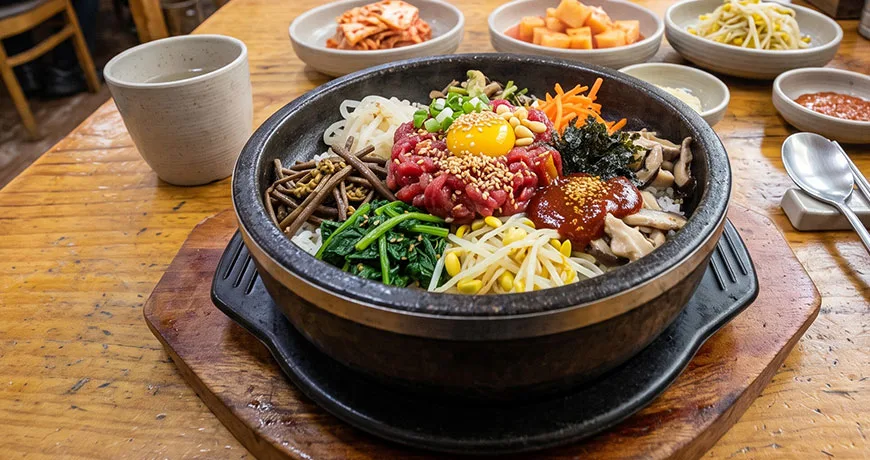
Yukhoedolsotbibimbap is a product of complex culinary engineering that utilizes the extreme thermal mass of a traditional stone pot (Dolsot) to create a dynamic, evolving physicochemical experience. When cooked rice is pressed against the 200°C+ sesame oil-coated stone, the surface moisture flash-evaporates, driving aggressive Maillard browning to form a crispy starch crust known as Nurungji. Placed atop this superheated matrix is cold, uncoagulated raw beef (Yukhoe). As the diner mechanically mixes the bowl, the immense residual heat of the stone pot triggers partial thermal coagulation of the raw beef. This creates a brilliant textural spectrum—a savory, cooked exterior yielding to a soft, viscoelastic, medium-rare core, all bound together by a viscous hypertonic chili emulsion.
⏱️ Total: 30 mins | Prep: 20 mins | Cook: 10 mins | 🍳 Difficulty: Moderate (Requires strict thermal mass control and protein denaturation management) | 🌶️ Profile: Crispy, Savory, and Luxuriously Rich | 🍚 Focus: Thermal Mass, Maillard Crust Formation, & Partial Coagulation
Ingredients (2 servings)
- Uncoagulated Protein Matrix: 150g fresh Beef for Yukhoe (Rump or Round cut—lightly coated with 1 tsp soy sauce and 1 tsp sesame oil to form an anti-oxidation lipid barrier)
- Starch Matrix: 2 bowls cooked white rice (cooked with 10% less water for a firmer grain structure)
- Fiber Matrix: 50g each of blanched bracken, bellflower root, spinach, and bean sprouts (squeezed violently to remove 80%+ of moisture)
- Viscous Binder & Lipid Catalyst: 3 tbsp Gochujang sauce for bibimbap, 2 tbsp toasted sesame oil (for coating the pot), 1 raw egg yolk (optional)
- Essential Equipment: Dolsot (Korean Hot Stone Pot) or heavy Cast-Iron Bowl
Allergy Information Contains: Beef, Soy, Wheat (from Gochujang and soy sauce), Egg
Equipment Dolsot (Hot Stone Pot), Gas Stove (direct heat source), Mixing Bowls, Protective Oven Mitts
Cooking Instructions
- Moisture Control (Vegetables): After blanching the vegetables, squeeze them aggressively to remove excess water. If the vegetables are too wet, the water will absorb the stone pot’s kinetic energy (heat of vaporization), dropping the temperature rapidly and causing the rice to steam into a mushy paste rather than fry into a crust.
- Protein Lipid Coating: Slice the chilled raw beef into thin strips and toss with sesame oil and soy sauce. The unsaturated fats in the sesame oil create a protective barrier against oxygen, preventing enzymatic browning and moisture loss in the raw meat.
- Thermodynamic Preheating: Generously brush the inside of the stone pot with sesame oil and place it over high heat. Maximize the thermal mass by heating it until the oil is just about to smoke (surpassing 200°C/400°F).
- Starch Crust Formation (Nurungji): Press the cooked rice evenly against the sizzling bottom and sides of the hot stone pot. Let it cook undisturbed for 1–2 minutes. The intense conductive heat will trigger rapid Maillard browning, creating a thick, crispy caramelized crust.
- Assembly & Partial Coagulation: Arrange the moisture-controlled vegetables over the rice. Just before removing the pot from the heat, place the cold raw beef in the center. Serve immediately. As the diner vigorously mixes the contents, the residual heat of the stone partially thermo-coagulates the raw beef in real-time.
💡 Professional Culinary Tips
- The Physics of Thermal Mass: Stone and cast iron have a high specific heat capacity compared to thin stainless steel. Even after being removed from the fire, the Dolsot retains temperatures well over 100°C for up to 20 minutes. This continuous heat pumps thermal energy into the food, ensuring the moisture keeps evaporating to maintain the crispy texture of the rice until the very last bite.
- The Dilemma of Partial Coagulation: Why put raw beef in a screaming-hot pot? If you pre-cook the beef, the residual heat of the pot will overcook it into dry rubber. By adding raw, uncoagulated beef and allowing the diner to mix it, the beef essentially cooks to a perfect medium-rare within seconds, locking its kinetic juices inside a freshly seared exterior.
- Chemical Mechanism of the Lipid Coat: Brushing the stone pot with sesame oil isn’t just for flavor. It acts as a physical release agent. At high temperatures, the sticky amylopectin in the rice would otherwise fuse to the stone and turn to carbon (ash). The oil acts as a conductive frying medium, ensuring the starch crisps into a golden crust rather than burning.
Nutrition Facts (Estimated)
Total Content : Approx. 500g (1 serving)
Calories : 620 kcal
– Sodium : 890mg
– Total Carbohydrate : 76.0g
– Sugar : 8.0g
– Total Fat : 22.0g
– Saturated Fat : 5.5g
– Cholesterol : 85.0mg
– Protein : 34.0g
– Dietary Fiber : 6.5g
*Daily Values are based on a 2,000 calorie diet and standard Korean nutritional reference values.
**Nutritional values are calculated based on original ingredients; substitutions may alter specific macronutrients.
Origins and Food Culture of Beef Tartare Hot Stone Pot Bibimbap (Yukhoedolsotbibimbap)
1. The Confluence of Classical Tartare Bibimbap and Gopdol Stone Craft
- Tracing its roots back to historic royal and regional beef tartare traditions (hwaban) in Jeonju and Jinju, this dish modernizes heritage cuisine by incorporating the natural agalmatolite stone pots (gopdol-sot) developed in Jeolla-do during the 1960s and 1970s.
- By transforming a traditionally room-temperature or chilled tartare dish into a piping-hot tabletop presentation, it established an approachable, year-round luxury standard across modern Korean dining.
2. The Culinary Science of Sizzling Heat, Crispy Nurungji, and Flash-Searing
- The hallmark of authentic preparation lies in utilizing the intense thermal mass of the stone bowl to toast the bottom layer of rice against sesame oil, creating the coveted crispy, nutty rice crust known as nurungji.
- As diners toss the ingredients together, the radiant stone heat gently flash-sears the seasoned beef tartare from rare to medium-rare, creating a customizable texture that captures both the silkiness of raw beef and the savory richness of seared meat.
3. Enduring Tabletop Warmth and the Wholesome Healing Ritual
- Embodying the ancient Korean philosophy of eumyang-oheang (five elements and colors) and thermal hospitality, the heavy stone vessel ensures the entire meal remains steaming hot down to the final spoonful, soothing the stomach and promoting smooth digestion.
- Traditionally served with a bowl of refreshing bean sprout broth or rich soybean paste soup, scraping the fragrant, crunchy toasted rice from the stone pot serves as a deeply satisfying finale to an iconic comfort meal.
The Sizzling Crescendo of Radiant Stone and the Silken Bloom of Hanwoo Tartare: A Refined Portrait of Yukhoe Dolsot Bibimbap
Yukhoe Dolsot Bibimbap (Beef Tartare Hot Stone Pot Bibimbap) stands as a theatrical, temperature-defying masterpiece of modern Korean mixed-rice gastronomy. Steamed white rice is placed inside a scorching, heavy agalmatolite stone pot (dolsot) lightly coated with toasted sesame oil, layered with a colorful spectrum of seasoned mountain greens (namul), and crowned with a ruby-red mound of finely julienned fresh beef tartare (yukhoe) alongside fermented red chili paste (gochujang). Fusing the aristocratic elegance of raw beef bibimbap with the relentless thermal inertia of heated stone pottery, the bowl arrives at the table with an exhilarating sizzle and an intoxicating cloud of toasted sesame steam that commands immediate sensory reverence.
Plunging a metal spoon to the base and folding the ingredients together initiates a dynamic culinary performance: as the cool, tender ribbons of raw beef meet the blistering interior of the stone, they undergo an instant, gentle contact-searing that turns the meat into succulent, rose-hued semi-rare morsels. Taking a hearty mouthful reveals an astonishing textural cadence: the golden, crackling crunch of caramelized scorched rice (nurungji) from the pot’s base contrasts exquisitely against the velvety, melt-in-the-mouth chew of the warm beef. The juicy crunch of blanched vegetables and the rich, spicy-sweet fermented glaze knit every starch grain together into a deeply satisfying, full-bodied culinary harmony that warms the palate through every bite.
The enduring majesty of Yukhoe Dolsot Bibimbap lies in its functional harmony—capturing the pristine freshness of raw beef while allowing the diner to orchestrate their preferred degree of doneness through the pot’s sustained thermal energy. Moving from the initial crunch of scorched grains to the lush savoriness of rare beef and garden greens, this piping-hot vessel remains an enduring emblem of culinary innovation, revitalizing nourishment, and heartwarming comfort.
Editor’s Review
1. A Dynamic Contrast of Crispy Scorched Rice Crust, Silken-to-Seared Beef Elasticity, and Crisp Mountain Herb Piquancy
The sensory progression within the heated stone vessel delivers an exhilarating balance of textures. The audible, shattering crunch of bottom nurungji introduces a deep toasted savoriness, immediately met by the yielding softness of the lightly seared beef tartare. The juicy snap of seasoned soybean sprouts, earthy bracken, and sweet zucchini prevents any palate fatigue, while the glossy gochujang-sesame emulsion ensures a harmonious, cohesive finish.
2. Agalmatolite Stone Thermal Retention, Starch Dextrinization Pyrolysis, and Selective Myosin Denaturation Kinetics
Yukhoe Dolsot Bibimbap represents an exacting study in mineral thermal dynamics and protein phase transitions. The agalmatolite stone pot possesses a high specific heat capacity, sustaining temperatures above 100°C throughout the meal. This dry contact heat dehydrates the bottom rice layer to drive thermal dextrinization and pyrolytic Maillard browning (forming nurungji). Concurrently, rapid heat dissipation during mixing gently denatures the beef’s low-threshold myosin proteins without aggressively contracting high-threshold actin, sealing in natural inosinate-rich juices while maintaining optimal cellular tenderness.
3. The Modern Thermal Evolution of Jeonju Heritage and the Sustaining Sanctuary of Hearthside Warmth
Evolving from the mid-20th-century stone pot innovations of Jeonju and elevated by the inclusion of premium beef tartare, this dish represents a brilliant synergy of historic courtly aesthetics and modern thermal engineering. Serving a meal that stays piping hot until the final grain is savored honors a timeless Korean tradition of restorative care, wholesome abundance, and heartfelt gastronomic hospitality.