
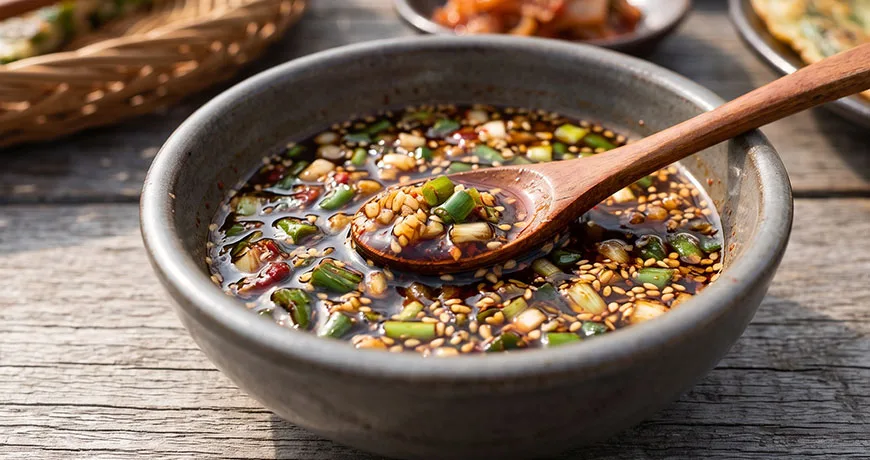
Yangnyeomganjang is a foundational unheated, liquid flavor-infusion sauce in Korean cuisine. It moves far beyond a simple salty condiment by utilizing high-salinity soy sauce as a liquid matrix to extract the juices and volatile aromatics of finely minced alliums (scallions and garlic) via osmosis. The sharp, aggressive salinity of the pure soy sauce is pleasantly diluted and buffered by these extracted vegetable juices and natural sugars. Meanwhile, dry red chili flakes absorb the liquid and swell, naturally thickening the sauce without the need for starches. The process is finalized with toasted sesame oil, which creates a microscopic lipid seal over the liquid, preventing the oxidation of volatile aromatics while elegantly masking the harshness of the salt on the palate.
- ⏱️ Total: 15 mins | Prep: 5 mins (Mincing aromatics) | Cook & Ferment: None (Minimum 30-minute resting for osmotic extraction highly recommended)
- 🍳 Difficulty: Very Low (No-cook process; relies purely on mechanical mixing and osmotic resting)
- 🌶️ Profile: A robust, savory soy base cut by a sharp, fresh allium punch and enveloped in a deep, nutty sesame finish
- 🍚 Focus: High-Salinity Osmotic Vegetable Extraction, Chili Flake Hydration & Swelling, Volatile Aromatic Lipid Encapsulation
- 🍶 Pairing: Plain carbohydrate matrices like pan-fried tofu, acorn jelly (Dotori-muk), savory pancakes (Jeon), and bean sprout rice
Physicochemical & Sensory Matrix
- Baseline Salinity: 11.0% ~ 13.0% (Soy sauce raw salinity optimally buffered by vegetable juices and syrups)
- pH Equilibrium: 4.8 ~ 5.2 (Mild acidity derived from fermented soy sauce and optional vinegar buffering)
- Viscosity Index: [■■□□□] (Low-viscosity flowing liquid with dense suspended particulates)
- Umami Density (T1R1/T1R3 Synergy): 8.8 / 10 (Direct expression of soybean fermentation amino acids)
- Shelf Stability: 1 Week (Targeted for short-term consumption due to moisture release from fresh vegetables)
- Aroma Profile: Diallyl Disulfide (Allium Punch) | Roasted Sesame Pyrazines | Fermented Soy Melanoidins
Ingredients (Yields 1 Small Condiment Bowl)
- Base Amino Acid Matrix: 5 tbsp Naturally Brewed Soy Sauce (Yangjo-ganjang; can mix with 1 tbsp traditional Joseon Ganjang for deeper umami)
- Aromatic & Moisture Extraction Matrix: 3 tbsp Finely Minced Scallion, 0.5 tbsp Finely Minced Garlic, 1 tbsp Finely Minced Cheongyang Green Chili (Optional)
- Viscosity & Spice Matrix: 1 tbsp Coarse Red Chili Flakes (Gochugaru)
- Sweetener & Acidity Matrix: 1 tbsp Plum Extract (Maesil-cheong) or Oligosaccharide, 1 tbsp Toasted Sesame Seeds
- Lipid Emulsion Matrix: 1 tbsp Toasted Sesame Oil
Allergy Information
- Contains: Soy, Wheat (inherent in brewed soy sauce)
Equipment Small Mixing Bowl, Spoon, Airtight Container
Cooking Instructions
- Allium Mincing: Using a sharp knife, mince the scallions, garlic, and green chilies into a uniform, fine 1-2mm dice. Maximizing the surface area of the cuts is chemically essential for rapid osmotic juice extraction.
- Dry Particle & Sweetener Blending: Place the minced vegetables into a bowl, add the red chili flakes and plum extract, and toss lightly to coat.
- High-Salinity Infusion: Pour in the soy sauce and stir well. Allow the mixture to rest at room temperature for 10 to 15 minutes. The extreme salinity of the soy sauce will forcibly draw water out of the vegetable cell walls (osmosis), neutralizing the harsh saltiness and dissolving fresh flavor compounds directly into the liquid matrix.
- Hydration & Swelling: As the sauce rests, the dry chili flakes will absorb the soy sauce and swell, transforming the texture from a watery liquid into a dense, particulate-heavy suspension.
- Lipid Sealing: Just before serving (or as the final step before storage), stir in the toasted sesame oil and sesame seeds. The oil floats to the surface, creating a lipid barrier that physically blocks the sharp, volatile allium aromatics from escaping or oxidizing in the air.
💡 Professional Culinary Tips
- Osmotic Dynamics Over Time: If served immediately after mixing, Yangnyeomganjang tastes disjointed—the salt is too sharp, and the vegetables taste raw. A mandatory resting period of 15 to 30 minutes is required for cellular moisture release to buffer the salinity and harmonize the flavor matrix.
- Lipid Oxidation & Stability: Even when refrigerated, sesame oil oxidizes quickly, and the fresh vegetables will continuously release water until the sauce becomes diluted and muddy after 3 to 5 days. For commercial operations, prepare the base matrix (soy sauce, chili, alliums) in bulk, but only add the sesame oil drops directly into individual portion bowls right before serving to guests to maintain peak aromatic integrity.
🍶 Gastronomic Pairing
- Contrast with Neutral Carbohydrates: Because the flavor profile of Yangnyeomganjang is incredibly aggressive, it demands a “blank canvas.” Spooning it over pan-fried tofu, mild acorn jelly, or hot bowls of bean sprout rice maximizes the culinary contrast, allowing the sharp, nutty, and savory notes of the sauce to perfectly season the neutral carbohydrate/protein bases.
Nutrition Facts (Estimated)
Total Content : Approx. 15g (1 tbsp)
Calories : 25 kcal (Soy amino acids and plant-based lipids)
– Sodium : 450mg (High-salinity soy sauce base)
– Total Carbohydrate : 2.5g (Natural vegetable sugars and plum extract)
– Sugar : 1.5g
– Total Fat : 1.5g (High-quality unsaturated fats from sesame oil)
– Saturated Fat : 0.2g
– Cholesterol : 0.0mg (100% Vegan matrix)
– Protein : 1.0g (Soybean derived peptides)
– Dietary Fiber : 0.5g (Chili flake and allium fiber)
*Daily Values are based on a 2,000 calorie diet and standard Korean nutritional reference values.
**Nutritional values are calculated based on original ingredients; substitutions may alter specific macronutrients.
Origins and Food Culture of Spicy Soy Sauce (Yangnyeomganjang)
1. Joseon Table Setting (Bansang) Etiquette and Classical Culinary Treatises
- Yangnyeomganjang traces its cultural lineage to the traditional Korean table setting etiquette (bansang), where a central sauce saucer (jangjeopsi) was always placed at the heart of the table in noble yangban and royal palace meals to allow diners to customize flavors and enhance digestion.
- Classical Joseon culinary texts, including Lady Yi’s 1809 encyclopedia Gyuhap Chongseo and the late 19th-century manuscript Siuijeonso, extensively documented recipes for composite dipping sauces—such as vinegar-spiked soy sauce (choganjang) and spice-infused seasoned soy sauces (yangnyeomjang). These blends paired pure fermented soy sauce with fresh seasonal alliums and sesame oil to bring instant vibrancy to seasonal dishes.
2. The Culinary Science of Cold Maceration and Lipid-Emulsion Dynamics
- The technical brilliance of Yangnyeomganjang relies upon unheated cold maceration (cold extraction), using the osmotic pressure of soy sauce and the solubility of sesame oil to capture aromatic compounds without thermal degradation.
- The hypertonic salinity of the soy sauce draws out cellular moisture and aromatic sulfur oils from chopped scallions and garlic, infusing the liquid with savory complexity while crisping the vegetable tissues. Concurrently, the hydrophobic lipids of sesame oil dissolve the insoluble red pigments and capsaicin of chili flakes, keeping them evenly suspended across the water-based sauce. Bypassing high-heat cooking avoids the degradation of fresh enzymes and volatile terpenes, producing an impeccably balanced colloidal condiment.
3. The Universal Soul Condiment: Comfort Dining, Rice Bowls, and Golden Jeon
- Requiring no luxury ingredients, Yangnyeomganjang has long reigned as the ultimate humble bap-doduk (“rice thief”) of ordinary Korean households: a simple bowl of freshly steamed rice, roasted seaweed, or vegetable-topped rice (kongnamulbap) transformed into a deeply satisfying feast with a few spoonfuls of fragrant seasoned soy sauce.
- Serving as the indispensable soul companion to rainy-day pan-fried delicacies (jeon), rustic acorn jelly (dotorimuk), and sliced tofu, Yangnyeomganjang remains an immortal cultural monument to Korean domestic resourcefulness, balanced seasoning art, and everyday culinary comfort.
The Piquant Cellular Snap of Fresh Alliums Suspended in Savory Brewed Soy Sauce, the Crimson Flare of Chili Flakes, and Floating Droplets of Toasted Sesame Oil: A Refined Portrait of Yangnyeomganjang
Yangnyeomganjang (Spicy Seasoned Soy Sauce) stands as the dynamic, quick-witted flavor catalyst of Korean everyday table dining. Centered upon brewed or traditional fermented soy sauce (ganjang) as its liquid backbone, this all-purpose dipping sauce is whipped up on the spot by incorporating finely sliced scallions (or wild spring chives, dalrae), minced raw garlic, red chili flakes (gochugaru), toasted sesame seeds, a generous swirl of toasted sesame oil, and an occasional splash of vinegar or a pinch of sugar. Bypassing prolonged simmering or long cellar fermentation, it harnesses the sharp physics of room-temperature osmotic extraction: the saline soy liquor immediately draws out the crisp cellular moisture and volatile aromatics from raw pungent alliums without cooking them down. Across the dark amber surface, insoluble crimson chili flakes and vibrant green scallion batons float freely, while droplets of toasted sesame oil gather into golden lenses. The result is a vibrant, multi-phase dipping broth that bridges fluid umami, fat, and botanical crunch. Served alongside pan-fried pancakes (jeon), blanched tofu, or steamed root-vegetable rice bowls, a single spoonful cuts through blank starches or heavy oils, transforming modest sustenance into a lively, multifaceted sensory experience.
Lifting a spoonful from a shallow ceramic saucer releases an immediate, refreshing aromatic bloom: the sharp, stinging allicin of crushed garlic and scallions cuts through the toasted perfume of sesame oil and the aged peptide savor of fermented soy. Dipping a piece of piping-hot mung bean pancake (bindae-tteok) or pan-seared tofu and bringing it to the mouth triggers an instantaneous physical transformation: the light, low-viscosity sauce wicks deep into the porous crevices of the batter via capillary action. As your teeth break through the exterior, the suspended scallions fracture with a clean, juicy snap, bursting with fresh moisture that tempers the sauce’s concentrated salinity. The nutty pop of crushed sesame seeds adds tactile crunch, while the fiery prick of chili flakes cleanly slices through the rich cooking fats. Swallowed down, it leaves no cloying heaviness—only a refreshed palate coated in a balanced, mouthwatering halo of umami. Operating as an alert flavor switch, it effortlessly enlivens the space between plain grain and hot stew.
The cultural identity of Yangnyeomganjang resides in the pragmatic culinary agility of the Korean domestic hearth, which has always relied on fresh seasonal greens to reshape fermented staples for each meal. From the earthy, foraged spring chives of dalrae-yangnyeomjang drizzled over hot rice to the piquant scallion-soy dip served alongside rainy-day pancakes, this unpretentious condiment proves that profound sensory excitement requires neither heavy reductions nor hours over a flame—standing as an enduring benchmark of direct, versatile, and intuitive Korean flavor crafting.
Editor’s Review
1. Low-Viscosity Capillary Penetration, Crisp Vegetal Turgor Rupture, and Brittle Seed Micro-Crunch in a Multi-Phase System
Yangnyeomganjang delivers a contrasting textural architecture where frictionless liquid fluidity meets crisp, particulate mastication:
- Capillary Infiltration: The base soy sauce maintains an ultra-low viscosity aqueous phase, allowing it to penetrate the porous voids of fried pancakes, tofu curd networks, and grain matrices through pure capillary action without lingering on the surface.
- Turgor Rupture: Suspended slices of raw scallion, chives, and green chilies retain their cellular hydration and structural pectin in the short term. Upon chewing, their cell walls shatter with an audible, crisp snap, releasing localized bursts of vegetal freshness.
- Tactile Friction: The brittle hulls of whole toasted sesame seeds fracture under dental pressure to deliver micro-crunch, while hydrated chili skin flakes provide a pleasant tactile friction against the tongue.
2. Aqueous-Lipid Biphasic Dynamics, Osmotic Extraction of Allium Volatiles, Capsaicin Solubilization, and Organic Acid Buffering
The biochemical efficacy of Yangnyeomganjang relies on rapid room-temperature mass transfer and lipid-aqueous partitioning:
- Osmotic Solute Leaching: The high ambient salinity of soy sauce (15–18%) creates steep osmotic gradients across the damaged plant cell membranes of minced garlic and scallions. This rapidly draws out intracellular fluids containing volatile organic sulfur compounds—predominantly allicin and diallyl disulfide—infusing the soy base with an energetic allium punch while softening the harsh pungency of the raw bulb.
- Biphasic Lipid Buffering: The hydrophobic triglycerides of sesame oil do not form a permanent emulsion; instead, they disperse as floating micro-lenses on the aqueous surface. Lipophilic capsaicin from the chili flakes partially dissolves into these lipid pools, buffering its fiery impact on mucosal TRPV1 receptors while distributing roasted nutty aromas across the palate.
- Acidic Salivation Enhancement: An optional addition of acetic acid (vinegar) or citric acid (plum syrup) lowers the solution pH, tempering sharp mineral sodium edges and stimulating salivary flow to accelerate the perception of free glutamates in the soy base.
3. The Direct Flavor Linker for Mute Starches and Lipids
Rather than functioning as a standalone dish, Yangnyeomganjang serves as a precision tool designed to balance contrasting food properties. Its volatile allicin and organic acids cut through the heavy, lipid-saturated crusts of fried pancakes, while its dense glutamate and sodium profile instantly animates unseasoned, neutral substrates like warm tofu, plain rice, or boiled noodles. Requiring no heat to assemble, this nimble dipping sauce remains the most practical, adaptable flavor engine in the everyday Korean repertoire.