
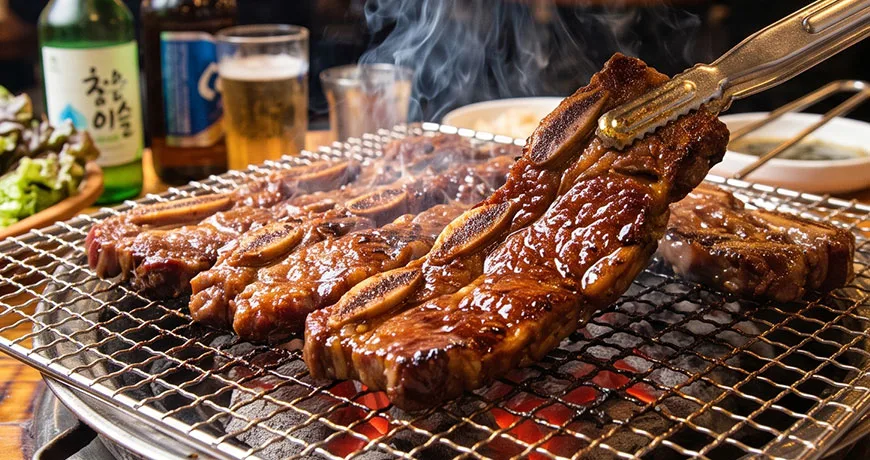
So-yangnyeom-galbi is a masterclass in biochemical meat tenderization and physical restructuring. The thick, tough muscle fibers attached to the short rib bones are mechanically butterflied into thin strips. This structural modification allows the hypertonic soy marinade and the protease enzymes from fruit juices to thoroughly penetrate and hydrolyze the tough peptide bonds via osmosis. When laid over the extreme 700°C+ infrared radiant heat of hardwood charcoal, the surface moisture flash-evaporates, driving the amino acids and reducing sugars into aggressive Maillard browning and rapid caramelization. As the rendered beef marbling and marinade drip onto the hot coals, they undergo lipid pyrolysis, enveloping the tenderized meat in an aerosolized, intensely savory smoke (Bul-mat).
⏱️ Total: 6.5 hrs (includes marination) | Prep: 20 mins | Cook: 10 mins | 🍳 Difficulty: High (Requires mechanical butterflying and strict carbonization control) | 🌶️ Profile: Deeply Savory, Sweet, and Intensely Smoky | 🍚 Focus: Mechanical Cleavage, Enzymatic Tenderization, & Lipid Pyrolysis
Ingredients (2–3 servings)
- Protein & Lipid Matrix: 800g Bone-in Beef Short Ribs (butterflied into thin, wide strips)
- Enzymatic Hypertonic Marinade: 5 tbsp soy sauce, 3 tbsp water, 2 tbsp sugar, 1 tbsp corn syrup, 2 tbsp minced garlic, 1.5 tbsp sesame oil, 1 tsp black pepper
- Protease & Natural Sugar Source: 4 tbsp Asian pear juice, 2 tbsp onion juice
Allergy Information Contains: Beef, Soy, Wheat (from soy sauce)
Equipment Cutting Board, Sharp Knife, Mixing Bowl, Charcoal Grill, BBQ Gridiron, Meat Scissors, Tongs
Cooking Instructions
- Mechanical Cleavage (Butterflying): Butterfly the thick meat off the rib bone, unrolling it into a long, thin continuous strip. Score the surface heavily in a crosshatch pattern. This physically severs tough connective tissues and drastically increases the surface area for the hypertonic marinade to penetrate.
- Enzymatic Hydrolysis & Osmosis: In a bowl, combine all the marinade ingredients and fruit juices. Massage the marinade thoroughly into the scored meat. Refrigerate for 6 to 12 hours. The protease enzymes in the pear juice will biochemically cleave the protein structure, softening the meat to a tender texture.
- Radiant Heat Evaporation: Place the unrolled ribs over white-hot charcoal. The intense infrared radiant heat will instantly flash-evaporate the surface moisture, establishing the thermodynamic conditions required for the Maillard reaction.
- Carbonization Control (Flipping): The high sugar content in the marinade begins to caramelize aggressively around 150°C. To prevent the sugars from crossing into bitter carbonization (burning), you must physically manage the surface temperature by flipping the meat frequently—every 15 to 20 seconds.
- Pyrolysis Coating & Thermal Coagulation: As rendered fat drips onto the hot coals, it vaporizes into a thick, aromatic smoke (pyrolysis). Adjust the meat so it catches this aerosolized smoke. Cut the lean meat into bite-sized pieces when it reaches 80% doneness to prevent moisture loss, and leave the bones on the cooler edges of the grill to gelatinize slowly.
💡 Professional Culinary Tips
- The Thermodynamics of the Butterfly Cut: Unrolling a thick block of muscle into a thin strip is a deliberate thermodynamic design. It drastically reduces the thermal conduction distance to the core, allowing the meat to cook rapidly over extreme heat without drying out, thereby preserving the internal kinetic moisture.
- The Limits of Protease Enzymes: While fruit enzymes are phenomenal tenderizers, they are a double-edged sword. Marinating the meat for over 24 hours will cause the muscle matrix to completely collapse, resulting in a mushy, unpalatable texture. Adhering to the 6–12 hour window is critical for proper biochemical texture control.
- Gelatinization of the Periosteum: The tough, white membrane attached directly to the bone is packed with elastin and collagen. Searing it over direct, high heat will cause it to seize into rubber. By cooking the bones slowly on the periphery of the grill (Low & Slow), this structure thermochemically denatures into soft, edible gelatin that pulls cleanly away from the bone.
Nutrition Facts (Estimated)
Total Content : Approx. 250g (1 serving, reflecting weight loss from rendering and excluding bone weight)
Calories : 560 kcal
– Sodium : 880mg
– Total Carbohydrate : 13.0g
– Sugar : 10.0g
– Total Fat : 36.0g
– Saturated Fat : 14.0g
– Cholesterol : 90.0mg
– Protein : 32.0g
– Dietary Fiber : 0.5g
*Daily Values are based on a 2,000 calorie diet and standard Korean nutritional reference values.
**Nutritional values are calculated based on original ingredients; substitutions may alter specific macronutrients.
Origins and Food Culture of Seasoned Beef Short Ribs (So-Yangnyeom-Galbi)
1. A Storied Heritage: From Joseon Royal Banquets to National Gourmet Icon
- Tracing its roots back to Joseon Dynasty aristocratic banquets—notably gari-gui (seasoned grilled beef ribs) and royal neobiani (marinated beef cuts)—this dish represents centuries of refined Korean grilling heritage.
- Supported by historic regional cattle trading hubs, celebrated destinations such as Suwon and Haeundae in Busan popularized soy-marinated beef ribs, establishing So-Yangnyeom-Galbi as the undisputed pinnacle of Korean celebratory dining.
2. The Artisanal Craft of Fruit Tenderization and Charcoal Caramelization
- The hallmark of authentic preparation lies in blending grated Korean pears, onions, and aromatics into the soy marinade, allowing natural fruit enzymes to tenderize the muscle fibers while imparting a clean, delicate sweetness.
- Attentively turning the ribs over high radiant charcoal heat triggers rapid surface caramelization (Maillard reaction), locking in succulent natural juices while imparting an irresistible smoky char without scorching the marinade sugars.
3. The Centerpiece of Celebration and the Classic “Seon-Yuk-Hu-Myeon” Dining Ritual
- Synonymous with major life milestones, family reunions, and formal hospitality, gathering around the tabletop charcoal grill captures the warmest traditions of Korean social dining.
- The feast traditionally culminates in the revered culinary principle of Seon-Yuk-Hu-Myeon (“meat first, noodles after”)—wrapping a hot, savory piece of grilled galbi around a mouthful of chilled buckwheat noodles (naengmyeon) to cleanse the palate and complete a balanced dining experience.
The Sizzling Radiance of Hardwood Embers and Caramelized Soy Glaze: A Refined Portrait of So-Yangnyeom-Galbi
So-Yangnyeom-Galbi (Marinated Charcoal-Grilled Beef Short Ribs) stands as the opulent, texture-driven crown jewel of Korean barbecue gastronomy. Prime, richly marbled beef short ribs are masterfully butterflied from the bone into wide ribbons by skilled butchers, scored with intricate diamond incisions, and steeped in a refined marinade of brewed soy sauce, Asian pear puree, garlic, ginger, and toasted sesame oil before meeting incandescent hardwood embers. Far from masking the beef, this exacting artisanal preparation relaxes dense connective tissue and infuses the marinade deeply, creating an aromatic cascade of sweet smoke and roasted soy the second the meat meets radiant heat.
Grilling the scored ribs with attentive, rhythmic turns over the open grate yields a glistening mahogany glaze kissed by gentle fire-char. The initial bite delivers a tender revelation—softened effortlessly by natural fruit enzymes, the meat fibers yield with silken tenderness upon mastication without stringy resistance. As you chew, the deep marbling of the rib meat floods the palate with pure, succulent juices, merging seamlessly with the caramelized savory-sweet marinade. Savoring the springy, collagenous morsels clinging tightly to the bone adds a delightful tactile contrast, completing a multi-layered and luxurious culinary journey.
The true majesty of marinated beef short ribs lies in its culinary harmony—balancing the rich, natural savoriness of prime beef with the fermented depth of traditional seasonings over pure open fire. Originating from historic banquet traditions to become Korea’s foremost celebratory feast for marking milestones and honoring esteemed guests, a smoking platter of marinated beef short ribs remains a timeless emblem of warmth, abundance, and refined gastronomic craft.
Editor’s Review
1. A Harmonious Interplay of Caramelized Soy Glaze, Velvety Beef Tenderness, and Springy Bone-Clinging Cartilage
The visual allure of the glossy, dark-amber glaze immediately sets an elevated tone. As high-intensity radiant heat browns the scored ridges into a delicate, savory crust, the interior remains succulent, flaking gently upon the palate. The subtle, fruity sweetness of the marinade enhances rather than overwhelms the beef’s natural flavor, while the chewy, collagen-rich meat around the bone provides an engaging, satisfying finish.
2. Fruit-Derived Proteolytic Cleavage of Actomyosin and High-Heat Radiative Maillard Kinetics
So-Yangnyeom-Galbi represents an exacting study in natural enzyme mechanics and direct-heat thermodynamics. Dense actomyosin protein bundles and connective collagen within the short rib are gently cleaved by active plant proteases present in pureed Asian pears, maximizing tenderness without compromising structural integrity. Over direct charcoal heat, reducing sugars and meat amino acids undergo rapid Maillard browning and caramelization above 150°C, forming a savory protective crust that locks in water-soluble inosinates and succulent juices.
3. The Storied Heritage of Regional Rib Alleys and the Enduring Prestige of Festive Barbecue Culture
Refined through celebrated culinary hubs such as Suwon, Pocheon, and Busan’s Haeundae, marinated beef short ribs represent an enduring cultural touchstone of celebration and generous hospitality. Tending each fire-kissed rib over the glowing tabletop hearth transforms the meal into an active communal celebration, offering diners a deeply grounding sanctuary of heritage, warmth, and elevated culinary art.