
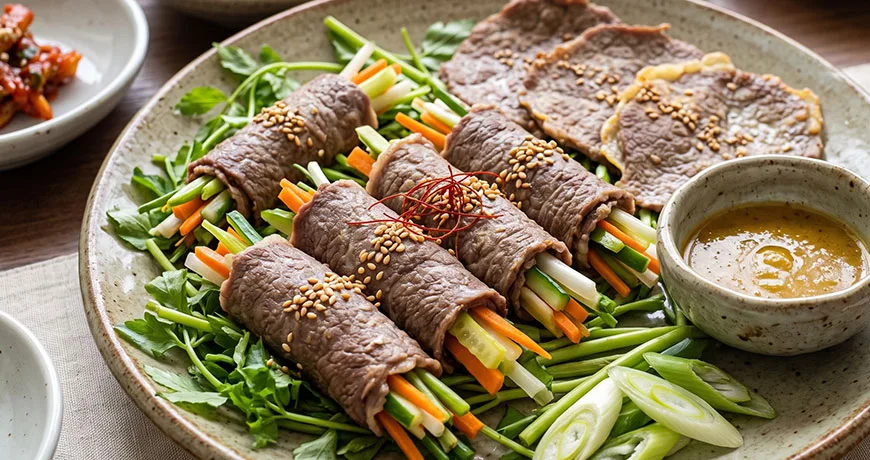
Sogogi-pyeonchae is a highly rheological dish that marries the thermal coagulation of thin muscle fibers with the intense viscoelastic properties of amylopectin. Thinly sliced beef is coated in glutinous rice (sweet rice) flour. When exposed to conductive heat in a pan, the flour absorbs the meat’s kinetic moisture and undergoes rapid starch gelatinization, creating a sticky, protective gel matrix. This barrier completely seals in the meat’s juices while shallow-frying into a crispy exterior. Stuffed with crisp, raw vegetables that provide high turgor pressure (crunch), the rolls are dipped in a pungent mustard sauce. The allyl isothiocyanate in the mustard chemically cleanses the dense lipid and starch coating from your palate, delivering a perfectly engineered sensory experience.
⏱️ Total: 30 mins | Prep: 20 mins | Cook: 10 mins | 🍳 Difficulty: Moderate (Requires strict control over starch gelatinization and thermal coagulation) | 🌶️ Profile: Chewy, Crispy, Savory, and Refreshingly Pungent | 🍚 Focus: Starch Gelatinization, Viscoelasticity, & Palate Cleansing
Ingredients (2 servings)
- Protein Matrix: 300g thinly sliced Beef (Tenderloin, Sirloin, or Eye of Round, 1–2mm thick)
- Starch Coating: 1/2 cup glutinous rice flour (sweet rice flour), 0.5 tsp coarse sea salt, a pinch of black pepper
- Structural Fiber Matrix: 1/2 cucumber, 1/3 carrot, 1 handful radish sprouts, 1/2 red and yellow bell peppers (all julienned uniformly to 5cm lengths)
- Chemical Cleanser: 1 tbsp hot yellow mustard, 1 tbsp soy sauce, 2 tbsp vinegar, 1 tbsp water, 1 tbsp sugar, crushed pine nuts for garnish
- Frying Medium: Cooking oil (neutral)
Allergy Information Contains: Beef, Soy, Wheat (from soy sauce), Mustard, Pine Nuts (Tree nuts)
Equipment Cutting Board, Knife, Wide Plate, Non-stick Skillet, Tongs, Paper Towels
Cooking Instructions
- Osmotic Control: Gently dab the beef slices with paper towels to remove excess blood. Season lightly with salt and pepper right before cooking. Do not let it sit too long, as osmotic pressure will prematurely draw out the intracellular moisture, leading to dry meat.
- Structural Prep (Julienne): Slice all the vegetables into thin, uniform matchsticks (approx. 2mm thick). Soak them briefly in ice-cold water to maximize their cellular turgor pressure (crispiness), then drain and dry them completely.
- Amylopectin Coating: Dredge the beef slices in the glutinous rice flour, shaking off the excess. A thick, clumpy layer of flour will impede thermal conduction and result in a gummy texture. An even, thin dusting is required for perfect gelatinization.
- Gelatinization & Thermal Coagulation: Heat a skillet over medium heat with a generous amount of oil. Lay the coated beef flat. As conductive heat is applied, the starch hydrates and gelatinizes, turning translucent and sticky while the edges fry crisp. Because the meat is so thin, flip it only once and cook very briefly to prevent the muscle fibers from seizing up.
- Assembly & Plating: Transfer the cooked beef to paper towels to cool slightly. As the starch matrix cools, it regains its chewy, viscoelastic stability. Place a bundle of the julienned vegetables at one end of the beef slice and roll it up tightly. Serve with the pungent mustard dipping sauce.
💡 Professional Culinary Tips
- The Rheology of Gelatinization: Unlike standard wheat flour which forms a gluten network, glutinous rice flour is essentially 100% amylopectin. Under heat and hydration, it transforms into a highly sticky, viscoelastic gel. This barrier acts as a biochemical shield, trapping the meat’s juices inside while offering a uniquely “chewy-yet-crispy” mouthfeel that wheat flour cannot replicate.
- Controlling Thermal Coagulation: Because the beef slices are paper-thin, exposing them to heat for too long will cause the protein fibers to violently contract and push out all their moisture, resulting in a rubbery texture. You must remove the beef from the pan the moment the starch goes translucent and a light Maillard browning occurs on the edges.
- Biochemical Palate Cleansing via Mustard: Eating pan-fried starch and lipid coats your tongue in a heavy film, quickly exhausting your taste buds. The allyl isothiocyanate compound in the mustard forcefully stimulates the TRPA1 receptors in your nasal cavity. This chemically cuts right through the lipid film, intensely cleansing your palate and resetting your sensory perception for the next bite.
Nutrition Facts (Estimated)
Total Content : Approx. 250g (1 serving, reflecting vegetable volume and oil absorption)
Calories : 390 kcal
– Sodium : 650mg
– Total Carbohydrate : 22.0g
– Sugar : 6.0g
– Total Fat : 20.0g
– Saturated Fat : 6.0g
– Cholesterol : 70.0mg
– Protein : 32.0g
– Dietary Fiber : 4.0g
*Daily Values are based on a 2,000 calorie diet and standard Korean nutritional reference values.
**Nutritional values are calculated based on original ingredients; substitutions may alter specific macronutrients.
Origins and Food Culture of Beef and Vegetable Rolls (Sogogi Pyeonchae)
1. A Modern Reinterpretation of Royal Gujeolpan and Milssam
- Drawing creative inspiration from historic Joseon Dynasty royal banquet dishes such as milssam (wheat crepe rolls) and gujeolpan (nine-section platter), this dish modernizes tradition by using delicate sheets of seared beef itself as the wrapper in place of flour crepes.
- Variously titled Ansim Pyeonchae (tenderloin) or Deungsim Pyeonchae (sirloin) depending on the cut, it embodies the ancient aesthetics of obangsaek (five traditional colors: yellow, blue/green, white, red, and black) through pristine vegetable fillings.
2. The Culinary Science of Glutinous Rice Dredging and Flash-Searing
- The hallmark of authentic preparation lies in lightly coating thinly sliced beef in fine glutinous rice flour (chapssal-garu) and flash-cooking it over medium-high heat for just seconds.
- The gelatinized rice starch forms an ultra-thin protective film that prevents moisture loss, ensuring the beef remains delightfully supple, moist, and tenderly chewy even after cooling.
3. The Elegant Centerpiece of Banquets and Festive Entertaining
- Celebrated for its striking, jewel-like presentation and neat visual appeal, it is an indispensable showpiece for formal celebratory banquets, holiday gatherings, and refined dinner parties.
- Served in bite-sized, rolled portions ready to be dipped into tangy mustard sauce, it represents a graceful, handheld dining experience that elevates Korean culinary hospitality.
The Delicate Elasticity of Glutinous Rice Batter and the Crisp Flourish of Garden Vegetables: A Refined Portrait of Sogogi-pyeonchae
Sogogi-pyeonchae (Pan-Seared Beef Rolls with Fresh Garden Vegetables) represents a sophisticated, aesthetically dazzling pinnacle of modern Korean banquet gastronomy. Paper-thin ribbons of prime beef tenderloin or sirloin are lightly dusted with fine sweet glutinous rice flour, gently seared across a hot griddle in seconds, and wrapped around a colorful bouquet of crisp julienned raw vegetables. Elevating beef from heavy braises and open-fire grills into an exquisite edible wrapper, this dish condenses contrasting textures, temperatures, and vibrant botanicals into an impeccably tailored, bite-sized roll.
Sampling a neatly rolled morsel dipped into a piquant mustard-vinegar emulsion reveals an extraordinary interplay of textures. The initial contact introduces the delicate, translucent chew of the gelatinized glutinous rice coating embracing the velvety beef. As teeth sink through, the tender beef gives way to an exhilarating crunch of cucumber, colorful bell peppers, perilla leaves, and peppery radish sprouts, releasing a refreshing wave of cool vegetable juices across the palate. The subtle, savory depth of the meat is lifted by the crisp crunch of raw botanicals, while the nasal warmth and tangy brightness of the mustard sauce knit the elements into a cohesive, wonderfully luminous culinary harmony.
The culinary brilliance of Sogogi-pyeonchae lies in its structural discipline—refusing to overwhelm the palate with heaviness and instead transforming rich beef into an airy, refreshing hors d’oeuvre through raw garden crispness. Originating as an elevated centerpiece for celebratory feasts, family banquets, and honored guests, these colorful beef rolls awaken the senses before a meal, offering a graceful celebration of Korean hospitality, dietary harmony, and refined craftsmanship.
Editor’s Review
1. A Delicate Interplay of Chewy Rice Crust, Silken Beef Tenderness, and Crisp Vegetable Piquancy
The dish creates a captivating sensory contrast between warm-seared protein and chilled, crisp garden botanicals. The translucent glutinous rice coating provides a delicate elasticity that hugs the tender beef, which yields effortlessly upon mastication before bursting into an auditory crunch of julienned vegetables. The zesty kick of the hot mustard-vinegar dipping sauce slices through the richness, leaving a remarkably clean, vibrant finish on the palate.
2. Amylopectin Starch Gelatinization Moisture Sealing and Sinigrin-Induced Salivary Stimulation
Sogogi-pyeonchae represents an exacting study in starch rheology and botanical sensory kinetics. Dusted onto the beef, the high-amylopectin glutinous rice flour rapidly gelatinizes upon contact with the pan, forming a cohesive viscoelastic gel barrier that physically prevents intracellular water loss and keeps the thin meat supple. Concurrently, sinigrin glucosinolates in the prepared mustard are hydrolyzed into volatile allyl isothiocyanates (AITC), stimulating trigeminal chemoreceptors and boosting salivary and gastric secretions for optimal protein digestion.
3. The Reimagined Courtly Elegance of Gujeolpan and the Art of Modern Korean Banquet Hospitality
Drawing aesthetic inspiration from the traditional courtly wrap dish Gujeolpan—where delicate crepes encase vibrant ingredients—Sogogi-pyeonchae reinvents this communal harmony by using seared beef itself as the wrapper for a spectrum of colorful raw vegetables. As a beloved staple of festive banquets and guest tables, this elegant dish embodies the warmth of Korean hospitality and a timeless dedication to visual and culinary balance.