
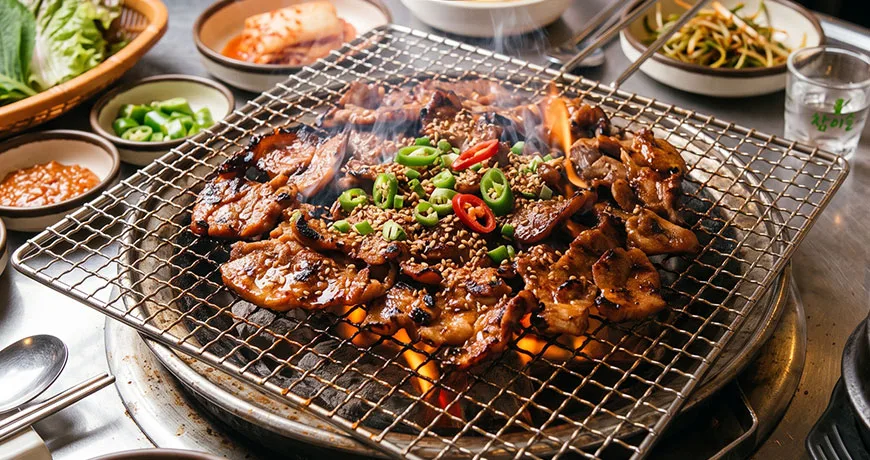
Seoksoe-dwaeji-bulgogi is an exercise in extreme thermodynamic grilling. By securing the marinated pork in a double-sided gridiron (seoksoe) and cooking it over white-hot charcoal, you entirely bypass conductive heat. Instead, the meat is bombarded with intense infrared radiant heat. This setup allows surface moisture to flash-evaporate instantly and rendered fat to drip away, preventing the meat from boiling in its own juices. Once the moisture is gone, the high-sugar hypertonic marinade undergoes rapid caramelization and Maillard browning. Simultaneously, the dripping animal fat hits the coals, triggering lipid pyrolysis. The resulting aromatic smoke physically adsorbs onto the meat, generating a profound, authentic “fire flavor” (Bul-mat).
⏱️ Total: 40 mins (includes marination) | Prep: 30 mins | Cook: 10 mins | 🍳 Difficulty: High (Requires intense thermodynamic control via frequent flipping) | 🌶️ Profile: Sweet, Savory, and Intensely Smoky | 🍚 Focus: Infrared Radiant Heat, Caramelization Control, & Lipid Pyrolysis
Ingredients (2–3 servings)
- Protein & Lipid Matrix: 600g thinly sliced Pork (collar or shoulder, 2–3mm thick)
- Hypertonic Emulsion Marinade: 3 tbsp soy sauce, 2 tbsp Gochujang (Korean chili paste), 1 tbsp Gochugaru (chili flakes), 2 tbsp sugar, 1 tbsp corn syrup, 2 tbsp minced garlic, 1.5 tbsp sesame oil, a pinch of black pepper
- Enzymatic Modifier: 3 tbsp Asian pear juice or onion juice
Allergy Information Contains: Pork, Soy, Wheat (from Gochujang and soy sauce)
Equipment Mixing Bowl, Charcoal Grill, Double-sided Gridiron (Grill Basket), Tongs
Cooking Instructions
- Enzymatic Cleavage & Osmosis: In a mixing bowl, aggressively knead the thinly sliced pork with the fruit juice and all marinade ingredients. The osmotic pressure draws flavor inward, while the protease enzymes in the pear gently tenderize the muscle fibers. Refrigerate for 30 minutes.
- Structural Assembly: Open the double-sided gridiron and spread the marinated pork evenly across the surface. Ensure a uniform thickness so the heat distributes evenly. Clamp the gridiron tightly; this secures the meat’s structure and allows for rapid, continuous flipping.
- Radiant Heat Evaporation: Place the gridiron over white-hot charcoal. The infrared radiant energy directly strikes the meat, instantly flash-evaporating surface moisture.
- Flipping Thermodynamics (Caramelization Control): The high sugar content in the marinade will begin to caramelize aggressively around 150°C. To prevent it from crossing the threshold into bitter carbonization (burning), you must flip the gridiron every 10–15 seconds. This constant flipping cools the surface just enough to prevent burning while driving kinetic heat into the core of the meat.
- Pyrolysis Aerosol Coating: As the rendered fat and marinade drip onto the coals, they vaporize into a thick, white smoke. Lightly tap the gridiron to ensure this pyrolyzed smoke completely coats the meat. Serve immediately once a deeply charred, crispy bark forms.
💡 Professional Culinary Tips
- The Physics of the Gridiron (Seoksoe): A solid frying pan relies on conduction, trapping extruded water and fat, which effectively limits the cooking temperature to the boiling point of water (100°C), resulting in steamed meat. A gridiron allows liquids to fall away via gravity, exposing the meat directly to the 700°C+ radiant heat of the charcoal, pushing the surface well into the Maillard reaction zone.
- Thermodynamics of Frequent Flipping: Flipping marinated meat continuously is not just about avoiding a burnt crust. It acts as a thermodynamic pump. Exposing the hot side to the cooler air drops the surface temperature below the carbonization threshold, while the residual surface heat conducts deeper into the center, ensuring the thin meat cooks evenly without drying out.
- The Flambé Error: If dripping fat causes flames to engulf the meat, you are no longer cooking with infrared radiation; you are covering your food in incomplete combustion gases. Direct flames deposit bitter soot and toxic polycyclic aromatic hydrocarbons. If flames flare up, immediately move the gridiron away until they subside.
Nutrition Facts (Estimated)
Total Content : Approx. 200g (1 serving, reflecting moisture evaporation and lipid rendering)
Calories : 460 kcal
– Sodium : 780mg
– Total Carbohydrate : 14.0g
– Sugar : 10.0g
– Total Fat : 28.0g
– Saturated Fat : 10.0g
– Cholesterol : 80.0mg
– Protein : 36.0g
– Dietary Fiber : 1.0g
*Daily Values are based on a 2,000 calorie diet and standard Korean nutritional reference values.
**Nutritional values are calculated based on original ingredients; substitutions may alter specific macronutrients.
Origins and Food Culture of Wire-Mesh Grilled Pork Bulgogi
1. A Storied Heritage: From Ancient Maekjeok to Urban Night-Market Fare
- Tracing its direct lineage to maekjeok (ancient Goguryeo marinated meat skewers) and royal neobiani (marinated grilled beef slices), this dish represents centuries of Korean direct-fire culinary craft.
- During the rapid urbanization of the 1960s and 1970s, bustling street markets and tavern alleys—most notably Daegu’s Bukseongno, Naju, Gangjin, and Yecheon—popularized affordable, thinly sliced pork grilled over glowing briquettes as an accessible feast for working-class communities.
2. The Culinary Art of Dual-Mesh Grates and Rhythmic Flipping
- Because the natural sugars in the marinade can scorch easily, the meat is spread evenly and clamped inside a double-sided wire-mesh grate, cooked over radiant heat with constant, rhythmic flipping.
- As rendered juices drip onto the coals, aromatic vapor rises to naturally smoke-kiss the meat, sealing in succulent juices while searing a tantalizing, golden-brown crust.
3. Street-Side Nostalgia, Tabletop Camaraderie, and the Classic Pairings
- Gathering around rustic round aluminum tables under street-stall canopies, pairing sizzling smoky pork with chilled soju or a steaming bowl of street-style udon captures the nostalgic romance of Korean nightlife.
- Wrapped in crisp leafy greens with raw garlic and savory ssamjang, Seoksoe Dwaeji Bulgogi remains an enduring comfort food that brings people together to unwind, share warmth, and celebrate daily life.
The Radiant Kiss of Charcoal Embers and the Delicate Perfume of Caramelized Marinade: A Refined Portrait of Seoksoe Dwaeji Bulgogi
Seoksoe Dwaeji Bulgogi (Gridiron Charcoal-Grilled Pork Bulgogi) stands as an intensely flavorful, texture-driven centerpiece of Korean live-fire gastronomy, featuring thinly sliced cuts of pork shoulder or neck steeped in a balanced marinade of aged soy sauce or gochujang, minced garlic, ginger juice, and toasted sesame oil, clamped between dual wire-mesh grates (seoksoe) and grilled directly over incandescent charcoal. Unlike skillet-braised variations that simmer in liquid broth, wire-grid grilling allows surplus moisture and rendered fats to drip away into the fire. As these lipid droplets vaporize against glowing coals, they create an aromatic upward draft of pure hardwood smoke that envelops the searing meat in a continuous cycle of natural seasoning.
Because marinated meat is naturally susceptible to burning over direct flame, achieving perfection requires the griller to turn the double-sided gridiron with attentive, rhythmic agility. Sampling a freshly charred morsel lifted from the rack reveals an immediate aroma of sweet, appetizing woodsmoke. Sinking your teeth into the slice produces a delicate surface crunch from the caramelized, flame-kissed edges, giving way effortlessly to the tender, succulent interior of the thinly sliced pork. The savory-sweet glaze caramelizes into a glossy lacquer that amplifies the meat’s natural flavor, while crisp lettuce wraps, garlic slivers, and savory dipping sauce create a complete and vibrant culinary harmony.
The enduring charm of gridiron-grilled pork bulgogi lies in its honest culinary discipline—elevating an accessible everyday cut of pork into an exquisite barbecue staple through precise flame control and radiant heat. Rooted in the bustling market taverns and night-stall traditions of regional hubs like Daegu’s Bukseong-ro and Naju, where generations of workers found affordable nourishment after long days of labor, sharing a smoky platter of gridiron pork bulgogi remains a deeply grounding dining ritual that warms the core and provides timeless comfort.
Editor’s Review
1. A Delicate Balance of Flame-Kissed Char, Tender Thin-Cut Pork Elasticity, and Rich Hardwood Woodsmoke
The visual appeal of dark, caramelized grill markings sets an inviting sensory baseline. High-intensity radiant heat browns the exterior quickly to create crisp, flavorful edges while preserving natural juices within the thin muscle fibers. The natural sweetness of the marinade fuses seamlessly with the deep hardwood smoke, delivering a satisfying, multi-layered taste that avoids heavy grease and leaves a clean, appetizing finish on the palate.
2. High-Heat Surface Pyrolysis Management, Sugar-Protein Maillard Kinetics, and Aerosolized Lipid Deposition
Seoksoe Dwaeji Bulgogi represents an exacting study in direct radiative thermal transfer and surface chemistry. The continuous manual flipping of the wire grid keeps surface temperatures within the optimal zone for Maillard browning and sugar caramelization without allowing the sweet marinade to cross into burnt carbonization. Simultaneously, rendered pork fat dripping onto 300°C charcoal embers undergoes flash pyrolysis, dispersing aromatic phenolic aerosols (such as guaiacol and syringol) that condense onto the meat to impart authentic woodsmoke character.
3. The Bustling Alleyway Heritage of Regional Markets and the Enduring Solace of Tabletop Gridiron Feasts
Originating in the vibrant market alleys and post-war night markets of Daegu and South Jeolla Province, where friends and laborers gathered around open ember pits to share grilled pork, wire-grid bulgogi serves as a cherished emotional touchstone. Savoring each fire-seared piece honors a time-tested tradition of communal warmth, artisanal flame control, and unpretentious culinary excellence.
형제집
#백년가게