
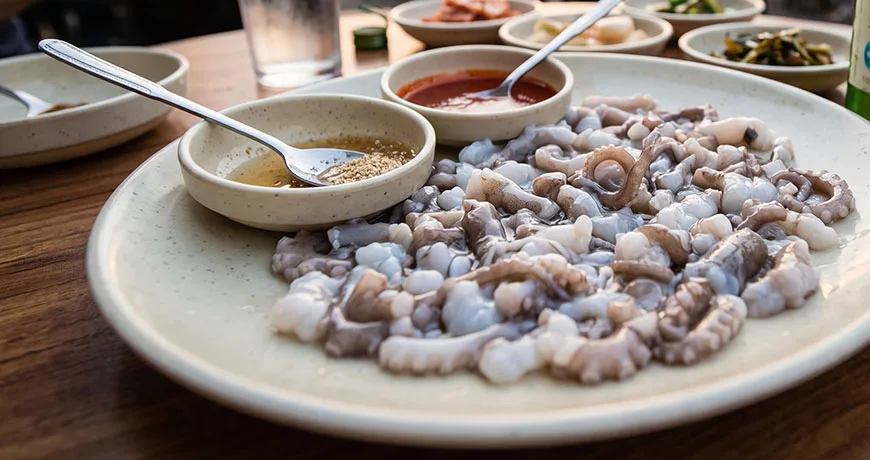
San-nakji is a profound culinary experience that leverages the unique neurobiology of cephalopods. Even after the brain is severed, localized ganglia in the tentacles continue to fire, using residual ATP in the muscle fibers to create active, writhing spasms. To safely consume this mechanically active dish, the tentacles are chopped finely and heavily coated in sesame oil. This lipid barrier physically neutralizes the suction cups, preventing them from adhering to the esophagus, while delivering an intensely nutty, umami-rich flavor profile powered by naturally high taurine levels.
⏱️ Total: 10 mins | Prep: 10 mins | Cook: 0 mins (Raw) | 🍳 Difficulty: High (Requires safe handling of live seafood) | 🌶️ Profile: Chewy, Nutty, and Dynamically Fresh | 🍚 Focus: Taurine, Lean Protein, & Neural ATP Spasms
Ingredients (2 servings)
- Main Ingredients: 2 ultra-fresh, live small octopuses (nakji)
- For Prep/Scrubbing: 2 tbsp wheat flour, 1 tbsp coarse salt
- Dipping Sauce 1 (Sesame Oil-Salt – Mandatory for Safety): 2 tbsp sesame oil, 0.5 tsp fine or roasted sea salt, a pinch of sesame seeds
- Dipping Sauce 2 (Cho-gochujang): 2 tbsp gochujang, 2 tbsp vinegar, 1 tbsp sugar (or agave syrup), 0.5 tbsp minced garlic, a pinch of sesame seeds
- (Optional: Julianned cucumber, 1 stalk of chopped scallion)
Allergy Information Contains: Seafood (Octopus), Soy, Wheat (from gochujang, flour)
Equipment Heavy Cleaver (or extremely sharp Chef’s Knife), Sturdy Cutting Board, Mixing Bowl, Strainer
Cooking Instructions
- Mechanical Mucilage Scrub (Friction Wash): Place the live octopuses in a bowl. Add the coarse salt and wheat flour. Massage vigorously. As a defense mechanism, the octopus will release copious amounts of slippery mucin. The abrasive salt and glutenous flour physically bind to and strip away this slime and any mud trapped in the suction cups. Rinse thoroughly under cold water until squeaky clean.
- Neural Severing: Swiftly and decisively cut off the head (the bulbous sac containing the brain and viscera) just above the eyes to disconnect the central nervous system. (Do not eat the head raw; it must be boiled separately for at least 10 minutes to be consumed as a cooked delicacy.)
- Physical Mincing (Tang-tang-i Technique): Place the writhing tentacles on the board. Using a heavy cleaver, forcefully chop the tentacles into small 1 to 1.5 cm pieces. It is critical to cut them finely; leaving large, intact suction cups poses a severe choking hazard as they can attach to the throat.
- Plating: Transfer the actively moving chopped tentacles to a chilled plate. Garnish with a generous sprinkle of toasted sesame seeds, chopped scallions, and julienned cucumber on the side.
- Consumption & Safety Mechanism: Dip a piece of the moving octopus generously into the sesame oil-salt mixture. The thick lipid coating of the oil physically prevents the suction cups from forming a vacuum seal against your mucosal membranes, allowing you to swallow safely while the salt extracts the deep, savory umami of the muscle fibers.
💡 Professional Culinary Tips
- Dynamics of ATP & Localized Ganglia: The octopus writhes fiercely even without a brain because each arm contains its own independent nerve cords (ganglia), and the muscle cells are still loaded with ATP. This macabre but fascinating movement ceases once rigor mortis sets in, which is why San-nakji must be consumed immediately upon preparation to experience its signature textural resistance.
- The Safety Engineering of Sesame Oil: Sesame oil is not merely a flavor enhancer; it is a life-saving culinary lubricant. The viscous, hydrophobic layer of the oil coats the suction cups, disrupting their ability to grip the wet surfaces of the mouth and throat. Never eat San-nakji dry.
- Cucumber as a Palate Cleanser: The julienned cucumber provides a vital hydrating contrast. Its crisp texture and the volatile compounds (like nonadienal) responsible for its fresh scent cut through the heavy lipid film of the sesame oil, completely resetting the palate between bites.
Nutrition Facts (Estimated)
Total Content : Approx. 150g (1 serving, tentacles only)
Calories : 110 kcal
– Sodium : 320mg (excluding dipping sauce)
– Total Carbohydrate : 0.0g
– Sugar : 0.0g
– Total Fat : 4.5g (including a trace of sesame oil)
– Saturated Fat : 0.5g
– Cholesterol : 95.0mg
– Protein : 18.0g
– Calcium : 40.0mg
*Daily Values are based on a 2,000 calorie diet and standard Korean nutritional reference values
**Nutritional values are calculated based on original ingredients; substitutions may alter specific macronutrients.
The Writhing Symphony of Ocean Vitality: A Lyrical Masterpiece of San-nakji and Wild Sensory Thrill
San-nakji (Live Webfoot Octopus) stands as the bold, exhilarating, and wildly unique pinnacle of Korean seafood gastronomy, where freshly harvested, writhing baby octopus is chopped on the cutting board and served immediately, inviting a dynamic, pulsating communion between diner and sea. Defying the boundaries of static cuisine, this wild delicacy offers an electrifying tactile thrill as the active suction cups gently adhere to the palate and tongue, awakening the senses to an unprecedented state of vibrant awareness.
The moment a lively, squirming tentacle is lifted with chopsticks, generously coated in a nutty emulsion of sesame oil and coarse salt, and placed into the mouth, a playful structural resistance unfolds. The suction cups engage dynamically across the palate, releasing a surge of clean, sweet marine juices that harmonize brilliantly with the savory richness of the oil dip. When paired with the crisp, clean finish of a shot of chilled soju, it delivers an unforgettable wave of liberation and raw vitality.
True gastronomy does not restrict itself to refined, processed plates; it flourishes in the ancestral courage to embrace nature’s raw, unbridled life force and shatter everyday lethargy through pure sensory awakening. Savoring a plate of writhing live octopus alongside a glass of soju today is a bold and unforgettable ritual—clearing away the rush of modern life and filling the spirit with unbridled energy, wild maritime spirit, and timeless solace.
Editor’s Review
1. An Exhilarating Cadence of Writhing Tentacle Suction, Nutty Sesame-Oil-Salt, and Wild Textural Thrill
The moment a freshly chopped morsel of writhing live octopus—dipped deeply in savory sesame oil and salt or tangy chogochujang—touches the palate, an immediate wave of tactile engagement occurs as the active suction cups gently grip the tongue and inner cheek. This playful, adhesive resilience is swiftly followed by a burst of clean, sweet ocean umami and rich, nutty depth, orchestrating an endlessly fascinating, multi-dimensional sensory thrill that captivates from the first bite to the last.
2. Neuromuscular Reflex Kinetics, Suction Cup Adhesion Physics, and High-Taurine Metabolic Vitality
San-nakji represents an exacting study in raw food physics and biochemical stimulation. The sustained neuromuscular reflex action of the cephalopod’s nervous system post-preparation maintains active suction dynamics, creating a unique vacuum-adhesion physics across the oral mucosa that stimulates peripheral sensory nerves. Concurrently, the exceptionally high concentration of bioavailable taurine, betaine, and free amino acids present in fresh octopus acts as a potent metabolic activator, supporting rapid fatigue recovery and systemic invigoration.
3. The Coastal Pocha Hearth and the Grounding Sanctuary of Late-Night Soju Conviviality
Found gracing bustling seaside pochas and late-night neighborhood taverns as the ultimate expression of Korean drinking culture, a modest plate of live octopus paired with soju serves as an enduring emotional haven against daily weariness. Revered for generations as an essential restorative bar snack that instantly banishes lethargy and sharpens the spirit, enjoying this honest, wild delicacy washes away modern stress, granting a timeless sanctuary of stillness, coastal heritage, and grounded culinary happiness.