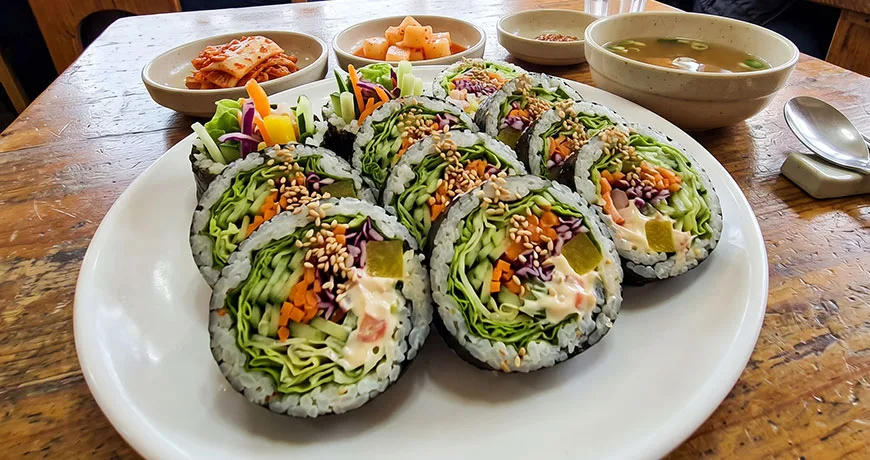
Salad Gimbap is an exercise in fluid dynamics and moisture migration control, mechanically isolating a high-turgor raw vegetable matrix from a hydroscopic algae membrane (seaweed wrapper) using a lecithin-stabilized mayonnaise emulsion. Unlike traditional Gimbap, which relies on thermally denatured (cooked) vegetables, Salad Gimbap utilizes raw iceberg lettuce, bell peppers, and sprouts inflated to maximum cellular turgor pressure via an ice-water osmotic shock. To prevent the intracellular plant sap from leaking and structurally degrading the seaweed, a hydrophobic barrier is constructed. Finely shredded Surimi (crab stick) is bound with mayonnaise, creating an impermeable lipid wall between the wet vegetables and the starch matrix. When rolled tightly with completely cooled, lipid-coated rice, this structure delivers a violent, acoustic crunch upon mastication, seamlessly balanced by the rich, creamy masking effect of the emulsion.
⏱️ Total: 25 mins | Prep: 20 mins | Cook: 5 mins | 🍳 Difficulty: Moderate (Requires strict cellular dehydration and hydrophobic barrier construction) | 🌶️ Profile: Explosively Crisp, Refreshing, and Creamy | 🍚 Focus: Turgor Maximization, Hydrophobic Lipid Barriers, & Pectin Preservation
Ingredients (2 servings / 2–3 rolls)
- Hydroscopic Algae Matrix: 3 sheets of roasted seaweed for Gimbap (Gim)
- Lipid-Coated Starch Matrix: 2 bowls of cooked short-grain white rice, 1.5 tbsp toasted sesame oil, 0.5 tsp fine salt
- High-Turgor Raw Matrix: 4 leaves of Iceberg Lettuce (thick white ribs removed), 1/2 Bell Pepper (red/yellow, julienned), 1 handful mixed Sprouts (all soaked in ice water, then dried 100% using a salad spinner)
- Hydrophobic Emulsion Barrier: 4 sticks of Surimi / Crab stick (torn into fine fibrous threads), 3 tbsp mayonnaise, 0.5 tbsp honey mustard, a pinch of white pepper
Allergy Information Contains: Egg, Soy, Wheat (from mayonnaise/surimi), Crustacean (Surimi flavoring)
Equipment Salad Spinner, Bamboo Rolling Mat (Gimbal), Mixing Bowls, Cutting Board, Knife
Cooking Instructions
- Turgor Maximization & Mechanical Dehydration: Submerge the lettuce, julienned bell peppers, and sprouts in an ice-water bath (under 2°C/35°F) for 5 minutes. The osmotic pressure forces water into the plant vacuoles, maximizing structural turgor. Transfer to a salad spinner and use centrifugal force to remove every single drop of external moisture.
- Hydrophobic Emulsion Prep: Tear the surimi (myofibrillar protein gel) into microscopic threads. Vigorously mix with the mayonnaise, mustard, and pepper. The egg yolk lecithin and oils in the mayo permeate the surimi, creating a thick, waterproof paste designed to physically block vegetable moisture from escaping.
- Starch Thermodynamics (Cooling): Mix the warm rice with salt and sesame oil, then allow it to cool entirely to body temperature (37°C/98°F). Placing delicate, high-turgor raw lettuce on steaming hot rice will instantly transfer conductive heat, melting the plant pectin and causing a rapid, soggy structural collapse (thermal wilting).
- Radial Compression Assembly: Place a seaweed sheet rough-side up. Spread the cooled rice thinly. In the center, spread a generous, flat layer of the mayo-surimi emulsion to act as a damp-proof pad. Pile the bone-dry lettuce, peppers, and sprouts on top of the emulsion. Roll tightly using the bamboo mat, applying strict radial compression to fuse the matrix without snapping the crisp vegetables.
- Mechanical Slicing: Use an extremely sharp knife, lightly oiled, to saw through the roll. Due to the high thermodynamic instability of the raw vegetables, this Gimbap must be consumed shortly after assembly for peak rheological texture.
💡 Professional Culinary Tips
- The Thermodynamic Insulation of Mayonnaise: Mayonnaise is not just a flavor enhancer; it is an oil-in-water emulsion that functions mechanically as a hydrophobic sealant. By insulating the raw vegetables within the mayonnaise-bound surimi, you create a physical barrier that delays the plant moisture from migrating into the starches and eventually the hydroscopic seaweed wrapper.
- Pectin and Thermal Wilting: Leafy greens rely on pectin for their rigid cellular structure, which is exceptionally vulnerable to heat. Exposing iceberg lettuce to the conductive heat of fresh rice (80°C+) hydrolyzes the pectin in seconds, resulting in a translucent, limp, and foul-smelling leaf. Strict thermal cooling of the rice is the only way to preserve the auditory and tactile “crunch” of the plant matrix.
- Biochemical Balancing via Sprouts: While lettuce and bell peppers provide hydration and mechanical crunch, they lack chemical sharpness. Incorporating sprouts introduces volatile enzymatic compounds and slight bitterness (saponins). These act as natural biochemical astringents, cleanly slicing through the heavy lipid profile of the mayonnaise and resetting the palate so each bite remains refreshingly crisp.
Nutrition Facts (Estimated)
Total Content : Approx. 450g (1 serving, approx. 1.5 rolls)
Calories : 460 kcal
– Sodium : 680mg
– Total Carbohydrate : 62.0g
– Sugar : 4.0g
– Total Fat : 20.0g (Primarily from mayonnaise emulsion)
– Saturated Fat : 3.5g
– Cholesterol : 30.0mg
– Protein : 10.0g
– Dietary Fiber : 7.0g
*Daily Values are based on a 2,000 calorie diet and standard Korean nutritional reference values.
**Nutritional values are calculated based on original ingredients; substitutions may alter specific macronutrients.
Origins and Food Culture of Salad Gimbap (Salad Gimbap)
1. The 2000s “Well-Being” Wave and the Emergence of Plant-Forward Gimbap
- Evolving away from traditional mid-century gimbap fillings centered on sautéed meats, processed ham, and salted pickles, Salad Gimbap emerged during the nationwide “Well-Being” and LOHAS (Lifestyles of Health and Sustainability) movement of the early 2000s.
- Developed to satisfy urban professionals and health-conscious diners seeking a light, non-greasy meal that could deliver the nutritional benefits of a fresh tossed garden salad in a convenient, portable one-hand format.
2. The Culinary Science of Moisture Management and Raw Botanical Architecture
- The hallmark of authentic preparation lies in meticulous moisture control: spinning the washed lettuce and sprouts dry to prevent water from leaching into the rice and causing the delicate seaweed sheet to turn soggy.
- Chefs frequently wrap the crisp botanicals inside an inner perilla leaf (kkaennip) or rice-paper barrier, lightly binding them with creamy emulsified dressings (such as roasted sesame, light mayo, or honey mustard) that mellow raw astringency while locking in structural crunch.
3. Modern “Guilt-Free” Dining, Diet Culture, and Contemporary Grab-and-Go Meals
- Revered by fitness enthusiasts, dieters, and pesco-vegetarians as the ultimate “guilt-free” comfort meal, offering generous physical volume and high fiber without excess calories.
- Widely featured in modern boutique gimbap houses and upscale urban lunch spots, Salad Gimbap exemplifies the creative adaptability of Korean food culture, seamlessly fusing ancient roll mechanics with contemporary wellness trends.
The Hydrating Radiance of Crisp Garden Botanicals and the Silken Embrace of Emulsified Dressing: A Refined Portrait of Salad Gimbap
Salad Gimbap (Fresh Garden Salad Seaweed Rice Roll) stands as the radiant, ultra-refreshing, and health-forward summit of Korea’s contemporary portable (doshirak) gastronomy. Crisp leaves of fresh iceberg lettuce boasting exceptional cell hydration, thick batons of sweet, jewel-toned bell peppers (paprika), and nutrient-dense microgreens are combined with tender shredded crab stick gently coated in a velvety mayonnaise-based dressing. Artfully arranged over a foundation of short-grain white rice—lightly seasoned with sea salt and cold-pressed toasted sesame oil—and encased in a tight cylinder of roasted sea laver (gim), this dish deliberately departs from the heavy, soy-braised and pan-fried fillings of traditional gimbap. By honoring the raw, unheated cellular vitality and vibrant phytochemicals of fresh botanicals, it presents a garden-fresh salad composed like a blooming mandala within a sleek, portable roll.
Placing a sesame-speckled slice onto the tongue awakens the palate with an immediate, intoxicating perfume of toasted sea laver intertwined with the nutty warmth of cold-pressed sesame oil. Sinking your teeth into the slice triggers a crisp fracture as the brittle seaweed gives way, yielding smoothly to the tender, chewy elasticity of the seasoned rice grains. As your teeth compress the vibrant core, an exhilarating sensory crescendo unfolds: layers of iceberg lettuce and sweet bell pepper shatter with an auditory, juicy snap (asak), releasing a flood of pure, cooling botanical hydration. The silken, creamy emulsion of the dressing cushions the raw crunch, softening the mild grassy notes of the greens while the peppery sparkle of fresh radish sprouts adds a lively, sophisticated kick. The sweet starch of the rice effortlessly absorbs the botanical moisture, orchestrating an impeccably balanced, endlessly refreshing harmony that leaves the palate feeling light, clean, and invigorated.
The enduring brilliance of Salad Gimbap lies in its functional equilibrium—balancing the sustained energy of complex carbohydrates with the detoxifying power of dietary fiber, natural water, and essential vitamins within an unpretentious, hand-held parcel. Flourishing alongside Korea’s modern wellness movement as a beloved lunch and casual brunch staple for health-conscious diners, this vibrant green roll remains a timeless cultural monument of thoughtful nutrition, domestic ingenuity, and rejuvenating everyday comfort.
Editor’s Review
1. A Dynamic Cadence of Laver Tensile Fracture, Resilient Botanical Turgor, Silken Dressing Cushioning, and Chewy Rice Starch
The textural landscape inside the sliced roll achieves an extraordinary equilibrium of contrasting physical elements. The delicate, papery snap of roasted seaweed gives way to the supple, cohesive chew of sesame-seasoned rice, which provides a grounding foundation. At the center, the concentric leaf layers of iceberg lettuce and the dense flesh of sweet bell peppers deliver an auditory, high-hydration crunch that crackles crisply with each bite. The smooth, velvety dressing acts as a textural bridge, preventing oral friction and ensuring a remarkably clean, non-greasy mouthfeel from the first slice to the last.
2. Plant Cell Turgor Mechanics, Hydrophobic Lecithin Moisture Barriers, and Carotenoid Bioavailability Optimization
Salad Gimbap represents an exacting study in plant cellular biophysics, colloidal interface science, and lipophilic nutrient kinetics. Serving iceberg lettuce and sweet bell peppers unheated fully preserves the intracellular turgor pressure of their plant vacuoles, ensuring an instant, auditory release of free water upon mastication. The phospholipid surfactants (lecithin) present in the egg-yolk-stabilized mayonnaise dressing form a protective, hydrophobic oil-in-water (O/W) coating over the cut botanicals; this barrier physically halts the capillary migration of free water into the hygroscopic dried laver (Porphyra), preventing the structural softening of its structural porphyran polymers. Furthermore, the unsaturated fatty acid micelles in the dressing solubilize fat-soluble antioxidants—such as capsanthin and beta-carotene from the bell peppers—significantly enhancing their intestinal bioavailability.
3. The Modern Wellness Evolution of Traditional Rolls and the Vanguard of Korean Fresh-Casual Gastronomy
Replacing rich meats and heavy marinades with living, crisp garden produce, Salad Gimbap exemplifies the agile modernization of traditional Korean roll culture. Delivering the holistic refreshment and dietary lightness of a full garden salad within an ergonomic, hand-held format, this unassuming masterpiece stands as an enduring sanctuary of casual wellness, restorative vitality, and thoughtful culinary craftsmanship.