
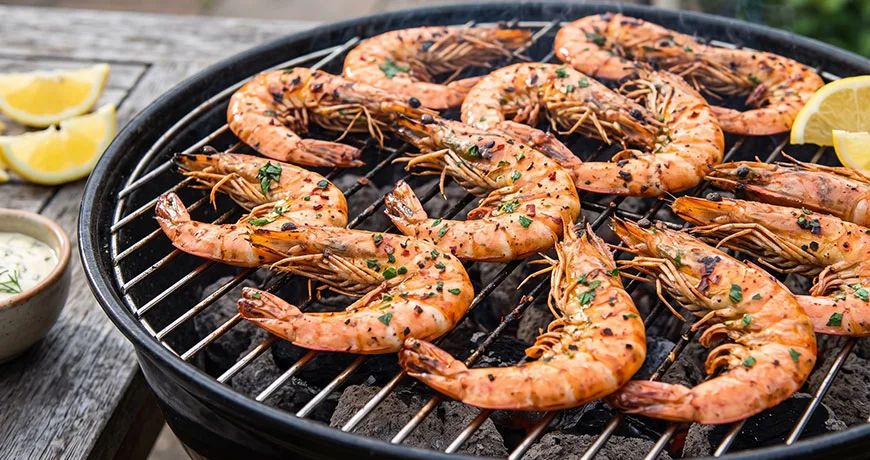
Saeu-gui (specifically Daeha-sogeum-gui, or coarse salt-grilled shrimp) is a brilliant thermodynamic cooking method that utilizes a thick bed of sea salt as both a thermal insulator and a radiant heat distributor. The scorching salt prevents the delicate crustacean shells from burning against the direct heat of the pan, while the trapped steam under the lid cooks the myofibrils evenly via convection. As heat permeates the shrimp, a fascinating biochemical reaction occurs: the astaxanthin pigment unbinds from its carrier protein, dramatically shifting the shrimp’s color from dull grey to vibrant crimson.
⏱️ Total: 20 mins | Prep: 10 mins | Cook: 10 mins | 🍳 Difficulty: Easy (Requires thermal timing to prevent syneresis) | 🌶️ Profile: Salty, Sweet, and Snappy | 🍚 Focus: Astaxanthin Denaturation, Thermal Mass, & Lean Protein
Ingredients (2 servings)
- Main Ingredient: 15–20 fresh whole shrimp (fleshy prawns or whiteleg shrimp, shell-on)
- Thermal Medium: 2–3 cups coarse sea salt (cheonilyeom – enough to cover the pan’s base with a 1cm layer)
- Dipping Sauce (Cho-gochujang): 2 tbsp gochujang, 2 tbsp vinegar, 1 tbsp agave syrup (or sugar), 0.5 tbsp minced garlic
Allergy Information Contains: Seafood (Shrimp), Soy, Wheat (from gochujang)
Equipment Heavy Cast-Iron Skillet or Thick Pan, Aluminum Foil (optional, to protect the pan), Tight-fitting Lid, Toothpick (for deveining)
Cooking Instructions
- Mechanical Prep (Deveining): Lightly wash the shrimp in mildly salted water. Using kitchen shears, trim off the sharp rostrum (horn on the head) and the long antennae. Insert a toothpick horizontally between the 2nd and 3rd shell segments on the back and gently pull upwards to physically extract the dark digestive tract (vein). Leaving this tract intact introduces grit and a bitter off-flavor.
- Thermal Bed Construction: Line the bottom of a heavy skillet with aluminum foil (to prevent the salt from ruining the pan’s coating). Pour the coarse sea salt over the foil, spreading it evenly to form a dense 1cm thick thermal bed.
- Thermodynamic Grilling (Convection & Radiant Heat): Heat the pan over medium heat. Once the salt starts to crackle and store heat energy, lay the dried shrimp flat on the salt bed in a single layer, ensuring they do not overlap.
- Moisture Trapping & Denaturation: Immediately cover the pan with a tight lid. The enclosed space traps the escaping steam, creating a convection environment. After 4–5 minutes, when the underside of the shrimp turns bright red, remove the lid, swiftly flip each shrimp, cover again, and cook for another 3–4 minutes.
- Consumption Mechanics: Turn off the heat once the shells are completely opaque and vibrant orange. Peel the shrimp (or eat them whole if you prefer the crunchy, chitosan-rich shells) and dip the sweet, snappy flesh into the highly acidic cho-gochujang to balance the savory ocean notes.
💡 Professional Culinary Tips
- Thermodynamic Role of Salt: In this dish, the salt is an engineering tool, not just a seasoning. Coarse salt acts as a high-heat-capacity thermal mass. It absorbs the direct heat of the burner and radiates it gently upwards, preventing the shells from scorching. Additionally, the dry salt absorbs excess moisture weeping from the shrimp, concentrating their natural sweetness and firming the texture.
- Astaxanthin Biochemistry: Live shrimp appear greyish-blue because the red pigment, astaxanthin, is bound to a protein called crustacyanin, which alters how it absorbs light. The application of heat forcefully denatures (unwinds) this protein, releasing the astaxanthin and immediately triggering the visual shift to a vibrant red-orange.
- Controlling Syneresis (Overcooking): If exposed to heat for more than 10 minutes, the myofibrillar proteins in the shrimp will contract violently, expelling their internal water (syneresis) and turning the meat into rubber. The precise moment the entire shell is colored and the tail curls into a tight “C” shape, the cooking process must be halted.
Nutrition Facts (Estimated)
Total Content : Approx. 200g (1 serving, edible flesh only)
Calories : 210 kcal
– Sodium : 450mg (Includes natural sodium and surface osmosis / excludes dipping sauce)
– Total Carbohydrate : 0.0g
– Sugar : 0.0g
– Total Fat : 2.5g
– Saturated Fat : 0.5g
– Cholesterol : 310.0mg
– Protein : 42.0g
– Calcium : 110.0mg
*Daily Values are based on a 2,000 calorie diet and standard Korean nutritional reference values
**Nutritional values are calculated based on original ingredients; substitutions may alter specific macronutrients.
The Ruby Transformation Atop a Bed of Pure Sea Salt: A Lyrical Masterpiece of Saewoo-gui and Coastal Autumn Splendor
Saewoo-gui (Salt-Grilled Prawns) stands as the pure, radiant, and deeply comforting pinnacle of Korean coastal gastronomy, where plump, pristine shrimp—cleaned and carefully deveined along the dorsal line—are nestled atop a thick bed of coarse Korean sea salt (cheonilyeom) in a lidded skillet. Relying on the gentle, even radiant heat of hot salt crystals rather than direct open flame, this honest method locks in delicate marine moisture while transforming the translucent, slate-gray shells into brilliant coral-ruby jewels, filling the air with an intoxicating aroma of roasted sea minerals the moment the lid is lifted.
Lifting a freshly grilled prawn from the salt bed and gently peeling away its hot, brittle shell reveals a pristine morsel brimming with natural sweetness. The first bite delivers a satisfying, springy bounce that yields smoothly to the tooth, releasing concentrated marine juices seasoned with a delicate, mineral-rich salinity absorbed from the salt. Complemented by the deeply nutty, caramelized richness of the crisped shrimp heads, every mouthful pairs exquisitely with a shot of chilled soju, delivering a profound surge of restorative vitality and soul-warming comfort.
True gastronomy does not depend on heavy artifice; it flourishes in the ancestral wisdom of respecting seasonal bounty through elemental cooking techniques, and in the generous hospitality of peeling piping-hot prawns with bare hands to share across the table. Gathering around a sizzling salt pan with loved ones today is an elegant and sacred ritual—clearing away the rush of modern life and filling the spirit with unpretentious warmth, coastal nostalgia, and timeless solace.
Editor’s Review
1. An Exhilarating Cadence of Snappy Plump Resilience, Concentrated Sea Sweetness, and Subtle Salt Infusion
The moment a freshly peeled, salt-grilled prawn touches the palate, an immediate wave of plump, springy elasticity gives way to an explosion of concentrated, sweet umami. The gentle salinity infused through the vaporizing sea salt crystals naturally elevates the prawn’s innate glycine sweetness, while the crunchy, deeply roasted heads offer an intensely rich contrast, orchestrating an endlessly satisfying, multi-layered sensory thrill from start to finish.
2. Coarse Sea Salt Radiant Thermal Dynamics, Astaxanthin Carotenoid Cleavage, and Taurine-Chitosan Bioavailability
Saewoo-gui represents an exacting study in mineral-based heat transfer and seafood biochemistry. The dense bed of coarse sea salt acts as an indirect thermal buffer, converting direct conductive heat into gentle far-infrared radiation that prevents scorching while sealing cellular moisture within the muscle fibers. Thermally induced cleavage of the carotenoprotein crustacyanin releases free astaxanthin, imparting the signature ruby color and potent antioxidant properties. Concurrently, the meat’s high concentration of taurine and the shell’s bioavailable chitosan provide an optimal nutritional matrix for liver recovery and systemic stamina.
3. The Autumn Portside Salt Pan Nostalgia and the Grounding Sanctuary of Hand-Peeled Camaraderie
Found gracing lively coastal festival tents along the West Coast and neighborhood taverns nationwide as the undisputed herald of crisp autumn evenings, a modest pan of salt-grilled shrimp serves as an enduring emotional haven against daily weariness. Revered for generations as an essential comfort feast that fosters affection through the shared gesture of peeling shells for one another, enjoying this honest, nutrient-dense delicacy washes away modern stress, granting a timeless sanctuary of stillness, coastal heritage, and grounded culinary happiness.