
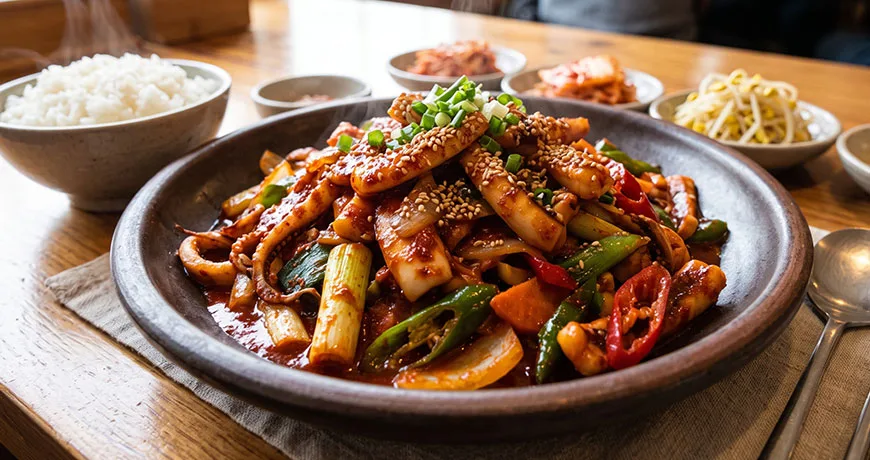
A masterclass in cephalopod moisture control and thermodynamic timing. Unlike meats that require long braising, squid muscle fibers tighten rapidly under heat. A preliminary brief blanching step expels excess cellular water, preventing a watery sauce and preserving a tender-crisp texture. Rapid high-heat stir-frying ensures deep flavor absorption without sacrificing the delicate elasticity of the seafood.
⏱️ Total: 20 mins | Prep: 10 mins | Cook: 10 mins | 🍳 Difficulty: Moderate | 🌶️ Profile: Spicy, Clean Umami | 🍚 Focus: High-Protein Seafood & Vegetable Balance
Ingredients (2 servings)
- Main Ingredients: 1 cleaned squid (approx. 250g), 1/2 onion, 1/4 carrot, 100g cabbage, 1 scallion, 1 Cheongyang chili (optional)
- Seasoning Sauce: 1.5 tbsp gochujang, 1.5 tbsp gochugaru, 1.5 tbsp soy sauce, 1 tbsp minced garlic, 1 tbsp sugar, 1 tbsp oligosaccharide (or 1 tbsp agave syrup), 1 tbsp sesame oil, a pinch of sesame seeds
Allergy Information Contains: Seafood (Squid), Soy, Wheat (from soy sauce)
Equipment Cutting Board, Knife, Boiling Water Pot (for blanching), Wok or Skillet, Spatula
Cooking Instructions
- Ingredient Preparation: Cut the cleaned squid into bite-sized strips. Slice the onion, carrot, and cabbage uniformly. Diagonally cut the scallion and chili.
- Thermal Blanching (Moisture Management): Briefly blanch the squid in boiling water for 10-15 seconds until the surface turns opaque white. Drain in a strainer. This prevents excess water release during stir-frying.
- Formulating the Sauce: In a bowl, combine gochujang, gochugaru, soy sauce, minced garlic, sugar, and oligosaccharide into a smooth paste.
- Sautéing Vegetables: Heat a skillet with a little oil over high heat. Stir-fry the firmer vegetables (carrot, cabbage, onion) briefly until slightly tender.
- Rapid High-Heat Stir-Frying: Add the blanched squid and the sauce to the skillet. Turn the heat to maximum and stir-fry rapidly for 1–2 minutes. Quick cooking is critical to prevent the squid from turning rubbery.
- Residual Heat Finishing: Turn off the heat entirely. Fold in the scallion, chili, sesame oil, and sesame seeds, leveraging residual heat to preserve vibrant aromatics.
💡 Professional Culinary Tips
- Blanching Mechanism for Water Control: Squid releases a significant amount of moisture when heated. Pre-blanching locks out excess liquid, ensuring the seasoning clings thickly rather than diluting into a watery broth.
- Thermodynamics of High-Heat Brief Searing: Cephalopod proteins tighten aggressively under prolonged heat. Executing the final stir-fry within 1 to 2 minutes over intense heat preserves optimal tenderness.
- Preserving Vegetable Crunch: Brief, high-heat exposure maintains the cellular integrity and natural sweetness of the accompanying vegetables.
Nutrition Facts (Estimated)
Total Content : Approx. 200g (1 serving)
Calories : 230 kcal
– Sodium : 720mg
– Total Carbohydrate : 18.0g
– Sugar : 10.0g
– Total Fat : 5.0g
– Saturated Fat : 0.8g
– Cholesterol : 180.0mg
– Protein : 28.0g
– Calcium : 45.0mg
*Daily Values are based on a 2,000 calorie diet and standard Korean nutritional reference values
**Nutritional values are calculated based on original ingredients; substitutions may alter specific macronutrients.
The Origins and Culture of Ojingeobokkeum (Stir-fried Squid)
1. Coastal Abundance and Modern Culinary Evolution
- Ojingeo-bokkeum (stir-fried squid) is rooted in the rich seafood harvests along Korea’s coasts—particularly the East Sea, where squid has long been a staple catch.
- As refrigeration and distribution improved, squid became widely accessible inland. With the mid-20th-century boom of spicy, gochujang-based comfort foods, the dish naturally evolved into one of Korea’s most cherished everyday home-cooked meals.
2. High-Heat Mastery: Bouncy Textures and a Fiery-Sweet Kick
- The secret to authentic Ojingeo-bokkeum lies in flash-stir-frying over high heat. Because squid turns rubbery if overcooked, mastering the timing is crucial to preserve its snappy, bouncy texture.
- Tossed with crisp vegetables like cabbage, onions, and carrots in a vibrant chili-paste and garlic sauce, it delivers an addictive, harmonious balance of spicy heat and savory sweetness.
3. A Versatile Banchan, Pub Anju, and the Ultimate Fried Rice Finale
- It serves as a reliable, crowd-pleasing side dish (banchan) for everyday dining, a popular midday meal, and an exceptional drinking companion (anju).
- In Korean dining culture, the experience reaches its glorious peak when leftover sauce is whisked into the pan with rice, sesame oil, and toasted seaweed flakes to create the ultimate stir-fried rice finale (bokkeum-bap).
The Resilient Bounce of the Sea and Fiery Spice: A Vibrant Lyricism of Tender Squid and Crisp Garden Vegetables
Ojingeo Bokkeum (Spicy Stir-fried Squid) stands as the dynamic and breathtaking masterpiece of Korean coastal gastronomy, where fresh squid—gently blanched to preserve the snappy elasticity and tender bounce of its muscle fibers—meets a vibrant medley of sweet onions, crisp carrots, and fresh cabbage, all united under a blistering glaze of fiery red pepper powder and rich gochujang. Eschewing the heavy greasiness of dense meats, this dish combines pure marine protein, fatigue-banishing taurine, and crisp vegetal hydration to achieve an astonishingly clean, balanced, and invigorating culinary harmony.
As the seasoned squid and vegetables sizzle together in the screaming-hot pan, the pungent, savory vapor commands the dining room, instantly awakening dulled senses. The delightful, springy bounce of the squid yields satisfyingly to the tooth, releasing clean, savory juices that meld seamlessly with the tender sweetness of caramelized cabbage and vitamin U-rich juices—softening the sharp strike of red pepper capsaicin into a deeply comforting embrace.
True gastronomy does not rely on heavy artificial artifice; it flourishes in ancestral wisdom that unites pristine marine assets with intense heat to revitalize depleted vitality and restore internal balance. Savoring a steaming, glossy morsel of spicy stir-fried squid over a bowl of freshly cooked white rice today is an exhilarating and comforting ritual—banishing daily exhaustion and replenishing the spirit with unyielding oceanic energy and heartwarming solace.
Editor’s Review
1. A Dynamic Sensory Rhythm of Fiery Gochujang-Chili Glaze, Snappy Squid Elasticity, and Crisp Vegetal Textures
The moment a sauce-drenched slice of blanched squid touches the palate, the vibrant kick of gochujang depth and sharp chili spice delivers an electric awakening to the taste buds. This initial spark is swiftly followed by the playful, snappy resilience of the squid, which gives way tenderly without chewiness thanks to the gentle pre-blanching technique. As the natural umami of the seafood blends with the crisp crunch of cabbage and sweet onions, it creates an endlessly refreshing, multi-layered rhythm of comfort and culinary satisfaction.
2. Blanching-Induced Moisture Preservation, Taurine Retention Thermodynamics, and Cabbage Vitamin U Mucosal Protection
Ojingeo Bokkeum represents an exacting study in high-heat culinary physics and seafood biochemistry. Pre-blanching the squid rapidly sets the surface proteins, physically locking in internal moisture and preventing excessive shrinkage or toughness during high-heat stir-frying. This optimized thermal control preserves vital, water-soluble taurine within the cellular matrix. Concurrently, the bioactive Vitamin U (S-methylmethionine) leached from the stir-fried cabbage forms a protective, soothing barrier across the gastric mucosa, naturally buffering the mucosal irritation of capsaicin and securing optimal digestive compatibility.
3. The Warmth of the Evening Hearth and the Grounding Sanctuary of Oceanic Rejuvenation
Encountering a steaming platter of spicy stir-fried squid amidst the cheerful clatter of an evening family table serves as an intimate emotional sanctuary against modern exhaustion. Celebrated for generations as an indispensable source of stamina and metabolic warmth, enjoying this honest, savory seafood dish washes away daily stress, granting a timeless refuge of physical replenishment, culinary joy, and grounded vitality.