
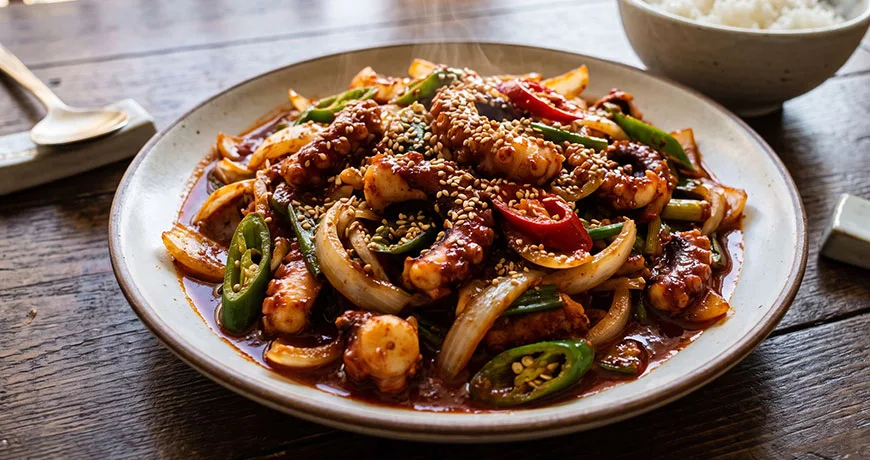
Nakjibokkeum is a high-heat wok masterpiece engineered to control the violent thermal contraction and moisture release (syneresis) that occur when dense cephalopod myofibrillar proteins are exposed to extreme heat. Prior to cooking, the octopus must undergo a rigorous mechanical massage using coarse salt and flour to strip away surface mucin and impurities, ensuring optimal sauce adhesion. The absolute law of this dish is the “flash stir-fry”—a rapid, maximum-heat cooking process lasting no more than 60 to 90 seconds. Reducing sugars leached from cabbage and onions combine with the peptide binders of Gochujang, flash-boiling at the base of a scorching wok to trigger Maillard reactions, while the octopus is introduced only in the final 60 seconds to lock in its tender, bouncy texture just before protein over-coagulation sets in.
- ⏱️ Total: 25 mins | Prep: 15 mins (Salt/flour massage & moisture purging) | Cook: 10 mins
- 🍳 Difficulty: Advanced (Requires precise high-heat wok timing under 90 seconds to prevent protein syneresis)
- 🌶️ Profile: Fiercely Fiery Capsaicin Heat, Smoky Wok Hei, and Deep Marine Sweetness
- 🍚 Focus: Mechanical Mucin Purging, High-Heat Capsaicin-Sugar Emulsion, & Flash Cooking
- 🍶 Pairing: Ice-cold Terra-Somaek (Lager mixed with Soju) or high-proof distilled Soju to extinguish the capsaicin heat
Ingredients (2–3 servings)
- Myofibrillar Protein Matrix: 2 Fresh Live/Flash-Frozen Small Octopuses (Nakji – approx. 500g, cleaned: heads inverted and gutted, eyes and beaks removed)
- Mechanical Cleaning Matrix: 2 tbsp Coarse Salt, 2 tbsp All-Purpose Flour (for stripping surface slime and trimethylamine odors)
- Capsaicin-Peptide Binder: 3 tbsp Gochugaru (mix of fine and coarse flakes), 2 tbsp Brewed Soy Sauce, 1.5 tbsp Gochujang (Chili Paste), 1.5 tbsp Minced Garlic, 1 tbsp Sugar, 1.5 tbsp Corn Syrup or Rice Syrup (for surface gloss glazing)
- Reducing Sugar & Turgor Matrix: 1/4 head Cabbage (coarsely chopped), 1/2 Onion (julienned), 1 stalk Green Onion (diagonally sliced), 2 Cheongyang green chilies
- Lipid & Aromatic Matrix: 2 tbsp Cooking Oil, 1 tbsp Toasted Sesame Oil, 1 tbsp Roasted Sesame Seeds
Allergy Information Contains: Mollusk (Octopus), Soy, Wheat (Soy Sauce, Gochujang)
Equipment High Thermal Mass Cast-Iron Wok or Non-Stick Pan, Mixing Bowl, Strainer
Cooking Instructions
- Mechanical Slime Removal: Place the cleaned octopus in a mixing bowl along with the coarse salt and flour. Aggressively massage and knead with your hands for 1 minute. The starch granules in the flour will forcefully absorb trapped sand in the suction cups and slimy mucin compounds from the skin. Rinse thoroughly 3–4 times in cold water, then pat completely dry with paper towels. (Excess moisture will cause the octopus to boil rather than sear.)
- Pre-Cutting & Turgor Prep: Cut the dried octopus into bite-sized pieces (approx. 5cm), separating thicker tentacle sections from thinner ones to ensure uniform cooking.
- Capsaicin Emulsion Base Construction: In a separate bowl, combine the Gochugaru, soy sauce, Gochujang, minced garlic, and sugar. Let rest for 10 minutes. The chili flakes will hydrate, transforming the raw powders into a smooth, vibrant red capsaicin syrup matrix.
- High-Heat Wok Maillard Reaction: Heat a wok over maximum flame until blistering hot. Add the cooking oil, followed by the cabbage and onions. Stir-fry over high heat for 1 minute to drive off vegetable water and initiate Maillard browning. Pour the prepared sauce directly over the vegetables and let it boil violently for 3 seconds to activate the peptide binder.
- Flash Stir-Frying & Thermal Sealing: Instantly drop the prepped octopus, green onions, and chilies into the scorching wok. Keep the heat roaring and toss rapidly with tongs for strictly 60 to 90 seconds. The moment the octopus surface transitions from translucent red to opaque, bouncy white, kill the heat immediately. (Delaying by even a few seconds triggers syneresis, turning the octopus rubbery.)
- Lipid Sealing: Instantly drizzle the sesame oil and scatter the sesame seeds over the octopus. Utilize the residual heat of the wok to lock in the aromatic lipid coating, then plate and serve immediately.
💡 Professional Culinary Tips
- The Physics of Octopus Myofibril Contraction: Unlike mammals or finfish, cephalopod muscle tissue possesses unique structural proteins that violently curl and expel intracellular water when subjected to high heat (syneresis). Trying to “fix” this water by cooking it longer guarantees tough, rubbery results. Only maximum heat and a sub-90-second cooking window can preserve tenderness.
- The Chemical Necessity of the Flour Massage: The slimy mucin coating an octopus acts as a physical barrier preventing marinades from binding to the flesh. The amylopectin in the flour traps and strips away this slime, allowing the Gochujang-Gochugaru peptide sauce to achieve flawless cellular adhesion upon contact.
- Moisture Management in Wok Cooking: While cabbage and onions provide necessary reducing sugars to balance the capsaicin, adding too much or cooking them too slowly releases a flood of water, turning a dry-heat stir-fry into a boiling soup. Limiting vegetable volume and maximizing burner BTUs to instantly flash-evaporate moisture is mandatory.
🍶 Gastronomic Pairing
- Biochemical Palate Cleansing: When the scorching capsaicin emulsion and the bouncy, sweet marine protein intensely assault your oral mucosa, pair this wok masterwork with an ice-cold Terra-Somaek (Lager mixed with Soju in a 1:1 ratio) or a chilled, high-proof distilled Soju. The carbonation bubbles and refined ethanol molecules cleanly slice through the capsaicin lipid barrier on your tongue, offering a flawless chemical reset that compels your next bite.
Nutrition Facts (Estimated)
Total Content : Approx. 350g (1 serving)
Calories : 220 kcal (High-protein, low-fat seafood matrix)
– Sodium : 1,200mg (Attributed to soy sauce, Gochujang, and salt-wash)
– Total Carbohydrate : 14.0g (Vegetable reducing sugars and Gochujang polysaccharides)
– Sugar : 7.0g
– Total Fat : 6.0g (Cooking oil and sesame oil lipids)
– Saturated Fat : 0.8g
– Cholesterol : 180.0mg (High concentration of natural taurine and sterols from octopus)
– Protein : 27.0g (Highly bioavailable cephalopod myofibrillar protein)
– Dietary Fiber : 3.5g (Cabbage and onion cellulose)
*Daily Values are based on a 2,000 calorie diet and standard Korean nutritional reference values.
**Nutritional values are calculated based on original ingredients; substitutions may alter specific macronutrients.
Origins and Food Culture of Stir-fried Octopus (Nakjibokkeum)
1. Historical Lineage: Jeong Yak-jeon’s Jasanoebo and the Legend of Reviving Exhausted Cattle
- Native to the sand-mud tidal flats of the southwest coastline, octopus has sustained peninsular communities since antiquity as a treasured source of sustenance and restorative vitality, famously documented by Jeong Yak-jeon in his 1814 marine biology compendium Jasanoebo under the classical Hanja name Nakjeeo (絡蹄魚, “interlocking-foot fish”).
- Jasanoebo recorded that “its flesh is white, sweet, and excellent… consuming it restores human primal vital energy (won-gi)”. Furthermore, enduring peninsular folklore immortalized the octopus’s legendary restorative prowess through the famous agrarian proverb that “feeding three or four octopuses to an exhausted, collapsed ox will immediately restore its strength and make it stand right back up”. Traditionally fed to overworked livestock and simmered into postpartum seaweed soups for recovering mothers, octopus has long reigned as the ultimate biological emblem of rapid stamina revival.
2. The Culinary Chemistry of Flash-Frying and Protein Thermodynamic Control
- While historic culinary texts predominantly featured octopus in clear cooling soups (yeonpo-tang), blanched platters (sukhoe), or sun-dried preserves, the contemporary incarnation of fiery gochujang-based Nakjibokkeum blossomed during the modernization era alongside the widespread accessibility of vegetable cooking oils and high-BTU cast-iron woks.
- The chief technical challenge in octopus cookery lies in managing actomyosin protein denaturation: cephalopod muscle fibers rapidly expel intracellular water and tighten past 70°C. Traditional master kitchens circumvent this by building a rich base of sautéed aromatics and high-moisture vegetables before introducing the prepared octopus, subjecting the entire pan to a blazing flash-sear for under two minutes. This locks in internal hydration and maximizes the retention of water-soluble taurine.
3. The Mujgyo-dong Alley Phenomenon and the Catharsis of Spicy Comfort Dining
- During the rapid urbanization of the 1970s, the historic Mujgyo-dong district in central Seoul birthed the legendary “Mujgyo-dong Style Nakjibokkeum”—characterized by an unsparing use of pulverized sun-dried chili flakes and crushed garlic designed to induce a sweat-drenched, tear-jerking culinary catharsis for stressed corporate workers.
- Pairing the searing, fiery octopus with cooling mild broth or steamed rice, and subsequently mixing the remaining spicy red sauce into rice to create an impromptu bibimbap, established a quintessential ritual of emotional release and communal bonding. Standing as an immortal monument to Korean spice gastronomy, working-class endurance, and restorative maritime comfort, Stir-fried Octopus remains a beloved national soul food.
The Springy Muscle Resilience of Tidal Mudflat Small Octopus, the Smoky Wok Hei of Torrential Iron Flames, and the Fiery Capsaicin Glaze of Sun-Dried Chili Paste: A Refined Portrait of Nakjibokkeum
Nakjibokkeum (Stir-fried Octopus) stands as the dynamic, intensely invigorating, and biologically dramatic summit of Korea’s spicy seafood stir-fry (bokkeum) gastronomy. Centered upon pristine small octopus (Octopus minor or Semakji) harvested from the sprawling intertidal mudflats of the southwestern coast—where relentless tidal currents concentrate high physiological reserves of free taurine and sweet amino acids—the preparation begins with rigorous mechanical sanitation. Coarse sea salt and wheat flour are massaged vigorously into the tentacles to scour away benthic silts and mucosal biofilms from the suction cups, followed by careful evisceration to excise the bitter viscera and ink sacs before sectioning into bite-sized lengths. Anchored inside a searing cast-iron wok or heavy iron skillet heated to roaring thermal velocity, aromatic alliums—minced garlic, scallions, and sliced Cheongyang green chilies—are flash-seared in clean vegetable oil to release fragrant sulfur compounds. The prepared octopus is introduced instantly, subjecting the delicate flesh to torrential convective and conductive heat exceeding 300°C for a fleeting 10 to 20 seconds. An assertive seasoning paste of sun-dried red chili powder (gochugaru), a whisper of aged gochujang, artisanal soup soy sauce, fermented anchovy sauce, and roasted sesame oil is tossed into the pan alongside crisp cabbage ribbons, sweet onions, and wild crown daisy, completing the high-heat hydrothermal process before the vegetables can shed excessive water. Finished off the flame with a fragrant drizzle of toasted sesame oil and a blizzard of toasted sesame seeds, this dish represents a masterclass in high-velocity wok engineering. Bypassing heavy braising liquids or cloying fats, Nakjibokkeum harnesses the uncorrupted snap of fresh cephalopod muscle and the pyrolytic alchemy of open flame, delivering an explosive surge of heat and umami that clears the mind and revitalizes the spirit.
Approaching the sizzling iron plate or ceramic platter as vibrant crimson bubbles froth around glossy, curled octopus tentacles, lifting a tender piece with chopsticks releases an immediate, electrifying olfactory charge: the smoky, pyrolytic aroma of high-heat wok hei mingles seamlessly with the sharp, roasted heat of sun-dried chili powder, the sweet sulfurous warmth of seared garlic, and the nutty fragrance of perilla and sesame oils. Sinking your teeth into an octopus tentacle delivers an extraordinary textural revelation: having undergone lightning-fast flash frying that seals in intracellular moisture, the dense muscular fibers resist tooth pressure with an energetic, springy bounce (taenggeul) before yielding to release concentrated torrents of sweet, briny marine protein. The thick, vermilion chili glaze coats the oral mucosa like liquid fire, sparking immediate sensory excitement through capsaicin activation, while the crisp, watery crunch of seared cabbage and onions provides refreshing botanical balance. Mounding spicy stir-fried octopus and blanched bean sprouts over a wide bowl of piping-hot white rice and mixing them into a unified crimson canvas completes an unforgettable ritual of culinary theater, physical awakening, and profound gastronomic catharsis.
The enduring majesty of Nakjibokkeum lies in its legendary urban history—born in the narrow alleyways of Mugyo-dong in downtown Seoul during the mid-20th century, where fiery, sweat-inducing plates of octopus revived industrial-era laborers and weary late-night drinkers alike. This modern tradition converges with the ancient coastal heritage of southern fishermen, who tossed freshly foraged octopus straight into beachside cauldrons or over straw-fire embers with chili paste. Rejecting culinary pretense to focus entirely on extreme thermal velocity and ocean-fresh protein, a steaming plate of spicy stir-fried octopus remains an irreplaceable monument of working-class resilience, explosive flavor design, and brilliant Korean culinary craftsmanship.
Editor’s Review
1. A Dynamic Harmony of Springy Tentacle Resilience, Silken Chili Glaze Coating, Crisp Cabbage Fracture, and Frictionless Emulsion Fluidity
The structural architecture inside the dish delivers an extraordinary, four-tiered choreography between high-density cephalopod smooth muscle bundles, flash-steamed vegetable turgor matrices, whole-seed friction, and an ultra-high-viscosity capsaicin-sugar suspension. Because small octopus (Semakji) possesses dense muscular layers without rigid skeletal structures, flash-cooking inside a 300°C wok locks in cellular moisture and prevents structural desiccation, allowing the tentacles to recoil under tooth pressure with an energetic, springy bounce (taenggeul) paired with clean tenderness. Counterbalancing this, the flash-seared cabbage and onions preserve their cellular integrity, fracturing under the teeth with an audible, refreshing snap (ajak) that provides essential masticatory contrast. Simultaneously, the vermilion chili glaze—emulsified with starch and oil—forms a frictionless lubricating fluid layer across oral membranes, ensuring an impeccably balanced, non-fatiguing mouthfeel from the first steaming bite to the last.
2. High-Velocity Flash-Frying Actomyosin Preservation, Pyrolytic Wok Hei Pyrazine Kinetics, Capsaicin TRPV1 Endorphin Cascade, and Taurine-Mediated Hepatic Recovery
Nakjibokkeum represents an exacting study in cephalopod muscle biochemistry, high-temperature pyrolytic thermodynamics, and neurosensory physiology. Unlike vertebrate fish flesh, cephalopod muscle features low connective tissue cross-linking but undergoes severe, irreversible protein tightening (syneresis) when exposed to prolonged thermal stress (>100°C for extended periods). Confining cooking time to under 20 seconds inside an roaring iron wok restricts protein denaturation, preserving Water Holding Capacity (WHC) and yielding a succulent, tender bite. Concurrently, high-heat pyrolysis of trace vegetable oils and amino-reducing sugar complexes across the iron surface generates complex volatile pyrazines, pyrroles, and furans that impart the prized smoky dimension known as wok hei. Sensory excitement is governed by lipophilic capsaicin activating oral TRPV1 ion channels, triggering peripheral vasodilation, gentle sweating, and the central nervous release of endorphins and dopamine. Biologically, high physiological concentrations of free taurine and betaine within the octopus tissue stimulate bile acid secretion and support hepatic metabolic pathways, establishing an immaculate restorative mechanism to banish physical fatigue.
3. The Mugyo-Dong Alley Legend and the Sovereign Apex of Korean Seafood Wok Gastronomy
Forged out of the bustling nocturnal alleys of Mugyo-dong and polished within the demanding canons of urban Korean dining, Nakjibokkeum stands as the ultimate archetype of high-velocity seafood cookery. Proving that profound gastronomic catharsis requires extreme thermal discipline and unmasked marine protein, this vibrant, smoky centerpiece captures the raw energy of modern Korean urban life, standing as an enduring sanctuary of sensory audacity, cultural resilience, and brilliant culinary artistry.