
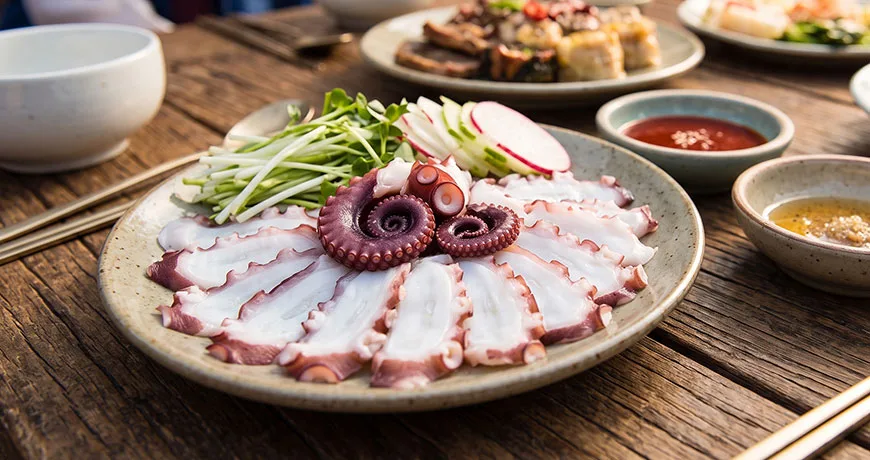
A centerpiece of Gyeongsang-do banquets, Muneo-sukhoe relies on precise thermodynamic control to prevent the cephalopod’s myofibrillar proteins from seizing (syneresis). Utilizing the enzymatic power of radish (diastase) during a flash-boil, followed by an immediate thermal shock in an ice bath, the octopus retains a tender core encased in a snappy, vibrant exterior. Diagonal slicing (sogisseolgi) mechanically severs the tough collagen fibers, delivering an impossibly tender, sweet, and briny delicacy.
⏱️ Total: 30 mins | Prep: 15 mins | Cook: 15 mins | 🍳 Difficulty: Moderate (Requires precise thermal timing) | 🌶️ Profile: Sweet, Briny, and Snappy | 🍚 Focus: Taurine, Lean Protein, & Muscle Relaxation
Ingredients (2 servings)
- Main Ingredients: 1 whole fresh octopus (approx. 500g–800g)
- Cleaning & Blanching Medium: 2 tbsp wheat flour, 1 tbsp coarse salt (for scrubbing), 1 block radish (approx. 100g), 2 tbsp refined rice wine (cheongju), 1 tbsp vinegar
- Dipping Sauce 1 (Sesame Oil-Salt): 2 tbsp sesame oil, 0.5 tbsp fine sea salt (or roasted salt), a pinch of black pepper
- Dipping Sauce 2 (Cho-gochujang): 2 tbsp gochujang, 2 tbsp vinegar, 1 tbsp sugar (or agave syrup), 0.5 tbsp minced garlic, a pinch of sesame seeds
Allergy Information Contains: Seafood (Octopus), Soy, Wheat (from gochujang, flour)
Equipment Cutting Board, Knife, Mixing Bowl, Deep Pot, Tongs, Ice Bath, Absorbent Food-grade Paper (Haedongji)
Cooking Instructions
- Mechanical Mucilage Scrub: Invert the octopus head to remove the innards, then carve out the eyes and the beak. Place the octopus in a bowl with the coarse salt and wheat flour. Vigorously massage the tentacles; the abrasive salt and glutenous flour physically bind to and strip away the foul-tasting mucins and grit. Rinse thoroughly under cold running water until squeaky clean.
- Enzymatic & Chemical Broth: Fill a deep pot with ample water. Add the sliced radish, rice wine, and vinegar, then bring to a rolling boil. (The radish provides tenderizing enzymes, the wine masks oceanic odors, and the acidic vinegar chemically enhances the octopus’s vibrant reddish-purple pigmentation.)
- Structural Curling & Flash Blanching: Once boiling, grip the octopus by the head and dip the tips of the tentacles into the water and pull them out 3–4 times. This thermal shock causes the legs to curl beautifully. Finally, submerge the entire octopus and boil rapidly for just 5–7 minutes depending on size.
- Thermal Shock & Moisture Control: As soon as the octopus is cooked, transfer it immediately into an ice-water bath. This crucial thermal shock instantly halts the residual heat from over-coagulating the proteins, locking in a tender yet snappy texture. Once chilled, dry completely with absorbent paper.
- Myofibrillar Slicing: Separate the tentacles. Holding your knife at a shallow angle, slice the tentacles diagonally (bias cut / sogisseolgi) into thin medallions. Serve alongside the rich sesame oil-salt dip and the acidic cho-gochujang to alternate flavor profiles.
💡 Professional Culinary Tips
- Physics of Cephalopod Muscle: If boiled for longer than 7–10 minutes, cephalopod proteins violently expel their internal water (syneresis), transforming the meat into unchewable rubber. A rapid flash-boil is scientifically imperative to maintain the delicate balance between a firm exterior and a succulent, moisture-rich core.
- Enzymatic Tenderization (Diastase): Adding radish to the boiling water is a biochemical strategy. The diastase enzyme within the radish mildly hydrolyzes the tough connective tissues of the octopus during the boiling phase, yielding a remarkably softer bite.
- Slicing Mechanics (Collagen Shearing): Octopus tentacles are sheathed in a tough, elastic collagen matrix. Cutting straight down preserves the integrity of this rubbery sheath. Slicing at a severe diagonal bias physically shortens these collagen bands, mechanically tenderizing the meat and maximizing the surface area for the dipping sauces.
Nutrition Facts (Estimated)
Total Content : Approx. 150g (1 serving, excluding sauce)
Calories : 125 kcal
– Sodium : 350mg
– Total Carbohydrate : 3.0g
– Sugar : 0.0g
– Total Fat : 1.5g
– Saturated Fat : 0.3g
– Cholesterol : 70.0mg
– Protein : 24.0g
– Calcium : 80.0mg
*Daily Values are based on a 2,000 calorie diet and standard Korean nutritional reference values
**Nutritional values are calculated based on original ingredients; substitutions may alter specific macronutrients.
The Ruby Jewel of Coastal Tides: A Lyrical Masterpiece of Tender Blanched Octopus and Festive Heritage
Muneo-sukhoe (Blanched Octopus Slices) stands as the celebratory, elegant, and deeply restorative pinnacle of Gyeongsang regional gastronomy, where fresh, ocean-harvested octopus is briefly blanched in boiling water before being sliced diagonally into tender, ruby-ribboned morsels. Mastering the delicate balance of cephalopod texture to avoid toughness through precise heat control, this iconic dish delivers a miraculous coexistence of springy elasticity and velvety softness, elevated to perfection when paired with tangy chogochujang or nutty sesame-oil-and-salt dip.
Arranged with pristine precision across a serving plate like unfolding flower petals, each diagonal slice of octopus delivers an immediate wave of clean marine flavor and satisfying resistance that yields smoothly to the tooth. Eschewing heavy artificial flavorings in favor of pure, natural freshness, this traditional staple has long served as an indispensable centerpiece at regional banquets and festive gatherings across Gyeongsang Province, offering both profound communal joy and vital restorative nourishment.
True gastronomy does not rely on heavy artifice; it flourishes in the ancestral wisdom of capturing an ingredient’s peak vitality through precise thermal control to revitalize the weary body. Savoring a pristine plate of blanched octopus slices today is an elegant and sacred ritual—clearing away the rush of modern life and filling the spirit with unpretentious warmth, festive vitality, and timeless coastal solace.
Editor’s Review
1. An Exhilarating Cadence of Snappy-Yet-Tender Resilience and Savory Dipping Contrast
The moment a delicately sliced morsel of blanched octopus—dipped lightly in savory sesame-oil-and-salt or tangy chogochujang—touches the palate, an immediate wave of springy bounce gives way to a surprisingly tender, melt-in-the-mouth finish. This dynamic textural contrast, combined with the rich, nutty notes of the oil dip or the vibrant kick of the red pepper paste, orchestrates an endlessly refreshing, multi-layered sensory thrill from start to finish.
2. Rapid High-Heat Blanching Kinetics, Collagen Denaturation Control, and Taurine-Glycine Umami Preservation
Muneo-sukhoe represents an exacting study in high-heat culinary physics and seafood biochemistry. Rapidly blanching the octopus in boiling water for an optimal, brief duration partially denatures tough connective collagen while sealing internal cellular moisture, preventing the rubbery toughness associated with overcooking. Concurrently, this precise thermal window locks in abundant fatigue-banishing taurine, free glycine, and betaine, establishing an optimal nutritional matrix for systemic recovery and metabolic stimulation.
3. The Celebratory Hearth of Gyeongnam Banquets and the Grounding Sanctuary of Vitality
Found gracing festive banquets, family celebrations, and traditional ceremonial tables across Gyeongsang Province as an essential culinary anchor, a modest plate of blanched octopus serves as an enduring emotional haven against daily weariness. Revered for generations as a premium restorative tonic that honors guests and invigorates the core, enjoying this honest, reliable dish washes away modern stress, granting a timeless sanctuary of stillness, cultural heritage, and grounded culinary happiness.