
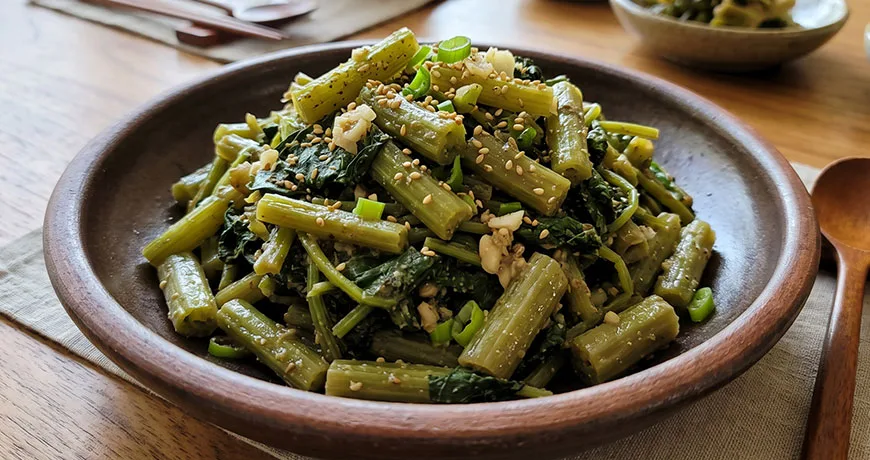
A deeply comforting, earthy, and rustic Korean side dish (banchan) featuring butterbur (meowi). Butterbur is prized for its distinctively mild, pleasant bitterness that instantly awakens the palate. The stems and leaves are blanched, peeled of their tough outer fibers for tenderness, and then gently simmered and stir-fried with fragrant minced garlic, salt, and a generous amount of toasted perilla seed powder (deulkkae-garu) and perilla oil (deulgireum). This classic seasoning combination not only perfectly tempers the herb’s natural bitterness but also creates an incredibly creamy, nutty, and savory flavor profile.
⏱️ Total: 25 mins | Prep: 15 mins | Cook: 10 mins | 🍳 Easy | 🌿 Nutty & Earthy | 🥢 Healthy Vegan Banchan
Ingredients (2-3 servings)
- Main Ingredients: 300g fresh butterbur (meowi, stems and young leaves separated), 1/2 tsp coarse sea salt (for blanching water)
- Sautéing Aromatics: 1.5 tbsp perilla oil (deulgireum), 1 tbsp minced garlic
- Creamy Nutty Glaze: 1/2 tsp fine sea salt (or 1 tbsp soup soy sauce / guk-ganjang for deeper umami), 2–3 tbsp toasted perilla seed powder (deulkkae-garu), 1/4 cup kelp broth or water
- Finishing Touches: 1 tsp toasted sesame seeds
💡 Substitutes & Notes
- Soup soy sauce (guk-ganjang) ➔ Regular soy sauce + a pinch of salt (if using instead of just salt).
- Gluten-Free ➔ Tamari instead of regular soy sauce.
Allergy Information
- Contains: Sesame (if using as a garnish) (Fully Vegan & Vegetarian-friendly)
Equipment
- Medium Stockpot (for blanching), Colander, Frying Pan or Wok, Spatula, Knife, Cutting Board
Cooking Instructions
- Separating & Blanching: Separate the butterbur leaves from the stems (the thicker stems require more time to cook). Bring a pot of water to a boil with the coarse salt. Submerge the stems first and boil for 2–3 minutes, then add the leaves and boil for an additional 30–45 seconds.
- Shocking & Peeling: Immediately drain and shock the greens in a bowl of ice-cold water. Starting from the bottom of the blanched stems, gently snap and peel away the tough, stringy outer fibers (similar to peeling celery). This step is crucial for a tender chew. Cut the peeled stems and leaves into 4–5 cm bite-sized lengths.
- Sautéing Aromatics: Heat the perilla oil in a frying pan over medium heat. Add the minced garlic and sauté for 30 seconds until fragrant.
- Stir-Frying & Braising: Add the prepped butterbur to the pan and stir-fry for 2–3 minutes. Pour in the kelp broth (or water) to help soften the vegetables further and create a base for the sauce.
- Adding the Nutty Glaze: Stir in the salt (or soup soy sauce) and the perilla seed powder. Reduce the heat to medium-low and simmer gently for another 2–3 minutes. The broth will thicken into a rich, creamy, and nutty sauce that clings tightly to the greens.
- Finishing & Serving: Turn off the heat. Sprinkle with a few toasted sesame seeds for texture. Serve warm or at room temperature.
💡 Cooking & Pairing Tips / Health Benefits
- Flavor Expectation (The Perilla Synergy): Butterbur has a characteristic earthy bitterness that can be overpowering on its own. Perilla oil and perilla seed powder are its ultimate flavor partners—the rich, fragrant fats and creamy plant-based oils perfectly neutralize the bitterness, transforming it into a complex, savory sweetness.
- Peeling the Stems: Taking the extra 5 minutes to peel the translucent fibrous skin off the blanched stems is the secret to a high-quality namul. If left unpeeled, the stems will remain stringy and tough to chew.
- Health Benefits: Butterbur is celebrated in traditional Korean medicine for supporting respiratory health and clearing phlegm. Combined with the healthy fats from perilla seeds, it is highly nutritious and excellent for digestion.
- Food Pairing: A quintessential spring and early summer side dish. It pairs beautifully with hearty, rustic meals like Soybean Paste Stew (Doenjang-jjigae) or mixed into a vibrant bowl of Bibimbap.
Nutrition Facts (Estimated)
Total Content : Approx. 100g (1 serving)
Calories : 110 kcal
– Sodium : 420mg
– Total Carbohydrate : 8.5g
– Sugar : 1.5g
– Total Fat : 7.2g
– Saturated Fat : 0.8g
– Cholesterol : 0.0mg
– Protein : 3.5g
– Calcium : 85.0mg
* Daily Values are based on a 2,000 calorie diet and standard Korean nutritional reference values
** Nutritional values are calculated based on the original ingredients, not substitutes.
The Healing Aesthetics of Bitter Earthly Breath and Generous Perilla
Stir-fried Butterbur (Meowinamulbokkeum) is a masterpiece of wild vegetable gastronomy, elegantly taming the raw, untamed vitality of the damp earth as spring transitions into summer. Butterbur, inherently known for its intense aroma and sharp bitterness, transforms into an entirely new, sensual delicacy the moment it receives a baptism of boiling water and a glossy coat of perilla oil.
The process of delicately separating and blanching the coarse stems and tender leaves, seasoning them cleanly with minced garlic and salt, and generously folding in perilla seeds and oil is a brilliant alchemy of flavor balance. The heavy, nutty lipids of the perilla gracefully embrace the sharp bitterness of the butterbur, stroking its rugged texture into a velvet-like softness.
True gastronomy is not a deluge of extravagant ingredients, but the wisdom of refining nature’s coarse and bitter elements to fill the soul’s voids. Emptying this verdant, deeply fragrant plate today is a serene healing ritual—purifying a palate exhausted by complex modern diets and swallowing the purest, most grounding consolation nature has to offer.
Editor’s Review
1. A Multi-Dimensional Crossing of Rich Nutty Perilla and Earthy Bitter Undertones
The moment the heavy, perilla oil-soaked butterbur enters the palate, the deeply nutty, creamy richness of ground perilla seeds smoothly coats the tongue, commanding the senses. This is immediately followed by a delightful textural contrast between the tender leaves and the slightly resistant, crunchy stems. Finally, the butterbur’s signature herbaceous bitterness gently rises on the finish, cleanly washing away the heavy oils to complete a flawless geometry of flavor.
2. Water-Soluble Alkaloid Control and Unsaturated Fatty Acid-Driven Texture Softening
Meowinamulbokkeum represents the pinnacle of botanical food science, chemically managing the bitter compounds and rigid cellular structure of wild greens. The preliminary blanching process relaxes the robust cellulose—yielding approximately 4.2g of dietary fiber per 100g—while leaching out excessive water-soluble polyphenols and alkaloids to temper the bitterness. During the subsequent sauté, the high concentration of unsaturated fatty acids from the roasted perilla seeds (containing over 36g of fat per 100g) perfectly emulsifies over the rough fibrous surfaces, creating a velvety, cohesive texture that melts seamlessly on the palate.
3. The Tranquility of a Mountain Temple and the Rustic Solace of the Hearth
Piled high in an unpretentious ceramic bowl, stir-fried butterbur serves as an emotional sanctuary, quieting the daily clamor much like encountering a serene mountain temple feast. Stripped of flashy, artificial spices and relying solely on the interplay of natural earthly bitterness and nutty seeds, pairing this wholesome, rustic side dish with warm rice allows us to breathe in the forgotten scent of the soil, granting a profound, purifying sanctuary for the soul.