
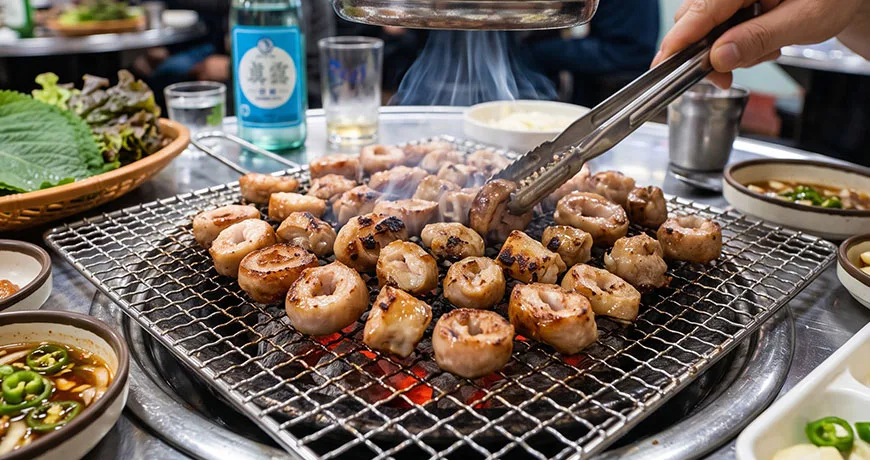
Makchang-gui represents the pinnacle of thermodynamic organ meat preparation, exploiting the ultra-dense collagen matrix and rich animal lipids found in the bovine abomasum (fourth stomach) or porcine rectum. Preparing this cut demands rigorous mechanical scrubbing with coarse salt and flour to strip away mucin, followed by a biochemical parboil utilizing fermented soybean paste (doenjang) and alcohol to neutralize volatile off-odors (indoles and skatoles). When exposed to a searing hot grill, the thick lipid layers rapidly render, triggering intense Maillard browning that creates a wildly crisp exterior contrasting with a resilient, chewy core.
⏱️ Total: 60 mins | Prep: 20 mins | Cook: 40 mins (30 mins parboil + 10 mins grill) | 🍳 Difficulty: High (Requires strict sanitation and collagen hydrolysis) | 🌶️ Profile: Deeply Savory, Nutty, and Intensely Crispy | 🍚 Focus: Lipid Rendering, Collagen Matrix, & Chemical Deodorization
Ingredients (2–3 servings)
- Main Ingredient: 500g raw beef makchang (abomasum) or pork makchang (rectum)
- Mechanical Scrubbing Agents: 2 tbsp coarse salt, 3 tbsp wheat flour
- Chemical Deodorization Broth (Parboil): 6 cups water, 1/2 cup soju (or refined rice wine), 1.5 tbsp traditional doenjang (soybean paste), 1/2 onion, 5 cloves garlic, 1 scallion, 1 tsp whole black peppercorns
- Dipping Sauce (Sesame Oil-Salt): 2 tbsp sesame oil, 0.5 tbsp roasted sea salt, a pinch of black pepper
Allergy Information Contains: Beef or Pork, Soy, Wheat (from doenjang, scrubbing flour)
Equipment Heavy Mixing Bowl, Deep Pot, Kitchen Shears, Tongs, Heavy Cast-Iron Grill or Hotplate
Cooking Instructions
- Mechanical Mucilage Scrub: Place the raw makchang in a bowl. Add the coarse salt and wheat flour. Massage and scrub violently. The abrasive texture of the salt and the glutinous properties of the flour physically bind to and strip away the foul-smelling mucilage and impurities embedded in the tissue walls. Rinse multiple times under cold running water until squeaky clean.
- Collagen Hydrolysis & Chemical Deodorization: In a deep pot, combine all the parboil broth ingredients and bring to a rolling boil. Add the scrubbed makchang and simmer over medium heat for 30–40 minutes. (This essential wet-heat cooking phase partially hydrolyzes the impenetrable collagen into tender gelatin, while the soy proteins and alcohol chemically trap and vaporize the pungent animal odors.)
- Moisture Extraction: Remove the boiled makchang, rinse briefly in cold water to stop the cooking, and drain thoroughly. 100% of surface moisture must be removed; any residual water will inhibit the Maillard reaction and cause violent oil splatters on the grill.
- Thermodynamic Lipid Rendering: Preheat a cast-iron grill to high heat (surface temp >180°C). Place the whole makchang on the grill. Allow the intense heat to render the subcutaneous fats, essentially letting the meat deep-fry in its own rich lipids.
- Shearing Mechanics & Consumption: Once the exterior develops a dark brown, crispy crust, use shears to cut the makchang into bite-sized rings or strips. Sear the freshly cut cross-sections until golden. Dip heavily into the sesame oil-salt sauce to allow osmotic pressure to amplify the profoundly nutty, fatty umami.
💡 Professional Culinary Tips
- Biochemical Deodorization (Off-flavors): The characteristic funk of organ meats is driven by volatile compounds like indole and skatole, byproducts of digestion. Boiling the meat in a doenjang-laced broth is a targeted chemical masking technique. The colloidal soy proteins bind to these volatile molecules, lifting them away from the meat and neutralizing them completely.
- Thermodynamics of the Collagen Matrix: Organ meats have an exceedingly tight web of connective tissues designed for mechanical strength. Grilling them raw results in an unchewable rubbery mass. The 30-minute parboil (wet heat) is a thermodynamic necessity to break the triple-helix structure of the collagen, turning it into gelatin so the meat becomes pleasantly chewy rather than invincible.
- Extreme Textural Contrast: The magic of Makchang-gui lies in lipid rendering. As the fat melts onto the scorching iron grill, it rapidly fries the exterior tissue, vaporizing all moisture to create a shatteringly crisp crust, while the core remains insulated, juicy, and bouncy.
Nutrition Facts (Estimated)
Total Content : Approx. 200g (1 serving, cooked weight after parboiling shrinkage)
Calories : 580 kcal
– Sodium : 350mg (including dipping sauce)
– Total Carbohydrate : 0.0g
– Sugar : 0.0g
– Total Fat : 52.0g
– Saturated Fat : 21.0g
– Cholesterol : 185.0mg
– Protein : 28.0g
– Calcium : 45.0mg
*Daily Values are based on a 2,000 calorie diet and standard Korean nutritional reference values
**Nutritional values are calculated based on original ingredients; substitutions may alter specific macronutrients.
The Sizzling Symphony of Charcoal Flames and Golden Elasticity: A Lyrical Masterpiece of Makchang-gui and Rustic Culinary Solace
Makchang-gui (Grilled Beef or Pork Abomasum/Rectum) stands as the dynamic, textural, and deeply comforting pinnacle of Korean barbecue gastronomy, where carefully trimmed beef fourth-stomach or pork entrails sizzle over open charcoal grates or heavy iron griddles until transformed into golden-brown, crackling morsels with an irresistible, chewy-elastic core. Overcoming the initial challenges of offal through high-heat fire craft and meticulous preparation, this beloved dish locks in profound, smoky richness while achieving absolute harmony when dipped into coarse sea salt or a fragrant pool of toasted sesame oil and salt.
The moment a freshly grilled, caramel-crusted piece of makchang is lifted from the grate and placed into the mouth, an exhilarating burst of textural contrast unfolds. The crisp, crackling exterior yields smoothly to a deeply satisfying, springy bounce that releases rich, savory lipid juices and smoky charcoal essence across the palate. When paired with the sharp, refreshing finish of a shot of chilled soju, the combination provides an immediate surge of liberation, warming the core and banishing everyday weariness.
True gastronomy does not remain confined to delicate luxury cuts; it flourishes in the adaptive wisdom of working-class communities who turned humble, tough ingredients into an enduring reservoir of warmth and social connection. Gathering around a round metal table enveloped in fragrant charcoal smoke to share a sizzling plate of Makchang-gui today is an honest and grounding ritual—clearing away modern exhaustion through a wave of primal, nutty richness and filling the spirit with unpretentious warmth, camaraderie, and timeless solace.
Editor’s Review
1. An Exhilarating Cadence of Crispy Exterior Snap, Deep Chewy Resilience, and Nutty Salt-Dip Harmony
The moment a sizzling, golden-brown piece of grilled makchang—dipped lightly in coarse salt or nutty sesame-oil-and-salt—touches the palate, an immediate wave of crispy, charred surface texture awakens the senses with tactile brilliance. This crunchy exterior gives way to a lush, springy chew that releases concentrated, savory juices, which are effortlessly balanced by the clean mineral snap of sea salt, orchestrating an endlessly satisfying, multi-layered sensory thrill.
2. High-Heat Charcoal Grilling Kinetics, Maillard Crust Formation, and Collagen-Elastin Gelatinization Mechanics
Makchang-gui represents an exacting study in high-heat meat physics and connective tissue biochemistry. Direct radiant heat from hardwood charcoal rapidly triggers the Maillard reaction across surface amino acids and fats, developing a crispy, golden crust while allowing excess rendering lipids to drip away. Concurrently, prolonged thermal conduction denatures the dense collagen and elastin fibers within the organ walls into tender gelatin, eliminating rubbery toughness and maximizing structural chew for an optimized culinary texture.
3. The Nostalgic Charcoal Grill Alleys of Daegu and the Grounding Sanctuary of Communal Soju Solace
Found gracing the legendary open-grill alleys of Daegu and late-night neighborhood taverns nationwide as the ultimate centerpiece of casual fellowship, a modest plate of sizzling grilled makchang serves as an enduring emotional haven against daily stress. Revered for generations as an essential comfort feast that unites friends around glowing embers and shared soju toasts, enjoying this honest, nutrient-dense delicacy washes away modern fatigue, granting a timeless sanctuary of stillness, street food heritage, and grounded culinary happiness.