
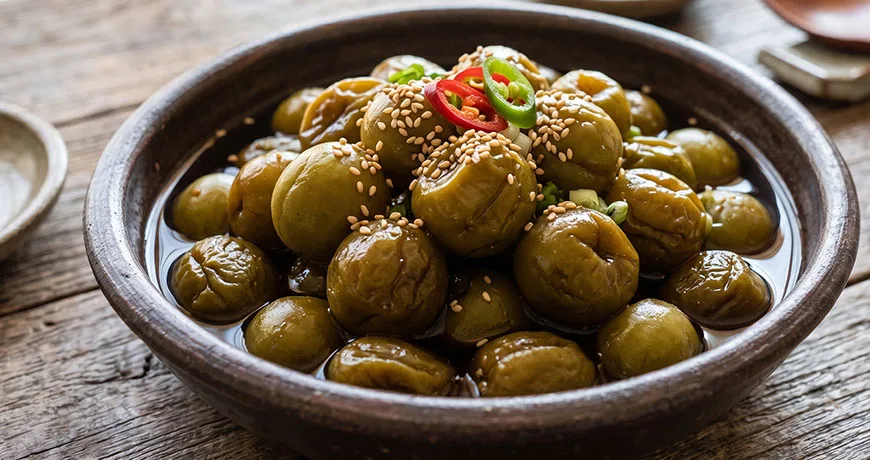
Maesiljangajji is a triumph of patience and precision, where firm, early-summer green plums (Cheongmaesil) are meticulously pitted and embedded in a rich, aged red chili paste (Gochujang). The plum’s powerfully crisp, natural organic acids meet the quiet osmotic force of sugar, surrendering their sharp bite to become elegantly sweet and remarkably crunchy. The labor-intensive process of pitting each plum by hand is a chef’s devotion to eliminating trace toxicities and securing a flawless, percussive texture. After months of quiet slumber in the dark ruby paste, this preserve emerges as a radiant culinary masterpiece, instantly reviving a palate exhausted by the summer heat.
- ⏱️ Total Time: 3–4 Months | Prep: 15–20 Days (Pitting and sugar osmotic dehydration) | Cook & Ferment: Gochujang embedding and 3 months of cold aging
- 🍳 Difficulty: High (Requires masterful pitting techniques and absolute moisture control)
- 🌶️ Profile: An overwhelming, percussive crunch followed by a wave of vibrant fruit acidity and a deep, savory Gochujang umami
- 🍚 Core Process: The Art of Pitting, Sugar Osmotic Dehydration, Gochujang Embedding
- 🍶 Pairing: Rice steeped in ice-cold green tea (Ochazuke), charcoal-grilled dried croaker (Borigulbi), warm pine nut porridge
Physicochemical & Sensory Matrix
- Baseline Salinity: 4.5% ~ 5.5% (A steady, long-term aging salinity introduced through the Gochujang matrix)
- pH Equilibrium: 3.2 ~ 3.6 (A pristine, highly stable acidic barrier forged by the plum’s natural citric and malic acids)
- Textural Crunch Index: [■■■■■] (An explosive, unparalleled crunch born from the extreme concentration of natural pectins)
- Umami Density: 8.0 / 10 (A deeply resonant balance where fermented soybean amino acids gracefully temper the fruit’s bright tang)
- Shelf Stability: Peaks at 3 months; maintains its phenomenal texture for over 1 year when stored in a cool, dark place
- Aroma Profile: Vibrant Green Plum Acidity | Rich Fermented Gochujang Esters | Clear, Sweet Syrup Notes
Ingredients (Yields 1 Medium Airtight Earthenware or Glass Container)
- Primary Plant Matrix: 1kg Premium, unblemished, and rock-hard Green Plums (Yields approx. 700g of pure pitted flesh)
- Dehydration Matrix: 700g Unrefined Sugar (1:1 ratio with the pitted flesh), 1 tsp Coarse Sea Salt
- Aging Paste Matrix: 3 Cups Traditional Gochujang (Red Chili Paste)
- Garnish for Serving: 1 tsp Toasted Sesame Oil, Toasted Sesame Seeds
Allergy Information
- Contains: Soy, Wheat (inherent in Gochujang)
Equipment Paring Knife, Sturdy Wooden Mallet, Cutting Board, Large Glass Bowl, Traditional Breathable Crock (Onggi) or Airtight Container, Wire Mesh Strainer
Cooking Instructions
- Pristine Cleansing: Wash the plums multiple times under clear running water to remove their fine fuzz. Using a toothpick, meticulously pick out the small, dark stem caps from the top of each plum; leaving them will introduce a bitter off-flavor and invite spoilage during aging. Spread the washed plums on a strainer to dry completely.
- The Art of Pitting: Score a deep cross (+) into each dry plum. Place it on a cutting board and strike it gently but firmly with a wooden mallet. The firm flesh will elegantly split away from the hard seed. This laborious step is critical; it completely eliminates the seed’s mild toxicity (amygdalin) and secures the pristine, uncompromised texture of the pure flesh.
- Sugar Osmosis: Place the 700g of pitted plum flesh into a large bowl, add an equal weight of sugar and the sea salt, and toss thoroughly. Transfer to an airtight container and leave in a cool place for 15 to 20 days. The dissolving sugar creates an immense osmotic pressure, ruthlessly extracting the excess moisture and forging the dense structural foundation of the ultimate crunch.
- Moisture Expulsion: After 15 to 20 days, the plum pieces will have shriveled and floated to the top of the syrup. Scoop out only the flesh and place it in a strainer. Let it drain completely until no syrup drips from the surface. (Reserve the extracted plum syrup for use in marinades or beverages).
- Gochujang Embedding: Generously coat the shriveled, dehydrated plum pieces in the thick Gochujang. Pack them tightly into your crock or container, leaving no air gaps. Seal the top with a thick, protective layer of leftover Gochujang, and let it age peacefully in a cool, dark place for a minimum of 3 months.
💡 Professional Culinary Tips
- 1. The Necessity of Pitting: Attempting to pickle whole green plums carries the risk of amygdalin leaching from the pit, and the intact skin prevents the osmotic pressure from penetrating deeply, resulting in a mushy texture. The physical intervention of scoring and striking the plum to extract the pure flesh is a chef’s devotion to safety and the absolute maximization of pectin density, yielding an unparalleled crunch.
- 2. Moisture Control via Osmosis: The 15-20 days spent in sugar is not a period of fermentation, but of aggressive dehydration. If you bury the plums in Gochujang before their moisture is fully extracted, the residual water will leach out, diluting the paste and causing sour spoilage. You must verify that the flesh is thoroughly shriveled and drained before moving to the red aging matrix.
- 3. Balancing Sweetness and Acidity: Over the 3 months of deep aging, the plum’s fierce citric acid and the Gochujang’s savory amino acids engage in a graceful exchange. The sharp, aggressive sourness becomes round and elegant, while the heavy, earthy notes of the chili paste are lifted by the fruit’s brightness, culminating in a highly sophisticated, multi-dimensional flavor profile that dances on the palate.
🍶 Gastronomic Pairing
- An Exquisite Communion of Acidity and Umami: When ready to serve, lightly wipe the excess Gochujang from the plum pieces. Toss with a single drop of premium sesame oil and a sprinkle of toasted sesame seeds. Prepare a bowl of rice steeped in ice-cold green tea (Ochazuke), and serve it alongside a piece of rich, charcoal-grilled dried croaker (Borigulbi). As the heavy, oily fish coats the tongue, the pristine acidity and resounding crunch of the Maesiljangajji flawlessly cleanse the palate, offering an utterly transcendent dining experience.
Nutrition Facts (Estimated)
Total Content : Approx. 20g
Calories : 40 kcal (Fruit organic acids, absorbed sugars, and complex paste polysaccharides)
– Sodium : 310mg (Stable, long-term aging salinity via Gochujang)
– Total Carbohydrate : 9.0g
– Sugar : 6.5g
– Total Fat : 0.1g
– Saturated Fat : 0.0g
– Cholesterol : 0.0mg
– Protein : 0.5g
– Dietary Fiber : 1.2g
*Daily Values are based on a 2,000 calorie diet and standard Korean nutritional reference values.
**Nutritional values are calculated based on original ingredients; substitutions may alter specific macronutrients.
Origins and Food Culture of Pickled Green Plum (Maesiljangajji)
1. Ancient Peninsular Cultivation and the Classical Legacy of “Omae” (烏梅) in the Dongui Bogam
- The plum tree (Prunus mume) was introduced to the Korean peninsula before the Three Kingdoms period. Beyond its poetic reverence as the first of the Four Gracious Plants (Sagunja), the plum was valued for its medicinal properties, with therapeutic records appearing as early as the 13th-century Goryeo text Hyangyak Gugeupbang.
- In Heo Jun’s 1613 Joseon medical compendium Dongui Bogam, green plums were documented both in their fresh state and as Omae (烏梅)—immature plums smoked and dried over straw fires: “Warm in nature, sour, and non-toxic; it dissolves phlegm, arrests vomiting, thirst, and chronic diarrhea, detoxifies alcohol, and restores vital pulse.” Classical agrarian treatises, including Hong Man-seon’s Sallim Gyeongje (early 18th century) and Yu Jung-im’s Jeungbo Sallim Gyeongje (1766), documented techniques for preserving plums in salt (white plums / baekmae) or burying them in soy sauce and chili paste, highlighting the ancestral philosophy of Yaksik-dongwon (“food and medicine share the same root”).
2. The Seasonality of Mangjong and Cyanogenic Detoxification Science
- In agrarian tradition, the premier window for harvesting green plums fell around Mangjong (roughly June 5–6). At this point in late spring, the plums reach full size and firmness, their internal stones harden, and the concentration of organic acids peaks while amygdalin levels in the flesh stabilize.
- The domestic processing of Maesiljangajji represents an empirical exercise in food safety. Splitting the fruit with wooden mallets or small blades to remove the stone eliminates the primary source of cyanogenic glycosides. The subsequent sugar-saline maceration extracts free water, lowering water activity to inhibit microbial decay while locking cell-wall pectins into a durable, crunchy texture. Coating this cured fruit in fermented pastes allows microflora to mellow harsh tannins into a complex, sweet-savory preserve.
3. The Seomjin River Plum Belt (Gwangyang and Hadong) and the Household First-Aid Heritage
- The cultural capital of Korean plum cultivation spans the fertile banks of the Seomjin River, framed by Mount Baegun and Mount Jiri across Gwangyang (notably Daap-myeon’s Maeha Village) in Jeollanam-do and Hadong in Gyeongsangnam-do. Blessed by mild maritime breezes, rich alluvial soil, and wide diurnal temperature swings, Gwangyang plums are renowned nationwide for their thin rinds, dense flesh, and high acidity.
- Before modern pharmaceuticals were widely accessible, Korean households turned to the earthenware crock of Maesiljangajji whenever a family member suffered from indigestion, nausea, or abdominal chills, offering a few wedges or diluting the cured syrup in warm water. Bridging kitchen medicine with refined dining, Pickled Green Plum stands as an enduring monument to Korean slow-food ingenuity, seasonal foraging, and domestic wellness heritage.
The Emerald Firmness of Early Summer Plums Harvested at Mangjong, Excising Toxic Cyanogenic Pits and Taming Raw Organic Acid Fury Through Non-Thermal Sugar-Salt Plasmolysis into Translucent Amber Gems: A Refined Portrait of Traditional Maesiljangajji
Maesiljangajji (Pickled Green Plums in Sugar and Salt) stands as a crystalline, intellectually brilliant pinnacle within Korea’s heritage of fruit preservation. Centered on firm, unripe green plums (Prunus mume, or cheongmaesil) gathered in early June just before the fruits soften into yellow ripeness, this esteemed preserve requires delicate anatomical dissection and non-thermal dehydration. In its raw botanical state, the unripe green plum is an unyielding, dangerously acidic drupe harboring amygdalin—a toxic cyanogenic glycoside concentrated within its stone. Ancestral cooks resolved this hazard through decisive manual intervention: splitting the firm flesh into crescent wedges with a knife, discarding the toxic kernel entirely, and tossing the jade-colored petals into a dense, alternating cure of unrefined solar sea salt and sugar. Bypassing boiling vats that would reduce fruit pectins to mush, the hypertonic environment gently coaxes out intracellular free water over months of undisturbed subterranean cellar aging. The bright emerald tone matures into an aristocratic, translucent amber crystal, converting an inedible, sour wild fruit into a chewy, acoustic delicacy.
Lifting a translucent wedge of Maesiljangajji with chopsticks reveals a jewel-like facet glistening under a thick mantle of fruit syrup. Approaching the nose, an intense vapor of volatile citric acid pierces the senses, immediately grounded by the sophisticated, perfume-like esters of young apricot, green grape, and a subtle marzipan undertone derived from trace benzaldehyde. Biting down with the molars delivers an unexpected masticatory triumph: far removed from the soggy surrender of canned fruit or the rubbery yield of commercial preserves, a resonant, authoritative crack reverberates through the jaw. The intact, dehydrated cell walls shear cleanly under tooth pressure, releasing a concentrated surge of icy nectar across the tongue. A vibrant rush of pure citric and malty sweetness floods the oral cavity, followed instantly by the buffering embrace of dissolved sucrose and trace mineral salt that rounds off the sour edge into pure refreshment. Stationed beside glistening slices of grilled pork belly, charred freshwater eel, or oily marbled beef, a single translucent petal of pickled green plum cleaves through cloying animal fats like a diamond, instantly restoring the palate to absolute equilibrium.
The cultural identity of Maesiljangajji lies in the domestic foresight that transformed a seasonal toxicity into an enduring gastronomic treasure. By commanding osmotic forces without the application of heat, traditional cooks locked raw botanical firmness into an eternal, jewel-like crunch. A shimmering saucer of pickled green plum remains an unblemished monument to cellular preservation, organic acid buffering, and the timeless culinary intelligence of the Korean hearth.
Editor’s Review
1. Non-Thermal Protopectin Stabilization, Calcium Chelation, and Brittle Fracture Mechanics
Maesiljangajji occupies a singular textural space that entirely bypasses the mushy hydrocolloid collapse of cooked jams and compotes:
- Preservation of Insoluble Protopectin: In unripe green plums, the cellular framework is heavily reinforced with insoluble protopectin cross-linked to cellulose microfibrils. The non-thermal osmotic cure halts endogenous pectolytic enzymes by depriving the system of free water, preventing the liquefaction of the middle lamella.
- Calcium Pectate Gelation and Acoustic Snap: Divalent cations (Ca²⁺, Mg²⁺) supplied by solar sea salt chelate with free carboxyl groups on de-esterified polygalacturonic acid chains. This establishes an insoluble “egg-box” calcium pectate lattice that fortifies cell walls against mechanical deformation, generating an audible, brittle snapping fracture (ajak) upon dental shear.
2. Physical Amygdalin Removal, Organic Acid Attenuation, and Aw Control
The safety and balanced sensory profile of Maesiljangajji stem from precise mechanical separation and multi-modal sensory masking:
- Excision of Cyanogenic Glycosides: The bitter, toxic compound amygdalin is concentrated within the embryonic seed inside the lignified stone. Cleaving the fresh fruit and mechanically discarding the pit eliminates the precursor for enzymatic hydrolysis into toxic hydrogen cyanide (HCN). Trace glycosides in the flesh leach out into the hypertonic syrup and degrade harmlessly over extended storage.
- Sensory Buffering of Citric and Malic Acids: Green plums contain extraordinary concentrations of citric and malic acids, which intensely stimulate lingual OTOP1 proton channels. High concentrations of dissolved sucrose, glucose, and fructose increase fluid viscosity, slowing proton diffusion toward taste buds while triggering cross-modal sensory suppression in the cortex, reshaping an excruciating sour shock into a refined, multi-layered sweet-tart finish.
- Water Activity (Aw) Depression: The combined osmotic potential of saturated sucrose and salt depresses system water activity (Aw) to 0.70–0.75, establishing an impenetrable microbiological hurdle that ensures indefinite room-temperature shelf stability without thermal pasteurization.
3. TCA Cycle Acceleration and Interfacial Lipid Dispersion Dynamics
Beyond its role as a condiment, Maesiljangajji functions as an agile physiological digestive engine:
- Interfacial Lipid Emulsification: Saturated animal fats (pork lard, beef tallow) leave a stubborn hydrophobic lipid film on oral tissues that numbs taste perception. The low-pH organic acid solution (pH 2.8–3.2) drastically lowers interfacial tension, dispersing and stripping away grease with precision.
- Lactic Acid Cleavage via Krebs Cycle: Ingested citric acid enters the mitochondrial tricarboxylic acid (TCA) cycle directly, accelerating the metabolic clearance of systemic lactic acid and alleviating physical fatigue. Concurrently, intense trigeminal stimulation triggers profuse salivary and gastric secretions, expediting the breakdown of protein- and fat-dense meals.