
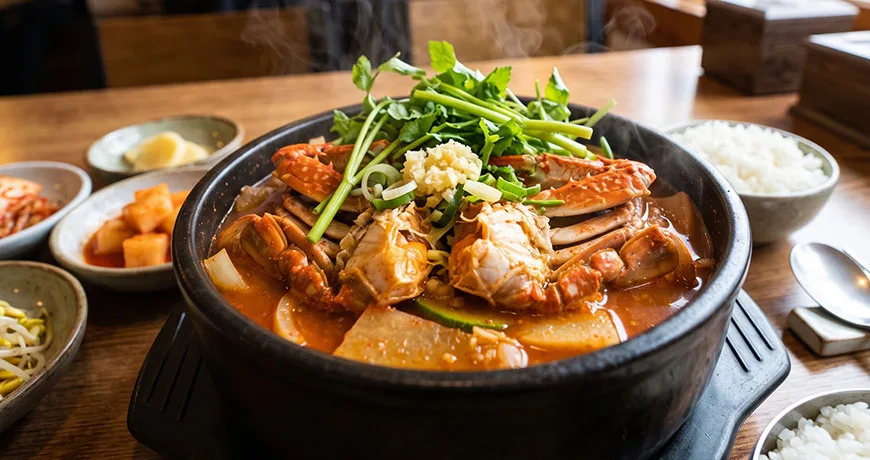
Kkotge-tang is a highly sophisticated biochemical stew that leverages the thermodynamic boiling process to denature crab shell proteins, visually releasing vibrant red astaxanthin pigments. As the crab simmers, it extracts succinic acid into the broth, which triggers an explosive umami synergy when combined with the glutamates of fermented soybean paste (doenjang). The enzymatic diastase from Korean radish heavily aids digestion, while volatile terpenes from the water dropwort and crown daisy chemically mask the sharp trimethylamine (TMA) odors of the seafood, resulting in a profoundly restorative and perfectly balanced restorative broth.
⏱️ Total: 35 mins | Prep: 15 mins | Cook: 20 mins | 🍳 Difficulty: Moderate (Requires careful physical cleaning of crustaceans) | 🌶️ Profile: Sweet, Briny, and Savory-Spicy | 🍚 Focus: Astaxanthin, Succinic Acid, & Taurine
Ingredients (3–4 servings)
- Umami Base: 3–4 whole fresh blue crabs (approx. 800g)
- Enzymatic & Aromatic Veggies: 200g Korean radish (cut into thin squares), 1 scallion, 50g crown daisy (ssukgat), 50g water dropwort (minari)
- Colloidal Broth Medium: 6–7 cups anchovy-kelp stock (or rice water)
- Hypertonic Seasoning: 1.5 tbsp doenjang (soybean paste), 1 tbsp gochujang (chili paste), 2 tbsp gochugaru (chili flakes), 1.5 tbsp minced garlic, 1 tbsp soup soy sauce (guk-ganjang), 0.5 tsp ginger juice
Allergy Information Contains: Crustacean (Blue Crab), Soy, Wheat (from soy sauce, doenjang, gochujang)
Equipment Wide Shallow Pot (Jeongol pan), Kitchen Scrub Brush, Kitchen Shears, Cutting Board, Knife
Cooking Instructions
- Mechanical Crab Prep: Scrub the live or raw blue crabs vigorously with a brush under running water. Pry off the top carapace (shell). Use shears to physically snip off the mouthparts and the spongy gills on both sides. (The gills act as biological filters and contain impurities that cause bitter off-flavors). Cut the body into halves or quarters.
- Enzymatic Extraction: In a wide pot, combine the anchovy stock and the squared radish. Boil over high heat for about 10 minutes until the radish turns translucent. This releases its natural sweetness and the digestive enzyme diastase directly into the broth.
- Protein Emulsification: Once boiling, use a strainer to dissolve the doenjang and gochujang smoothly into the broth. Stir in the gochugaru, minced garlic, soup soy sauce, and ginger juice. This constructs a heavy, colloidal base that will carry the crab flavor.
- Thermodynamic Denaturation: Gently add the prepped crab pieces and shells to the boiling stew. The intense heat will instantly break the protein bonds in the shell, turning them a vibrant red (astaxanthin). Boil vigorously for 7–8 minutes to fully extract the sweet succinic acid from the crab meat into the broth.
- Aromatic Masking: Once the crab meat is cooked (opaque white and puffed), add the diagonally sliced scallion. Just before turning off the heat, generously mound the crown daisy and water dropwort on top. Turn off the heat within 1 minute to trap the volatile terpenes, which act as a natural chemical mask against any lingering seafood odors.
Nutrition Facts (Estimated)
Total Content : Approx. 500g (1 serving, including broth, excluding shell weight)
Calories : 180 kcal
– Sodium : 1,150mg
– Total Carbohydrate : 14.0g
– Sugar : 4.0g
– Total Fat : 3.0g
– Saturated Fat : 0.5g
– Cholesterol : 75.0mg
– Protein : 24.0g
– Dietary Fiber : 4.0g
*Daily Values are based on a 2,000 calorie diet and standard Korean nutritional reference values
**Nutritional values are calculated based on original ingredients; substitutions may alter specific macronutrients.
The Origins and Culture of Kkotgetang (Spicy Blue Crab)
1. Coastal Roots and a Long History of Crab Cuisine
- Kkotge-tang is an iconic Korean seafood stew made by simmering fresh blue crabs—abundantly harvested along Korea’s west and south coasts—in a spicy, savory broth.
- Historical records like the Goryeo-era Goryeo Dogyeong note that Koreans have long cherished seafood and crab delicacies, and historical archives reveal that even royal courts during the Joseon Dynasty prized rich crab stews.
2. Natural Sweetness of Crab Meat and a Fiery, Refreshing Broth
- The standout charm of Kkotge-tang is the natural, subtle sweetness exuded by fresh blue crabs as they cook.
- When simmered with daikon radish, zucchini, onions, and green onions in a broth seasoned with a balanced touch of chili paste (gochujang) and soybean paste (doenjang), it yields a deeply savory, briny, and spicy soup profile.
3. The Ultimate “Rice Thief” and Soothing Hangover Cure
- Cracking open the shell to enjoy the tender, sweet meat while mixing rice into the rich, aromatic broth makes Kkotge-tang one of Korea’s most legendary “rice thieves” (bap-doduk).
- Thanks to its fiery, refreshing finish, it is also celebrated as an exceptional hangover cure (haejangguk) that revitalizes the senses.
The Coral Armored Jewels of Coastal Tides and the Savory Embrace of Earthy Fermented Broth: A Lyrical Masterpiece of Kkotgetang and Maritime Solace
Kkotgetang (Spicy Blue Crab Stew) stands as the radiant, deeply restorative, and celebratory pinnacle of Korean seafood gastronomy, where fresh swimming crabs—prized for their sweet, succulent meat in both spring (egg-laden females) and autumn (fleshy males)—are simmered in a shimmering broth seasoned with aged soybean paste (doenjang), sharp chili paste (gochujang), sweet radish, fragrant crown daisy (ssukgat), water dropwort, and scallions. Capturing the unadulterated sweetness of the Western and Southern seas within an earthen pot or wide tabletop skillet, this iconic stew unites the mineral-rich essence of marine crustaceans with the grounding complexity of fermented pastes, filling the dining room with an intoxicating aroma of oceanic sweetness from the very first rolling boil.
The moment a steaming spoonful of the crimson broth touches the palate, an immediate wave of deep, savory soybean depth and invigorating chili heat cascades across the senses, swiftly followed by the unmistakable, concentrated sweetness of simmering crab nectar. Cracking open the bright coral shells reveals tender, snow-white meat that melts effortlessly across the tongue like a savory mist. As the rich crab tomalley (todd) dissolves into the liquid to build a luxurious body, the crisp, watery sweetness of radish and the botanical lift of crown daisy balance the profile, turning every shared spoonful into an unforgettable sensory sanctuary.
True gastronomy does not rely on artificial embellishments; it flourishes in the ancestral wisdom of balancing seasonal oceanic abundance with earthy fermented seasonings and fresh garden herbs to revive tired metabolic systems and warm the core. Savoring an aromatic, bubbling cauldron of spicy crab stew alongside loved ones today is an elegant and sacred ritual—clearing away modern exhaustion through a wave of bracing maritime warmth and filling the spirit with unpretentious nourishment, coastal heritage, and timeless solace.
Editor’s Review
1. An Exhilarating Cadence of Sweet Blue Crab Umami Depth, Earthy-Spicy Doenjang Broth Warmth, and Fragrant Crown Daisy Freshness
The moment a piping-hot spoonful of Kkotgetang coats the palate, an immediate burst of rich fermented doenjang umami, piquant chili heat, and sweet marine broth awakens the senses with invigorating clarity. This robust baseline is swiftly elevated by the velvety, sweet surrender of the crab flesh, the luscious richness of dissolved crab butter, and the crisp, herbal aroma of crown daisy and minari, orchestrating an endlessly satisfying, multi-layered sensory thrill that elevates any bowl of warm rice.
2. Crab Taurine-Glycine Free Amino Acid Synergy, Radish Diastase Enzyme Digestion, and Crown Daisy Terpene Deodorization Mechanics
Kkotgetang represents an exacting study in marine crustacean biochemistry and botanical flavor integration. Free glycine, betaine, and succinic acid concentrated within the crab muscle interact synergistically with the glutamates of brewed doenjang to multiply umami intensity. Concurrently, dense reserves of taurine, zinc, and bioavailable chitosan support hepatic recovery and lipid homeostasis. Furthermore, radish diastase enzymes accelerate protein breakdown and digestive comfort, while volatile terpenes from crown daisy and water dropwort chemically trap and disperse seafood amines (trimethylamine), establishing an optimal biochemical equilibrium.
3. The Coastal Harbor Harvest Heritage and the Grounding Sanctuary of Communal Shellfish Feasts
Found commanding center stage at vibrant coastal fishing ports and lively family dinner tables nationwide as the undisputed herald of seasonal celebration, a modest pot of bubbling spicy crab stew serves as an enduring emotional haven against daily weariness. Revered for generations as an essential comfort feast that unites families through the tactile joy of cracking shells and sharing finishing noodles (sujebi or ramen), enjoying this honest, nutrient-dense delicacy washes away modern stress, granting a timeless sanctuary of stillness, coastal heritage, and grounded culinary happiness.