
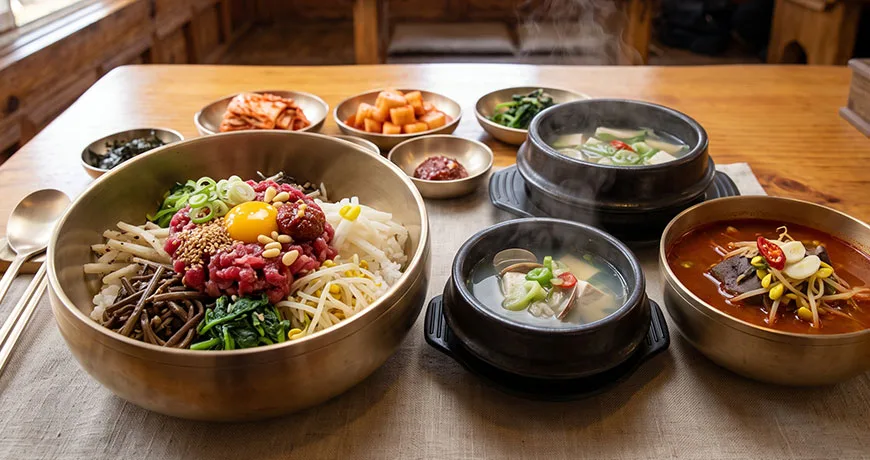
Jinju-bibimbap (historically known as Chilbohwaban, or “Flower of Seven Jewels”) is a highly rheological dish that relies on the precise mechanical cleavage of blanched vegetables and the binding power of a high-viscosity chili syrup. Unlike other regional variations, the vegetables in Jinju-bibimbap are chopped extremely fine. This structural modification allows the fibers to mix seamlessly with the rice grains and the uncoagulated myosin of the raw beef (Yukhoe). The entire matrix is then bound together by Yeot-gochujang (gochujang simmered with grain syrup), a highly viscoelastic sauce that acts as a culinary adhesive. Paired with a side of Botangguk (clam broth) or Seonjiguk (oxblood soup), this dish delivers an incredibly smooth, melt-in-your-mouth texture with profound umami synergy.
⏱️ Total: 40 mins | Prep: 30 mins | Cook: 10 mins | 🍳 Difficulty: Moderate (Requires moisture control of vegetables and safe handling of raw beef) | 🌶️ Profile: Sweet, Savory, Spicy, and Luxuriously Smooth | 🍚 Focus: Mechanical Cleavage, Viscoelasticity, & Uncoagulated Protein
Ingredients (2 servings)
- Starch Matrix: 2 bowls of cooked white rice (cooked with 10% less water to maintain firm grain structure)
- Uncoagulated Protein Matrix: 150g fresh Beef for Yukhoe (Rump or Round cut – lightly coated with 1 tsp soy sauce, 1 tsp sesame oil, 0.5 tsp minced garlic)
- Cleaved Fiber Matrix: 50g each of blanched bracken (gosari), bellflower root (doraji), mung bean sprouts, and spinach (finely chopped to 0.5cm pieces)
- Osmotic Seasoning for Veggies: 2 tbsp soup soy sauce (Guk-ganjang), 2 tbsp crushed toasted sesame seeds, 2 tbsp sesame oil
- High-Viscosity Binder: Yeot-gochujang (3 tbsp Gochujang, 1.5 tbsp rice syrup, 1 tbsp water—gently simmered to increase viscosity, then cooled)
Allergy Information Contains: Beef, Soy, Wheat (from soy sauce and Gochujang)
Equipment Knife, Cutting Board, Several Mixing Bowls, Saucepan
Cooking Instructions
- Thermal Denaturation & Moisture Control: Blanch the vegetables briefly in boiling water to break down their pectin structures. Shock in cold water, then violently squeeze out at least 80% of the moisture. If excess water remains, it will dilute the viscosity of the Yeot-gochujang, resulting in a soggy, unappealing texture.
- Mechanical Cleavage & Emulsification: Finely chop the squeezed vegetables into 0.5cm lengths. Toss them with the soup soy sauce, crushed sesame, and sesame oil. This induces osmotic pressure, drawing out residual flavors while coating the exposed cellular walls in a protective lipid membrane.
- Protein Coating: Julienne the chilled, raw beef. Lightly toss it with the soy sauce and sesame oil. The lipid coating protects the uncoagulated protein from rapid oxidation and enzymatic browning.
- Structural Assembly: Place the warm rice in a bowl. Artfully arrange the finely chopped vegetables around the edge. Place the raw beef mound in the dead center, topped with a dollop of the viscous Yeot-gochujang.
- Clam Broth Pairing (Botangguk): Jinju-bibimbap is traditionally served with a small bowl of milky broth made from sautéed clam meat (Botangguk). The water-soluble umami from the clams chemically balances the heavy, sticky matrix of the bibimbap.
💡 Professional Culinary Tips
- The Rheology of Yeot-gochujang: The defining feature of this dish is the use of grain syrup (rice syrup) mixed with gochujang. The high concentration of maltose creates a highly viscoelastic binder. Rather than just flavoring the dish, it acts as a mechanical glue, seamlessly emulsifying the chopped fibers, raw beef, and starch into a unified, silky paste that requires very little chewing.
- Physics of Chopped Fibers: By finely chopping the vegetables (mechanical cleavage) instead of leaving them long, you drastically reduce chewing fatigue. Furthermore, exposing the cross-sections of the plant cells allows their internal moisture and flavor compounds to interact directly with the sticky amylopectin of the rice, creating a remarkably cohesive mouthfeel.
- Succinic Acid Umami Synergy: The accompanying clam broth (Botangguk) is rich in succinic acid. When the inosinate from the raw beef, the glutamate from the soy-seasoned vegetables, and the succinic acid from the clam broth meet on your palate, they trigger a biological “Umami Synergy,” multiplying the perceived depth of savory flavor exponentially.
Nutrition Facts (Estimated)
Total Content : Approx. 450g (1 serving)
Calories : 580 kcal
– Sodium : 850mg
– Total Carbohydrate : 78.0g
– Sugar : 12.0g (Primarily from rice syrup)
– Total Fat : 16.0g
– Saturated Fat : 3.5g
– Cholesterol : 65.0mg
– Protein : 32.0g
– Dietary Fiber : 8.0g
*Daily Values are based on a 2,000 calorie diet and standard Korean nutritional reference values.
**Nutritional values are calculated based on original ingredients; substitutions may alter specific macronutrients.
Origins and Food Culture of Jinju Bibimbap (Jinjubibimbap)
1. Wartime Solidarity: The Battle of Jinjuseong and Patriotic Heritage
- Tracing its roots back to the historic Siege of Jinjuseong Fortress (1592–1593) during the Imjin War, where soldiers, righteous civilian armies, and local citizens gathered to defend the fortress.
- Facing scarce tableware and the urgent need for rapid nourishment before battle, locals butchered cattle to prepare fresh raw beef tartare and tossed it with garden greens over rice into a single communal bowl, creating a legendary high-energy patriotic meal.
2. The Aesthetic Craft of “Chilbohwaban” and Malt Gochujang Glaze
- Revered as Chilbohwaban (“Flower Platter of Seven Treasures”) or Hwaban due to its resemblance to a blooming flower, the dish was refined through Jinju’s sophisticated Joseon-era Gyobang (entertainment and courtly arts) culture.
- Instead of refined sugar, it utilizes yeot-gochujang—chili paste slow-simmered with traditional grain syrup (jocheong) or barley malt—yielding a mild, glossy sweetness that complements the clean, delicate savoriness of fresh beef tartare without overwhelming the palate.
3. The Artisanal Clam Reduction (Botang) and Ox Blood Soup (Seonjiguk) Pairing
- A defining culinary technique is drizzling a few spoonfuls of botang (a concentrated broth of finely minced clams and mussels) directly onto the rice before mixing, imparting rich oceanic umami and luscious moisture.
- The bowl is traditionally accompanied by a steaming cauldron of spicy beef and ox blood soup (seonji-guk), creating an exquisite balance of hot and cool temperatures that provides generous iron, hydration, and restorative warmth.
The Blooming Splendor of the Five Elemental Colors and the Silken Velvet of Hanwoo Tartare: A Refined Portrait of Jinju Bibimbap
Jinju Bibimbap (Seven-Treasure Flower Rice with Beef Tartare) stands as the aesthetically peerless, historically profound zenith of Korean mixed-rice gastronomy. Over a warm bed of perfectly cooked white rice, seasonal wild herbs and vegetables are blanched, finely minced, and gently seasoned with aged Korean soup soy sauce, toasted sesame salt, and cold-pressed sesame oil. At the center sits a brilliant blossom of ruby-red, hand-carved beef tartare (yukhoe), crowned with a shimmering dollop of fermented malted chili paste (yeot-gochujang). Renowned historically as Hwaban (Flower Rice) or Chilbo Hwaban (Seven-Treasure Flower Rice), this regional masterpiece diverges from other bibimbap styles by finely micro-dicing all vegetables to match the scale of the rice grains, creating an effortless, unified harmony where every element melts together in a single sweep of the brass spoon.
Gently folding the seasoned greens, succulent raw beef, and glossy chili glaze together with a splash of warm clam broth (botangguk) fills the dining space with the nutty fragrance of sesame and the sweet, fermented warmth of aged grains. Sinking your teeth into the first generous spoonful reveals an astonishingly silken textural cadence: the finely minced greens yield without fibrous resistance, releasing fresh, earthy juices that wrap around the swollen rice grains. Simultaneously, the tender beef tartare melts gently at body temperature, delivering a wave of clean, savory protein richness. Accompanied by a steaming bowl of mineral-rich ox blood and beef soup (seonjiguk), the interplay between coastal shellfish umami, rich land-raised beef, and gentle chili sweetness creates an unforgettable, symphonic dining experience.
The true majesty of Jinju Bibimbap lies in its poignant dual heritage—balancing the noble aesthetic of royal banqueting with the heroic resilience of battlefield history. Born during the harrowing 1592–1593 Siege of Jinju Castle, where soldiers, gentry, and citizens pooled cattle and mountain greens for a final communal feast before battle, and later refined within the aristocratic Gyo-bang entertainment houses of the Joseon Dynasty, this bowl remains a timeless cultural monument that transforms historical memory and artistic harmony into pure, comforting nourishment.
Editor’s Review
1. A Unified Cadence of Micro-Diced Blanched Greens, Silken Beef Tartare Elasticity, and Glossy Malted Gochujang Glaze
The sensory progression within the golden brass bowl offers exceptional fluidity. Because the blanched greens are minced to match the grain size, the mixture melds into a cohesive, velvety matrix that flows smoothly across the palate without clumping. The tender chew of prime raw beef provides a delightful tactile springiness, while the glossy malted chili paste and moisture from the clam broth coat every grain, ensuring a luscious, endlessly refreshing finish.
2. Shellfish Succinate-Glutamate and Beef Inosinate (IMP) Umami Synergism with Maltose Starch Stabilization
Jinju Bibimbap represents an exacting study in nucleotide-amino acid synergy and carbohydrate surface chemistry. Incorporating botangguk (clam reduction) introduces high concentrations of natural succinic and glutamic acids that synergize exponentially with the muscle-bound inosinates (IMP) of the raw beef, producing an intense umami baseline unattainable through single-source seasonings. Furthermore, the high concentration of natural maltose in yeot-gochujang acts as a humectant, physically retarding amylose retrogradation in the warm rice to preserve moisture, elasticity, and brilliant translucency during mixing.
3. The Heroic Siege of Jinju Castle and the Aristocratic Refinement of Joseon Gyo-bang Gastronomy
Bridging the solemn historical solidarity of the 1593 Siege of Jinju Castle with the exquisite hospitality of Joseon Gyo-bang banquet culture, Jinju Bibimbap serves as an enduring emotional touchstone in Korean culinary heritage. Celebrating the visual splendor of nature while honoring a generational legacy of communal courage and master craftsmanship, this revered flower rice provides diners with a deeply moving sanctuary of cultural pride, restorative vitality, and gastronomic elegance.