
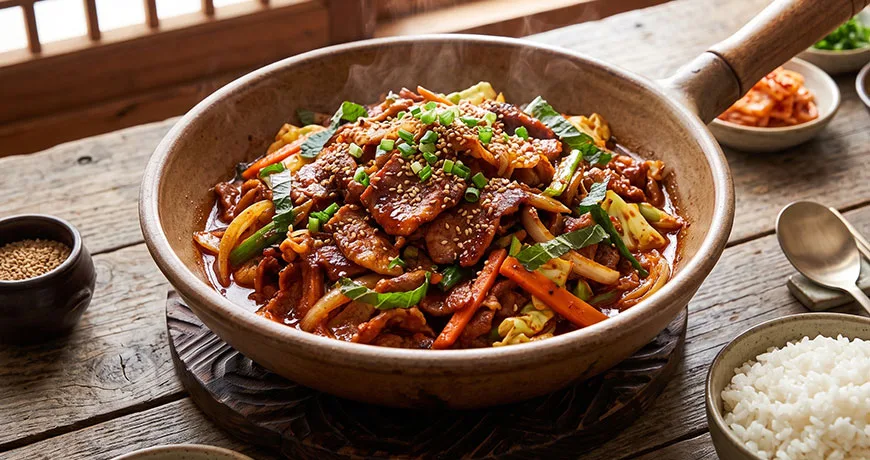
Jeyuk-bokkeum relies on enzymatic tenderization via ginger juice and high-heat thermodynamics to trigger an intense Maillard reaction and caramelization of the gochujang-based marinade. The culinary engineering focus is entirely on moisture control: managing the osmotic water release from the vegetables to ensure the pork is aggressively seared rather than steamed, resulting in a slightly charred, deeply savory glaze.
⏱️ Total: 35 mins (incl. 20 mins marination) | Prep: 10 mins | Cook: 5 mins | 🍳 Difficulty: Moderate | 🌶️ Profile: Spicy, Sweet, and Smoky | 🍚 Focus: Enzymatic Tenderization & High-Heat Searing
Ingredients (2 servings)
- Main Ingredients: 300g thinly sliced pork (shoulder or belly), 1/2 onion, 100g cabbage, 30g carrot, 5 perilla leaves (kkaennip), 1/2 scallion
- Gochujang Marinade: 2 tbsp gochujang, 2 tbsp gochugaru, 1.5 tbsp soy sauce, 1 tbsp minced garlic, 0.5 tbsp ginger juice, 1 tbsp sugar (or agave syrup), 1 tbsp mirin, 1 tbsp sesame oil, a pinch of black pepper, a pinch of crushed sesame seeds
Allergy Information Contains: Pork, Soy, Wheat (from gochujang, soy sauce)
Equipment Cutting Board, Knife, Mixing Bowl, Heavy-bottomed Skillet or Wok, Spatula
Cooking Instructions
- Ingredient Prep: Pat the thinly sliced (approx. 2mm) pork dry with a paper towel and cut into 5cm lengths. Thickly slice the onion and cabbage. Slice the carrot into thin half-moons. Diagonally slice the scallion. Roughly chop the perilla leaves and separate them to prevent clumping.
- Enzymatic Tenderization & Osmosis: In a bowl, aggressively massage the pork with the marinade ingredients. Let it rest for 20 minutes. This allows the ginger’s proteolytic enzymes to break down the tough meat fibers while osmotic pressure pulls the seasoning deep into the tissue.
- High-Heat Rendering & Searing: Lightly oil a heavy-bottomed skillet and heat until smoking. Spread the marinated pork evenly across the pan. Maintain maximum heat to rapidly render the animal fat and trigger the Maillard reaction, allowing the marinade to slightly char and caramelize.
- Vegetable Moisture Control: Once the pork is 80% cooked, introduce the carrot, cabbage, onion, and scallion. Stir-fry rapidly over high heat. The goal is to cook the vegetables just enough to soften their cellular structure before they release excess water, preserving their crunch and preventing the pan temperature from dropping.
- Volatile Aromatics Integration: As soon as the vegetables are slightly softened, turn off the heat immediately. Add the chopped perilla leaves and sesame seeds, tossing gently. Using only the residual thermal energy prevents the delicate, minty aromatics of the perilla from evaporating completely.
💡 Professional Culinary Tips
- Mechanism of Zingibain (Ginger Enzyme): The ginger juice is not merely for flavor. It contains zingibain, a powerful proteolytic enzyme that chemically hydrolyzes the tough connective tissues in the pork. It also acts as a molecular masking agent against gamey pork odors.
- Thermodynamic Limits of Gochujang: Marinades high in sugar and gochujang have a very low smoke point and burn rapidly. Preheating the pan thoroughly and moving the meat constantly under high heat is critical to achieving a pleasant, smoky caramelization (bulhyang) rather than an acrid, burnt taste.
- Preventing Vegetable Syneresis: If the heat is too low or the cooking time too long, the vegetables will purge their internal water into the pan. This halts the searing process, effectively boiling the pork and destroying the intensely glazed texture. High-heat, short-duration cooking is non-negotiable.
Nutrition Facts (Estimated)
Total Content : Approx. 300g (1 serving)
Calories : 380 kcal
– Sodium : 850mg
– Total Carbohydrate : 18.0g
– Sugar : 9.0g
– Total Fat : 22.0g
– Saturated Fat : 7.0g
– Cholesterol : 70.0mg
– Protein : 28.0g
– Calcium : 45.0mg
*Daily Values are based on a 2,000 calorie diet and standard Korean nutritional reference values
**Nutritional values are calculated based on original ingredients; substitutions may alter specific macronutrients.
The Origins and Culture of Jeyukbokkeum (Stir-fried Pork)
1. Evolution into a Modern Korean Working-Class Staple
- The term jeyuk derives from Chinese characters meaning pork. While pork has a long history in Korean cuisine, modern jeyuk-bokkeum—characterized by its signature gochujang marinade—flourished in the mid-to-late 20th century alongside the commercial growth of pork farming and the widespread embrace of spicy chili-paste cuisine.
- It originated as a hearty, accessible dish served at traditional diners (gisa-sikdang) and casual eateries to fuel everyday workers and laborers.
2. Sweet-Spicy Harmony and High-Heat Searing
- The soul of Jeyuk-bokkeum lies in slicing pork (typically shoulder butt or belly) and marinating it in a robust blend of gochujang, gochugaru, garlic, ginger, and sesame oil before stir-frying it with vegetables.
- Searing the meat over high heat infuses it with a delightful smoky aroma, while crisp cabbage and onions lend natural sweetness to balance the fiery kick.
3. The Ultimate Office Lunch Hero and Everyday Banchan
- A permanent fixture on Korean lunch menus and everyday dining tables, Jeyuk-bokkeum is universally revered as a quintessential comfort food.
- Whether enjoyed piled high over rice as jeyuk-deopbap for a satisfying midday meal or paired with an evening glass of soju, it remains a beloved cornerstone of Korean food culture.
The Fiery Tapestry of Thinly Sliced Pork and Piquant Ginger: The Quintessential Korean Comfort Masterpiece
Jeyuk Bokkeum (Spicy Stir-fried Pork) stands as the beloved and quintessential masterpiece of Korean everyday gastronomy, where thinly sliced pork—tenderized through careful marination in ginger-infused gochujang sauce—meets the blistering heat of a searing skillet. Eschewing heavy, thick cuts in favor of delicate, fast-cooking ribbons of meat that absorb seasonings to their core, this iconic dish achieves an extraordinary harmony of robust umami, fiery capsaicin, and melt-in-the-mouth tenderness.
As the marinated pork slices sizzle on the hot iron pan alongside crisp onions, sweet carrots, fragrant sesame leaves, and tender cabbage, a cloud of savory, caramelized vapor commands the dining room, instantly awakening the appetite. The delicate thickness of the meat allows for rapid Maillard browning across the surface, creating a rich glaze that marries seamlessly with the natural moisture released by the fresh vegetables to coat every grain of warm white rice in luscious comfort.
True gastronomy does not rely exclusively on elite luxuries; it flourishes in the culinary wisdom of elevating everyday ingredients to satisfy the weary soul’s hunger with profound warmth. Savoring a glossy, tender morsel of spicy stir-fried pork over rice today is an honest and comforting ritual—putting down the burdens of a complex world and filling the spirit with unpretentious, grounding vitality.
Editor’s Review
1. An Exhilarating Cadence of Sweet-and-Spicy Gochujang Glaze, Piquant Ginger Aromatics, and Tender Pork Slices
The moment a gloss-drenched ribbon of pork touches the palate, an immediate wave of savory depth, bold chili kick, and rounded sweetness awakens the taste buds. This is swiftly followed by the clean, sophisticated piquancy of ginger, which effortlessly dispels any heaviness, while the tender, thinly cut meat yields gently to the bite. Releasing rich, savory juices that coat the mouth in velvety warmth, it orchestrates an endlessly comforting, multi-layered culinary experience.
2. Gingerol-Driven Proteolysis, Maillard Reaction Kinetics, and Allithiamine Bioavailability
Jeyuk Bokkeum represents an exacting study in culinary physics and biochemical tenderization. Active gingerols and shogaols present in the ginger juice systematically break down myofibrillar proteins to guarantee an exceptionally tender mouthfeel. When introduced to a high-heat pan, reducing sugars and amino acids in the marinade trigger intense Maillard browning, forming a savory amber glaze. Furthermore, organosulfur compounds from accompanying aromatics bind with the pork’s abundant vitamin B1 (thiamine) to synthesize allithiamine—a compound with vastly superior bioactivity that accelerates cellular energy recovery.
3. The Silver Platters of Local Diners and the Grounding Solace of Everyday Table Comforts
Found gracing the silver side-dish platters of neighborhood diners across the nation, working-class lunch tables, and evening gathering spots alike, a modest plate of spicy stir-fried pork serves as an enduring emotional haven against daily weariness. Revered for generations as an indispensable source of stamina and hearty satisfaction, enjoying this honest, reliable staple washes away modern stress, granting a timeless sanctuary of stillness, maternal care, and grounded culinary happiness.