
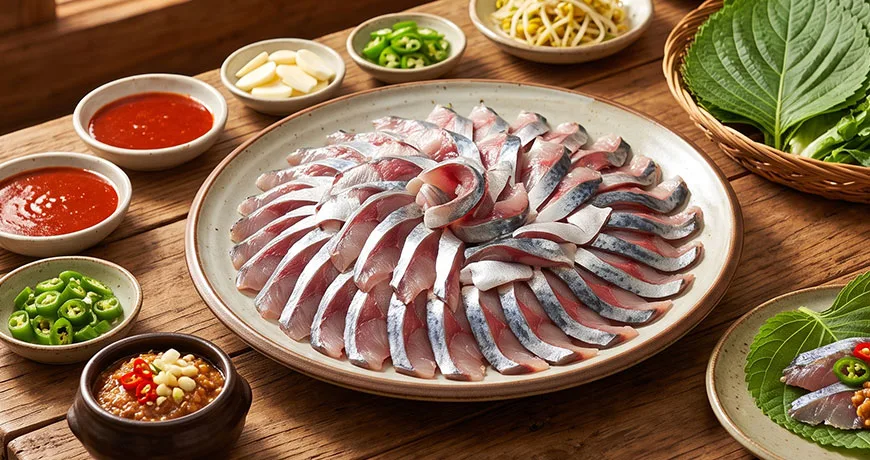
Jeoneo-hoe is a seasonal masterpiece of raw fish preparation that peaks when the gizzard shad is dense with rich, unsaturated lipids. Utilizing the ‘sekkosi’ technique—slicing the fish thinly with its bones intact—this dish offers a stunning mechanical contrast between the buttery flesh and the crunchy calcium matrix of the bones. Because the fish is highly oleaginous, it is paired with acidic gochujang (cho-gochujang) and volatile aromatics (garlic, perilla leaves) to cut through the rich fats and constantly refresh the palate.
⏱️ Total: 20 mins | Prep: 20 mins | Cook: 0 mins (Raw) | 🍳 Difficulty: High (Requires strict hygiene and knife skills) | 🌶️ Profile: Supremely Nutty, Rich, and Clean | 🍚 Focus: Unsaturated Fats (EPA/DHA) & Dietary Calcium
Ingredients (2 servings)
- Main Ingredients: 4–5 fresh, sashimi-grade gizzard shad (approx. 300g), 10 lettuce leaves, 10 perilla leaves, 3 cloves garlic, 2 Cheongyang chilies
- Accompaniment Sauces (Optional):
- Cho-gochujang (Vinegared Chili Paste): 2 tbsp gochujang, 2 tbsp vinegar, 1 tbsp sugar (or agave syrup), 0.5 tbsp minced garlic, 0.5 tbsp sesame oil, a pinch of sesame seeds
- Ssamjang/Makjang: 2 tbsp doenjang, 1 tbsp minced garlic, 1 tbsp sesame oil, 1 tbsp minced Cheongyang chili
Allergy Information Contains: Fish (Gizzard Shad), Soy, Wheat (from gochujang, doenjang)
Equipment Highly sharpened Sashimi or Deba Knife, Sanitized Cutting Board, Fish Scaler (or back of a knife), Absorbent Paper Towels (or clean cloth)
Cooking Instructions
- Sanitation & Thermal Control: Chill all utensils and the cutting board prior to use. Gizzard shad is rich in lipids, making it highly susceptible to rapid oxidation at room temperature. The entire preparation must be executed swiftly in a near-freezing environment.
- Scaling & Evisceration: Under cold running water, aggressively scrape off the scales from tail to head. Slice off the head diagonally and scoop out the viscera. Crucially, use a brush or your thumb to thoroughly scrape away the dark bloodline running along the spine (residual blood is the primary vector for fishy odors).
- Moisture Eradication (Osmotic Control): Once thoroughly cleaned, pat the fish entirely dry using absorbent food-grade paper or a clean cloth, ensuring the abdominal cavity is also moisture-free. Any residual water will trigger osmotic degradation, turning the flesh mushy and amplifying off-flavors.
- Sekkosi Slicing (Mechanical Bone Cleaving): Snip off the fins. Place the fish on the board and slice it diagonally across the spine into extremely thin pieces (approx. 2–3mm). This specific diagonal angle physically shortens the bone fragments, transforming them from dangerous hazards into edible, calcium-rich crunches.
- Plating & Serving: Arrange the sliced fish on a chilled plate. Serve immediately alongside sliced raw garlic, chilies, leafy greens (ssam), and the acidic cho-gochujang or savory ssamjang to balance the intense lipid profile.
💡 Professional Culinary Tips
- Mastery Over Blood and Water: In sashimi preparation, water and blood are the catalysts for bacterial bloom and the activation of trimethylamine (TMA), which causes fishy smells. A quick plunge in ice water after cleaning triggers a thermal shock that firms the flesh, followed by absolute drying, which is the hallmark of professional sashimi prep.
- The Mechanics of Sekkosi: Gizzard shad possesses countless fine bones that are nearly impossible to pin-bone. The sekkosi slicing technique alters the geometry of the fish; by slicing thinly at an angle, the structural integrity of the bones is broken down to a microscopic level, rendering them pleasant to chew and highly nutritious.
- Acid-Lipid Synergy: The overwhelming amount of unsaturated fats in autumnal gizzard shad can quickly fatigue the palate. The acetic acid in the vinegar-based cho-gochujang strips the lipid coating from the tongue, while the allicin from raw garlic and perillaketone from the perilla leaves chemically mask any lingering aquatic notes.
Nutrition Facts (Estimated)
Total Content : Approx. 150g (1 serving, fish only)
Calories : 240 kcal
– Sodium : 120mg
– Total Carbohydrate : 0.0g
– Sugar : 0.0g
– Total Fat : 16.0g
– Saturated Fat : 3.5g
– Unsaturated Fat : 11.5g
– Cholesterol : 85.0mg
– Protein : 24.0g
– Calcium : 210.0mg
*Daily Values are based on a 2,000 calorie diet and standard Korean nutritional reference values
**Nutritional values are calculated based on original ingredients; substitutions may alter specific macronutrients.
The Silver Herald of Autumn and the Rich, Sesame-Like Fat of Gizzard Shad: A Poetic Symphony of Coastal Seafaring Gastronomy
Jeon-eo-hoe (Raw Gizzard Shad Sashimi) stands as the dazzling, rustic pinnacle of Korean seasonal gastronomy, where fresh gizzard shad—harvested at the peak of autumn when the fish accumulate rich, savory fat to prepare for the cooling tides—is meticulously sliced bone-in (sekossi) and served alongside bright red chogochujang and savory soy dip. Celebrated in timeless Korean folklore as a delicacy so enticing “it would even draw a runaway daughter-in-law back home,” the signature crunch of its tender bones and the profound, sesame-like nuttiness melting across the palate embody the most magnificent harvest of the autumnal sea.
When a glistening slice of silver jeon-eo is paired with a sliver of spicy green chili, crushed garlic, and wrapped within a fragrant perilla leaf before meeting the tongue, an extraordinary interplay of textures and flavors unfolds. The delicate crunch of the soft bones yields instantly to a torrent of rich, oily umami, offering an intimate communion with the brisk, refreshing energy of the coastal waters.
True gastronomy does not rely on elaborate artifice; it flourishes in the ancestral wisdom of embracing seasonal shifts, honoring the peak maturity of wild ingredients, and restoring internal vitality through nature’s cycles. Savoring a pristine plate of chilled, bone-in gizzard shad sashimi today is an elegant and sacred ritual—clearing away the rush of modern life and filling the spirit with unpretentious warmth, seasonal gratitude, and timeless coastal solace.
Editor’s Review
1. An Exhilarating Cadence of Bone-In Sekossi Crunch, Rich Autumnal Fat, and Tangy Dipping Brilliance
The moment a delicate, bone-in slice of gizzard shad touches the palate, an immediate wave of clean sea umami and rich, buttery nuttiness characteristic of autumn fat envelops the senses. This is swiftly followed by the delightful, crisp crunch of the tender bones (sekossi), which dissolves into a velvety finish when balanced by the sharp tang of chogochujang and the herbal lift of fresh perilla leaves, orchestrating an endlessly refreshing, multi-layered sensory thrill.
2. Seasonal Polyunsaturated Fatty Acid Accumulation (Omega-3, EPA, DHA) and Ingestion Bioavailability of Natural Calcium
Jeon-eo-hoe represents an exacting study in seasonal marine biology and nutritional biochemistry. As gizzard shad gorge on nutrients and accumulate heavy fat reserves ahead of winter, their meat reaches peak concentrations of bioavailable polyunsaturated fatty acids, including omega-3s, EPA, and DHA, which support cardiovascular health and cognitive recovery. Furthermore, the traditional bone-in slicing technique (sekossi) ensures the direct ingestion of high-density natural calcium and trace minerals, establishing an optimal nutritional matrix for skeletal integrity.
3. The Autumnal Coastal Nostalgia and the Grounding Sanctuary of Seasonal Harvest
Found gracing seaside ports, local markets, and family dinner tables as the undisputed herald of autumn, a modest plate of gizzard shad sashimi serves as an enduring emotional haven against daily weariness. Revered for generations as an essential seasonal restorative to revitalize the appetite and warm the core, enjoying this honest, pristine dish washes away modern stress, granting a timeless sanctuary of stillness, coastal heritage, and grounded culinary happiness.