
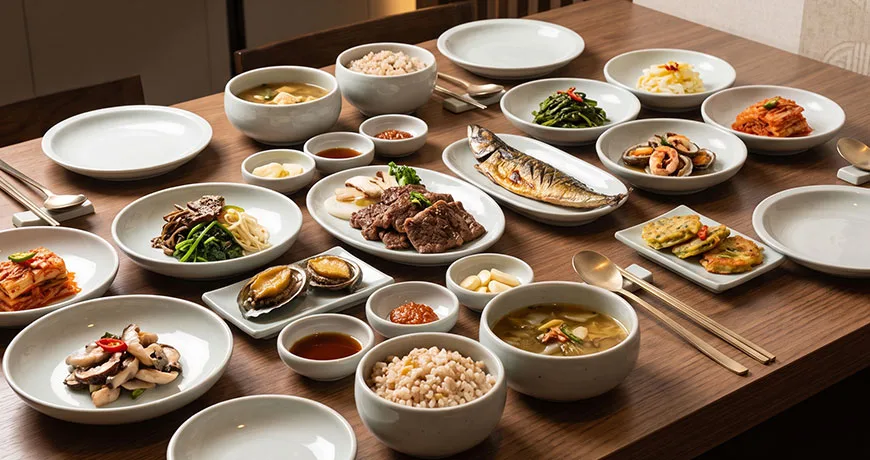
A grand, multi-course Korean banquet meal derived from royal palace cuisine and noble court dining traditions. Served either as an elaborate full-table spread (hansom-charim) or sequentially in modern formal settings, Hanjeongsik presents a harmonious progression of light appetizers, grain-centered main staples, seasoned side dishes (banchan), savory grilled meats, seafood, and traditional desserts.
⏱️ Prep: 1–2 hrs | Cook: 1–2 hrs | 🍳 Advanced / Formal | 👑 Royal Banquet | 🍱 Multi-Course
Menu Structure & Key Courses
- Appetizers (Jeonsik): Smooth pine nut porridge (Jatjuk) or pumpkin porridge (Hobakjuk), fresh seasonal salad with fruit dressing, and mung bean jelly salad (Tangpyeong-chae).
- Primary Savory Courses (Bunsik): Glass noodle stir-fry (Japchae), assorted savory pancakes (Modu-jeon), royal wrap platters (Gujeolpan), and chilled mustard salad (Naengchae).
- Main Hot Dishes (Siksa Main): Braised short ribs (Galbi-jim), grilled fish (Saengseon-gui), spicy stir-fried octopus (Nakji-bokkeum), or boiled pork slices (Bossam).
- Core Meal (Jusik & Bansang): Individual stone pot rice (Dolsot-bap), fermented soybean paste stew (Doenjang-jjigae), and 7 to 9 seasonal banchan (seasoned wild herbs, kimchi, and salted seafood/jeotgal).
- Desserts (Husik): Sweet rice punch (Sikhye) or five-flavor berry tea (Omija-cha), traditional rice cakes (Tteok), candied sweets (Hangwa), and fresh sliced seasonal fruits.
Allergy Information
- Contains: Soy, Wheat, Sesame, Eggs, Shellfish/Fish, Meat (Beef, Pork), Tree nuts (Pine nuts, Chestnuts) (Varies depending on specific course selections)
Equipment & Tableware
- Traditional Korean Brassware (Yugi) or Ceramic Dishes (Onggi), Stone Pots (Dolsot), Earthenware Stew Pots (Ttukbaegi), Grill Pans, Steamer
Course Serving Order
- Welcoming & Porridge Stage: Begin with a warm bowl of mild rice porridge (juk) and a refreshing cold kimchi broth (dongchimi) to coat the stomach and awaken the appetite.
- Cold & Light Appetizers: Serve delicate, colorful dishes such as Tangpyeong-chae, Gujeolpan, and fresh salads that emphasize natural vegetable flavors and subtle dressings.
- Warm Savory Dishes: Present hot stir-fried, pan-fried, and steamed specialties including Japchae, Jeon, Galbi-jim, and seafood over sequential servings.
- Main Rice & Stew Stage (Bansang): Bring out freshly steamed stone pot rice along with hot Doenjang-jjigae and an array of 7–9 complementary side dishes (namul, kimchi, and jeotgal).
- Traditional Tea & Dessert: Conclude the banquet with sweet traditional digestive drinks (Sikhye or Omija-cha), chewy rice cakes, and fresh fruit.
💡 Dining & Serving Tips
- Harmony of Five Colors (Obangsaek): Authentic Hanjeongsik incorporates white, black, red, yellow, and green across its dishes to ensure balanced nutrition and visual elegance.
- Temperature Contrast: Pay strict attention to serving cold dishes thoroughly chilled and hot cooked meats/stews piping hot to preserve authentic textures.
- Perfect Food & Beverage Pairing: Complements premium Korean traditional rice wines such as Cheongju, Yakju, or high-grade Makgeolli. Enjoy with warm roasted barley or Solomon’s seal tea (Dungulle-cha).
Storage & Prep Ahead Instructions
- Because Hanjeongsik consists of many distinct dishes, prep ingredients ahead: marinate meats, chop namul vegetables, and make sauces a day in advance. Assemble, cook, and serve fresh on the day of the feast for optimal quality.
Nutrition Facts (Estimated)
- Total Content : Full Multi-Course Banquet Meal (per 1 person)
- Calories : 950–1,200 kcal total
– Sodium : 1,450mg (73%)
– Total Carbohydrate : 135g (41%)
– Sugar : 28g (28%)
– Total Fat : 38g (70%)
– Saturated Fat : 10g (67%)
– Cholesterol : 220mg (73%)
– Protein : 65g (118%)
– Fiber : 14g (56%)
Editor’s Review
1. A Sensual Rhythm of Elegance Unfolding from Appetizers to Desserts
Unfolding sequentially from refined appetizers to rich seared dishes, stews, hearty main sides, and delicate traditional sweets, Hanjeongsik serenely captivates all five senses. As seasonal treasures from land and sea settle onto exquisite tableware with precise temperatures and vivid colors, a harmonious cadence of rich umami and contrasting textures delivers profound gastronomic joy. The aesthetic harmony presented across each coursed plate manifests the ultimate essence of elevated Korean dining.
2. Culinary Mastery Forged by Sequential Harmony and Five-Color Balance
Hanjeongsik stands as the pinnacle of Korean multi-course dining, built on a precise calculation of ingredient thermodynamics and palatal flow. Awakening the tongue with crisp, light starters before seamlessly transitioning into rich braises, grilled delicacies, and comforting soups represents essential dining science that prevents sensory fatigue. Uniting warm and cool elemental properties alongside the visual balance of Obangsaek (five traditional colors) demonstrates a flawless, high-level mastery of Korean culinary architecture.
3. Serene Hospitality and Cultural Solace Found in Traditional Formalities
The warm spirit of ancient Korean banquets, once prepared strictly to honor revered guests, blossoms beautifully within the elegance of modern Table d’hote. Sitting before a sequence of thoughtfully crafted dishes becomes a gentle, purifying ritual of self-care and mutual respect amidst a chaotic world. Infused with deep reverence and hospitality, a full Hanjeongsik course offers a steadfast and comforting sanctuary that gracefully restores body and soul.
만성한정식
#백년가게
해태식당 | Haetae Sikdang
#백년가게