
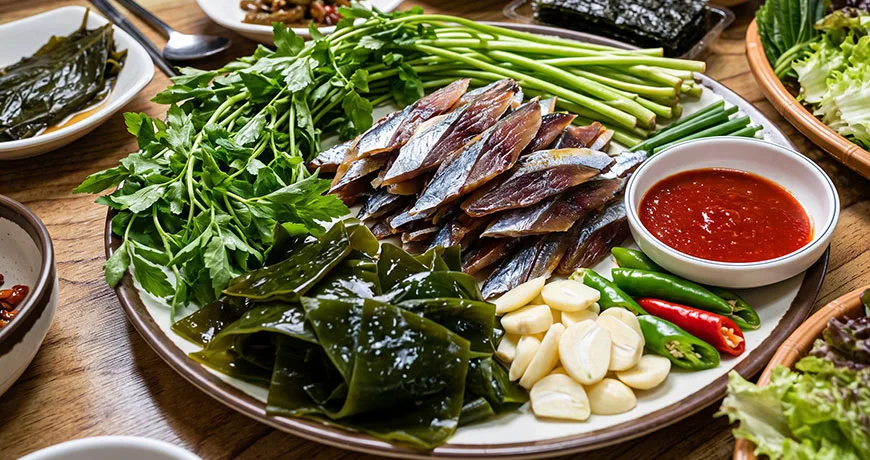
Gwamegi is the pinnacle of natural freeze-drying (sublimation) and enzymatic fermentation. By repeatedly freezing and thawing Pacific saury (or herring) in the freezing coastal winter winds, moisture is systematically driven out while unsaturated fats and free amino acids are intensely concentrated. To counteract its overwhelmingly rich and oily profile, it is paired with raw seaweed, volatile aromatics (garlic, green chili), and acetic acid (cho-gochujang), creating a masterful chemical masking effect and a perfectly balanced sensory experience.
⏱️ Total: 15 mins | Prep: 15 mins | Cook: 0 mins (Raw/Cured) | 🍳 Difficulty: Easy (Focus on prep and freshness) | 🌶️ Profile: Deeply Nutty, Rich, and Oceanic | 🍚 Focus: Omega-3 Fatty Acids (EPA/DHA) & Amino Acids
Ingredients (2 servings)
- Main Ingredients: 10 pieces half-dried Pacific saury (gwamegi) (approx. 200g), 100g fresh raw seaweed (miyeok), 3–4 cloves garlic, 2 green chilies, 3 stalks scallions (or chives), 4–5 napa cabbage leaves (optional)
- Cho-gochujang (Vinegared Chili Paste): 3 tbsp gochujang, 3 tbsp vinegar, 1.5 tbsp sugar (or agave syrup), 0.5 tbsp minced garlic, a splash of sesame oil, a pinch of sesame seeds
Allergy Information Contains: Fish (Saury/Herring), Soy, Wheat (from gochujang)
Equipment Cutting Board, Knife, Mixing Bowl, Food-grade Absorbent Paper (or Paper Towels)
Cooking Instructions
- Oxidized Lipid Control (Peeling): The thin outer skin of gwamegi harbors highly oxidized fats, which are the primary source of rancid, fishy odors. Gently pick at the edge near the head (or the dorsal side) with your thumbnail and pull the skin off in one smooth motion toward the tail.
- Structural Slicing: Once peeled, lightly pat the fillets with absorbent paper to remove excess surface oil. Using scissors or a knife, cut the fillets diagonally into 4–5cm bite-sized pieces. (Diagonal cutting shortens the chewy muscle fibers, ensuring a tender bite.)
- Aromatic & Alginate Prep: Blanch the fresh seaweed in boiling water for 10 seconds until it turns vibrant green, instantly chill in ice water, squeeze out the moisture completely, and cut into 5cm lengths. (Pristine raw seaweed can simply be massaged with coarse salt and rinsed.) Thinly slice the garlic and chilies. Cut the scallions into 5cm lengths.
- Acidic Sauce Formulation: Combine the gochujang, vinegar, sugar, and minced garlic in a bowl. This high-acid cho-gochujang acts as a crucial palate cleanser.
- Plating & Synergy: Arrange the gwamegi and prepared vegetables on a platter. To experience the intended gastronomic synergy, wrap a piece of gwamegi in a layer of seaweed or cabbage, top it with garlic, chili, and scallion dipped in cho-gochujang, and consume in one bite.
💡 Professional Culinary Tips
- Thermodynamics of Natural Freeze-Drying: The diurnal freeze-thaw cycle breaks down cellular walls. Ice crystals form at night and sublime (evaporate without melting) during the dry, windy days. This drastically lowers the water activity (aw), concentrating the lipids and allowing natural enzymes to hydrolyze proteins into umami-rich free amino acids without spoiling.
- The Science of Chemical Masking: Gwamegi is heavily laden with trimethylamine (TMA) and dense lipids. Eating it alone can quickly fatigue the palate. The alginate (soluble fiber) in the seaweed physically encapsulates the fats in the mouth, while the sulfuric allicin in the garlic and the acetic acid in the vinegar chemically neutralize the fishy TMA molecules, achieving a flawless flavor balance.
- Temperature & Oxidation Management: Due to its extreme lipid content, gwamegi oxidizes rapidly at room temperature. Peel and cut it immediately before serving. Any leftovers must be tightly wrapped in plastic film to block oxygen exposure and stored in the freezer.
Nutrition Facts (Estimated)
Total Content : Approx. 200g (1 serving, incl. vegetables)
Calories : 320 kcal
– Sodium : 650mg
– Total Carbohydrate : 15.0g
– Sugar : 8.0g
– Total Fat : 18.0g
– Saturated Fat : 3.5g
– Cholesterol : 85.0mg
– Protein : 24.0g
– Calcium : 110.0mg
*Daily Values are based on a 2,000 calorie diet and standard Korean nutritional reference values
**Nutritional values are calculated based on original ingredients; substitutions may alter specific macronutrients.
The Origins and Culture of Gwamegi
1. Etymology: Skewered Eyes
- The name originates from the traditional preparation method. Historically, the fish were hung to dry by stringing a skewer through their eyes—a practice called “Gwanmok” in Sino-Korean.
- Over time, the local Pohang dialect softened the pronunciation of the word, eventually evolving into “Gwamegi.”
2. Ingredient Shift: From Herring to Saury
- Originally, Gwamegi was a Pacific herring dish, taking advantage of the abundant winter catches in the East Sea.
- However, due to shifting ocean temperatures and rapidly declining herring populations in the 1960s, Koreans adapted by substituting it with Pacific saury. Today, saury remains the modern standard for this winter delicacy.
3. The Science of Freeze-Thaw Drying
- Guryongpo in Pohang is the undisputed capital of Gwamegi production, thanks to its optimal winter coastal winds.
- The fish undergo a unique natural fermentation process: they freeze during the frigid nights and gently thaw under the daytime sun.
- Repeating this cycle over several days concentrates the fish’s natural oils and intensifies the umami flavor, yielding a uniquely rich, chewy texture without unpleasant odors.
The Frost-Kissed Silver Tapestry of Winter Winds: A Lyrical Masterpiece of Gwamegi and Coastal Resilience
Gwamegi (semi-dried herring or saury) stands as the singular, majestic pinnacle of traditional Korean winter gastronomy, crafted by subjecting fish to the rhythmic cycle of freezing under sub-zero night frosts and thawing in the biting gales of coastal winter winds across shaded drying racks. Meticulously deboned and peeled into glistening silver ribbons, gwamegi is traditionally paired with briny fresh sea mustard (miyeok), sharp garlic slices, crisp green chilies, and tangy red pepper paste (chogochujang), delivering an extraordinarily rich and restorative dining experience that defines the soul of the cold season.
Aged slowly through the harsh elements of the coastal drying grounds, gwamegi yields a deeply savory, nutty richness reminiscent of roasted sesame oil, paired with a resilient, tender-chew texture that commands the senses. When wrapped together with the slippery, moisture-rich sea mustard and the piquant bite of raw garlic, the intense, oily profile of the fish is effortlessly balanced, orchestrating a multi-layered harmony of land and sea.
True gastronomy does not rely solely on mild climates; it flourishes in the ancestral wisdom of embracing nature’s harshest trials, respecting how winter elements transform humble fish into a concentrated reservoir of flavor and vitality. Savoring a pristine, seaweed-wrapped bundle of gwamegi today is an elegant and sacred ritual—clearing away the rush of modern life and filling the spirit with unpretentious warmth, seasonal resilience, and timeless coastal solace.
Editor’s Review
1. An Exhilarating Cadence of Rich, Oily Umami, Briny Seaweed Freshness, and Tangy Dipping Brilliance
The moment a garlic-and-seaweed-wrapped morsel of silver gwamegi touches the palate, an immediate wave of deep, buttery fat and concentrated marine umami envelops the senses. This rich, oily depth is swiftly balanced by the crisp, refreshing snap of fresh sea mustard and the sharp, clean punch of garlic and chogochujang, orchestrating an endlessly refreshing, multi-layered sensory thrill that eliminates any heaviness.
2. Cyclic Freeze-Thaw Proteolysis Kinetics and Winter Omega-3 Concentration Mechanics
Gwamegi represents an exacting study in traditional environmental food science and seasonal preservation physics. The deliberate, cyclic exposure to freezing night temperatures and daytime thawing breaks down tough myofibrillar proteins into savory free amino acids, generating a tender, melt-in-the-mouth texture. Concurrently, moisture evaporation concentrates heavy reserves of polyunsaturated fatty acids (omega-3s, EPA, and DHA), establishing an optimal nutritional matrix optimized for cold-weather metabolic support.
3. The Coastal Gales of Guryongpo and the Grounding Sanctuary of Winter Solace
Found gracing coastal drying yards in Guryongpo and winter dining tables across the nation as the undisputed culinary herald of the cold season, a modest platter of gwamegi serves as an enduring emotional haven against daily weariness. Revered for generations as an essential seasonal restorative to warm the core and invigorate the spirit, enjoying this honest, nutrient-dense delicacy washes away modern stress, granting a timeless sanctuary of stillness, coastal heritage, and grounded culinary happiness.